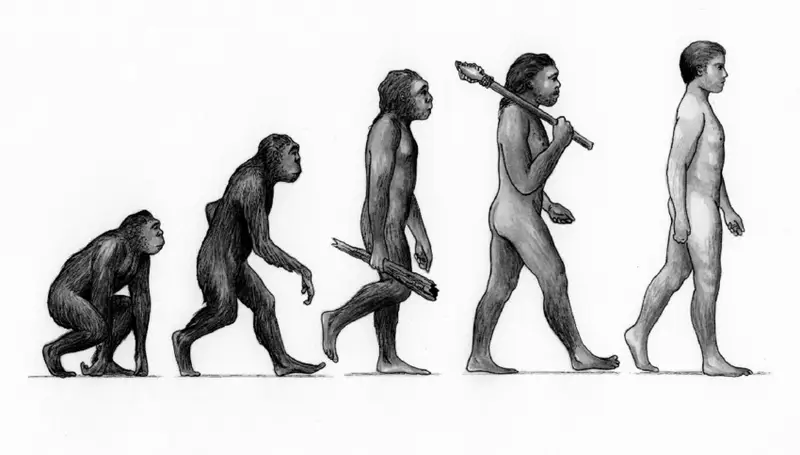
Evolution is often imagined as a slow, ancient process, something that shaped dinosaurs, early mammals, or our distant hominin ancestors millions of years ago. In this view, modern humans stand apart, buffered from natural selection by medicine, technology, and culture. Yet this idea is profoundly incomplete. Evolution did not stop with the emergence of Homo sapiens, nor did it pause with the rise of civilization. It continues quietly and relentlessly within us, shaping our bodies, our biology, and even aspects of our behavior.
From a scientific perspective, evolution simply means a change in the frequency of inherited traits within a population across generations. As long as humans reproduce, experience variation, and face environmental pressures—biological, social, or cultural—evolution continues. What has changed is not whether evolution occurs, but how it operates. Modern human evolution is subtle, complex, and deeply intertwined with culture and technology, yet it is no less real than the evolutionary forces that shaped our ancestors.
The following ten examples reveal how evolution is still unfolding in human populations today, offering a living portrait of our species in motion rather than frozen in time.
1. Lactose Tolerance Is Expanding in Some Human Populations
One of the clearest and most frequently cited examples of recent human evolution is the continued spread of lactose tolerance. Lactose is the primary sugar found in milk, and digesting it requires the enzyme lactase. In most mammals, including early humans, lactase production declines after weaning, making milk difficult to digest in adulthood. This condition, known as lactose intolerance, remains the global norm.
However, in certain human populations, particularly those with a long history of dairy farming, genetic mutations have allowed lactase production to persist into adulthood. This trait, called lactase persistence, provides a nutritional advantage in environments where milk is a reliable food source. Milk offers calories, fat, protein, and essential micronutrients, all of which can improve survival and reproductive success.
What makes this evolutionary change remarkable is its speed. Genetic evidence indicates that lactase persistence spread within the last 10,000 years, a blink of an eye in evolutionary terms. Even today, the frequency of lactose tolerance continues to shift as populations mix and dietary practices change.
This ongoing evolution illustrates how cultural innovations—such as animal domestication—can create new selective pressures. Human biology did not merely adapt to nature; it adapted to culture itself. Lactose tolerance stands as a powerful reminder that evolution responds not only to climate and predators, but also to the environments humans create.
2. Resistance to Infectious Diseases Is Still Evolving
Throughout human history, infectious diseases have been among the strongest drivers of natural selection. Pathogens exert intense pressure on populations, favoring genetic variants that enhance immune defense or reduce susceptibility to infection. This process did not end with modern medicine; it continues today, even as vaccines and antibiotics reshape the landscape.
Genetic variations affecting immune system function are still spreading or declining in response to disease exposure. Certain alleles provide partial resistance to malaria, HIV, or other infections, influencing survival and reproductive outcomes in affected regions. While these adaptations may come with trade-offs, such as increased risk of autoimmune disorders, they can still be favored under specific conditions.
The immune system itself is extraordinarily dynamic, shaped by a complex interplay between genetics and environment. Evolutionary pressures act not only on individual immune genes, but also on regulatory mechanisms that determine how strongly or weakly the immune response is activated.
What makes this form of evolution emotionally striking is its intimacy. The struggle between humans and microbes unfolds within our own bodies, generation after generation. Even in an age of advanced medicine, pathogens continue to evolve, and humans continue to respond in kind. This ongoing biological arms race ensures that evolution remains an active force in shaping our species.
3. Human Brains Are Still Changing in Subtle Ways
The human brain is often portrayed as the pinnacle of evolutionary achievement, a structure so refined that further change seems unnecessary. Yet there is no scientific reason to believe that brain evolution has ceased. On the contrary, evidence suggests that subtle changes in brain structure, development, and function are still occurring.
Genetic studies reveal ongoing variation in genes associated with neural development, synaptic plasticity, and neurotransmitter systems. These variations can influence cognition, behavior, and susceptibility to neurological conditions. While the effects of individual genetic changes are often small, their cumulative impact over generations can shape population-level trends.
Modern environments place novel demands on the brain. Literacy, complex social networks, abstract problem-solving, and prolonged education all interact with neural development. While culture plays a dominant role in shaping cognition, biology still provides the underlying framework. Evolution can favor traits that enhance learning efficiency, stress regulation, or social cognition under contemporary conditions.
Importantly, brain evolution does not imply a linear progression toward greater intelligence. Instead, it reflects ongoing adaptation to changing environments. The human brain remains a work in progress, sculpted by both ancient pressures and modern realities.
4. Changes in Human Height and Body Proportions Continue
Human height and body proportions are influenced by a combination of genetics, nutrition, and environment. Over the past several centuries, average height has increased in many populations, largely due to improved nutrition and health. Yet genetic evolution also plays a role in shaping body size and form.
Different environments favor different body proportions. In colder climates, shorter limbs and more compact bodies reduce heat loss, while in hotter regions, longer limbs help dissipate heat more efficiently. These patterns, described by ecological principles, reflect long-standing evolutionary pressures that continue to influence human variation.
Recent genetic studies show that alleles associated with height are still subject to selection. In some populations, taller stature may be favored due to social or reproductive factors, while in others, smaller body size may offer advantages related to energy efficiency or health outcomes.
These changes are gradual and often imperceptible within a single lifetime, yet over generations they accumulate. Human bodies continue to adapt, responding to the complex interplay of climate, culture, and biology that defines modern life.
5. Wisdom Teeth Are Becoming Less Common
The gradual disappearance of wisdom teeth offers a tangible example of evolution unfolding in plain sight. Early humans evolved large jaws to accommodate a diet of tough, unprocessed foods. Extra molars provided additional chewing power, improving survival. In modern societies, however, diets are softer, cooking is widespread, and dental care reduces the need for such adaptations.
As a result, smaller jaws are increasingly common, and wisdom teeth often fail to erupt properly or are absent altogether. Genetic variations that reduce the likelihood of developing wisdom teeth can be favored because they lower the risk of dental complications, infections, and associated health problems.
This change reflects a broader pattern in human evolution, where anatomical features shaped by past environments become less useful—or even disadvantageous—in new contexts. The decline of wisdom teeth highlights how evolution responds not only to external threats, but also to shifts in lifestyle and technology.
The process is quiet and incremental, yet it underscores a fundamental truth: human anatomy is not fixed. Even seemingly minor traits continue to evolve as selective pressures change.
6. Skin Pigmentation Continues to Adapt
Human skin color is one of the most visible examples of evolutionary adaptation, shaped primarily by exposure to ultraviolet radiation. Darker pigmentation protects against UV damage and preserves essential nutrients, while lighter pigmentation enhances vitamin D synthesis in low-UV environments.
As human populations migrate, intermix, and settle in new regions, skin pigmentation continues to evolve. Genetic variants influencing melanin production remain subject to selection, particularly when environmental conditions differ significantly from ancestral habitats.
Modern factors complicate this process. Clothing, indoor lifestyles, and dietary supplementation reduce some of the selective pressures that once dominated skin color evolution. Nevertheless, biology still responds to environmental context, and pigmentation-related genes continue to show signs of adaptation.
The emotional resonance of this example lies in its reminder of shared humanity. Skin color variation reflects adaptation to sunlight, not biological divisions between people. Evolution has painted humanity in many shades, all shaped by the same physical principles and all part of a single, evolving species.
7. Metabolism Is Adapting to Modern Diets
Human metabolism evolved under conditions of food scarcity and unpredictability. Traits that promoted efficient energy storage were advantageous when meals were irregular and famine was a real threat. In modern environments, where calorie-dense foods are often abundant, these same traits can contribute to metabolic disorders.
Yet evolution does not stop simply because conditions change. Genetic variations affecting fat storage, insulin sensitivity, and appetite regulation continue to influence survival and reproductive success. In some environments, metabolic efficiency may still confer advantages, while in others, different traits may be favored.
There is growing evidence that populations with distinct dietary histories show genetic differences in how they process carbohydrates, fats, and alcohol. These adaptations reflect long-term interactions between genes and diet, some of which continue to evolve as eating patterns shift globally.
Metabolic evolution highlights a tension between ancient biology and modern lifestyles. It also demonstrates that natural selection operates even in complex, technology-rich societies, subtly shaping how our bodies respond to the foods we consume.
8. Fertility Patterns Are Influencing Genetic Change
Evolution is ultimately driven by differential reproduction. Traits that influence when, how often, and under what conditions people reproduce can shape genetic variation across generations. In modern societies, fertility patterns vary widely, influenced by cultural norms, education, economic factors, and personal choice.
Despite these cultural influences, biology remains involved. Genetic factors affect reproductive timing, hormone regulation, and fertility itself. Variants associated with earlier or later reproduction can become more or less common depending on how they interact with social environments.
For example, in populations where later reproduction is common, genes that support extended fertility may be favored. Conversely, in contexts where early reproduction remains prevalent, different traits may gain an advantage. These dynamics ensure that evolution continues to operate through the most fundamental mechanism of all: reproduction.
This aspect of human evolution is deeply intertwined with social structures, making it one of the most complex and emotionally charged examples. It reminds us that biology and culture are not separate forces, but partners in shaping our evolutionary future.
9. Human Resistance to Environmental Toxins Is Emerging
As humans encounter new chemicals and pollutants, selective pressures arise that can influence genetic variation. Differences in how individuals metabolize toxins, drugs, or environmental contaminants can affect health outcomes and survival.
Genes involved in detoxification pathways show considerable variation, and some of this variation appears to be under selection in environments with high exposure to pollutants. While cultural and regulatory measures play a crucial role in reducing harm, biological adaptation can also occur over time.
This form of evolution is subtle and often overlooked, yet it reflects the reality that human environments are rapidly changing. As new challenges emerge, so too do opportunities for adaptation, even when those challenges are of our own making.
10. Cultural Evolution Is Interacting with Biological Evolution
Perhaps the most distinctive feature of modern human evolution is the intimate interaction between biological and cultural change. Humans alter their environments through technology, social systems, and knowledge, creating new selective pressures that feed back into biology.
This process, known as gene–culture coevolution, ensures that evolution continues even when natural environments are heavily modified. Traits related to learning, cooperation, communication, and social behavior can be shaped by the cultural contexts in which they operate.
Unlike other species, humans transmit information across generations not only through genes, but through language, education, and shared knowledge. This does not replace biological evolution; it amplifies and redirects it. The result is a uniquely human form of evolution, where culture and biology are inseparable.
This interaction gives modern human evolution its distinctive character. It is slower in some respects, faster in others, and deeply complex. Yet it remains evolution in the truest scientific sense: change over time driven by inherited variation and differential success.
Conclusion: Humanity as an Evolving Species
Evolution is not a relic of the distant past, nor a process confined to fossils and ancient bones. It is happening now, within living human populations, shaping our bodies, our biology, and our future. Though modern technology has altered the selective landscape, it has not erased it.
The examples explored here reveal a species still in motion, adapting to new environments, new challenges, and new ways of living. Human evolution today is quieter than in the past, but no less profound. It unfolds across generations, guided by the same fundamental principles that have always governed life on Earth.
To recognize that evolution is still happening in humans is to accept that we are not finished products. We are participants in an ongoing process, shaped by history and shaping what comes next. In this understanding lies both humility and hope, for it reminds us that change is not only inevitable, but intrinsic to what it means to be human.