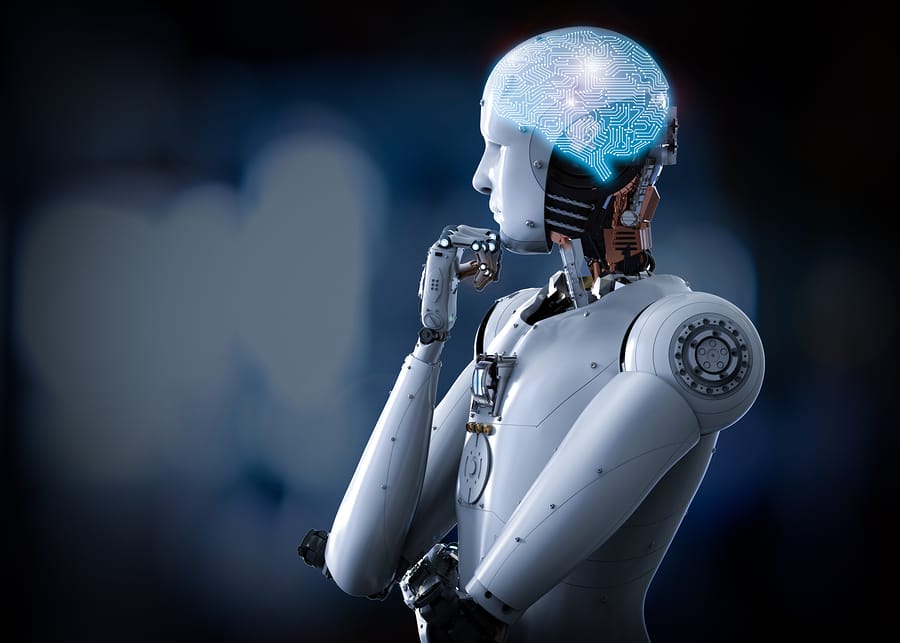
For most of human history, science advanced through a careful balance of observation, theory, and experimentation. Progress was often slow, limited by human intuition, available instruments, and the sheer complexity of nature. Some problems resisted solution not because scientists lacked intelligence or dedication, but because the systems involved were too vast, too nonlinear, or too data-rich for traditional approaches. In recent decades, artificial intelligence has begun to change this landscape. By learning from enormous datasets, identifying patterns invisible to human reasoning, and exploring solution spaces far beyond intuitive reach, AI has transformed questions once labeled “unsolvable” into tractable scientific challenges.
This transformation is not a replacement of human intelligence, but an extension of it. Artificial intelligence does not discover in isolation; it works alongside physicists, biologists, chemists, and engineers, amplifying their ability to see, test, and imagine. The following ten examples illustrate how AI is reshaping the boundaries of scientific possibility, turning longstanding mysteries into solvable problems and, in the process, redefining how knowledge itself is produced.
1. Predicting Protein Structures That Defied Decades of Biology
For much of the twentieth century, one of biology’s most stubborn problems was understanding how proteins fold. Proteins are chains of amino acids that twist and bend into precise three-dimensional shapes, and those shapes determine how proteins function in living cells. The challenge was not merely theoretical. Misfolded proteins are linked to diseases such as Alzheimer’s, Parkinson’s, and cystic fibrosis. Yet predicting a protein’s final shape from its amino acid sequence proved extraordinarily difficult.
The difficulty arises from physics. A protein explores an astronomical number of possible configurations as it folds, governed by subtle energetic interactions. Calculating this process directly using first principles is computationally infeasible for most proteins. For decades, experimental techniques such as X-ray crystallography and cryo-electron microscopy provided answers one protein at a time, but the underlying predictive problem remained largely unsolved.
Artificial intelligence changed this by learning the statistical patterns connecting sequence and structure. By training deep neural networks on vast databases of known protein structures, AI systems learned to infer how amino acid sequences constrain three-dimensional form. These systems do not simulate every physical interaction explicitly; instead, they internalize the rules implicitly, capturing the essence of protein folding in a way that bypasses brute-force calculation.
The result was a dramatic leap in accuracy. Structures that once required years of experimental work can now be predicted computationally in hours or days, often with near-experimental precision. This breakthrough has profound implications, accelerating drug discovery, illuminating basic biology, and opening new avenues in synthetic biology. A problem once described as “unsolvable” by conventional methods has become a routine part of scientific practice, largely due to AI’s ability to learn from complexity rather than simplify it away.
2. Decoding the Dark Matter of the Genome
The sequencing of the human genome at the beginning of the twenty-first century was a triumph of science, but it also revealed a deeper mystery. Only a small fraction of the genome codes directly for proteins. The rest, often referred to as non-coding DNA, was once dismissed as “junk.” Over time, it became clear that this non-coding majority plays crucial roles in regulating gene expression, development, and disease. The challenge lay in understanding how.
The genome is not a linear instruction manual. It is a dynamic, context-dependent system where distant regions interact, chemical modifications alter activity, and regulatory elements respond to environmental signals. Traditional analytical methods struggled to capture this complexity, leaving vast regions of the genome functionally unexplained.
Artificial intelligence has proven uniquely suited to this problem. Machine learning models can analyze genomic sequences alongside epigenetic data, expression profiles, and three-dimensional chromatin organization. By integrating these layers, AI systems can predict which genomic regions act as switches, enhancers, or silencers, and under what conditions.
This ability transforms genomics from a descriptive science into a predictive one. AI-driven models can forecast how specific mutations affect gene regulation, helping researchers understand the genetic basis of complex diseases that do not follow simple inheritance patterns. What once seemed like an impenetrable code embedded within DNA is becoming legible, not because humans suddenly grew smarter, but because AI can recognize patterns at a scale and subtlety beyond unaided human cognition.
3. Modeling Climate Systems Beyond Human Intuition
Earth’s climate is one of the most complex systems ever studied. It involves interactions among the atmosphere, oceans, ice sheets, biosphere, and human activity, all operating across vast ranges of time and space. Traditional climate models, based on physical equations, have been remarkably successful, yet they face limits. Many processes, such as cloud formation or ocean turbulence, occur at scales too small to resolve directly, requiring approximations that introduce uncertainty.
Artificial intelligence offers a complementary approach. Rather than replacing physics-based models, AI learns from observational data and high-resolution simulations to improve representations of these difficult processes. Neural networks can emulate complex components of climate models, capturing nonlinear relationships that are difficult to express analytically.
In practice, this means AI-enhanced climate models can produce more accurate forecasts of extreme events, such as heatwaves, hurricanes, and floods. They can also explore “what-if” scenarios more efficiently, helping scientists understand how different emission pathways may influence future climate outcomes.
The emotional weight of this achievement lies in its urgency. Climate change is not a distant abstraction but a present reality. By helping scientists navigate the immense complexity of Earth’s climate system, AI contributes directly to humanity’s ability to anticipate and respond to one of the defining challenges of our time.
4. Discovering New Materials in Vast Chemical Spaces
The number of possible chemical compounds and materials is effectively infinite. Even when restricted to solid-state materials relevant for batteries, electronics, or renewable energy, the space of possibilities is far too large to explore experimentally one by one. For decades, materials science advanced through intuition-guided experimentation, guided by known chemical principles but constrained by time and cost.
Artificial intelligence has transformed this search into a data-driven exploration. By training models on existing materials databases, AI systems learn the relationships between composition, structure, and properties. They can then predict which new combinations are likely to exhibit desirable characteristics, such as high conductivity, mechanical strength, or thermal stability.
This approach turns materials discovery into a targeted process. Instead of synthesizing thousands of candidates blindly, researchers can focus on a small set of AI-predicted materials with high potential. In some cases, AI has proposed compounds that human experts would not have considered, expanding the creative space of science itself.
The implications are wide-ranging. Better battery materials could accelerate the transition to renewable energy. New catalysts could make industrial processes more efficient and less polluting. AI is not merely speeding up discovery; it is changing how scientists think about what is discoverable.
5. Mapping the Brain’s Complexity Beyond Classical Analysis
The human brain contains roughly 86 billion neurons, each connected to thousands of others. Understanding how this network gives rise to perception, thought, and consciousness is one of science’s grandest challenges. Traditional neuroscience has made enormous progress by studying individual neurons, circuits, and brain regions, but integrating these findings into a coherent picture remains daunting.
Artificial intelligence provides tools capable of handling this complexity. Machine learning algorithms can analyze vast datasets from brain imaging, electrophysiology, and behavioral experiments, identifying patterns that link neural activity to function. These patterns often emerge from high-dimensional data that resist traditional statistical methods.
AI models have been used to decode sensory information from neural signals, predict disease progression in neurological disorders, and simulate neural networks that mirror aspects of brain function. While these models do not replicate human cognition in full, they offer insights into how distributed neural activity produces coherent behavior.
There is a profound emotional resonance in this work. By using artificial systems to study natural intelligence, science is holding up a mirror to itself. Each advance brings us closer to understanding not only how the brain works, but what it means to understand anything at all.
6. Solving Longstanding Problems in Fundamental Physics
Physics seeks simple laws beneath complex phenomena, yet some of its most important problems resist analytical solution. Systems involving many interacting particles, such as turbulent fluids or quantum materials, quickly become mathematically intractable. Even when the governing equations are known, solving them exactly is often impossible.
Artificial intelligence offers a new strategy. By learning from simulation data or experimental results, AI models can approximate solutions to complex physical systems without explicitly solving the underlying equations. In fluid dynamics, machine learning has been used to model turbulence, capturing essential features that elude classical approaches. In quantum physics, AI has helped identify phases of matter and optimize quantum experiments.
These successes do not undermine the importance of theory; rather, they complement it. AI acts as a bridge between equations and reality, extracting usable knowledge where formal solutions fail. Problems once dismissed as analytically hopeless are now approachable through data-driven insight.
This shift challenges traditional notions of understanding in physics. When an AI model predicts behavior accurately but cannot easily explain itself in human terms, scientists are forced to rethink what it means to “solve” a problem. The result is not confusion, but a deeper philosophical engagement with the nature of explanation itself.
7. Accelerating Drug Discovery Beyond Trial and Error
Developing new medicines has traditionally been a slow, expensive process, often taking over a decade and billions of dollars. The difficulty lies in the complexity of biological systems and the enormous space of possible drug molecules. Testing each candidate experimentally is impractical, and failures are common.
Artificial intelligence has revolutionized this process by predicting how molecules interact with biological targets. Machine learning models can analyze chemical structures, biological pathways, and clinical data to identify promising drug candidates and anticipate potential side effects. This approach narrows the search dramatically, focusing experimental efforts where they are most likely to succeed.
AI-driven drug discovery does not eliminate the need for laboratory testing or clinical trials, but it reshapes the pipeline. Diseases that once attracted little pharmaceutical interest due to high risk or low profitability may become more tractable, expanding the scope of medical research.
At a human level, this matters deeply. Faster, more efficient drug discovery means lives saved, suffering reduced, and hope extended to conditions once considered untreatable. AI’s contribution here is not abstract; it touches the most personal dimensions of human experience.
8. Revealing Patterns in the Deep History of Life
The fossil record is incomplete, fragmented, and biased by preservation conditions. Reconstructing the history of life from such evidence is a formidable challenge. Traditional paleontology relies on careful interpretation of limited data, but many large-scale patterns remain uncertain.
Artificial intelligence can integrate fossil data with geological, climatic, and genetic information, revealing trends that emerge only at large scales. Machine learning models can identify subtle correlations between extinction events and environmental change, or infer evolutionary relationships from incomplete morphological data.
These tools allow scientists to test hypotheses about life’s history with greater rigor, transforming paleontology into a more quantitative science. They also help bridge the gap between deep time and modern biology, illuminating how past events shaped present ecosystems.
There is a quiet wonder in this work. By teaching machines to read the scattered traces of ancient life, scientists extend human memory across hundreds of millions of years, recovering stories that would otherwise remain lost to time.
9. Automating Hypothesis Generation in Complex Systems
One of the most creative acts in science is formulating a good hypothesis. Traditionally, this has been seen as a uniquely human skill, rooted in intuition and experience. Yet in systems with thousands of interacting variables, human intuition can falter, overlooking possibilities that lie outside familiar conceptual frameworks.
Artificial intelligence can assist by generating and testing hypotheses automatically. By exploring data for unexplained patterns, AI systems can propose candidate relationships for further investigation. In fields such as systems biology and economics, this approach has already revealed unexpected connections.
This does not mean that AI replaces scientific creativity. Rather, it expands the space of ideas available for human evaluation. Scientists remain responsible for interpretation, validation, and theoretical integration. AI becomes a partner in imagination, suggesting directions that might never arise from human reasoning alone.
The emotional significance here is subtle but profound. Science becomes less about individual genius and more about collaboration between minds, both natural and artificial, each contributing strengths the other lacks.
10. Redefining What “Unsolvable” Means in Science
Perhaps the most important way artificial intelligence is solving “unsolvable” problems is by changing how scientists define the term itself. Problems once deemed unsolvable were often those that exceeded human cognitive or computational limits. AI shifts those limits, expanding what can be analyzed, predicted, and understood.
This does not mean that all mysteries vanish. New questions arise as old ones fall, and some aspects of reality may always resist full explanation. Yet AI demonstrates that unsolvability is often a temporary judgment, shaped by available tools rather than fundamental impossibility.
In this sense, artificial intelligence is not just a technological advance but a philosophical one. It reminds us that knowledge is constrained by perspective, and that expanding our perspective can transform impossibility into progress.
Conclusion: A New Era of Scientific Possibility
Artificial intelligence is not a magic solution, nor is it an infallible oracle. It depends on data, human guidance, and careful interpretation. Yet its impact on science is undeniable. By navigating complexity, extracting meaning from vast datasets, and exploring solution spaces beyond human reach, AI has turned problems once labeled “unsolvable” into active frontiers of discovery.
This transformation carries emotional weight because it reshapes humanity’s relationship with the unknown. It suggests that limits are not fixed, that curiosity paired with the right tools can penetrate even the deepest mysteries of nature. As AI continues to evolve, it will not replace the human spirit of inquiry, but amplify it, allowing science to ask bolder questions and pursue answers with unprecedented reach.
In the end, the story of AI in science is not about machines surpassing humans. It is about humans extending themselves, using artificial intelligence as a lens through which the universe becomes, once again, a little more understandable.