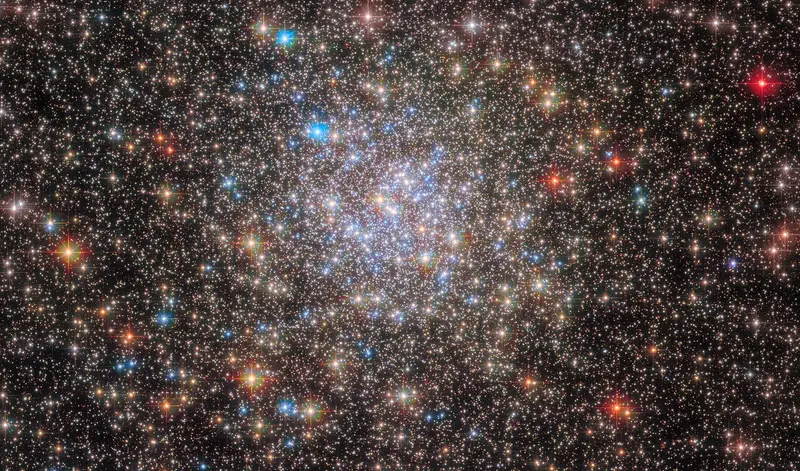
On a clear night, when the noise of the world fades and the sky opens above us, stars appear as tiny white points scattered across darkness. At first glance, they seem uniform, distant, and unchanging. But look more closely—through a telescope, a camera, or even with the naked eye under pristine skies—and a hidden richness emerges. Some stars glow blue-white, others shimmer yellow, some burn red, and a few shine with strange hues that feel almost unreal. These colors are not cosmetic. They are messages.
The color of a star is one of the most powerful clues astronomers have about its nature. It tells a story about temperature, age, mass, and fate. Each color marks a different chapter in the life of a star, shaped by physics so precise and unforgiving that even slight changes leave visible traces across the cosmos.
Here are ten different colors of stars and what they truly mean, not just scientifically, but emotionally—because each color reflects a different way the universe creates light, heat, and meaning.
1. Blue Stars
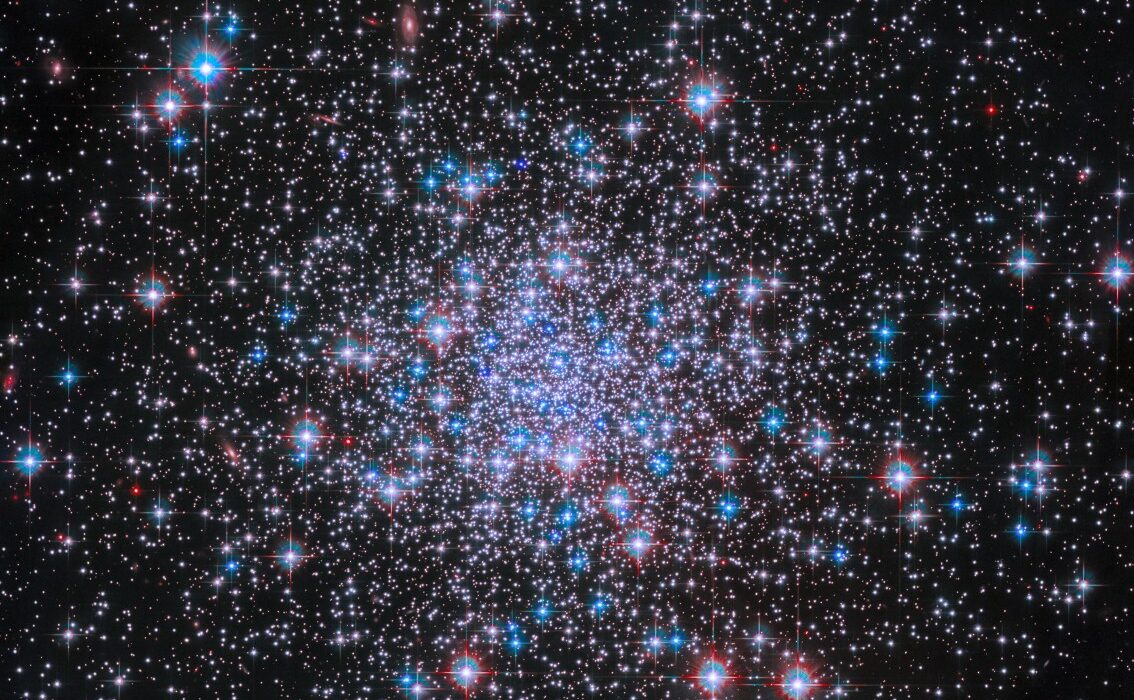
Blue stars are the most intense, most extreme stars in the universe. Their color immediately signals danger and power. These stars burn at extraordinarily high temperatures, often exceeding tens of thousands of degrees. The blue color comes from their surface temperature, which is so hot that most of their light is emitted at shorter wavelengths.
These stars are massive, often many times heavier than the Sun. That mass gives them crushing gravity, forcing their cores to burn fuel at a furious pace. Hydrogen fusion occurs so rapidly that blue stars live fast and die young, sometimes lasting only a few million years—a blink of an eye on cosmic timescales.
Despite their short lives, blue stars shape the universe profoundly. Their intense radiation sculpts surrounding gas clouds, triggering the formation of new stars. When they die, they often explode as supernovae, spreading heavy elements like oxygen, iron, and carbon into space. Those elements later become planets, oceans, and living beings.
Blue stars are cosmic fireworks—brilliant, violent, and brief. They remind us that brilliance often comes at a cost.
2. Blue-White Stars
Blue-white stars occupy a middle ground between pure blue giants and slightly cooler stars. They still burn incredibly hot, but with slightly less ferocity. Their color reflects surface temperatures that remain extreme, though not quite as punishing as the bluest stars.
These stars are also massive and luminous, dominating star clusters with their sharp, piercing light. They often appear in regions where stars are actively forming, embedded in glowing nebulae. Their radiation ionizes nearby gas, causing those nebulae to shine in vivid colors.
Blue-white stars tend to live longer than pure blue stars, but their lives are still short compared to stars like the Sun. They burn through their fuel rapidly, driven by gravity that refuses moderation.
Emotionally, blue-white stars feel like the adolescence of stellar life—still fierce, still radiant, but beginning to hint at the cost of intensity.
3. White Stars
White stars are deceptive. They appear calm, balanced, almost neutral, but beneath that appearance lies immense heat. These stars emit light evenly across much of the visible spectrum, which blends into white when seen from afar.
Many white stars are still hotter than the Sun, with surface temperatures that keep fusion running efficiently without the explosive urgency of blue stars. They often represent a more stable phase of stellar life, where gravity and energy production are in temporary equilibrium.
Some of the most famous stars in the night sky appear white to human eyes, partly because Earth’s atmosphere scatters light and masks subtle color differences. In reality, many of these stars lean slightly toward blue or yellow.
White stars embody a kind of cosmic restraint. They burn fiercely, but not recklessly. They are proof that balance can exist even under extreme conditions.
4. Yellow-White Stars
Yellow-white stars mark a transition zone in stellar evolution. They are cooler than white stars but hotter than our Sun. Their light carries a faint golden tint, hinting at changes occurring deep within their cores.
These stars often live longer than their hotter counterparts, sometimes lasting billions of years. Their slower fuel consumption allows stability to persist for vast stretches of time. In many cases, planets form around these stars, as their radiation is less destructive to surrounding material.
Yellow-white stars often feel approachable, like stars that could host life-friendly environments. Their warmth is intense but not overwhelming, their energy steady rather than explosive.
They represent a cosmic balance point, where longevity and brightness coexist.
5. Yellow Stars
Yellow stars feel familiar because our Sun belongs to this category. These stars shine with a warm, golden light, their surface temperatures lower than white stars but still hot enough to sustain nuclear fusion efficiently for billions of years.
Yellow stars are medium-sized, neither giants nor dwarfs in the most extreme sense. Their internal pressures allow hydrogen to fuse into helium at a measured pace, giving them long, stable lifespans. This stability is crucial. It allows planets to form, climates to stabilize, and life to evolve.
The yellow color comes from the way these stars emit slightly more light at longer wavelengths compared to hotter stars. Their radiation is gentler, less likely to strip atmospheres or sterilize surfaces.
Yellow stars are the quiet heroes of the universe. They do not dominate their surroundings with violence, but they provide the consistent energy necessary for complexity to arise.
6. Orange Stars
Orange stars are cooler and dimmer than yellow stars, glowing with a deeper, softer light. Their surface temperatures are lower, and their energy output is more restrained. These stars often live longer than yellow stars, sometimes for tens of billions of years.
Their slow fuel consumption makes them incredibly stable. While they emit less light, their longevity offers extended opportunities for planetary systems to mature. Many astronomers consider orange stars promising candidates for hosting life-bearing planets, as their radiation is steady and less intense.
Orange stars feel ancient and patient. They burn slowly, almost thoughtfully, as if conserving energy for an unimaginably long future.
Their color reflects endurance—a reminder that in the universe, longevity can be just as powerful as brilliance.
7. Red Stars
Red stars are cool by stellar standards, though still unimaginably hot by human measures. Their surface temperatures are low enough that most of their light shifts toward the red end of the spectrum.
Many red stars are small, faint, and incredibly long-lived. Red dwarfs, the most common type of star in the universe, fall into this category. They burn their fuel so slowly that some may outlive the current age of the universe.
Other red stars are enormous, swollen giants nearing the end of their lives. These stars expand dramatically as their internal processes change, cooling their surfaces and turning them red.
Red stars are paradoxical. They can represent both the quiet persistence of youth and the looming end of old age. Their color carries the weight of time.
8. Red Giants
Red giants are stars in transformation. Once similar to the Sun, they have exhausted the hydrogen fuel in their cores. As fusion shifts to outer layers, the star expands enormously, cooling its surface and glowing red.
These stars are vast, often large enough to engulf nearby planets. Despite their cooler surfaces, their sheer size makes them incredibly luminous. Their internal structure becomes unstable, leading to powerful stellar winds that shed material into space.
Red giants are dying stars, but their deaths are creative. They release elements forged in their cores, enriching the interstellar medium and setting the stage for future stars and planets.
Emotionally, red giants feel like cosmic elders—swollen with experience, nearing the end, yet still giving generously to the universe.
9. White Dwarfs
White dwarfs are not white stars in the usual sense; they are stellar remnants. After stars like the Sun shed their outer layers, their cores remain behind as incredibly dense objects that glow white-hot.
These stars no longer produce energy through fusion. Instead, they shine from residual heat, slowly cooling over billions of years. Despite their small size, white dwarfs are extraordinarily dense, packing the mass of a star into a volume comparable to Earth.
Their color reflects intense heat trapped in a compact form. Over time, they fade, eventually becoming black dwarfs, though the universe is not yet old enough for any to exist.
White dwarfs are the afterglow of stellar life—a quiet, fading ember marking what once was.
10. Brown Dwarfs
Brown dwarfs exist in a strange category between stars and planets. They are too massive to be planets, yet too small to sustain full hydrogen fusion like true stars.
Their colors range from deep red to infrared shades invisible to human eyes. These objects emit very little visible light, glowing primarily from leftover heat generated during their formation.
Brown dwarfs cool continuously, never achieving long-term equilibrium. They drift through space as failed stars, never fully igniting.
Yet even brown dwarfs matter. They help astronomers understand how stars form, where the boundary between star and planet lies, and how mass shapes destiny.
Brown dwarfs are cosmic maybes—objects that came close to greatness but took a quieter path.
What Star Colors Ultimately Tell Us
Star colors are not aesthetic choices. They are the visible fingerprints of physics, shaped by temperature, mass, pressure, and time. Each color represents a different way matter and energy interact under extreme conditions.
When we look at the night sky, we are not just seeing points of light. We are seeing lifetimes. A blue star is a blazing youth. A yellow star is a stable adulthood. A red giant is an aging giant nearing transformation. A white dwarf is a fading memory.
These colors connect us to the universe emotionally as well as scientifically. They remind us that everything has a life cycle, that brilliance and longevity rarely coexist, and that even endings give rise to new beginnings.
The stars are not silent. Through their colors, they tell stories—of fire and patience, of violence and calm, of creation and decay. And when we learn to read those colors, we learn not only about the universe, but about time, change, and our own fleeting place beneath the cosmic sky.