Space has always called to us.
Long before rockets pierced the sky, human beings looked up at the stars and felt something stir—curiosity, wonder, longing. We imagined what it would be like to leave Earth, to float among the constellations, to escape gravity’s invisible grip. Space seemed silent and serene, a vast ocean of darkness sprinkled with light.
But the moment a human body leaves Earth, reality begins to shift in ways that are both astonishing and unsettling.
We are creatures shaped by gravity. Every cell in our body has developed under the steady downward pull of 9.8 meters per second squared. Our bones are built to bear weight. Our muscles are designed to resist collapse. Our hearts pump blood upward against gravity. Even our sense of balance depends on it. Remove that force, and the body begins to transform almost immediately.
Space is not just a new location. It is a new biological environment.
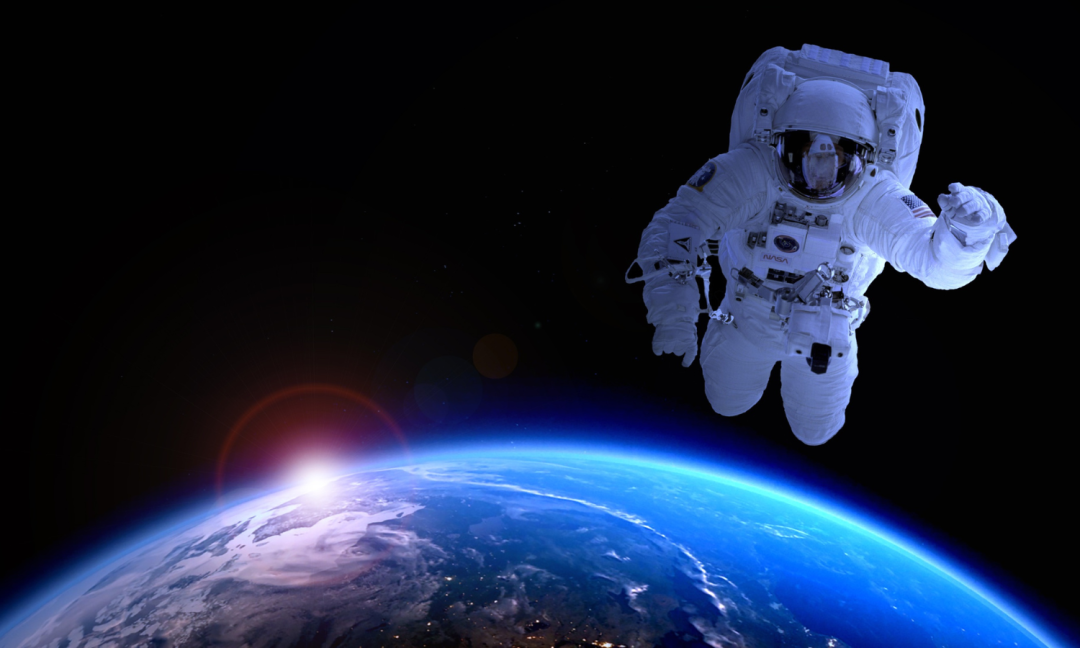
In orbit, astronauts do not simply float—they adapt. Their spines stretch. Their faces swell. Their bones lose density. Their hearts change. Their immune systems behave differently. Their brains rewire. The human body, so stable and familiar on Earth, becomes something slightly altered, something in transition.
Yet these changes are not random. They are precise responses to physics. Microgravity, radiation exposure, confinement, altered day-night cycles—each exerts measurable effects on physiology. Scientists study these transformations carefully, not only to protect astronauts on long missions, but also to understand the deeper relationship between biology and gravity itself.
The story of the human body in space is not just about strange symptoms or scientific curiosity. It is about resilience. It is about how a species evolved for one planet can temporarily survive beyond it. It is about how fragile and adaptable we truly are.
As humanity prepares for longer missions—to the Moon, to Mars, perhaps someday beyond—understanding these bizarre bodily changes is no longer optional. It is essential.
1. Your Height Increases Almost Overnight
One of the first surprises astronauts report after reaching orbit is that they feel taller. It sounds like a joke, but it is a measurable, physical reality. In microgravity, the spine is no longer compressed by the constant downward pull of Earth’s gravity. On Earth, gravity gently squeezes the cartilage discs between your vertebrae every moment of your life. In space, that pressure vanishes.
Freed from compression, the spinal discs expand. The spine elongates. Astronauts can grow up to several centimeters taller during long missions. The change happens quickly—sometimes within the first day or two.
This stretching is not entirely comfortable. Many astronauts experience back pain during the first days in orbit as their muscles adjust to the new posture and spinal configuration. The body has evolved for life under gravity. When that force disappears, even something as simple as standing straight becomes biologically unfamiliar.
When astronauts return to Earth, gravity resumes its steady compression. The spine gradually returns to its original length. The extra height vanishes. It is as if space briefly grants you a borrowed body—longer, lighter, subtly transformed.
2. Your Face Swells and Your Legs Shrink
On Earth, gravity constantly pulls bodily fluids downward. Blood and other fluids tend to pool slightly in the lower extremities. In space, there is no “down.” Without gravity guiding fluid distribution, bodily fluids shift toward the upper body and head.
Astronauts often develop what is informally called “puffy face” and “bird legs.” Their faces appear fuller, their sinuses feel congested, and their legs look thinner than usual. The fluid redistribution can also create a sensation similar to having a head cold.
This shift is more than cosmetic. The increased fluid in the head raises pressure inside the skull and affects the eyes and brain. Researchers continue to study how long-term fluid shifts influence astronaut health, especially during extended missions.
The human body evolved over millions of years under the steady pull of gravity. Remove that force, and even the flow of blood rewrites itself.
3. Your Muscles Begin to Weaken Rapidly
On Earth, every movement is a small act of resistance against gravity. Standing, walking, even sitting upright requires muscles to work continuously. In space, microgravity removes that resistance. Objects float. Bodies drift. Muscles no longer need to support weight in the same way.
As a result, muscle atrophy begins quickly. Muscles, especially those in the legs and back that normally fight gravity, lose mass and strength. Without countermeasures, this weakening can become severe during long missions.
To combat this, astronauts exercise rigorously every day using specially designed equipment. Resistance machines, stationary bicycles, and treadmills with harnesses help simulate the effects of gravity. Exercise is not optional; it is a medical necessity.
The lesson is stark: muscles exist to meet demands. Remove the demand, and the body conserves energy by reducing the tissue.
4. Your Bones Lose Density
Bones are living tissues that constantly remodel themselves. On Earth, the stress of supporting body weight stimulates bone formation. In microgravity, that mechanical stress disappears.
As a result, astronauts experience bone density loss, particularly in weight-bearing bones such as the hips and legs. The process resembles accelerated osteoporosis. Calcium leaches from bones into the bloodstream, and if not carefully managed, this can increase the risk of kidney stones.
Exercise and nutritional strategies help reduce bone loss, but they do not eliminate it entirely. Long-duration spaceflight presents ongoing challenges for skeletal health.
The silent strength of bone, built over a lifetime on Earth, begins to fade in the absence of gravity’s pull.
5. Your Heart Changes Shape
The heart is a muscle, and like other muscles, it adapts to its environment. On Earth, the heart must pump blood upward against gravity. In microgravity, that workload decreases.
Over time, the heart can become slightly more spherical and may lose some muscle mass. Because fluids shift toward the upper body, the cardiovascular system initially responds as if there is too much blood volume. The body compensates by reducing total blood plasma volume.
Upon returning to Earth, astronauts sometimes experience dizziness or difficulty standing, a condition known as orthostatic intolerance. Their cardiovascular systems must readjust to gravity.
The heart, which tirelessly beats from before birth until death, must relearn its rhythm under new cosmic rules.
6. Your Vision Can Blur
One of the more concerning discoveries of long-term spaceflight is that some astronauts develop changes in vision. The fluid shift toward the head increases pressure within the skull, which can affect the optic nerve and alter the shape of the eyeball.
This condition, known as spaceflight-associated neuro-ocular syndrome, can cause blurred vision and structural changes in the eye. Some changes improve after returning to Earth, but others may persist.
The exact mechanisms are still being studied. It is a reminder that even the act of seeing—so fundamental to our experience—depends delicately on gravitational balance.
7. Your Immune System Behaves Differently
The immune system does not remain unchanged in space. Research has shown that certain aspects of immune function can become altered during spaceflight. Some immune cells may not respond as robustly as they do on Earth.
At the same time, dormant viruses already present in the body, such as certain herpes viruses, have been observed to reactivate in some astronauts during missions. Stress, radiation exposure, and microgravity likely contribute to these changes.
Understanding immune alterations is critical for long-duration missions, where medical support is limited. In space, even the invisible defenses inside you operate under unfamiliar conditions.
8. Your Sense of Taste and Smell Shifts
Many astronauts report that food tastes bland in orbit. The fluid shift toward the head can cause nasal congestion, reducing the sense of smell. Because smell contributes significantly to taste perception, flavors seem muted.
As a result, astronauts often prefer spicier foods. Hot sauce and strong seasonings become popular choices on space missions.
Eating in space is not only about nutrition; it is also about morale. The simple pleasure of flavor becomes surprisingly precious when the senses are subtly altered.
9. Your Balance System Gets Confused
Deep inside your inner ear lies the vestibular system, responsible for balance and spatial orientation. On Earth, it constantly interprets signals influenced by gravity. In microgravity, those signals no longer align with expectation.
During the first days in orbit, astronauts may experience space motion sickness. Nausea, disorientation, and dizziness can occur as the brain tries to reconcile conflicting sensory information.
Eventually, the brain adapts. It recalibrates to a world without up or down. But when astronauts return to Earth, the process reverses. Gravity once again becomes a powerful reference point, and balance must be relearned.
Orientation, something we rarely think about, is a delicate dance between physics and perception.
10. Your DNA Faces Increased Radiation Exposure
Beyond Earth’s protective atmosphere and magnetic field, astronauts are exposed to higher levels of cosmic radiation. This radiation can damage DNA, increasing the risk of cancer and other health effects.
Spacecraft shielding and mission planning reduce exposure, but it cannot be eliminated entirely. Long-term missions, such as journeys to Mars, pose particular challenges.
Radiation interacts with cells at the molecular level. It reminds us that space is not an empty void but an energetic environment filled with high-speed particles from the Sun and distant cosmic events.
11. Your Sleep Cycle Becomes Disrupted
In low Earth orbit, astronauts aboard spacecraft like the International Space Station experience multiple sunrises and sunsets each day due to rapid orbital motion. The frequent light-dark transitions can disrupt circadian rhythms.
Artificial lighting schedules help regulate sleep, but astronauts often report sleep disturbances. Stress, workload, and the unusual environment contribute as well.
Sleep is essential for cognitive performance and emotional well-being. In space, maintaining healthy sleep becomes an active process rather than a natural rhythm guided by Earth’s 24-hour cycle.
12. Your Brain Rewires Itself
Neuroscientific studies have revealed that the brain adapts structurally and functionally to microgravity. Changes have been observed in areas related to motor control and sensory integration.
The brain is remarkably plastic. It reorganizes neural pathways to accommodate floating movement and altered sensory input. This adaptability allows astronauts to function efficiently in orbit.
Upon return to Earth, the brain must once again readjust. Neural plasticity, the capacity to change, is both a gift and a challenge in space exploration.
13. Your Red Blood Cell Count Drops
Shortly after entering space, astronauts experience a reduction in red blood cell mass, a phenomenon sometimes referred to as space anemia. The body appears to destroy more red blood cells than usual during the initial adaptation to microgravity.
Although levels often stabilize, the change underscores how even oxygen transport adapts to a new gravitational context.
Blood, the river of life within us, flows differently when gravity no longer shapes its course.
14. Your Skin Becomes More Sensitive
Some astronauts report increased skin sensitivity or irritation during space missions. The closed environment, recycled air, and microgravity-related changes in fluid distribution may contribute.
Minor injuries can behave differently in microgravity, and skin may take time to adjust. Even the barrier that separates you from the world feels the shift from Earth to orbit.
15. Your Psychological Experience Transforms
Beyond the physical, space changes how humans feel and think. Many astronauts describe a profound emotional response when viewing Earth from orbit, often called the overview effect. Seeing the planet as a fragile, borderless sphere suspended in darkness can reshape perspectives.
Isolation, confinement, and distance from family can also create psychological stress. Space agencies carefully select and train astronauts to handle these challenges, and ongoing support is essential.
The human body does not travel to space alone; the human mind travels with it. And the mind, confronted with the vastness of the cosmos, often returns forever changed.
In space, the body reveals how deeply it is shaped by gravity. Muscles weaken, bones thin, fluids shift, senses adapt, cells respond to radiation. Every system, from spine to immune cell, feels the absence of Earth’s pull. Yet within these changes lies something extraordinary: adaptability. The human body, forged on a single planet, can adjust—imperfectly, courageously—to an alien environment. Space does not merely test our technology. It tests our biology. And in doing so, it reveals both our fragility and our resilience in the vast, silent universe beyond our home world.