On Earth, rain is a familiar comfort. It taps against rooftops, gathers in puddles, nourishes forests, and cools hot summer air. It is water falling from clouds, shaped by temperature and pressure in ways we understand intimately. But beyond our gentle blue world, the meaning of rain transforms into something almost mythic. In the vast and varied atmospheres of distant planets, precipitation can take forms that seem torn from fantasy. There are worlds where droplets of molten glass may whip sideways in supersonic winds. There are icy giants where diamonds could crystallize deep in turbulent clouds and descend like glittering hail.
Physics does not forbid such storms. In fact, under extreme temperatures and crushing pressures, chemistry demands them. When carbon-rich compounds are squeezed and heated beyond earthly imagination, they can rearrange into crystalline lattices of diamond. When silicate minerals vaporize in blistering heat, they can condense into droplets of glass.
These worlds are not poetic metaphors. They are real planets discovered orbiting distant stars, or icy giants within our own Solar System. Their atmospheres, studied through spectroscopy and high-pressure laboratory experiments, suggest that rain may fall not as water—but as gemstones and shards.
Here are seven planets where it may literally rain diamonds or glass, worlds that redefine what a storm can be.
1. Neptune: Diamond Rain in the Ice Giant’s Depths
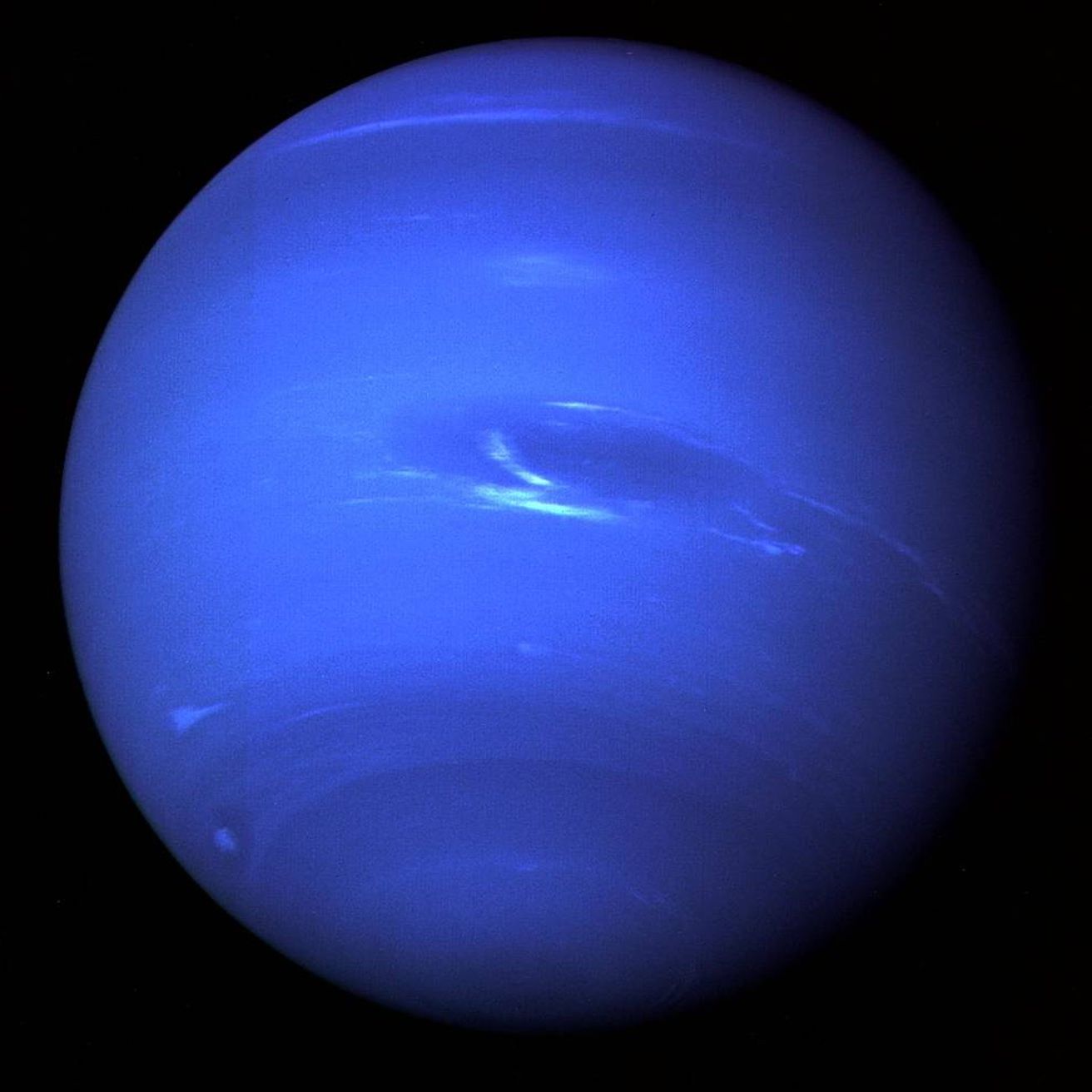
Far from the Sun, beyond the orbit of Uranus, drifts the deep blue world of Neptune. Known for its violent winds and methane-rich atmosphere, Neptune is often called an ice giant. But beneath its serene color lies a realm of unimaginable pressure.
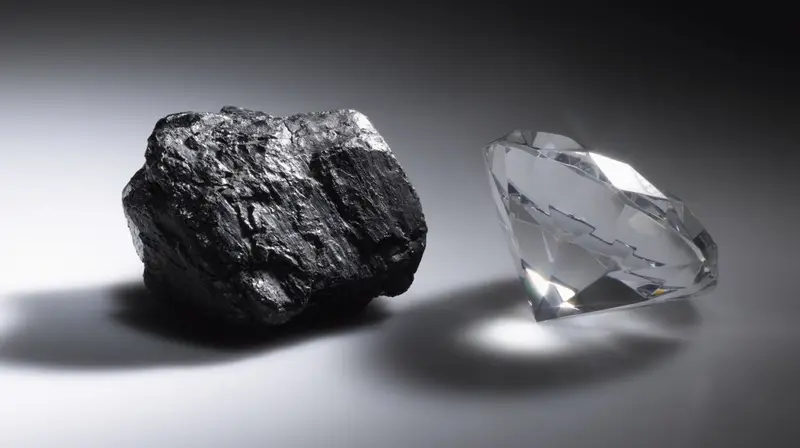
Neptune’s atmosphere contains hydrogen, helium, and methane. Methane is a carbon-bearing molecule, and under ordinary conditions it behaves quietly. But deep inside Neptune, pressures climb to millions of times Earth’s atmospheric pressure. Temperatures soar to thousands of degrees Celsius. Under these extreme conditions, laboratory experiments suggest that methane molecules can break apart. The hydrogen separates, and the carbon atoms are compressed into crystalline structures—diamonds.
In high-pressure experiments on Earth, scientists have recreated conditions similar to those inside Neptune using shock compression techniques. These experiments indicate that carbon can indeed form diamond under such intense pressure and temperature combinations. The diamonds would not form near the visible cloud tops, but much deeper—perhaps thousands of kilometers below the surface.
The idea is breathtaking. Within Neptune’s interior, diamonds may form and fall like hailstones through superheated fluid layers. Over time, they could sink toward the core, possibly accumulating into vast diamond-rich regions.
The physics behind this process is rooted in thermodynamics and phase transitions. When carbon atoms are forced together at immense pressure, they rearrange into diamond’s tightly bonded lattice because that structure becomes energetically favorable. Neptune’s internal environment provides precisely such conditions.
Though no spacecraft has directly observed diamond rain inside Neptune, the theoretical and experimental evidence strongly supports the possibility. In the darkness beneath its azure clouds, a glittering storm may be eternally underway.
2. Uranus: A Twin World of Diamond Storms
Neptune’s neighbor, Uranus, shares many similarities. It too is an ice giant, composed largely of hydrogen, helium, water, ammonia, and methane. Like Neptune, Uranus likely harbors extreme pressures and temperatures deep within its mantle.
Uranus is unusual for its extreme axial tilt, rotating almost on its side. But beneath its strange orientation lies an interior structure capable of dramatic chemistry. Models of Uranus’s interior indicate that pressures reach levels sufficient to dissociate methane molecules.
Laboratory simulations of Uranus-like conditions have shown that carbon from methane can crystallize into diamond when subjected to shock compression. These experiments provide strong support for the diamond rain hypothesis on Uranus as well.
Imagine descending into Uranus’s atmosphere. You would first encounter layers of hydrogen and helium, then deeper methane-rich regions. As you plunge further, pressure builds relentlessly. Eventually, methane breaks apart. Carbon atoms are squeezed into diamond form. These diamonds, denser than surrounding materials, would begin to fall.
Unlike Earth’s gentle rainfall, this precipitation would occur in a superheated, high-pressure fluid environment. Diamonds might grow as they fall, perhaps reaching significant sizes before sinking toward the planet’s core.
While direct observation remains beyond current technological reach, planetary models and laboratory physics strongly suggest that Uranus may host diamond storms deep within its interior.
3. 55 Cancri e: A Carbon-Rich Super-Earth
Orbiting a star about 40 light-years away lies a super-Earth known as 55 Cancri e. This exoplanet is roughly twice Earth’s size and far more massive. It orbits extremely close to its parent star, completing a full orbit in less than a day.
Temperatures on its dayside are scorching—hot enough to melt rock. Spectroscopic observations suggest that the planet may be rich in carbon relative to oxygen, though the exact composition remains debated. If carbon is indeed abundant in its interior, high pressures within the planet could support diamond formation.
Unlike Neptune and Uranus, where diamond rain may occur within fluid mantles, 55 Cancri e could contain vast diamond layers as part of its solid interior structure. Some theoretical models have proposed that a significant fraction of its mass could consist of diamond if carbon dominates its composition.
On such a world, carbon under immense pressure would naturally adopt the diamond structure. The physics is straightforward: diamond is a stable high-pressure phase of carbon. If the planet formed from carbon-rich material and experienced sufficient pressure during its formation, large-scale diamond formation would be inevitable.
Although uncertainties remain regarding its exact chemical makeup, 55 Cancri e remains one of the most intriguing candidates for a diamond-rich planet. It may not rain diamonds in its atmosphere, but its interior could glitter beyond imagination.
4. HD 189733 b: The World of Glass Rain
If Neptune whispers of hidden diamonds, HD 189733 b screams of glass storms. This exoplanet, located about 64 light-years away, is a “hot Jupiter”—a gas giant orbiting extremely close to its star.
HD 189733 b has captured scientific attention because of its deep blue appearance, reminiscent of Earth. But this is where the similarity ends. Its blue color likely arises from silicate particles in its atmosphere, not from oceans.
Temperatures on this planet exceed 1,000 degrees Celsius. Silicate materials, the same compounds that make up sand and glass on Earth, can vaporize under such intense heat. In the upper atmosphere of HD 189733 b, these silicates may condense into tiny glass particles.
Observations indicate that winds on this planet may reach thousands of kilometers per hour. If silicate particles condense into droplets, they would not fall gently. They would be hurled sideways in horizontal storms at supersonic speeds.
In effect, it may rain molten glass—sideways.
The process is grounded in condensation physics. Just as water vapor condenses into raindrops on Earth when cooled, vaporized silicates can condense when temperatures and pressures shift. In HD 189733 b’s extreme atmosphere, this cycle could create glass precipitation.
The idea of glass rain is not fantasy. It is a natural consequence of thermodynamics and atmospheric chemistry under extreme conditions.
5. WASP-121b: A World of Metal and Mineral Clouds
WASP-121b is another hot Jupiter, orbiting so close to its star that its atmosphere is heated to extreme temperatures. Observations reveal that heavy elements such as iron and magnesium exist in vapor form in its upper atmosphere.
On the planet’s dayside, temperatures are hot enough to vaporize metals. But as material circulates to the cooler nightside, temperatures drop enough for condensation to occur. In principle, iron and mineral compounds could condense and fall as precipitation.
While not purely glass, the mineral condensation cycle suggests the possibility of exotic rains composed of metal-rich droplets. Under intense heat, silicates and metals behave much like water does on Earth—evaporating, condensing, and precipitating.
The atmospheric circulation patterns of WASP-121b create a dynamic environment where vaporized rock can travel, cool, and rain down. These mineral rains would likely occur under extreme wind conditions, producing storms of staggering intensity.
Physics predicts such cycles naturally when temperature gradients are large and materials can exist in vapor form at high temperatures.
6. HAT-P-7b: Sapphire and Ruby Possibilities
HAT-P-7b is another intensely heated gas giant. Observations have detected evidence of corundum-forming materials—compounds that on Earth form sapphires and rubies when aluminum oxide crystallizes under specific conditions.
If aluminum and oxygen combine in high-temperature clouds, and if condensation occurs, corundum particles could theoretically form. These would not be gemstone-quality crystals in the decorative sense, but they would be chemically identical to sapphire and ruby material.
In hot Jupiter atmospheres, mineral condensation is governed by equilibrium chemistry. As vaporized materials cool, they transition into solid or liquid phases depending on pressure and temperature. Aluminum oxide is a plausible condensate in certain temperature regimes.
The thought of ruby and sapphire rains may seem extravagant, but it arises directly from chemical physics. Under extreme conditions, minerals that form gemstones on Earth can form naturally in alien skies.
7. Jupiter: Diamond Hail in Our Own Backyard
Even within our Solar System, beyond Neptune and Uranus, speculation extends to Jupiter. Laboratory experiments suggest that methane under shock conditions can produce diamond formation. Jupiter’s atmosphere also contains methane, though in smaller proportions than Neptune or Uranus.
Some models propose that lightning storms in Jupiter’s atmosphere could compress carbon-rich molecules sufficiently to produce tiny diamond particles. These would then fall deeper into the atmosphere, possibly melting into liquid carbon at extreme depths.
While the diamond rain hypothesis is strongest for Neptune and Uranus due to their composition, the fundamental physics applies to Jupiter as well. High pressures and carbon chemistry create the possibility of crystalline carbon formation.
In Jupiter’s vast, turbulent interior, carbon may undergo dramatic transformations. Though direct confirmation remains elusive, experimental evidence keeps the possibility scientifically grounded.
The Physics Behind Diamond and Glass Rain
What makes these extraordinary rains possible is not magic, but phase transitions under extreme conditions. Matter changes state depending on temperature and pressure. Water becomes ice or vapor. Carbon becomes graphite or diamond. Silicates melt, vaporize, and condense.
In planetary atmospheres and interiors, pressures can exceed millions of atmospheres. Temperatures can reach thousands of degrees. Under such conditions, familiar materials behave in unfamiliar ways.
Diamond formation requires high pressure because its atomic structure is denser than graphite. When carbon atoms are forced together, diamond becomes the stable form. Glass rain arises when silicate vapor condenses into liquid droplets at high temperature.
These processes are governed by thermodynamics, quantum mechanics, and material science. They are predictable consequences of known physical laws applied to extreme environments.
A Universe of Astonishing Weather
The idea that it rains diamonds or glass challenges our intuition because we are accustomed to Earth’s mild chemistry. But Earth is only one example among countless planetary possibilities.
Exoplanet discoveries have revealed enormous diversity in planetary types—hot Jupiters skimming their stars, super-Earths with crushing gravity, ice giants rich in volatile compounds. Each world follows the same physical laws but expresses them differently.
Storms of glass and hail of diamonds are not violations of physics. They are physics in its most dramatic form.
Wonder and Reality
When we imagine diamond rain, it is tempting to think of treasure falling from the sky. But on these worlds, such storms would be deadly, violent, and unimaginably hostile. The beauty lies not in human value, but in cosmic possibility.
Physics teaches us that the universe is not constrained by familiarity. It operates according to universal principles that yield astonishing diversity. The same laws that govern raindrops on Earth govern gemstone storms light-years away.
In studying these planets, we glimpse the creative power of matter under pressure. We see that even the most extravagant phenomena can arise naturally when conditions demand them.
The sky, it turns out, can rain far more than water. And somewhere in the depths of distant worlds, diamonds may still be falling through alien storms, silent and eternal in the darkness.