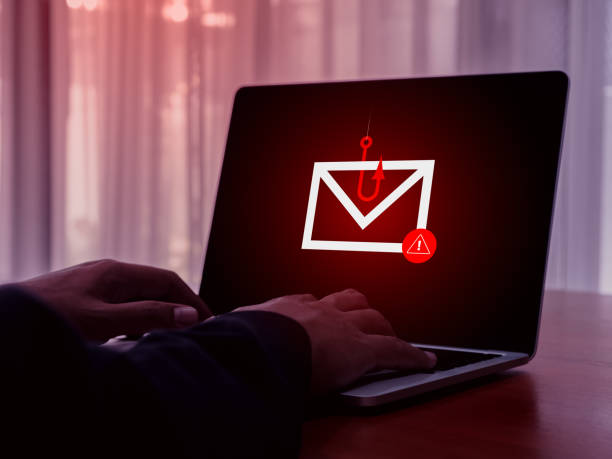
Phishing is one of the most pervasive and damaging forms of cybercrime in the modern digital landscape. It operates through deception, exploiting human psychology rather than technological flaws. While cybersecurity systems have become more advanced, phishing continues to succeed because it targets the weakest link in any security system—the human being. To understand how phishing truly works, it is necessary to explore its technical mechanisms, psychological foundations, and evolving strategies. From traditional email scams to sophisticated, AI-assisted attacks, phishing has become a complex, multi-layered threat that requires equally sophisticated defense and awareness.
The Core Concept of Phishing
Phishing is a social engineering attack designed to trick individuals into revealing sensitive information or performing actions that compromise security. The term originates from the analogy of “fishing,” where attackers “bait” victims with a deceptive lure in hopes that someone will “bite.” Instead of hooks and worms, the bait in phishing attacks consists of fraudulent messages, links, and websites that mimic legitimate sources.
At its core, phishing relies on manipulation rather than force. Attackers impersonate trusted entities—such as banks, online retailers, social media platforms, or even colleagues—to persuade victims to provide confidential data like passwords, credit card numbers, or access tokens. The communication appears authentic, often borrowing branding, logos, and language identical to legitimate institutions. Once the target interacts with the malicious content, the attacker captures the data or deploys malware to infiltrate the victim’s system.
The simplicity of the concept belies its effectiveness. Every major organization, from government agencies to private corporations, faces phishing attempts daily. Even trained professionals sometimes fall victim to well-crafted scams. The question, then, is not whether phishing is dangerous, but how exactly it manages to deceive so many people so consistently.
The Psychological Foundation of Phishing
Phishing works because it preys on human cognitive biases. Humans are inherently trusting creatures; we rely on shortcuts, emotions, and assumptions to navigate daily life. Phishers exploit these tendencies through psychological triggers such as authority, urgency, fear, curiosity, and reward.
The principle of authority is one of the strongest. When a message appears to come from a figure of authority—such as a bank officer, a CEO, or a government agency—recipients are less likely to question it. An email signed “IT Security Department” or “IRS Notification” invokes automatic compliance. Similarly, the sense of urgency pressures victims into acting quickly. A subject line like “Your Account Will Be Suspended in 24 Hours” bypasses rational analysis, prompting immediate response without verification.
Fear is another powerful motivator. Many phishing campaigns rely on threats of financial loss, legal action, or data breaches. Others leverage curiosity or greed, promising unexpected rewards such as refunds, prizes, or job offers. These emotional cues create cognitive dissonance—the tension between rational thinking and emotional impulse—which phishers exploit to manipulate behavior.
This psychological manipulation explains why phishing remains effective despite widespread awareness. Even when individuals recognize the general concept of phishing, emotional and situational pressure can override caution. Attackers understand this deeply and design campaigns that align with human tendencies, exploiting both individual emotions and organizational routines.
The Technical Anatomy of a Phishing Attack
To understand how phishing truly functions, one must break down its operational stages. A phishing attack is not a single event but a process that includes planning, delivery, exploitation, and execution. Each phase involves both social engineering and technical tactics that enhance credibility and increase success rates.
The first step is reconnaissance. Before launching an attack, phishers gather information about their targets. This may include scraping social media profiles, corporate directories, or breached databases to identify potential victims and understand their behavior. Such information allows attackers to craft personalized messages, increasing the likelihood of engagement.
Once reconnaissance is complete, attackers move to weaponization and delivery. They create deceptive messages—usually emails, though sometimes SMS, voice calls, or social media messages—that contain malicious links or attachments. The content is engineered to look authentic, often using spoofed email addresses, cloned websites, or even legitimate domains compromised through vulnerabilities.
The exploitation phase begins when the victim interacts with the phishing lure. Clicking a link may lead to a fake website that captures login credentials, while downloading an attachment could install malware that steals information silently. Advanced phishing kits automate these steps, instantly forwarding captured credentials to the attacker.
Finally, in the execution phase, attackers use the harvested data for direct exploitation or sell it on dark web markets. Stolen credentials can grant access to financial accounts, corporate networks, or cloud services. In many cases, phishing serves as the initial entry point for larger attacks, such as ransomware or business email compromise.
The Role of Email Spoofing and Domain Forgery
Email remains the most common vector for phishing because it provides direct, personalized access to users. Attackers exploit weaknesses in email protocols to disguise their identity. Email spoofing involves forging the “From” field so that messages appear to come from trusted domains. While modern systems use authentication methods like SPF, DKIM, and DMARC to verify senders, many organizations still fail to configure these correctly, leaving gaps that attackers exploit.
Domain forgery extends this deception. Attackers register domains that look visually similar to legitimate ones, a technique known as typosquatting. For example, a user might receive an email from “[email protected]” instead of “[email protected].” To the untrained eye, such differences are nearly invisible. Phishers also use subdomain tricks, where a URL like “paypal.com.secure-login.net” misleads users into believing it belongs to PayPal, when in fact the real domain is “secure-login.net.”
Some sophisticated campaigns even compromise legitimate email servers or hijack real corporate accounts, sending messages from authentic infrastructure. These “account takeover” attacks are nearly impossible to distinguish from legitimate communication, making them particularly dangerous.
Fake Websites and Credential Harvesting
Phishing websites are the digital traps that complete the deception. When a victim clicks a phishing link, they are redirected to a fake website designed to mimic a legitimate service. These clones replicate the design, logos, and content of real platforms with such precision that only subtle differences—such as the domain name or SSL certificate—betray their falsity.
Modern phishing kits make creating such sites trivial. A single toolkit can clone a website, capture credentials, and forward them to attackers in real time. Many of these kits include dashboard interfaces, allowing criminals with minimal technical skill to manage large-scale phishing operations.
When a victim enters their credentials—be it email, bank login, or social media password—the site captures the input and sends it to the attacker’s command-and-control server. In some cases, phishing pages act as proxies, relaying user data directly to the legitimate service while recording it. This allows the fake site to display a successful login page, leaving the victim unaware of the breach.
SSL certificates, once a hallmark of secure websites, no longer guarantee safety. Attackers now obtain free certificates through services like Let’s Encrypt, giving their fraudulent domains the appearance of legitimacy. Thus, the presence of “https://” and a padlock icon in the browser is no longer a sufficient indicator of trust.
The Evolution of Phishing Vectors
While email remains dominant, phishing has diversified across multiple channels. Attackers now exploit SMS (smishing), phone calls (vishing), instant messaging, and even QR codes (quishing). Each medium offers unique advantages depending on the target audience and context.
Smishing leverages text messages to deliver malicious links or prompts. Messages may claim to be from delivery services, financial institutions, or government agencies, urging recipients to click a link or call a number. Because SMS lacks advanced filtering and identity verification, smishing often bypasses traditional security measures.
Vishing, or voice phishing, exploits the credibility of human speech. Attackers pose as bank representatives, customer support agents, or even executives to extract information directly over the phone. Advances in voice synthesis and AI-generated speech have made vishing more convincing, allowing criminals to mimic familiar voices with startling accuracy.
Social media platforms have become fertile ground for phishing. Attackers impersonate brands or individuals, distributing malicious links through posts, comments, or direct messages. Business platforms like LinkedIn are particularly attractive for spear-phishing—targeted attacks on professionals where trust and reputation are easily manipulated.
Spear-Phishing and Targeted Attacks
Unlike general phishing campaigns that cast a wide net, spear-phishing targets specific individuals or organizations. Attackers conduct detailed reconnaissance, learning about their victims’ roles, relationships, and routines. The resulting messages are highly customized, often referencing real projects, colleagues, or internal terminology.
Spear-phishing is particularly dangerous in corporate environments because it can bypass automated defenses. A message referencing a real meeting or project appears authentic to the recipient. Attackers may impersonate high-ranking executives in what is known as a “whaling” attack, requesting urgent financial transactions or sensitive documents.
One famous example involved a multinational corporation losing millions of dollars after receiving forged payment requests that appeared to come from their CEO. Because the messages matched the CEO’s communication style and timing, the finance team complied without question. Such incidents demonstrate how phishing leverages both social engineering and contextual intelligence to achieve devastating results.
Phishing-as-a-Service and the Underground Economy
Phishing has evolved into a fully developed underground economy. Cybercriminals now offer “Phishing-as-a-Service” (PhaaS), where clients can purchase ready-to-deploy phishing kits, email lists, hosting infrastructure, and even technical support. These services operate much like legitimate software businesses, complete with subscription models and customer feedback systems.
A typical PhaaS package includes pre-made templates for banks, social networks, or corporate portals, along with backend scripts to collect and manage stolen credentials. Some providers even offer dashboard interfaces that track conversion rates, similar to marketing analytics tools. This commodification of phishing lowers the barrier to entry, allowing even low-skilled attackers to launch convincing campaigns.
Dark web marketplaces facilitate the trade of stolen data, turning harvested credentials into profit. Email accounts, social media logins, and financial data are sold in bulk, often bundled by region or industry. These marketplaces also host reputation systems, ensuring trust between criminals and sustaining the illicit economy that fuels phishing worldwide.
Advanced Phishing Techniques
Phishing tactics continue to evolve with technology. Attackers now employ artificial intelligence to craft more persuasive content. Machine learning models can analyze legitimate emails to mimic writing styles, reducing the likelihood of detection. Generative AI tools can produce grammatically perfect, contextually relevant messages at scale, erasing the language errors that once betrayed phishing attempts.
Another emerging tactic is deepfake-assisted phishing. Attackers use synthetic media to impersonate real individuals in video or audio calls. In one high-profile case, criminals used AI-generated voice technology to impersonate a CEO and convince a subordinate to transfer large sums of money. As voice and video synthesis become more realistic, distinguishing real communication from fake becomes increasingly difficult.
Phishing also intersects with credential-stuffing attacks, where stolen usernames and passwords from previous breaches are reused to access other accounts. Since many users reuse passwords, a successful phishing campaign can yield access to multiple unrelated systems. Attackers then automate login attempts across platforms, maximizing exploitation from a single breach.
The Lifecycle of a Successful Phish
A complete phishing operation can unfold in a matter of minutes or extend over weeks, depending on sophistication. After initial compromise, attackers often move laterally within systems, escalating privileges and planting backdoors. They may monitor email traffic silently, harvesting intelligence for future exploitation.
In corporate breaches, attackers often exfiltrate large volumes of data, then cover their tracks to delay detection. This persistence allows them to conduct secondary attacks or sell access to other criminal groups. A single successful phishing email can therefore trigger a chain reaction leading to ransomware deployment, espionage, or long-term infiltration.
The aftermath of a phishing attack can be devastating. Victims face identity theft, financial loss, and reputational damage. For organizations, the consequences include data breaches, regulatory penalties, and erosion of customer trust. The financial impact is often compounded by indirect costs such as incident response, system remediation, and legal liabilities.
Why Phishing Continues to Succeed
Despite decades of awareness campaigns and security advancements, phishing remains remarkably effective. The main reason lies in its adaptability. Attackers constantly evolve their methods to exploit new technologies and human vulnerabilities. As organizations improve defenses, phishers adjust their strategies, maintaining an ongoing arms race between attackers and defenders.
Another factor is cognitive overload. In a world flooded with digital communication, users are conditioned to process messages quickly. This habitual speed reduces scrutiny, allowing phishing messages to slip through. Moreover, organizational hierarchies and power dynamics can discourage employees from questioning requests that appear to come from superiors.
The global nature of the internet also complicates enforcement. Phishers can operate from jurisdictions with weak cybercrime laws, making prosecution difficult. The anonymity of cryptocurrencies facilitates untraceable transactions, sustaining the economic ecosystem behind phishing operations.
Defensive Measures and Human Awareness
While technology can filter and block many phishing attempts, no system is foolproof. Human awareness remains the most critical defense. Training programs that teach employees to recognize phishing indicators—such as suspicious URLs, unexpected attachments, and emotional manipulation—significantly reduce risk. However, such training must be continuous and adaptive, reflecting the latest attack trends.
Technical defenses complement education. Email authentication protocols like SPF, DKIM, and DMARC verify sender identity and prevent spoofing. Anti-phishing gateways use machine learning to detect suspicious patterns in emails, while browser-based warnings alert users to potentially fraudulent websites. Multi-factor authentication (MFA) mitigates damage by requiring additional verification even if credentials are compromised.
Nevertheless, attackers continue to innovate around these defenses. They use MFA fatigue attacks, where repeated login prompts trick users into approving unauthorized access. As defenses evolve, the need for layered security—combining technology, policy, and awareness—becomes ever more critical.
Phishing in the Age of Artificial Intelligence
The intersection of phishing and artificial intelligence marks a new era of cyber deception. AI enables automation, personalization, and scale previously unattainable. Attackers can use AI to analyze targets’ communication patterns, crafting messages that blend seamlessly into legitimate workflows. They can even automate reconnaissance, identifying high-value individuals based on online activity.
Conversely, AI also strengthens defense. Machine learning models can detect anomalies in communication patterns, identifying phishing attempts before they reach users. Natural language processing systems analyze semantics and tone, flagging deceptive or manipulative content. The same technology that empowers attackers can thus serve as a powerful defensive tool, depending on who wields it.
The challenge lies in the balance of accessibility. As generative AI tools become mainstream, both sides of the cybersecurity battle gain new capabilities. The future of phishing defense will depend on continuous adaptation, global cooperation, and ethical use of technology.
The Broader Impact of Phishing on Society
Phishing is more than a technical threat—it is a social phenomenon that erodes trust in digital communication. Every successful attack undermines confidence in online transactions, emails, and even interpersonal communication. As a result, organizations must invest not only in cybersecurity infrastructure but also in rebuilding user trust.
The societal cost extends to the economy and governance. Large-scale phishing campaigns have been linked to financial fraud, political manipulation, and espionage. Nation-state actors use phishing as an entry point for cyber operations targeting critical infrastructure or democratic institutions. The low cost and high success rate make phishing a preferred weapon in both criminal and geopolitical arenas.
Phishing also amplifies inequality in digital security. Individuals and small businesses often lack the resources to defend themselves effectively, making them prime targets. Education and access to security tools are therefore essential components of a resilient digital society.
The Future of Phishing and Digital Deception
As technology evolves, so too will phishing. The integration of augmented reality, virtual environments, and the Internet of Things introduces new attack surfaces. Imagine phishing in immersive environments, where fake avatars impersonate real individuals, or fraudulent IoT notifications trick users into revealing access credentials.
Future phishing campaigns may become indistinguishable from legitimate communication, driven by real-time AI interaction and adaptive language models. Defending against such threats will require continuous innovation, cross-industry collaboration, and ethical governance of emerging technologies.
Researchers are exploring cognitive-resilient design—interfaces and workflows that reduce susceptibility to manipulation by aligning with human cognitive patterns. Such designs could help users detect anomalies instinctively, providing psychological defense alongside technical safeguards.
Conclusion
Phishing is not merely a technical problem; it is a human one. It exploits trust, emotion, and perception, weaving deception into the very fabric of digital communication. Its power lies in simplicity—the ability to turn belief into vulnerability. Understanding how phishing works means understanding the intersection of psychology, technology, and society.
While tools and protocols can mitigate the risk, lasting protection comes from awareness and vigilance. Every email, link, or request represents a potential decision point between security and compromise. As digital life becomes ever more integrated into personal and professional existence, recognizing the mechanisms of phishing becomes not just a technical skill but a fundamental aspect of digital literacy.
Phishing will continue to evolve, adapting to new technologies and exploiting new weaknesses. Yet the same adaptability that sustains it also empowers defense. Through education, collaboration, and ethical innovation, humanity can outthink deception, preserving the trust upon which the digital world depends.