For all the astonishing achievements of modern astronomy and physics, the universe remains deeply mysterious. Humanity has walked on the Moon, sent spacecraft beyond the edge of the solar system, photographed black holes, and mapped the faint afterglow of the Big Bang. Yet with every discovery comes a humbling realization: the cosmos is far stranger than we ever imagined.
Scientific knowledge grows through observation, experimentation, and theory. But sometimes observations reveal phenomena that existing theories cannot fully explain. These puzzles are not failures of science; they are its greatest opportunities. Each mystery is a doorway to deeper understanding.
Space is filled with such mysteries—observations that challenge our models, objects that behave in unexpected ways, signals that appear without clear origins, and cosmic structures so enormous they defy easy explanation. Scientists work tirelessly to unravel these puzzles, but many remain unresolved.
Below are fifteen fascinating facts about space that continue to perplex researchers and remind us how much there is left to learn about the universe.
1. The Universe Is Mostly Invisible
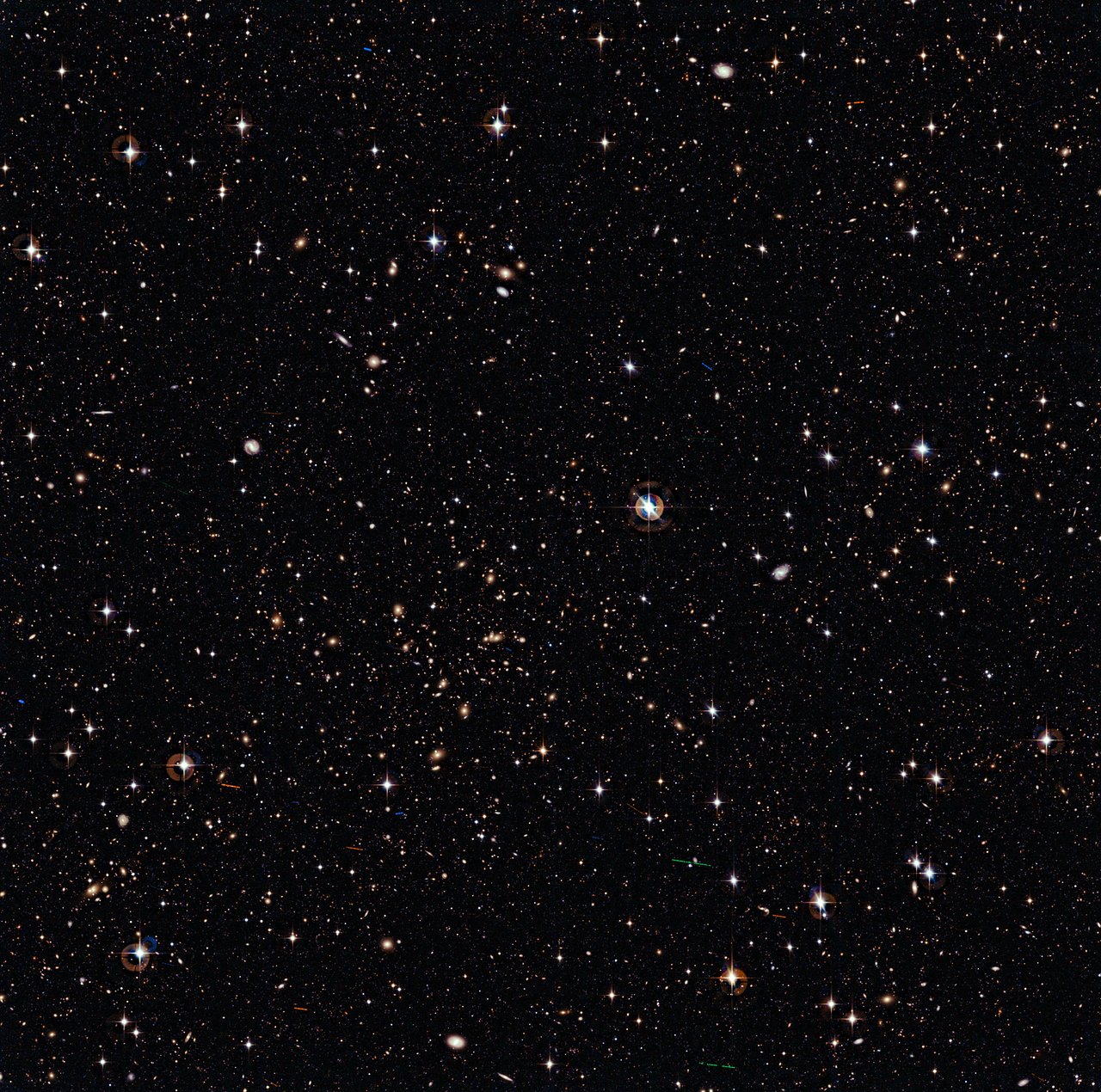
One of the most astonishing discoveries in modern cosmology is that the vast majority of the universe cannot be seen.
When astronomers measure the motion of galaxies and the gravitational behavior of cosmic structures, they find that visible matter—stars, planets, gas, and dust—accounts for only a tiny fraction of the total mass-energy content of the universe. In fact, ordinary matter makes up less than five percent.
The rest is composed of two mysterious components known as dark matter and dark energy. Dark matter seems to provide the gravitational glue that holds galaxies together, while dark energy drives the accelerating expansion of the universe.
Despite decades of research, scientists still do not know what dark matter particles are made of or what dark energy truly represents. The strange truth is that everything we see in the night sky—every star and galaxy—is only a small part of cosmic reality.
2. Fast Radio Bursts Appear Out of Nowhere
In 2007, astronomers discovered a bizarre cosmic signal: a brief but incredibly powerful flash of radio waves lasting only milliseconds. These signals became known as Fast Radio Bursts, or FRBs.
Since then, dozens have been detected from distant galaxies across the universe. Some occur only once, while others repeat irregularly.
What makes FRBs mysterious is their enormous energy. In a fraction of a second, they can release as much energy as the Sun emits in several days.
Scientists suspect they may originate from extreme astrophysical objects such as magnetars—neutron stars with extraordinarily strong magnetic fields—but the exact mechanism remains uncertain. Some FRBs repeat in patterns that challenge existing models.
Each new detection adds data but also deepens the mystery. These fleeting cosmic flashes are like whispers from across the universe, still waiting to be fully understood.
3. The Great Attractor Is Pulling Galaxies Toward It
Deep in the direction of the Centaurus and Norma galaxy clusters lies an enormous gravitational anomaly known as the Great Attractor.
Astronomers discovered that our Milky Way and thousands of nearby galaxies are being pulled toward this region of space at incredible speeds—hundreds of kilometers per second.
The challenge is that the Great Attractor lies behind the dense dust and stars of our own galaxy, making direct observation extremely difficult. While some of its mass appears to come from a massive cluster of galaxies, it may not fully account for the gravitational pull being observed.
The region may be part of an even larger structure called the Laniakea Supercluster, but the exact distribution of mass remains unclear.
Somewhere in that hidden region of space lies a massive gravitational influence that continues to tug entire galaxies toward it.
4. Black Holes Grow Bigger Than Expected
Black holes form when massive stars collapse, but the universe contains black holes far larger than stellar remnants. These supermassive black holes sit at the centers of galaxies and can contain millions or even billions of times the mass of the Sun.
What puzzles scientists is how quickly some of them appear to have formed.
Observations of extremely distant quasars—objects powered by supermassive black holes—show that some already existed less than a billion years after the Big Bang. Growing a black hole to billions of solar masses in such a short cosmic time is difficult to explain with standard models.
Either these black holes formed from unusually massive seeds, or they grew through mechanisms we do not yet fully understand.
Their existence challenges our understanding of how structures evolved in the early universe.
5. The Cosmic Microwave Background Has Strange Patterns
The cosmic microwave background (CMB) is the faint radiation left over from the early universe. It provides a snapshot of the cosmos when it was only about 380,000 years old.
Detailed measurements of the CMB reveal tiny fluctuations in temperature that correspond to the seeds of future galaxies. But some features appear unusual.
One example is the so-called “Cold Spot,” a region significantly cooler than surrounding areas. Another puzzle is the alignment of certain temperature patterns across enormous scales, sometimes referred to as the “axis of evil.”
These anomalies may simply be statistical quirks in the data, but they could also hint at unknown processes in the early universe.
Scientists continue to analyze CMB observations in search of answers.
6. Some Galaxies Exist Without Dark Matter
While dark matter is thought to dominate the mass of most galaxies, astronomers have discovered a few that appear to contain little or none of it.
These galaxies, such as NGC 1052-DF2, behave differently from what standard cosmological models predict. Their stars move as if dark matter is largely absent.
This discovery is surprising because dark matter is believed to play a key role in galaxy formation. Without it, galaxies should struggle to hold themselves together.
These unusual galaxies raise questions about how dark matter interacts with ordinary matter—or whether our understanding of gravity needs revision.
7. The Universe’s Expansion Is Conflicting
Measuring the rate at which the universe expands—known as the Hubble constant—has become one of the biggest puzzles in cosmology.
When scientists measure expansion using observations of distant supernovae and galaxies, they obtain one value. When they infer the expansion rate from the cosmic microwave background, they get a slightly different value.
This discrepancy, known as the Hubble tension, has persisted even as measurements become more precise.
If both measurements are correct, it could indicate that our cosmological model is incomplete. Perhaps unknown physics is influencing the universe’s expansion.
Resolving this tension may require rethinking fundamental aspects of cosmology.
8. Neutron Stars Are Stranger Than Expected
Neutron stars are the collapsed cores of massive stars that exploded as supernovae. They are incredibly dense—so dense that a teaspoon of neutron star material would weigh billions of tons on Earth.
But recent observations have revealed neutron stars that push the limits of our understanding.
Some rotate hundreds of times per second. Others possess magnetic fields trillions of times stronger than Earth’s. Some appear heavier than models predict neutron stars should be able to support without collapsing into black holes.
The exact physics governing matter under such extreme pressure remains uncertain. Inside neutron stars, atoms are crushed and exotic states of matter may form.
These stellar corpses are natural laboratories for physics at its most extreme.
9. Giant Structures Span the Universe
On the largest scales, matter in the universe forms a cosmic web of galaxies, clusters, and filaments. But some discovered structures are astonishingly large.
One example is the Hercules–Corona Borealis Great Wall, a massive structure of galaxies that may span more than 10 billion light-years.
According to some cosmological theories, structures larger than a certain scale should not exist because the universe should appear uniform at the largest scales.
Yet observations keep revealing enormous clusters and filaments that challenge our expectations about cosmic structure.
10. Rogue Planets Wander the Galaxy
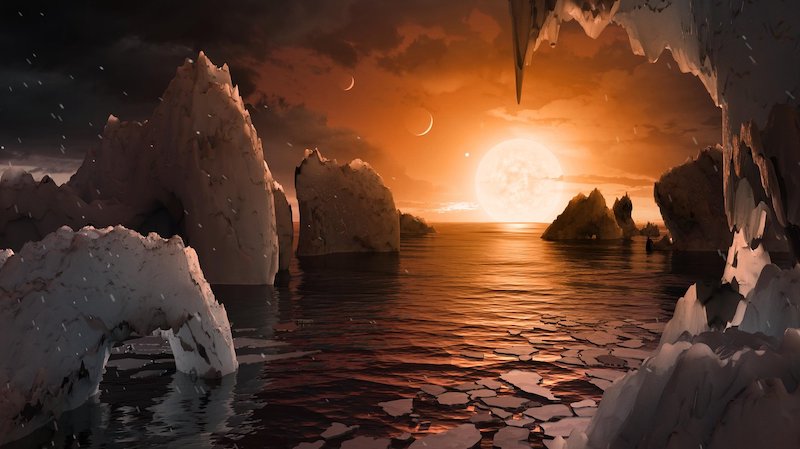
Not all planets orbit stars. Some drift alone through interstellar space, having been ejected from their original planetary systems.
These “rogue planets” may be extremely common. Some estimates suggest there could be billions of them in the Milky Way.
What makes them mysterious is how many appear to exist and how they formed. Some may have formed normally around stars and later been thrown out by gravitational interactions. Others might have formed directly from collapsing clouds of gas like small stars.
Some rogue planets could even retain internal heat or thick atmospheres that allow subsurface oceans to exist.
Lonely worlds wandering the darkness may be more common than planets bound to stars.
11. The Fermi Paradox
Given the enormous size of the universe, many scientists expect intelligent life to exist elsewhere. The Milky Way alone contains hundreds of billions of stars and likely billions of Earth-like planets.
So where is everyone?
This question is known as the Fermi Paradox. If technological civilizations are common, we might expect evidence—radio signals, megastructures, or interstellar probes.
Yet so far, we have detected none.
Perhaps intelligent life is extremely rare. Perhaps civilizations tend to destroy themselves. Perhaps they are deliberately silent. Or perhaps our search methods are simply too limited.
The silence of the cosmos remains one of the most haunting mysteries of space.
12. Cosmic Rays With Impossible Energies
Cosmic rays are high-energy particles that travel through space and occasionally collide with Earth’s atmosphere.
Most originate from supernova explosions or other energetic events. But some detected cosmic rays possess energies so extreme that scientists struggle to explain how they were accelerated.
These ultra-high-energy particles carry millions of times more energy than particles produced in human-made accelerators.
Their origins remain uncertain, though possible sources include active galactic nuclei or exotic astrophysical processes.
Understanding these particles could reveal powerful cosmic engines we do not yet fully understand.
13. Dark Matter Might Not Be Particles
For decades, scientists assumed dark matter consisted of undiscovered particles. Massive experiments were built to detect them.
Yet none have been definitively found.
This has led some researchers to consider alternative explanations. Perhaps gravity behaves differently on large scales. Perhaps dark matter is composed of exotic objects like primordial black holes.
While the particle hypothesis remains popular, the absence of direct detection keeps the mystery open.
14. Some Stars Shouldn’t Exist Where They Do
Astronomers have discovered stars in regions where star formation should be extremely unlikely.
For example, young stars have been found near the supermassive black hole at the center of the Milky Way, where intense gravitational forces should disrupt star formation.
Similarly, certain stars appear older or younger than expected based on their environments.
These anomalies suggest that our understanding of star formation in extreme environments is incomplete.
15. The Universe May Be Much Larger Than We Can See
The observable universe is about 93 billion light-years in diameter. But this is only the region from which light has had time to reach us since the Big Bang.
Beyond that horizon, the universe may continue indefinitely.
We cannot observe those regions directly, which means the total size and structure of the universe remain unknown.
There could be vastly more galaxies, perhaps even regions with different physical conditions. Some theories even propose that our universe is one of many in a multiverse.
The idea that the observable universe might be only a small part of a far larger reality is both thrilling and deeply humbling.
The Mystery Is the Beginning of Discovery
Every mystery in space is a reminder that science is not a finished story. It is a living process of exploration and discovery.
The unanswered questions about dark matter, cosmic expansion, alien life, and the deepest structure of reality are not signs of ignorance but of progress. Each puzzle points toward the next breakthrough.
One day, new telescopes, experiments, and theories may reveal answers to these cosmic riddles. Until then, the universe continues to challenge our understanding and ignite our curiosity.
And perhaps that is the most beautiful fact of all: the cosmos still holds secrets waiting to be discovered.