Space begins where the familiar world fades into silence. Beyond the breathable air, beyond the drifting clouds and the blue glow of the sky, lies a vast, dark ocean that stretches farther than the human mind can easily imagine. This immense expanse is not simply empty darkness. It is a realm filled with stars, galaxies, invisible forces, ancient light, and mysteries that continue to challenge humanity’s understanding of reality itself.
For most of human history, the night sky was a source of wonder and myth. Ancient civilizations looked upward and saw patterns among the stars. They imagined gods, heroes, animals, and stories written in the heavens. Yet the truth of space is even more extraordinary than the myths that once attempted to explain it. The universe is not a dome above Earth or a distant decoration for our planet. It is an immense cosmic environment in which Earth is a tiny participant.
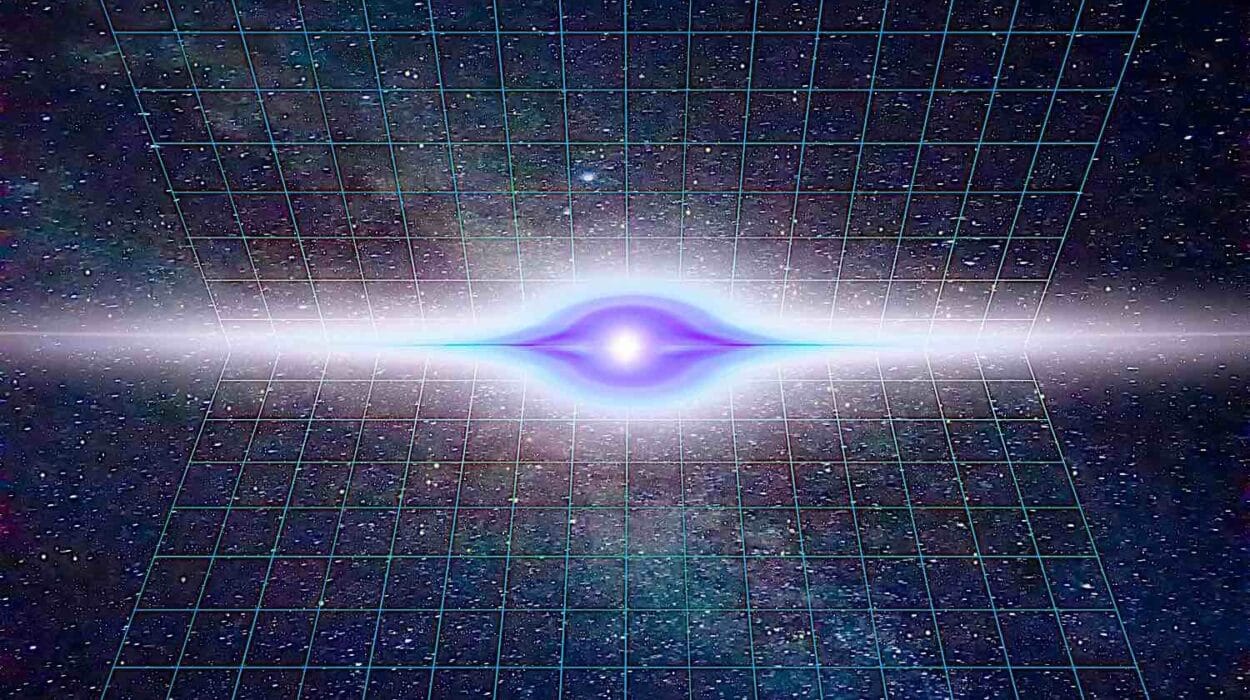
Space contains everything that exists beyond our atmosphere: planets, moons, asteroids, comets, stars, nebulae, galaxies, and the vast stretches of interstellar and intergalactic matter between them. It is also the stage on which the largest and most dramatic events in nature unfold. Stars are born, live brilliant lives, and eventually die in explosions so powerful they can briefly outshine entire galaxies. Black holes warp the very fabric of spacetime. Galaxies collide in slow cosmic dances lasting millions of years.
To explore space is to confront both the grandeur and the humility of existence. It reminds us how small we are, yet also how extraordinary it is that creatures on one small planet can study the entire universe.
Where Space Truly Begins
One might imagine that space begins the moment the sky turns dark. In reality, there is no sharp boundary between Earth’s atmosphere and outer space. The atmosphere gradually thins as altitude increases, fading into the near vacuum beyond.
Scientists often refer to a boundary called the Kármán line, located about one hundred kilometers above Earth’s surface. This altitude marks the approximate point where the atmosphere becomes so thin that aircraft cannot rely on aerodynamic lift. Beyond this height, objects must travel at orbital speeds to remain aloft. For practical purposes, this is considered the edge of space.
Above this boundary lies a realm where air molecules are incredibly sparse. The pressure is so low that humans cannot survive without protective equipment. Sound cannot travel because there are too few particles to carry vibrations. Temperatures fluctuate dramatically depending on exposure to sunlight. In direct sunlight objects can become extremely hot, while in shadow they may plunge to freezing extremes.
Despite its reputation as a void, space is not perfectly empty. Even the most remote regions contain scattered atoms, stray photons of light, and invisible fields that shape the behavior of matter. Space is a vacuum, but it is a living vacuum filled with energy and activity.
The Birth of the Universe
Understanding space means understanding its origin. Modern cosmology traces the beginning of the universe to an event known as the Big Bang. Around 13.8 billion years ago, the universe emerged from an incredibly hot, dense state and began expanding.
The Big Bang was not an explosion in space. Rather, it was an expansion of space itself. In those earliest moments, the universe was unimaginably hot, filled with energetic particles and radiation. As it expanded, it cooled, allowing matter to form.
Within minutes, the first atomic nuclei appeared, primarily hydrogen and helium. Hundreds of thousands of years later, electrons joined these nuclei to create the first atoms. Light, which had previously been trapped in the dense plasma, was finally able to travel freely. That ancient light still exists today as faint microwave radiation filling the cosmos, known as the cosmic microwave background.
Over millions of years, gravity gathered matter into dense regions that eventually ignited into the first stars. These stars illuminated the young universe and began the long process of building heavier elements. The story of space, in many ways, is the story of how simple beginnings evolved into extraordinary complexity.
The Expanding Universe
One of the most surprising discoveries in modern astronomy is that the universe is expanding. In the 1920s, astronomer Edwin Hubble observed that distant galaxies appear to be moving away from us. The farther away they are, the faster they recede.
This observation revealed a profound truth: space itself is stretching. Galaxies are not simply flying through a fixed cosmic arena. Instead, the fabric of the universe is expanding, carrying galaxies along with it.
This expansion does not mean Earth occupies a special position. From any galaxy in the universe, distant galaxies would appear to be moving away in much the same way. The expansion is a property of space everywhere.
Even more astonishing is the discovery that the expansion of the universe is accelerating. Observations of distant supernovae in the late twentieth century revealed that galaxies are drifting apart faster over time. Scientists attribute this mysterious acceleration to something called dark energy, an unknown form of energy that permeates space.
Dark energy remains one of the greatest mysteries in physics. It appears to make up most of the universe, yet its nature remains unknown.
The Cosmic Web of Galaxies
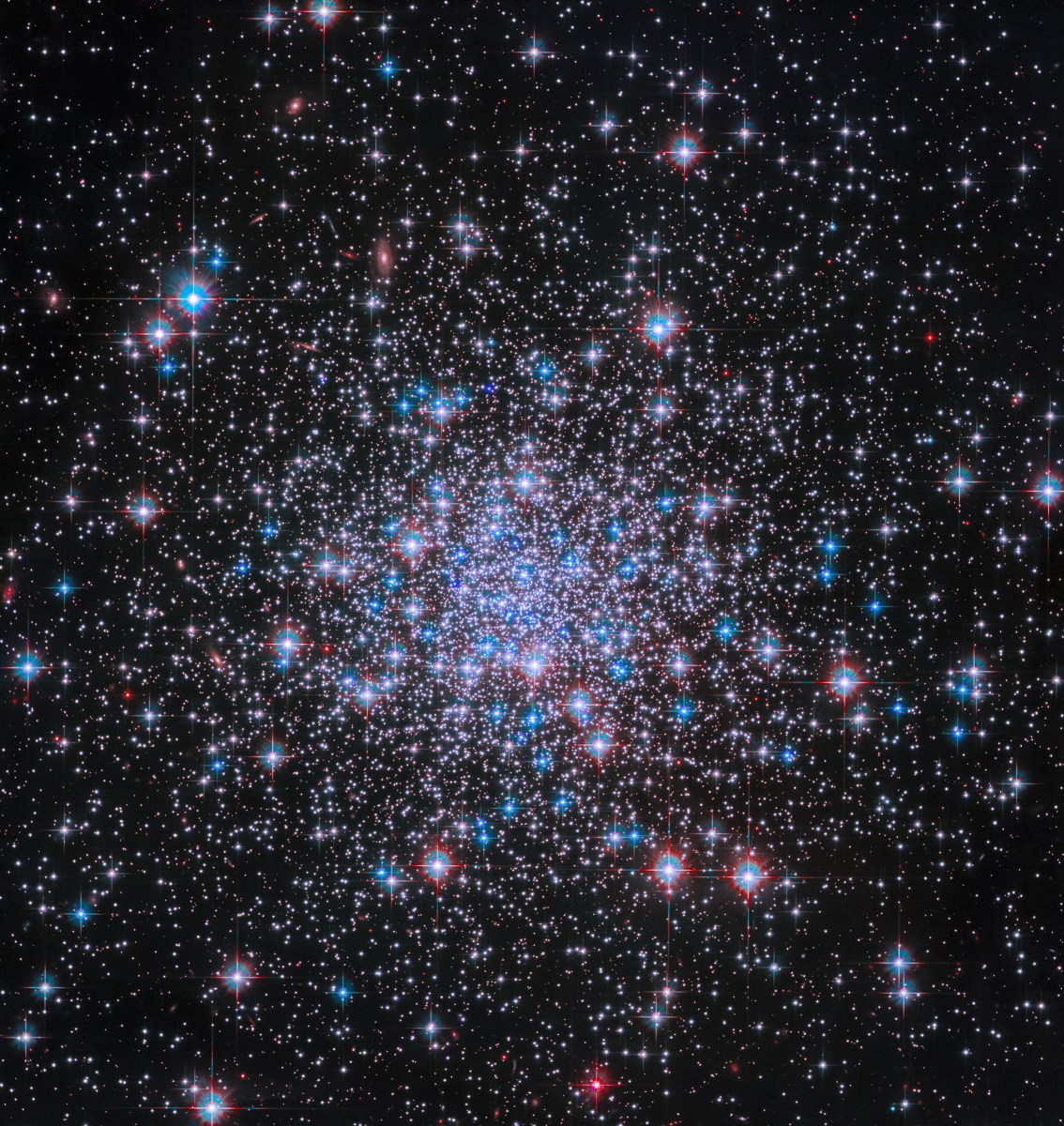
On the largest scales, the universe resembles a vast cosmic web. Galaxies are not randomly scattered through space. Instead, they form clusters and filaments connected by enormous structures of dark matter and gas. Between these structures lie immense cosmic voids where very few galaxies exist.
Each galaxy is itself a massive island of stars, gas, dust, and dark matter. Our home galaxy, the Milky Way, contains hundreds of billions of stars. It stretches roughly one hundred thousand light-years across, forming a spiral structure with sweeping arms filled with stellar nurseries.
Galaxies come in many shapes and sizes. Some are graceful spirals like the Milky Way. Others are elliptical, appearing as smooth, rounded collections of stars. Some galaxies are irregular, lacking clear structure.
Galaxies are not static. They evolve over billions of years. They merge, collide, and interact gravitationally. These cosmic encounters can trigger bursts of star formation or reshape galaxies entirely.
Our own galaxy is on a slow collision course with a neighboring galaxy called Andromeda. In about four billion years, the two will begin a gravitational dance that will eventually merge them into a single larger galaxy.
The Life Cycle of Stars
Stars are the engines of the universe. They are immense spheres of hot plasma powered by nuclear fusion in their cores. Within these fiery interiors, hydrogen atoms fuse into helium, releasing tremendous amounts of energy.
This energy flows outward, balancing the inward pull of gravity. The result is a stable star that can shine for millions or billions of years.
Stars form within cold clouds of gas and dust known as nebulae. Gravity gradually pulls the material together until temperatures become high enough to ignite nuclear fusion. At that moment, a new star is born.
The life of a star depends largely on its mass. Small stars burn their fuel slowly and can live for tens of billions of years. Massive stars live fast and die young, exhausting their fuel in only a few million years.
When massive stars reach the end of their lives, they often explode as supernovae. These explosions are among the most energetic events in the universe. They scatter heavy elements such as carbon, oxygen, and iron into space.
These elements eventually become part of new stars, planets, and even living organisms. In this sense, every atom in our bodies was forged in ancient stars. Humans are quite literally made of stardust.
Black Holes and the Warping of Spacetime
Among the most mysterious objects in space are black holes. These are regions where gravity becomes so strong that nothing, not even light, can escape.
Black holes form when extremely massive stars collapse under their own gravity at the end of their lives. The collapsing core compresses into an incredibly dense point surrounded by an invisible boundary called the event horizon. Once something crosses this boundary, escape becomes impossible.
Black holes do not act like cosmic vacuum cleaners sucking everything nearby. Their gravitational influence behaves like any other massive object at a distance. However, near the event horizon, gravity becomes extreme.
Matter falling into a black hole forms a swirling disk called an accretion disk. Friction within this disk heats the material to extraordinary temperatures, causing it to emit intense radiation. In some cases, black holes also produce powerful jets that shoot particles across vast distances.
At the centers of most galaxies lie supermassive black holes millions or billions of times more massive than the Sun. Our own galaxy hosts one known as Sagittarius A*, quietly lurking at its core.
The Mystery of Dark Matter
When astronomers measure how galaxies rotate, they encounter a puzzling problem. The visible matter in galaxies does not provide enough gravity to explain their motion. Stars in the outer regions move faster than expected.
This discrepancy suggests the presence of unseen mass known as dark matter. Unlike ordinary matter, dark matter does not emit or absorb light. It interacts primarily through gravity.
Evidence for dark matter appears throughout the universe. It influences the formation of galaxies, shapes the large-scale structure of the cosmos, and bends light from distant objects through gravitational lensing.
Despite decades of research, scientists still do not know what dark matter is made of. Many theories propose new types of particles, but none have yet been conclusively detected.
Dark matter is believed to make up about twenty-seven percent of the universe’s total energy content. Ordinary matter—the atoms that form stars, planets, and people—accounts for only about five percent.
Planets and the Diversity of Worlds
Planets are worlds that orbit stars. For centuries, humans knew only the planets of our own solar system. Today, astronomers have discovered thousands of planets around other stars, known as exoplanets.
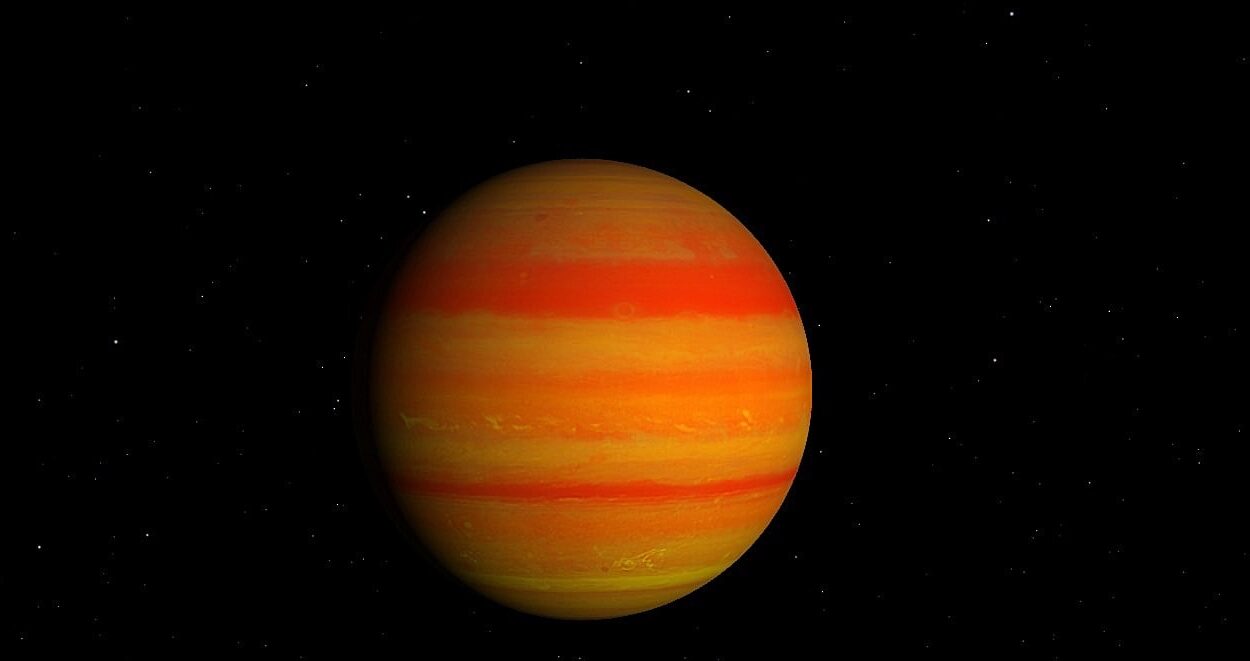
These discoveries have revealed an astonishing diversity of worlds. Some planets are gas giants larger than Jupiter. Others are rocky worlds similar to Earth. Some orbit extremely close to their stars, experiencing temperatures hot enough to melt metals. Others wander through space without any star at all.
Some exoplanets lie within their star’s habitable zone, the region where temperatures could allow liquid water to exist. Such worlds are of particular interest because water is considered essential for life as we know it.
The search for habitable planets is one of the most exciting frontiers in astronomy. Each discovery brings humanity closer to answering one of the oldest questions in history: Are we alone in the universe?
The Solar System: Our Cosmic Neighborhood
Within the vastness of space, our solar system is a relatively small region dominated by the Sun. The Sun contains more than ninety-nine percent of the system’s total mass. Its gravity binds planets, moons, asteroids, and comets into a complex gravitational family.
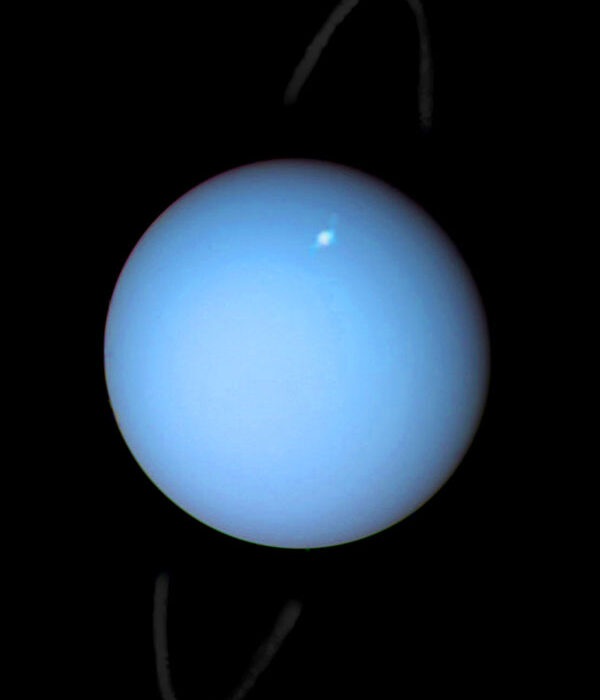
The inner planets—Mercury, Venus, Earth, and Mars—are rocky worlds. Beyond them lies the asteroid belt, followed by the gas giants Jupiter and Saturn, and the ice giants Uranus and Neptune.
Beyond Neptune stretches the Kuiper Belt, a region filled with icy bodies and dwarf planets. Even farther lies the Oort Cloud, a distant spherical halo of cometary material that may extend tens of thousands of astronomical units from the Sun.
Although the solar system seems vast by human standards, it is only a tiny corner of the Milky Way galaxy.
Human Exploration of Space
For most of history, space was unreachable. That changed in the twentieth century with the development of rockets capable of escaping Earth’s gravity.
In 1957, the first artificial satellite entered orbit. Four years later, a human being traveled into space for the first time. In 1969, astronauts landed on the Moon, marking one of humanity’s greatest technological achievements.
Since then, robotic spacecraft have visited every planet in the solar system. Probes have landed on Mars, flown past Pluto, and explored the outer planets in remarkable detail.
Space telescopes have revealed distant galaxies, star-forming nebulae, and ancient light from the early universe. These instruments allow astronomers to study parts of the cosmos that would otherwise remain invisible.
Humanity’s exploration of space continues to expand. Plans for future missions include returning astronauts to the Moon, sending humans to Mars, and building more advanced telescopes capable of detecting signs of life on distant planets.
The Infinite Mystery
The universe may be infinite, or it may simply be so vast that its boundaries lie beyond our observable horizon. Because light travels at a finite speed, we can only see objects whose light has had time to reach us since the beginning of the universe.
This region is known as the observable universe. It spans roughly ninety-three billion light-years across. Beyond that distance, space may continue indefinitely, filled with galaxies we will never see.
Such immensity challenges the imagination. Yet the human mind continues to explore it through observation, theory, and curiosity.
The Meaning of Space
Space is more than a physical environment. It is a mirror reflecting humanity’s deepest questions. It reminds us that our planet is a fragile oasis in a vast cosmic wilderness. It reveals that the atoms in our bodies were forged in ancient stellar furnaces billions of years ago.
Every telescope pointed toward the sky is an act of curiosity. Every spacecraft launched beyond Earth carries with it the hopes and dreams of a species that refuses to remain confined to one world.
The story of space is the story of existence itself—how matter, energy, and time combine to create galaxies, stars, planets, and eventually life capable of asking questions about the universe.
And perhaps the most remarkable part of that story is that somewhere within the immeasurable depths of space, on a small blue planet orbiting an ordinary star, the universe has become aware of itself.