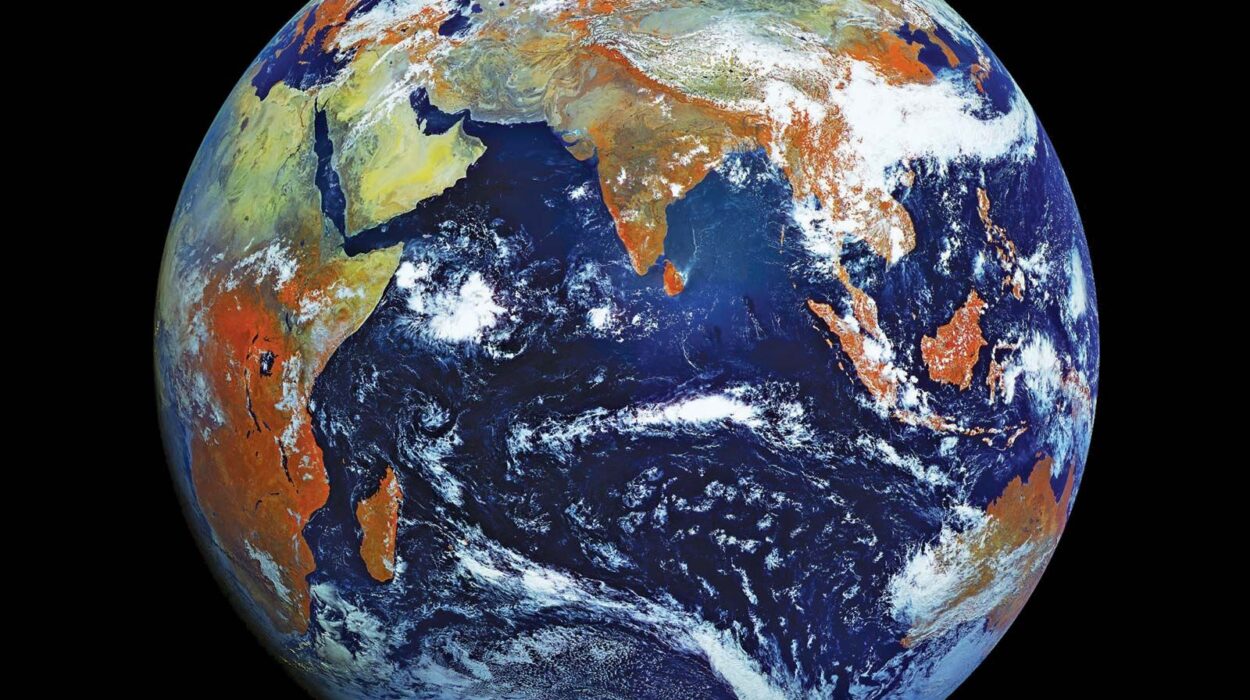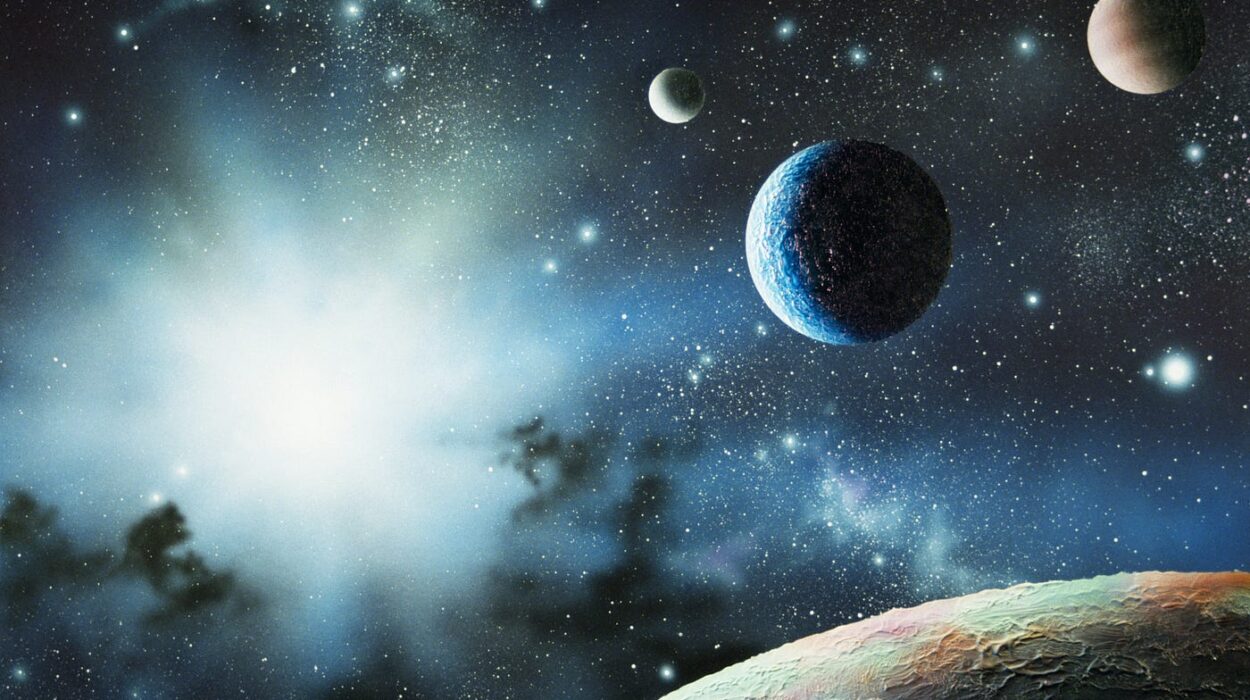
When we first began to discover planets beyond our Solar System in the 1990s, many imagined distant versions of Earth—blue oceans, drifting clouds, perhaps even alien forests beneath unfamiliar stars. Instead, the universe delivered something far stranger. It revealed worlds where molten rock falls from the sky. Planets where glass rains sideways at thousands of kilometers per hour. Atmospheres filled with corrosive acids. Gas giants so compressed that they may forge diamonds in their depths.
These planets are not fantasy. They are real exoplanets detected by telescopes and analyzed through spectroscopy, orbital mechanics, and atmospheric modeling. Many of them orbit stars hundreds or thousands of light-years away. We cannot visit them, but we can measure their masses, radii, temperatures, and even the chemical fingerprints of their skies.
They force us to confront a simple truth: Earth is not the standard model of a planet. It is an exception.
Below are seven of the most bizarre and extreme planets known to science—worlds where rain is not water, and weather is something closer to nightmare.
1. HD 189733 b — The Planet Where It Rains Molten Glass
Orbiting a star in the constellation Vulpecula, about 64 light-years from Earth, HD 189733 b is one of the most studied exoplanets in astronomy. It is classified as a “hot Jupiter,” a gas giant similar in size to Jupiter but orbiting extremely close to its parent star.
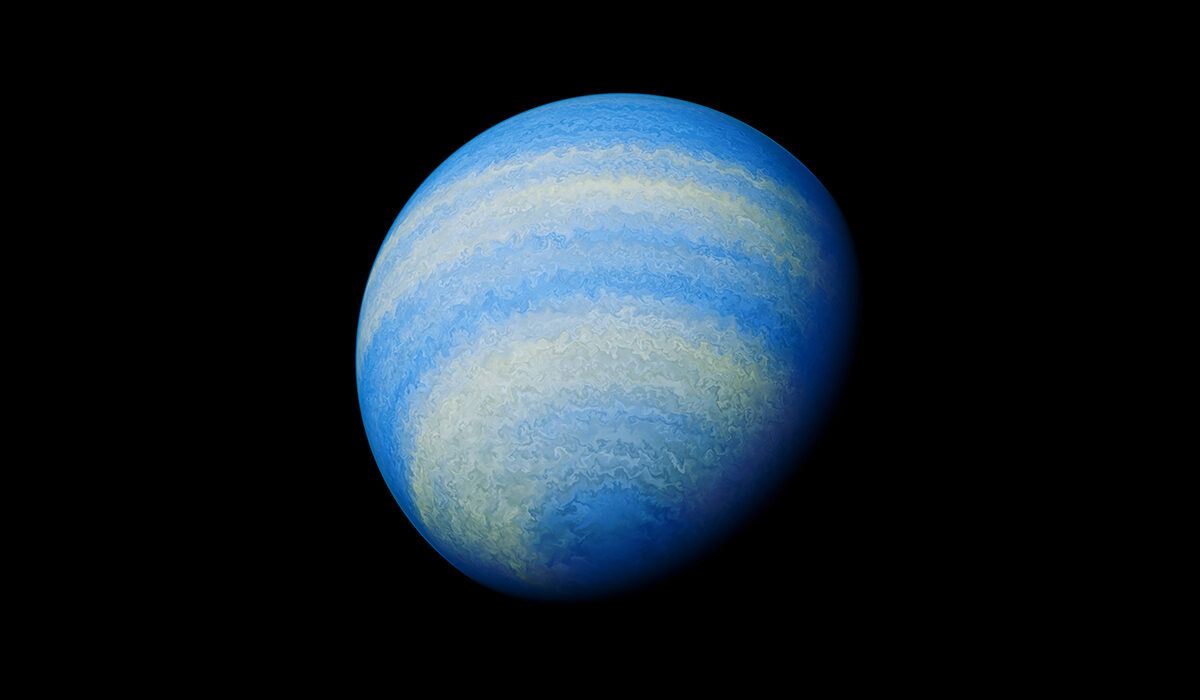
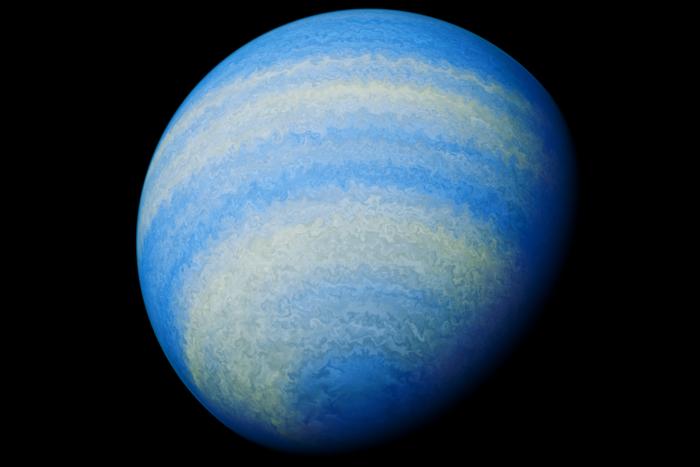
At first glance, HD 189733 b might even appear beautiful. Observations using the Hubble Space Telescope revealed that it has a deep cobalt-blue color. But this is no peaceful ocean world. That blue hue likely comes from silicate particles—tiny grains of glass—suspended in its atmosphere.
The planet orbits its star in just over two Earth days. Because of this tight orbit, it is tidally locked. One side permanently faces the star, while the other remains in darkness. Temperatures on the day side can exceed 1,000 degrees Celsius.
Under such intense heat, silicate materials vaporize. In the upper atmosphere, they condense into microscopic glass droplets. Strong winds, measured at speeds exceeding 7,000 kilometers per hour, whip these particles around the planet.
Instead of gentle rainfall, HD 189733 b experiences sideways storms of molten glass. The glass rain does not fall vertically as it does on Earth. The planet’s extreme winds blast it horizontally across the sky at supersonic speeds.
If a spacecraft could survive the heat and pressure, it would encounter an atmosphere filled with razor-sharp glass driven like cosmic sandblasting equipment. It is one of the clearest examples that alien weather can be far more violent than anything Earth has ever seen.
2. WASP-76 b — The World Where It Rains Iron
Located roughly 640 light-years away in the constellation Pisces, WASP-76 b is another hot Jupiter—but one that pushes atmospheric extremes even further.
This planet orbits so close to its star that a year lasts only about 1.8 Earth days. The intense stellar radiation heats its day side to temperatures around 2,400 degrees Celsius—hot enough to vaporize metals.
Spectroscopic observations have detected vaporized iron in its atmosphere. On the scorching day side, iron exists as gas. But as winds transport this material to the cooler night side, temperatures drop enough for the iron vapor to condense.
The result? Iron rain.
Molten droplets of iron likely fall through the atmosphere on the night side of the planet. Unlike Earth’s water cycle, this is a metal cycle—evaporation under extreme heat, condensation in cooler regions, and precipitation of liquid metal.
WASP-76 b is also tidally locked, creating a dramatic temperature contrast between hemispheres. Winds rush from the day side to the night side at immense speeds, redistributing heat and iron vapor.
The idea of metallic rain might sound like science fiction, but it is grounded in well-understood physics. Under high temperatures and pressures, metals can vaporize and condense just like water.
On WASP-76 b, clouds may be made of iron. Rain may be molten steel.
3. HAT-P-7 b — The Sapphire World of Corundum Storms
About 1,000 light-years away in the constellation Cygnus, HAT-P-7 b is another hot Jupiter—but it may host storms composed of corundum, the mineral form of aluminum oxide.
Corundum is familiar on Earth as sapphire and ruby. Under certain atmospheric conditions, aluminum oxide can condense into solid particles.
Observations of HAT-P-7 b suggest the presence of reflective clouds on its night side. These clouds may consist of corundum particles forming under high-altitude, high-temperature conditions.
Like other close-in gas giants, HAT-P-7 b is tidally locked. The day side is extremely hot, while the night side is somewhat cooler. Atmospheric circulation models indicate powerful winds redistributing heat around the planet.
If corundum condenses in sufficient quantities, it could form sapphire-like rain—tiny crystalline grains falling through turbulent skies.
The planet’s brightness variations over time suggest dynamic cloud patterns that shift and evolve, possibly driven by these mineral storms.
Imagine standing beneath a sky where sapphires fall like rain, forged in atmospheric furnaces heated by relentless starlight.
4. 55 Cancri e — The Lava World That May Hide Diamonds
In the constellation Cancer, about 41 light-years from Earth, orbits 55 Cancri e, a rocky exoplanet often described as a “super-Earth.” It is about twice the size of Earth and eight times as massive.
This planet orbits extremely close to its star, completing one orbit in less than 18 hours. Surface temperatures likely exceed 2,000 degrees Celsius, hot enough to melt rock.
Observations suggest that 55 Cancri e may have a carbon-rich composition. Early models proposed that if carbon were abundant in its interior, the immense pressures could transform it into diamond.
Under extreme pressure and temperature conditions, carbon can crystallize into diamond structures. Some theoretical models suggested that a significant fraction of the planet’s interior could consist of diamond.
Later analyses have questioned whether the star system truly has the necessary carbon-to-oxygen ratio for such a diamond-rich world. The current scientific picture remains uncertain. However, the possibility remains scientifically plausible under the right chemical conditions.
Regardless of its precise composition, 55 Cancri e is likely covered in vast oceans of molten lava. Its surface may continuously reshape itself as magma flows under the influence of tidal forces and stellar heating.
If diamonds do form deep within its mantle, they would be locked in a world of fire, pressure, and perpetual volcanic fury.
5. WASP-121 b — The Acid-Sky Inferno
WASP-121 b, located about 850 light-years away in the constellation Puppis, is one of the most extreme exoplanets ever studied.
This hot Jupiter orbits so close to its star that it is nearly being torn apart by tidal forces. Its upper atmosphere is heated to temperatures exceeding 2,500 degrees Celsius.
Spectroscopic observations have revealed the presence of water vapor, but also exotic molecules such as vanadium oxide and titanium oxide. These compounds can act as atmospheric absorbers, creating temperature inversions—regions where temperature increases with altitude.
At such high temperatures, water does not exist as liquid. It exists as superheated vapor. Complex chemical reactions likely occur in this violent atmosphere.
Models suggest that clouds on WASP-121 b may contain vaporized metals and possibly corrosive compounds. Under extreme heat, molecular bonds break and reform in ways that produce unfamiliar atmospheric chemistry.
While it does not literally rain sulfuric acid like the clouds of Venus, the atmosphere of WASP-121 b may contain highly reactive species capable of creating extremely corrosive conditions.
This is not a world where life as we know it could survive. It is a world on the brink of atmospheric escape, its upper layers stretched by tidal gravity and blasted by stellar radiation.
6. Gliese 1214 b — The Steamy Water World
Orbiting a red dwarf star about 48 light-years away, Gliese 1214 b represents a different kind of bizarre planet.
It is larger than Earth but smaller than Neptune—a category often called a “sub-Neptune.” Its density suggests that it may contain a large fraction of water or other volatile compounds.
Under the intense pressure and heat inside such a planet, water would not resemble the oceans of Earth. Instead, it could exist as supercritical fluid—a state of matter that is neither liquid nor gas but shares properties of both.
At high temperatures and pressures, water becomes chemically aggressive. It can dissolve minerals and participate in unusual reactions. The upper atmosphere of Gliese 1214 b likely contains thick clouds that obscure deeper layers from observation.
Although not a planet of glass or iron rain, it may be a world where superheated steam dominates, where water exists in exotic high-pressure phases unfamiliar to terrestrial experience.
The idea of a planet covered in endless high-pressure steam, with crushing atmospheric layers beneath, challenges our intuitive understanding of what “water worlds” might be like.
7. Neptune and Uranus — The Diamond Rain Giants
The final entry does not lie beyond our Solar System. It orbits much closer to home.
Uranus and Neptune, the ice giants of our Solar System, may host one of the most astonishing forms of precipitation theorized in planetary science: diamond rain.
Both planets are rich in water, ammonia, and methane. Under the immense pressures found thousands of kilometers beneath their cloud tops, methane molecules can break apart. Carbon atoms may be freed and compressed.
Laboratory experiments have shown that under high pressure and temperature conditions similar to those inside Neptune and Uranus, carbon can form diamond structures.
Theoretical models suggest that diamonds may form deep within these planets and sink toward their cores like hailstones falling through alien skies.
These diamonds would not sparkle under sunlight. They would fall through dark, high-pressure interiors, possibly forming vast diamond-rich layers above the planetary cores.
While direct confirmation is challenging due to the difficulty of probing deep planetary interiors, both experiments and simulations support the plausibility of diamond formation under such extreme conditions.
Even within our own Solar System, the weather may include gemstones forged by planetary pressure.
The Universe Is Not Built for Comfort
These seven planets represent only a fraction of the diversity we have discovered. There are lava worlds, ultra-dense super-Earths, puffy gas giants with densities lower than cork, rogue planets wandering without stars, and planets orbiting pulsars bathed in radiation.
The physics governing them is not mysterious. It is the same physics that shapes Earth—gravity, thermodynamics, chemistry, radiation. But when those laws operate under extreme conditions, the results can be astonishing.
Rain is not inherently water. Clouds are not inherently vapor droplets. Weather is not inherently gentle.
In the broader cosmos, rain can be iron. Clouds can be glass. Atmospheres can dissolve metal and strip molecules apart. Pressure can turn carbon into diamond and water into supercritical fluid.
Earth feels stable and familiar because it sits in a narrow band of temperature and chemical conditions that allow liquid water, moderate atmospheres, and stable geology.
Most worlds are not so kind.
Why These Worlds Matter
These bizarre planets are not merely curiosities. They help scientists test atmospheric models under extreme conditions. They refine our understanding of planetary formation and evolution. They reveal how chemistry behaves at high temperatures and pressures.
By studying them, astronomers improve the tools needed to identify potentially habitable worlds. Understanding extreme exoplanets helps define the boundaries of what is possible—and what is survivable.
Each strange world expands the catalog of planetary possibilities.
A Universe of Endless Extremes
The discovery of exoplanets has transformed our understanding of reality. We once believed our Solar System might be typical. Instead, we have learned that planetary systems can be wildly diverse.
There are planets so hot that rock vaporizes. Planets so dense that matter is compressed beyond imagination. Planets so close to their stars that they are being slowly torn apart.
And perhaps somewhere, orbiting a quiet star, there is a world where rain is water and clouds drift peacefully across blue skies.
But the universe does not promise comfort. It promises variety. It promises physics pushed to extremes. It promises worlds that challenge our imagination.
In that vast cosmic ocean, Earth is not the rule. It is the miracle.
And beyond our skies, storms of glass, iron, sapphire, and perhaps even diamond continue to fall—silent, distant, and unimaginably alien.