For centuries, humanity looked at the night sky and wondered whether we are alone. The stars seemed impossibly distant, the galaxies unreachable. Yet in recent decades, science has revealed something astonishing: if alien life exists, we may not need to travel beyond our own cosmic neighborhood to find it.
Our solar system, once thought to be a sterile collection of rocks and gas, has turned out to be dynamic, chemically rich, and in some places, surprisingly warm. Beneath frozen crusts, within salty oceans, inside subsurface rocks, and even in thick clouds, environments exist that could potentially support life—at least microbial life.
Life as we understand it requires a few basic ingredients: liquid water, a source of energy, essential chemical elements like carbon, hydrogen, nitrogen, oxygen, phosphorus, and sulfur, and enough stability for chemistry to become biology. Remarkably, multiple worlds in our solar system appear to meet at least some of these conditions.
Below are fifteen of the most scientifically promising places where alien life might be hiding—quietly waiting beneath ice, inside oceans, or drifting through alien skies.
1. Mars
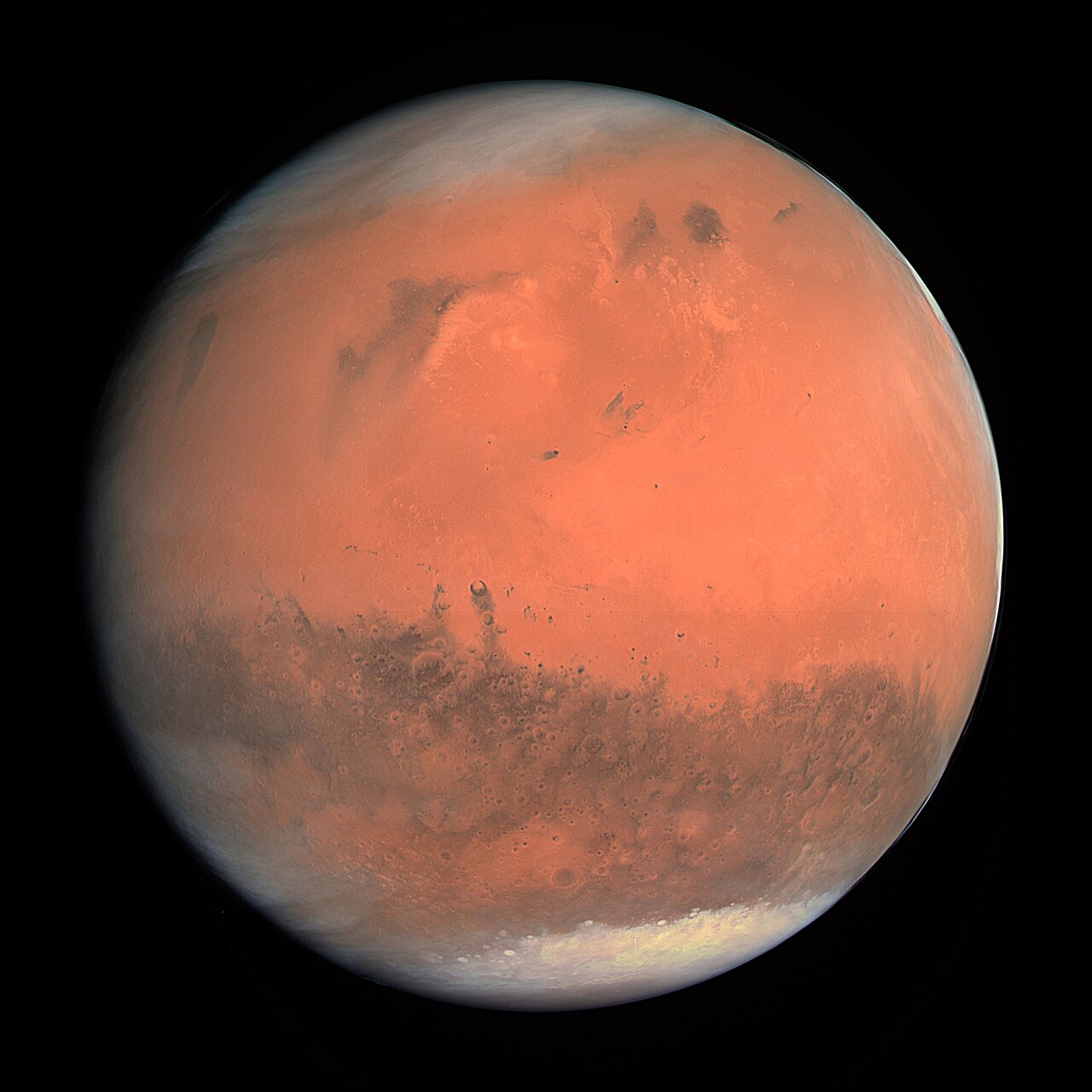
Mars has long captured human imagination. Its red deserts and polar ice caps make it the most Earth-like planet in our solar system. But modern science has revealed that Mars was once far more hospitable than it appears today.
Billions of years ago, Mars had rivers, lakes, and possibly even shallow seas. Evidence from orbiters and rovers shows dried-up river valleys, sedimentary rocks formed in water, and minerals that only form in wet environments. The atmosphere was thicker, temperatures were warmer, and liquid water flowed across its surface.
Today, Mars is cold and dry on the surface, but not necessarily lifeless. Subsurface ice is abundant, and radar data suggest that pockets of salty liquid water may exist beneath the southern polar ice cap. Methane has been detected in the Martian atmosphere, and while methane can be produced by geological processes, on Earth it is often associated with biological activity.
If life ever arose on ancient Mars, it may have retreated underground as the planet lost its atmosphere and surface water. Microbes on Earth thrive kilometers below the surface in extreme conditions. Similar life could exist beneath Martian soil, protected from radiation.
Mars remains one of the most accessible and scientifically compelling targets in the search for extraterrestrial life.
2. Europa
Europa, one of Jupiter’s largest moons, is an icy world with a smooth, cracked surface resembling fractured glass. Beneath that frozen shell lies one of the most exciting environments in the solar system.
Strong evidence suggests that Europa harbors a global ocean beneath its icy crust. Tidal heating, generated by Jupiter’s immense gravitational pull, keeps this ocean liquid despite surface temperatures far below freezing. The ocean may contain more water than all of Earth’s oceans combined.
Where there is liquid water and energy, life becomes possible. On Earth, hydrothermal vents on the ocean floor teem with life, supported not by sunlight but by chemical energy from the planet’s interior. If similar hydrothermal systems exist at the bottom of Europa’s ocean, they could provide a stable energy source for microbial ecosystems.
The icy crust may also exchange material with the ocean below. Plumes of water vapor have been detected erupting from Europa’s surface, suggesting that subsurface water sometimes reaches space.
Europa is not just a frozen moon. It may be a hidden ocean world.
3. Enceladus
Enceladus, a small moon of Saturn, shocked scientists when spacecraft observed geysers erupting from its south pole. These plumes spray water vapor, ice particles, and organic compounds into space.
Analysis of the plume material revealed something extraordinary: complex organic molecules, molecular hydrogen, and salts consistent with a subsurface ocean in contact with a rocky core. The presence of molecular hydrogen suggests hydrothermal activity on the ocean floor.
On Earth, hydrothermal vents support entire ecosystems independent of sunlight. The chemistry observed on Enceladus resembles environments where life thrives on our own planet.
The ocean of Enceladus is hidden beneath an icy crust, but it is actively communicating with space through its plumes. This makes Enceladus one of the most accessible ocean worlds for studying potential habitability.
Despite its small size, Enceladus may offer one of the clearest windows into alien ocean life.
4. Titan
Titan, Saturn’s largest moon, is one of the most chemically complex worlds in the solar system. It has a thick nitrogen-rich atmosphere and surface lakes—not of water, but of liquid methane and ethane.
Beneath its icy crust, Titan is believed to contain a subsurface ocean of liquid water mixed with ammonia. But even more intriguing is its surface chemistry. Sunlight and atmospheric reactions produce complex organic molecules that rain down onto the surface.
On Earth, organic chemistry is the foundation of life. Titan demonstrates that complex prebiotic chemistry can occur naturally on a planetary scale.
While surface temperatures are extremely cold, life in Titan’s subsurface ocean remains a possibility. Some scientists have even speculated about hypothetical methane-based life forms, though such life would be radically different from terrestrial organisms.
Titan challenges our assumptions about what environments might support life.
5. Ganymede
Ganymede, the largest moon in the solar system, also orbits Jupiter. It possesses its own magnetic field, a rare feature for a moon, suggesting a dynamic interior.
Evidence indicates that Ganymede may host multiple layers of subsurface oceans sandwiched between layers of ice. These oceans could be vast, though possibly separated from rocky material by thick ice layers.
If ocean water contacts rock, chemical reactions could provide energy sources similar to those that sustain life in Earth’s deep oceans. While Ganymede’s habitability may be more complex than Europa’s, its size and internal heat make it a compelling candidate.
Hidden beneath ice, Ganymede may hold deep reservoirs of liquid water.
6. Callisto
Callisto, another moon of Jupiter, appears heavily cratered and ancient. For years it seemed geologically inactive and uninteresting.
Yet magnetic measurements suggest that Callisto may also contain a subsurface ocean. Unlike Europa, Callisto experiences less tidal heating, but radioactive decay in its interior may provide enough warmth to maintain liquid water beneath its surface.
If water and essential elements are present, even a geologically quiet world could potentially host microbial life deep below its frozen crust.
Callisto reminds us that even seemingly inactive worlds can harbor hidden complexity.
7. Ceres
Ceres, the largest object in the asteroid belt, is classified as a dwarf planet. Once considered merely a rocky body, it has revealed surprising features.
Bright deposits on its surface are composed of salts, likely left behind by evaporating brines. Evidence suggests that Ceres once had, and may still possess, subsurface liquid water reservoirs.
Organic compounds have been detected on its surface. If briny liquid water persists beneath the surface, Ceres could provide an environment where microbial life might survive.
In the quiet expanse between Mars and Jupiter, this small world may hold watery secrets.
8. Venus (Cloud Layer)
Venus is often described as Earth’s twin gone wrong. Its surface is hot enough to melt lead, with crushing atmospheric pressure and clouds of sulfuric acid.
Yet at altitudes between roughly 50 and 60 kilometers above the surface, temperatures and pressures become surprisingly Earth-like. Within this temperate cloud layer, liquid droplets exist.
In 2020, observations suggested the possible detection of phosphine gas in Venus’s atmosphere, a molecule that on Earth is often associated with biological activity. The detection remains debated and unconfirmed, but it reignited interest in Venusian cloud habitability.
Some scientists propose that microbial life could float within Venus’s cloud droplets, shielded from the hostile surface below.
If life can adapt to extreme conditions on Earth, perhaps Venus’s skies are not entirely inhospitable.
9. Mars’ Subsurface Ice Deposits
Beyond the general case for Mars, specific regions of subsurface ice are especially promising. Thick ice deposits near the poles and mid-latitudes may protect potential life from radiation.
If briny liquid water exists intermittently within these icy layers, microbial life could persist in stable microenvironments. On Earth, microbes thrive in Antarctic ice and deep permafrost.
Mars may not need oceans to host life. Even small pockets of liquid water could suffice.
10. Europa’s Surface-Ocean Exchange Zones
Beyond Europa’s ocean itself, areas where surface ice interacts with ocean material are especially intriguing. Cracks and chaotic terrains suggest movement between layers.
If ocean water occasionally reaches the surface and refreezes, biosignatures could become trapped in the ice. Studying these regions may allow scientists to detect life without drilling through kilometers of ice.
These boundary zones may serve as windows into Europa’s hidden ocean.
11. Enceladus’ Hydrothermal Vent Regions
Deep beneath Enceladus’ icy shell, the interaction between water and its rocky core likely produces hydrothermal systems.
On Earth, such environments are rich with life. Chemical gradients provide energy for microbes, independent of sunlight.
If similar conditions exist on Enceladus, life could thrive in darkness, sustained by chemistry alone.
The plume samples already hint at this possibility.
12. Titan’s Subsurface Ocean
While Titan’s surface chemistry is fascinating, its internal ocean may be even more promising for life as we know it.
The presence of water mixed with ammonia lowers the freezing point, allowing liquid to persist. If the ocean contacts rock, chemical reactions could provide energy.
Titan’s thick atmosphere protects it from radiation, making its interior relatively stable over long timescales.
13. Pluto
Though distant and cold, Pluto surprised scientists with evidence of geological activity. Its heart-shaped region, Sputnik Planitia, suggests internal heat.
Some models propose that Pluto may harbor a subsurface ocean insulated by a thick ice shell. If true, even this distant dwarf planet could possess liquid water beneath its frozen exterior.
The outer solar system may not be as frozen and inert as once believed.
14. Triton
Triton, Neptune’s largest moon, is geologically active, with nitrogen geysers erupting from its surface.
Tidal heating in its past may have created a subsurface ocean. If remnants of that ocean persist today, Triton could offer another potential habitat.
Its unusual retrograde orbit suggests it was captured, possibly bringing different chemical compositions into Neptune’s system.
15. Earth’s Upper Atmosphere as an Analog
While not alien, Earth’s own upper atmosphere demonstrates how life can exist in unexpected places. Microbes have been detected at high altitudes, surviving harsh conditions.
This expands our understanding of where life can persist and informs our search on other worlds.
If life can survive in extreme niches on Earth, perhaps it can endure on worlds we once dismissed as sterile.
The Cosmic Perspective
The search for alien life in our solar system is no longer science fiction. It is an active, data-driven scientific endeavor.
Ocean worlds beneath ice. Methane lakes beneath alien skies. Subsurface brines hidden under red dust. Temperate cloud layers above infernos.
Each candidate world teaches us that habitability is not confined to Earth-like planets bathed in sunlight. Energy can come from gravity. Warmth can arise from tidal forces. Life may not require open oceans under blue skies.
We do not yet know whether life exists beyond Earth. But we know this: our solar system is far more dynamic and promising than we once believed.
Somewhere beneath ice or within clouds, chemistry may have crossed the threshold into biology.
And when we finally find even the smallest microbe beyond Earth, it will change everything—reshaping our understanding of life, of ourselves, and of our place in the universe.
Until then, the search continues.