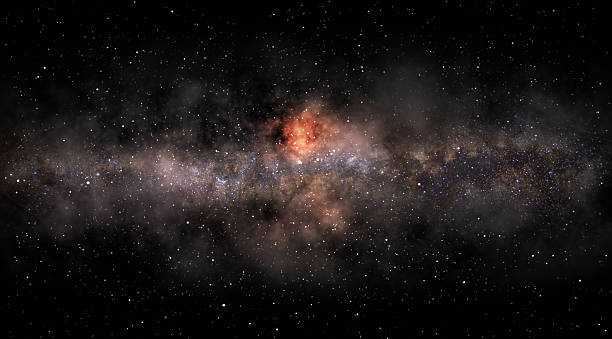
For as long as humanity has looked up at the night sky, we have wondered whether we are alone. The stars shimmer in cold silence, yet modern instruments have revealed that the universe is anything but quiet. It hums with radio waves, pulses with X-rays, crackles with gamma rays, and occasionally whispers signals so strange that even seasoned astronomers pause.
Radio telescopes scan the heavens day and night. Space-based observatories orbit above Earth’s atmosphere, catching high-energy photons from distant galaxies. Massive detectors monitor subtle changes in radiation from across the cosmos. And every so often, something unusual appears — a signal that does not immediately fit the patterns we know.
Most of these anomalies eventually find natural explanations. Pulsars, quasars, black holes, and stellar explosions can produce astonishing phenomena. Yet some signals linger in scientific memory because of their odd characteristics, their sudden appearances, or their puzzling origins.
Below are ten strange signals from deep space that have stirred curiosity, sparked speculation, and reminded us how mysterious the universe still is.
1. The Wow! Signal
On August 15, 1977, at the Ohio State University Radio Observatory, a radio telescope known as the Big Ear detected an unusually strong narrowband radio signal. It lasted for 72 seconds — the exact amount of time the telescope could observe a fixed point in the sky as Earth rotated.
The signal appeared to come from the direction of the constellation Sagittarius. It was remarkably intense compared to background noise and had a frequency close to the hydrogen line at 1420 MHz — a frequency considered significant in the search for extraterrestrial intelligence because hydrogen is the most abundant element in the universe.
When astronomer Jerry Ehman reviewed the data printout, he circled the unusual sequence of characters representing the signal’s intensity and wrote “Wow!” in the margin. The name stuck.
Despite repeated attempts to detect it again, the signal has never reappeared. Natural explanations have been proposed, including reflections from space debris or rare astrophysical phenomena, but none have been confirmed conclusively.
The Wow! Signal remains a one-time event — strong, narrow, and intriguingly placed in a frequency band that SETI researchers monitor closely. It does not prove extraterrestrial intelligence. But it continues to represent one of the most tantalizing moments in the search for cosmic company.
2. Fast Radio Bursts
In 2007, astronomers analyzing archival data from the Parkes Observatory in Australia discovered something extraordinary: a brief but incredibly powerful burst of radio waves lasting only a few milliseconds. It appeared to originate far beyond our galaxy.
These events, now known as Fast Radio Bursts, or FRBs, release in milliseconds as much energy as the Sun emits in days or even weeks. They are extremely bright, extremely short, and initially were completely mysterious.
Since their discovery, dozens and then hundreds of FRBs have been detected by observatories around the world, including Canada’s CHIME telescope. Some are one-off bursts. Others repeat irregularly.
Research has shown that at least some FRBs are produced by magnetars — highly magnetized neutron stars. In 2020, a magnetar within our own Milky Way galaxy produced a burst similar to extragalactic FRBs, strengthening this link.
However, not all FRBs are fully explained. Some show complex structures or periodic activity that remain under investigation. The extreme energies involved continue to challenge models.
Though no credible evidence connects FRBs to alien civilizations, their discovery reminds us that the universe can generate signals far more intense and stranger than anyone expected.
3. The BLC1 Signal
In 2020, researchers using the Breakthrough Listen initiative detected a narrowband radio signal coming from the direction of Proxima Centauri, the closest star to the Sun. The signal, labeled BLC1, appeared at a frequency around 982 MHz.
Its narrow bandwidth and slight frequency drift — consistent with motion between source and receiver — initially made it intriguing. Narrowband signals are particularly interesting in SETI research because natural astrophysical sources typically produce broad spectra.
For months, the signal remained unexplained, fueling cautious excitement.
Eventually, further analysis indicated that BLC1 was most likely terrestrial interference — a signal from Earth-based technology masquerading as something extraterrestrial. Such interference is a persistent challenge in radio astronomy.
The BLC1 episode demonstrated both the promise and difficulty of searching for intelligent life. Even with sophisticated filtering and careful verification, Earth’s own technology can mimic cosmic mystery.
Still, the fact that we can detect faint radio signals from nearby stars speaks to the extraordinary sensitivity of modern instruments.
4. The Mysterious Tabby’s Star Dimming
In 2015, data from NASA’s Kepler Space Telescope revealed something strange about a star officially known as KIC 8462852, often nicknamed Tabby’s Star after astronomer Tabetha Boyajian.
The star exhibited irregular and dramatic dips in brightness, far deeper than typical planetary transits. Some dips blocked up to 22 percent of the star’s light.
Initial speculation ranged widely. One hypothesis proposed a swarm of comet fragments. More speculative discussions even entertained the possibility of a megastructure built by an advanced civilization — such as a Dyson sphere partially surrounding the star.
Subsequent observations across multiple wavelengths suggested that dust was the most likely explanation. The dimming appeared to be wavelength-dependent, consistent with fine particles blocking starlight.
While the megastructure idea captured public imagination, no evidence supports artificial construction. The leading explanation remains natural dust clouds.
Yet Tabby’s Star stands as a reminder that the cosmos can produce behaviors we do not immediately understand — and that extraordinary claims require extraordinary evidence.
5. Repeating FRB 121102
One particular Fast Radio Burst, known as FRB 121102, changed everything about how scientists view these phenomena. Unlike most FRBs, it repeats.
Discovered in 2012, FRB 121102 has produced numerous bursts from the same location in a dwarf galaxy about three billion light-years away. Its repeating nature ruled out cataclysmic events like supernovae as a source.
High-resolution observations traced it to a region with persistent radio emission, possibly associated with a young magnetar embedded in a nebula.
The fact that a compact object can repeatedly unleash such powerful radio flashes raises new questions about magnetic field strength, plasma physics, and extreme astrophysical environments.
Repeating FRBs show that deep space is capable of structured, recurring signals that at first glance might resemble artificial transmissions. Nature, it seems, can be both dramatic and deceptive.
6. The Galactic Center Gamma-Ray Excess
At the center of the Milky Way lies a supermassive black hole known as Sagittarius A*. Surrounding this region is a mysterious excess of gamma rays detected by the Fermi Gamma-ray Space Telescope.
This gamma-ray glow does not perfectly match expected emissions from known astrophysical sources. One intriguing possibility is that it results from dark matter particles annihilating each other — a process predicted in some theoretical models.
Alternatively, the signal may arise from a population of millisecond pulsars too faint to resolve individually.
The debate continues. If the gamma-ray excess is indeed related to dark matter, it would represent one of the most significant discoveries in physics. If not, it still highlights our incomplete understanding of the energetic heart of our own galaxy.
7. The 1977 “SHGb02+14a” Signal
Another curious signal detected during SETI observations was labeled SHGb02+14a. It appeared multiple times from roughly the same region of sky, near the globular cluster Messier 55.
The signal was narrowband and appeared on three occasions. However, its strength varied, and follow-up observations failed to confirm it as a persistent extraterrestrial transmission.
Like many such signals, it likely resulted from terrestrial interference or statistical anomalies in noisy data. But its recurrence briefly raised eyebrows.
SETI researchers remain cautious. The history of strange signals is filled with examples that initially seemed promising but later found mundane explanations.
8. The Mysterious X-Ray Pulses From Isolated Neutron Stars
Certain isolated neutron stars emit periodic X-ray pulses that do not neatly fit into existing categories of pulsars or magnetars. These objects, sometimes called X-ray dim isolated neutron stars, produce soft X-ray emissions without strong radio counterparts.
Their origins and emission mechanisms are still under investigation. Some show absorption features in their spectra that are not fully explained by current models.
These stars are remnants of supernova explosions — dense cores composed mostly of neutrons. Their extreme magnetic fields and gravitational conditions make them natural laboratories for exotic physics.
While there is no suggestion of artificial origin, their unusual signals remind us that even stellar corpses can behave in unexpected ways.
9. The Lorimer Burst
The first Fast Radio Burst ever identified is often called the Lorimer Burst, after astronomer Duncan Lorimer. Detected in archival data from 2001, it was a bright, millisecond radio flash.
At first, some doubted its authenticity. Could it be interference? A glitch?
Eventually, additional FRBs confirmed that the Lorimer Burst was real and represented a new class of astrophysical phenomena.
The burst’s dispersion — the delay of lower frequencies compared to higher ones — indicated it had traveled through vast amounts of intergalactic plasma, confirming an extragalactic origin.
The Lorimer Burst opened a new window on the universe. It showed that powerful, millisecond radio flashes were occurring across cosmic distances — events no one had predicted.
10. The Oumuamua Interstellar Object
In 2017, astronomers discovered an object passing through the solar system on a hyperbolic trajectory, indicating it originated from interstellar space. Named Oumuamua, a Hawaiian term meaning “scout” or “messenger,” it was the first known interstellar object detected in our system.
Oumuamua exhibited unusual properties. Its brightness varied dramatically, suggesting an elongated shape. More puzzlingly, its trajectory showed slight acceleration inconsistent with gravity alone.
One natural explanation is that outgassing — like a comet releasing gas — pushed it slightly. However, no visible cometary tail was detected.
Some scientists proposed exotic scenarios, including a thin, light-sail-like structure of artificial origin. Most researchers favor natural explanations, such as hydrogen outgassing or unusual composition.
Oumuamua remains an enigma. It was a visitor from another star system, carrying secrets of distant planetary formation. Whether entirely natural or not, it reminded humanity that objects from other stars do occasionally cross our path.
Are We Being Watched?
Each of these signals has a scientific context. Each has been examined with skepticism and care. None has provided credible evidence of extraterrestrial intelligence.
Yet the question persists: are we alone?
Modern astronomy has revealed a universe teeming with planets. Organic molecules exist in interstellar space. Water is common. The ingredients for life appear widespread.
The silence may reflect technological limitations, vast distances, or the rarity of advanced civilizations. It may also reflect the immense timescales involved. Civilizations may rise and fall in cosmic blinks.
Science proceeds cautiously. It demands repeatability, verification, and evidence. One unexplained signal is not proof of alien watchers. It is an invitation to investigate further.
The cosmos is not quiet. It crackles with radiation, pulses with energy, and flashes with brilliance. Most of these signals have natural explanations rooted in astrophysics.
But every strange detection reminds us that the universe is more inventive than we are. It produces phenomena we did not predict. It challenges our assumptions.
We are listening more carefully than ever before. Radio arrays scan the skies. Optical telescopes search for laser flashes. Space missions analyze exoplanet atmospheres for biosignatures.
If someone out there is transmitting, we may one day hear it clearly.
Until then, the signals from deep space remain both scientific puzzles and mirrors reflecting our own curiosity.
We are a young species on a small planet orbiting an ordinary star in a vast galaxy among billions. The fact that we can detect millisecond radio bursts from billions of light-years away is astonishing. The fact that we continue to ask whether we are being watched is profoundly human.
The universe sends its signals. We listen. And in that act of listening, we reveal something extraordinary about ourselves — a desire not only to survive in the cosmos, but to understand it, and perhaps to find our neighbors among the stars.