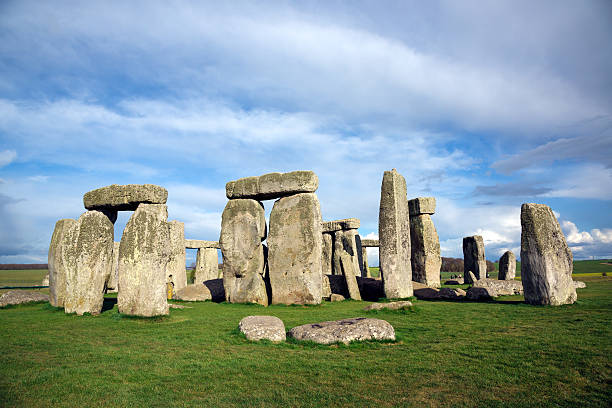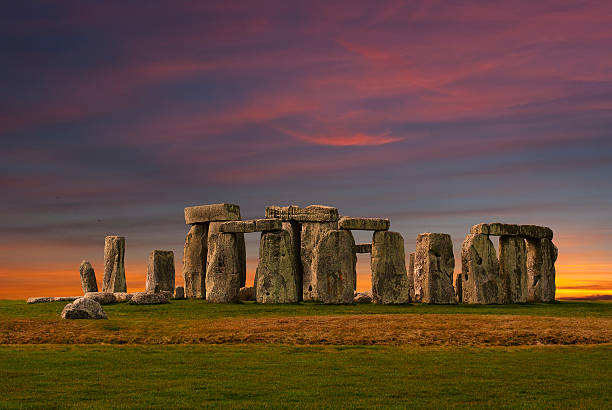
Across the rolling plains of southern England stands one of the most famous prehistoric monuments on Earth. Massive stones, some weighing more than 20 tons, form a ring that has fascinated historians, archaeologists, and dreamers for centuries. These stones have watched thousands of years pass. Empires rose and fell while they stood silent beneath the sky.
This ancient monument is Stonehenge.
For centuries, people have asked the same question: who built it, and why? The truth is both clearer and more mysterious than ever. Modern archaeology, geology, and astronomy have revealed remarkable facts about the monument. Yet many questions remain unanswered.
This article invites you into a journey of curiosity. Think of it as a quiz through time—a set of ten fascinating questions about Stonehenge. Each question opens a window into ancient engineering, prehistoric culture, and the astonishing ingenuity of people who lived thousands of years before written history.
As you read, imagine standing on Salisbury Plain at sunrise. The wind moves across the grass. The stones cast long shadows. And somewhere in the distance, the past whispers.
1. When Was Stonehenge Built?
The first question seems simple, but the answer is surprisingly complex.
Stonehenge was not built all at once. Instead, it developed in several stages over roughly 1,500 years. Archaeological evidence suggests construction began around 3000 BCE and continued until about 1500 BCE.
The earliest phase involved digging a circular ditch and bank, creating what archaeologists call a “henge.” Within this circular earthwork were pits known as the Aubrey Holes, named after the antiquarian who first identified them in the 17th century.
These pits likely held wooden posts or possibly stones, though their exact purpose remains debated. What is certain is that the earliest Stonehenge looked very different from the famous stone circle we see today.
Several centuries later, around 2500 BCE, the builders erected the enormous sarsen stones that form the monument’s iconic trilithons—two vertical stones topped by a horizontal lintel.
The construction phases reveal something remarkable: Stonehenge was a project spanning many generations. Entire communities must have contributed to its development. Each generation inherited the monument, reshaped it, and left its own imprint.
Stonehenge was not the work of a single moment in history. It was the evolving vision of a civilization.
2. Who Built Stonehenge?
For centuries, myths tried to explain the builders of Stonehenge.
Medieval legends claimed that wizards transported the stones by magic. Some stories attributed its construction to the mythical wizard Merlin. Others imagined giants carrying stones across oceans.
Today, archaeology offers a more grounded answer.
Stonehenge was built by Neolithic and Bronze Age peoples living in Britain. These were farming communities who had transitioned from hunter-gatherer lifestyles to agriculture. They cultivated crops, raised livestock, and formed increasingly complex social networks.
Excavations at nearby settlements, including Durrington Walls, reveal evidence of large seasonal gatherings. Thousands of people may have assembled during important festivals.
These communities possessed sophisticated knowledge of engineering, organization, and astronomy. They had no metal tools during the earliest phases of construction—only stone, bone, wood, and ingenuity.
The builders were not primitive. They were skilled planners capable of coordinating enormous communal efforts.
Stonehenge is a testament to the creativity and determination of prehistoric societies.
3. How Were the Giant Stones Moved?
One of the most astonishing aspects of Stonehenge is the transportation of its massive stones.
The largest stones, called sarsens, weigh up to 25 tons. These stones likely came from the Marlborough Downs, roughly 25 kilometers away from the monument.
Moving such enormous stones without modern machinery was an extraordinary feat.
Researchers believe the builders used wooden sledges and rollers, pulling the stones over prepared tracks. Teams of workers may have hauled them using ropes made from plant fibers or animal hides.
Experimental archaeology has demonstrated that with enough people—perhaps a few hundred—it is possible to move stones of this size using simple technology.
The smaller stones at Stonehenge, known as bluestones, present an even greater mystery. These stones originated in the Preseli Hills of Wales, nearly 225 kilometers away.
How they were transported remains debated. Some scientists believe the stones were dragged overland and floated along rivers. Others suggest glaciers may have moved them closer during the Ice Age, though this theory remains controversial.
Regardless of the exact method, the transportation of these stones required remarkable logistical planning.
Stonehenge was not merely a monument. It was an engineering triumph.
4. Why Are the Stones Arranged in Circles?
The circular design of Stonehenge is one of its most distinctive features.
Circles held symbolic importance in many prehistoric cultures. They often represented unity, cycles of life, or connections between Earth and sky.
But Stonehenge’s circles are not random. The monument contains several concentric rings of stones, each carefully arranged with precise spacing and orientation.
The outer ring consists of upright sarsen stones topped with lintels forming a continuous circle. Inside this ring stand the massive trilithons arranged in a horseshoe shape.
Archaeologists believe the arrangement reflects both ceremonial and astronomical purposes.
The monument’s symmetry suggests deliberate planning and possibly sacred symbolism. Circles have no beginning and no end, making them powerful representations of eternity and continuity.
When standing inside Stonehenge, the circular arrangement creates a sense of enclosure and ritual space—separating the sacred interior from the ordinary world outside.
The design invites contemplation of cycles: seasons, life, death, and rebirth.
5. Does Stonehenge Align With the Sun?
Yes—and this is one of the most fascinating aspects of the monument.
Stonehenge is aligned with the movements of the Sun during key moments of the year. The most famous alignment occurs during the summer solstice.
At sunrise on the summer solstice, the Sun rises directly over the Heel Stone when viewed from the center of the monument. The light shines along the monument’s main axis, illuminating the stones dramatically.
A corresponding alignment occurs during the winter solstice sunset, when the Sun sets in line with the central axis of the monument.
These alignments suggest that Stonehenge functioned partly as a solar observatory or ceremonial calendar.
For agricultural societies, tracking the seasons was crucial. The solstices marked important turning points in the yearly cycle—moments when days begin to grow longer or shorter.
Stonehenge may have been a place where communities gathered to celebrate these cosmic events.
The monument connects Earth to the heavens, reminding observers that human life unfolds within a larger cosmic rhythm.
6. What Were the Bluestones Used For?
Inside the larger sarsen circle stand smaller stones known as bluestones.
These stones are named for their bluish tint when freshly cut or wet. They are geologically distinct from the sarsens and originated in Wales.
Why transport stones hundreds of kilometers?
Some archaeologists believe the stones held spiritual or cultural significance for the communities who moved them. The Preseli Hills may have been considered sacred, and bringing stones from that landscape could have symbolized unity between distant regions.
Another theory suggests the stones were believed to possess healing properties. Medieval writers later associated Stonehenge with healing rituals, though direct evidence from the Neolithic period is limited.
Recent studies of human remains found near Stonehenge reveal that some individuals buried nearby came from distant regions, including Wales. This suggests that the monument attracted pilgrims or participants from across Britain.
The bluestones may have represented connections between communities, landscapes, and beliefs.
Their presence transforms Stonehenge from a local monument into a symbol of a wider prehistoric world.
7. Was Stonehenge a Burial Site?
Yes—at least during its early phases.
Excavations have uncovered cremated human remains in several of the Aubrey Holes and surrounding areas. These burials date to the earliest phase of Stonehenge, around 3000 BCE.
For several centuries, the monument appears to have served as a cremation cemetery for an elite group of individuals.
The presence of burials suggests that Stonehenge was not just an astronomical site or ceremonial gathering place—it was also connected to death and remembrance.
In many ancient cultures, monuments served multiple purposes simultaneously. Ritual, burial, and celestial observation could all occur within the same sacred landscape.
Later phases of Stonehenge may have shifted emphasis toward seasonal ceremonies rather than funerary practices.
Still, the early burials reveal that Stonehenge was intimately tied to human mortality.
The stones may have stood not only as markers of cosmic cycles but also as monuments to ancestors.
8. How Precise Was the Engineering?
Stonehenge’s engineering precision is extraordinary, especially considering the tools available at the time.
The builders shaped the sarsen stones using stone hammers, creating smooth surfaces and carefully fitted joints. The lintel stones were connected to uprights using mortise-and-tenon joints—techniques similar to woodworking.
Additionally, the lintels were curved to form a perfect circle when placed atop the uprights. Achieving this required sophisticated geometric planning.
The monument’s axis alignment with the solstices also required careful observation of solar movements across the horizon.
These details reveal that the builders possessed advanced knowledge of measurement, geometry, and construction techniques.
Stonehenge demonstrates that prehistoric societies were capable of remarkable technical achievements long before the development of written mathematics.
It stands as a silent classroom in ancient engineering.
9. Why Was Stonehenge Eventually Abandoned?
Like many ancient monuments, Stonehenge did not remain active forever.
By around 1500 BCE, major construction activity had ceased. Over time, the monument gradually lost its central role in regional life.
Why this happened remains uncertain.
One possibility is that cultural and religious practices evolved. As societies changed, new ritual sites may have emerged elsewhere.
Another possibility is that population movements altered social networks that once supported large communal gatherings.
Climate fluctuations during the late Bronze Age may also have influenced settlement patterns and agricultural stability.
Stonehenge was never destroyed or intentionally dismantled. Instead, it slowly transitioned from an active ceremonial site to a silent relic of the past.
The stones endured, but the culture that built them transformed.
10. What Does Stonehenge Mean Today?
Stonehenge continues to inspire wonder.
To archaeologists, it represents one of the most important prehistoric monuments in the world. To historians, it reveals the sophistication of Neolithic societies. To astronomers, it illustrates humanity’s long fascination with the sky.
For many modern visitors, Stonehenge evokes a sense of mystery and connection to deep time.
Every year during the summer solstice, thousands of people gather at the monument to watch the Sun rise along its ancient alignment. Though separated by thousands of years from the original builders, these observers share the same awe.
The monument reminds us that human curiosity is ancient. Long before telescopes and satellites, people watched the sky and sought meaning in its movements.
Stonehenge is not merely a structure of stone. It is a bridge across millennia—a place where science, history, myth, and imagination meet.
The Endless Questions of Stonehenge
Even after centuries of research, Stonehenge continues to pose new questions.
Each excavation reveals new clues about ancient diets, migration patterns, and construction techniques. Advances in radiocarbon dating, DNA analysis, and geological studies have transformed our understanding of the monument.
Yet mystery remains.
Why did prehistoric communities invest such immense effort in this structure? What ceremonies took place within its stones? What stories did its builders tell about the sky, the land, and the ancestors?
Stonehenge stands at the intersection of science and wonder.
It challenges us to imagine the world through the eyes of people who lived five thousand years ago—people who watched the same Sun rise over the same horizon and felt the same desire to understand their place in the universe.
And perhaps that is the real quiz Stonehenge offers.
Not simply whether we know the answers—but whether we still possess the curiosity to keep asking the questions.