For as long as humans have looked up at the stars or down at the soil beneath their feet, one question has lingered with quiet persistence: how did life begin?
Every forest, every ocean, every heartbeat on Earth traces its origin to a moment billions of years ago when lifeless chemistry somehow transformed into biology. This transition—from simple molecules drifting in ancient oceans to living systems capable of growth, reproduction, and evolution—is one of the greatest mysteries science has ever attempted to understand.
Today, scientists from fields as diverse as geology, chemistry, astronomy, and biology work together to reconstruct the earliest chapters of life’s story. Their discoveries reveal a world far stranger than we once imagined: a young planet battered by asteroids, oceans rich with chemical energy, microscopic molecular experiments occurring endlessly in warm pools and deep-sea vents.
The origin of life was not a single event but a long chain of improbable steps. Each step built upon the previous one, gradually increasing complexity until the first true living systems appeared.
Here are ten astonishing facts that reveal how life on Earth may have begun.
1. Life Appeared Surprisingly Early in Earth’s History
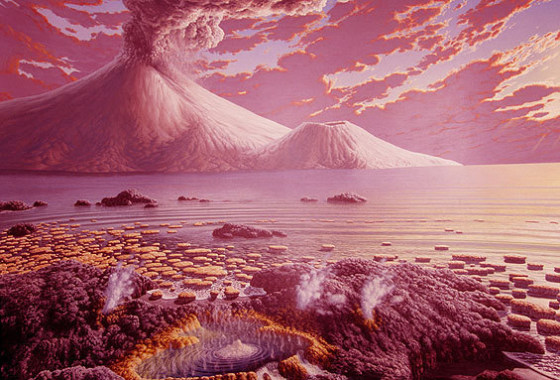
The Earth formed about 4.54 billion years ago from a swirling cloud of gas and dust surrounding the young Sun. For the first few hundred million years, the planet was a violent place. Massive asteroid impacts struck the surface. Volcanoes erupted constantly. Oceans of molten rock covered much of the planet.
Yet life seems to have appeared remarkably quickly once conditions stabilized.
The oldest widely accepted evidence of life dates back at least 3.5 billion years. Fossilized microbial structures known as stromatolites, created by colonies of microorganisms, have been found in ancient rocks in Western Australia and other regions. Some isotopic evidence suggests life may have existed even earlier, possibly around 3.7 to 3.8 billion years ago.
This means life emerged only a few hundred million years after Earth became habitable.
In geological terms, that is astonishingly fast.
It suggests that the transition from chemistry to biology may not be an impossibly rare event. If conditions are right—liquid water, energy sources, and the necessary chemical ingredients—life might emerge relatively quickly.
The implication reaches far beyond Earth. If life appeared rapidly here, perhaps it could arise on other planets as well.
2. Life Probably Began with Simple Molecules
Before cells, before DNA, before proteins, the early Earth contained only simple molecules. These molecules were formed from basic elements such as carbon, hydrogen, oxygen, nitrogen, sulfur, and phosphorus.
In the 1950s, an experiment conducted by Stanley Miller and Harold Urey demonstrated that organic molecules could form naturally under conditions thought to resemble the early Earth’s atmosphere.
Their experiment circulated gases like methane, ammonia, hydrogen, and water vapor through a closed system and exposed them to electrical sparks that simulated lightning. Within days, the apparatus produced amino acids—the building blocks of proteins.
Later experiments have produced even more complex organic molecules under similar conditions.
These results show that the basic components of life can form spontaneously through natural chemical reactions. The early Earth likely contained vast quantities of such molecules, created by lightning, ultraviolet radiation, volcanic activity, and asteroid impacts.
Life did not begin with complexity. It began with chemistry.
3. Water Was Essential for Life’s Origin
One ingredient appears absolutely essential in every hypothesis about the origin of life: liquid water.
Water is often called the “universal solvent” because it dissolves a wide range of chemical substances. This property allows molecules to interact, combine, and rearrange in countless ways.
Early Earth had abundant water. Geological evidence suggests that oceans existed as early as 4.3 billion years ago. These oceans provided enormous chemical laboratories where reactions could occur continuously for millions of years.
Water also stabilizes biological molecules and helps regulate temperature. Without it, complex chemistry becomes far more difficult.
The presence of water is therefore a central criterion in the search for life beyond Earth. Scientists look for evidence of past or present water on planets and moons such as Mars and Europa.
Where there is liquid water, the chemistry of life may have a chance to begin.
4. RNA May Have Been the First Biological Molecule
Modern life relies heavily on DNA to store genetic information and proteins to carry out chemical reactions. But many scientists believe that before DNA and proteins, another molecule dominated the earliest biology: RNA.
This idea is known as the RNA world hypothesis.
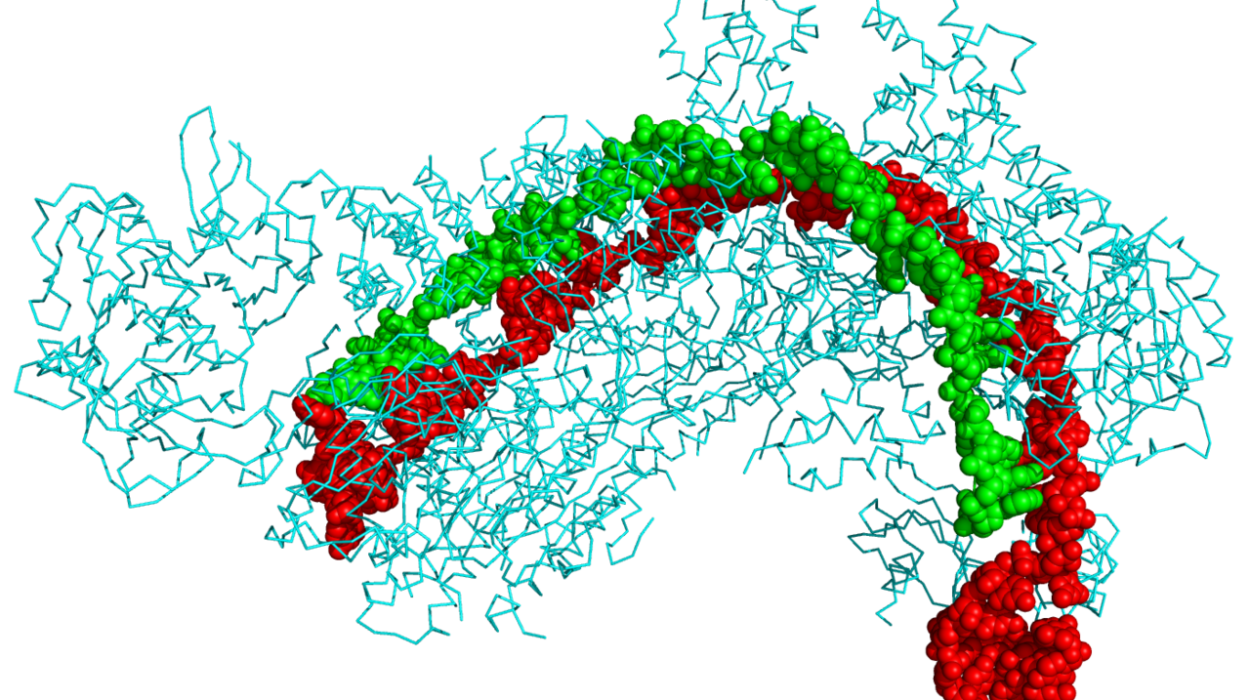
RNA is remarkable because it can perform two critical roles. Like DNA, it can store genetic information. But unlike DNA, certain RNA molecules can also act as enzymes, speeding up chemical reactions. These catalytic RNAs are called ribozymes.
This dual ability suggests that early life may have relied entirely on RNA molecules that could both replicate themselves and catalyze reactions.
Over time, more stable DNA molecules may have evolved to store genetic information, while proteins became the primary catalysts in cells.
Although many questions remain about how RNA first formed, the discovery of ribozymes strongly supports the idea that RNA played a central role in life’s earliest stages.
The molecules that once ruled ancient chemistry may still echo inside every cell today.
5. Life May Have Begun in Deep-Sea Hydrothermal Vents
One of the most compelling environments proposed for the origin of life lies deep beneath the ocean surface.
Hydrothermal vents are cracks in the seafloor where heated, mineral-rich water emerges from Earth’s crust. These vents create steep chemical gradients and supply abundant energy—conditions ideal for complex chemistry.
In the late 1970s, scientists exploring the ocean floor discovered entire ecosystems thriving around hydrothermal vents. These communities rely not on sunlight but on chemical energy, a process known as chemosynthesis.
Some researchers propose that life began in alkaline hydrothermal vents, where microscopic mineral pores could have acted as natural compartments for chemical reactions.
These tiny chambers may have concentrated molecules, promoted reactions, and created conditions that eventually led to self-replicating systems.
If this hypothesis is correct, life began not in sunlit ponds but in the dark depths of the ocean, fueled by geothermal energy from the Earth’s interior.
6. Asteroids May Have Delivered Life’s Ingredients
The early solar system was filled with asteroids and comets, many of which collided with Earth. While these impacts were destructive, they may also have delivered essential ingredients for life.
Meteorites found on Earth contain a wide variety of organic molecules, including amino acids and nucleobases—the building blocks of DNA and RNA.
One famous example is the Murchison meteorite, which fell in Australia in 1969. Scientists analyzing the meteorite discovered dozens of amino acids, many not commonly found in terrestrial biology.
This evidence suggests that organic chemistry occurs naturally in space.
Comets and asteroids may have showered early Earth with these molecules, enriching the planet’s chemical inventory and accelerating the processes that led to life.
In this sense, life on Earth may partly owe its existence to chemistry that began among the stars.
7. Early Life Survived Extreme Conditions
The early Earth was far harsher than the world we know today. Volcanic eruptions were common. Ultraviolet radiation from the Sun was intense because the planet lacked an ozone layer. Asteroid impacts were frequent.
Yet life not only survived—it thrived.
Modern organisms known as extremophiles offer clues to how early life endured such conditions. These microbes can live in boiling hot springs, acidic lakes, deep underground rocks, and even inside nuclear reactors.
Some bacteria flourish at temperatures above 100°C near hydrothermal vents. Others survive intense radiation or crushing pressure.
These organisms demonstrate that life is remarkably resilient.
Early life forms were likely similar—simple, hardy microbes capable of surviving in environments that would be deadly to most modern organisms.
Life’s origins may lie not in gentle conditions but in extremes.
8. The First Cells Were Incredibly Simple
All modern organisms are composed of cells. But the earliest cells were probably far simpler than those found today.
These primitive cells likely consisted of little more than a membrane surrounding a collection of molecules capable of replication and metabolism.
Membranes may have formed naturally when certain molecules, such as fatty acids, assembled into spherical structures in water. These structures, called vesicles, can grow and divide under the right conditions.
Inside such compartments, chemical reactions could occur more efficiently than in open water. Molecules that cooperated in maintaining the system would persist, while others would disappear.
This process gradually led to increasingly organized and self-sustaining systems.
The first true cells were likely fragile and primitive. Yet from them descended every living organism on Earth.
9. Evolution Began Almost Immediately
Once self-replicating molecules appeared, evolution began.
Replication is never perfectly accurate. Small errors—mutations—occur. Some mutations improve survival or replication efficiency, while others are harmful.
Natural selection favors systems that reproduce more effectively.
Even the simplest replicating molecules would have competed for resources. Over time, more efficient systems would dominate, gradually increasing complexity.
This process, described centuries later by Charles Darwin, did not begin with animals or plants. It began with molecules.
From that point forward, life entered an endless cycle of variation, selection, and adaptation—a process that continues today.
Evolution is not just a feature of life. It is the engine that shaped life from its earliest beginnings.
10. Every Living Thing Shares a Common Ancestor
Perhaps the most astonishing fact about life’s origin is that all organisms on Earth appear to share a single common ancestor.
Genetic evidence reveals that every known organism—from bacteria to whales—uses the same genetic code and similar molecular machinery.
This universal biochemistry points to a common origin.
Scientists refer to this hypothetical organism as LUCA, the Last Universal Common Ancestor. LUCA lived more than 3.5 billion years ago and was likely a single-celled microbe.
It was not the first life form but rather the ancestor from which all modern lineages descend.
LUCA already possessed complex molecular systems for storing genetic information, producing proteins, and generating energy.
From that ancient organism, life diversified into the millions of species that have inhabited Earth.
Every tree, every bird, every human being traces its lineage back to that distant microbial ancestor.
The entire living world is one vast family.
The Cosmic Perspective
The origin of life is not just a biological puzzle. It is a cosmic story.
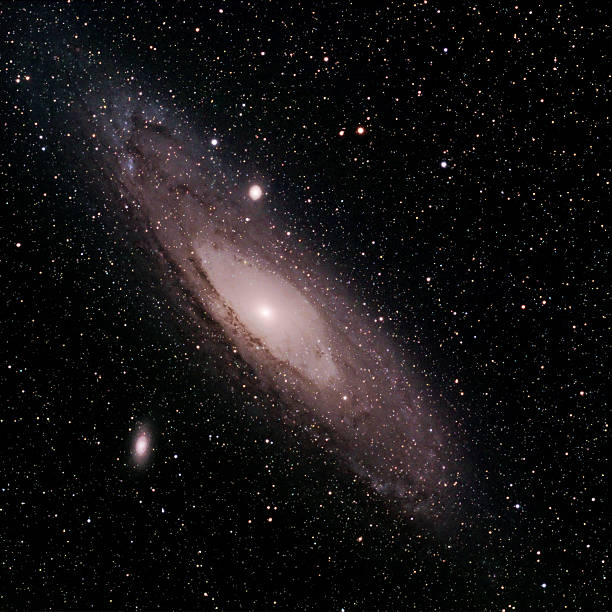
The atoms that make up living organisms were forged inside ancient stars through nuclear fusion. Carbon, nitrogen, oxygen, and other elements essential to life were scattered into space by supernova explosions long before Earth formed.
Those atoms eventually became part of our planet, our oceans, and our bodies.
In a profound sense, life is the universe becoming aware of itself.
Scientists continue to investigate how nonliving chemistry crossed the threshold into biology. Experiments recreate ancient conditions in laboratories. Space missions search for organic molecules on comets and distant moons. Telescopes study planets around other stars for signs of habitability.
Each discovery brings us closer to understanding one of the deepest questions ever asked.
How did life begin?
The answer may not lie in a single dramatic moment but in countless tiny steps—chemical reactions repeating endlessly until, one day, a system emerged that could copy itself.
From that humble beginning grew forests, oceans, ecosystems, civilizations, and minds capable of wondering about their own origins.
Life’s story began quietly, billions of years ago, in a world that seemed utterly lifeless.
Yet within that silent chemistry lay the seeds of everything that would follow.