For most of human history, Earth was not merely our home—it was the only world we knew. The stars were distant lights, mysterious and unreachable. The idea that planets might orbit other suns was once speculation, philosophy, even poetry. Today, it is confirmed science. Thousands of exoplanets have been discovered, and among them are worlds that stir something profound inside us: planets that resemble Earth.
To be clear, none of these planets are confirmed second Earths. We have not set foot on them. We do not know if oceans roll across their surfaces or if winds move through alien forests. What we do know is based on careful measurements of their sizes, masses, densities, orbital distances, and the properties of their host stars. From this data, astronomers can estimate whether liquid water might exist on their surfaces—a crucial requirement for life as we understand it.
Habitability is complex. A planet must orbit within the “habitable zone,” the region around a star where temperatures could allow liquid water. It should have a suitable atmosphere, stable conditions, and protection from extreme stellar radiation. The chemistry must permit complex molecules. Gravity must be strong enough to hold an atmosphere but not so strong that it crushes biology beyond possibility.
Within those constraints, here are ten of the most scientifically intriguing Earth-like planets that could, in principle, host human life.
1. Proxima Centauri b
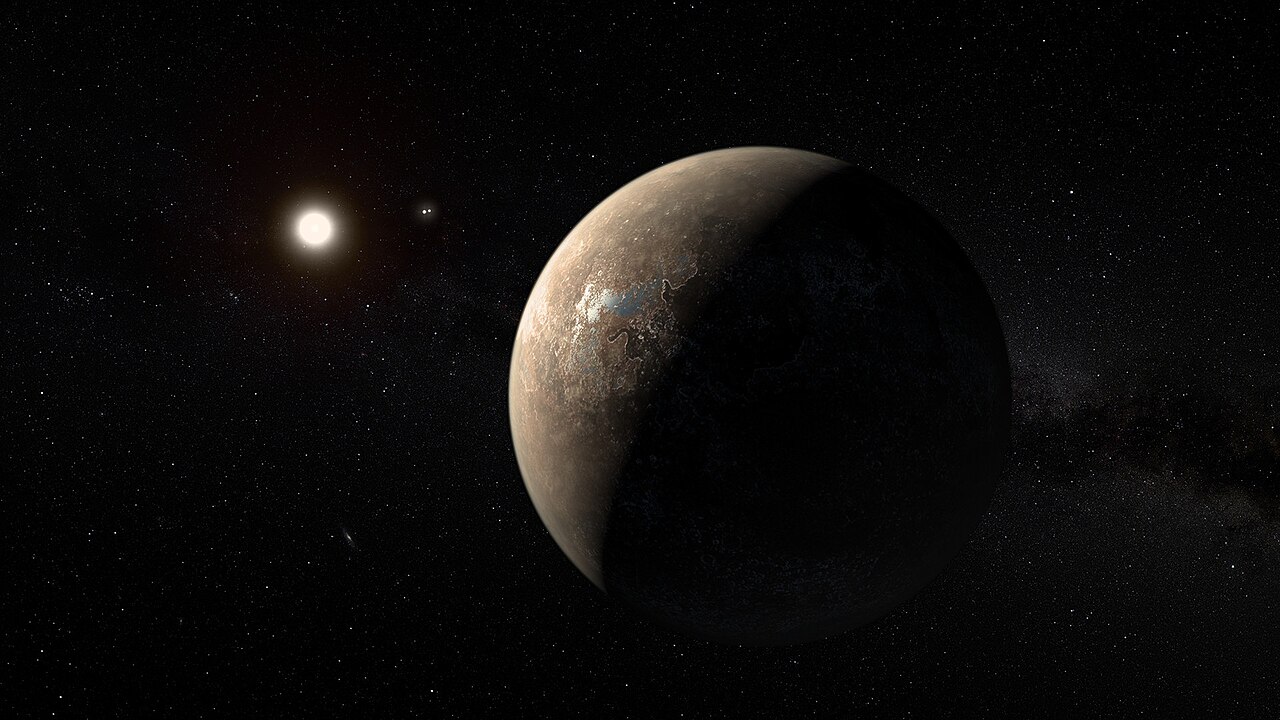
Orbiting the closest star to our Sun, Proxima Centauri b lies just over four light-years away in the Alpha Centauri system. Its discovery in 2016 electrified the scientific world. For the first time, a potentially habitable planet was found around the nearest star to Earth.
Proxima Centauri b orbits within the habitable zone of its parent star, a red dwarf known as Proxima Centauri. The planet has a minimum mass slightly greater than Earth’s, suggesting it is likely rocky. Its orbital period is only about eleven Earth days, meaning it circles its star extremely closely compared to Earth’s orbit around the Sun.
However, red dwarfs are volatile. Proxima Centauri emits powerful stellar flares and high-energy radiation. Because the planet is so close, it is likely tidally locked, with one side perpetually facing the star while the other remains in darkness. Whether an atmosphere could survive under such conditions is still under investigation.
Climate models suggest that if Proxima Centauri b possesses a thick atmosphere and possibly oceans, heat could circulate from the day side to the night side, preventing extreme temperature differences. It may not be a gentle world, but it remains one of our most tantalizing neighbors.
2. TRAPPIST-1e
In the constellation Aquarius lies the ultra-cool dwarf star TRAPPIST-1, home to seven Earth-sized planets. Among them, TRAPPIST-1e stands out as one of the most promising for habitability.
TRAPPIST-1e is similar in size to Earth and likely rocky in composition. It orbits comfortably within the habitable zone of its star. Density measurements suggest it may have a solid surface and potentially a significant water inventory.
Because TRAPPIST-1 is much smaller and cooler than the Sun, its habitable zone is extremely close in. Like Proxima Centauri b, TRAPPIST-1e is likely tidally locked. Yet detailed climate simulations indicate that a sufficiently thick atmosphere could distribute heat effectively.
The TRAPPIST-1 system offers a rare opportunity. With multiple potentially habitable planets in one compact system, future telescopes can compare their atmospheres for signs of water vapor, oxygen, or methane. If life thrives there, we may someday detect its chemical fingerprints.
3. Kepler-452b
Kepler-452b orbits a star remarkably similar to our Sun, located about 1,400 light-years away. Discovered by NASA’s Kepler Space Telescope in 2015, it was one of the first planets described as a possible “Earth cousin.”
The planet is larger than Earth, roughly 60 percent greater in diameter. This size suggests it may be a super-Earth—a rocky world with higher gravity. It orbits within the habitable zone of a G-type star, much like the Sun, completing one orbit in approximately 385 days.
Its star is slightly older than the Sun, meaning Kepler-452b has likely spent billions of years in stable conditions. That extended period could allow life to develop, assuming the planet has a suitable atmosphere and surface water.
However, because it is larger than Earth, its surface gravity may be stronger, and it may possess a thicker atmosphere. Whether these factors enhance or hinder habitability remains uncertain. Still, Kepler-452b remains one of the most compelling analogues to Earth discovered so far.
4. Kepler-186f
Kepler-186f holds historical significance as the first Earth-sized planet discovered within the habitable zone of another star. Located about 500 light-years away, it orbits a red dwarf star.
This planet is nearly the same size as Earth, suggesting a rocky composition. Its orbital period is about 130 days, placing it in the outer edge of its star’s habitable zone.
Because its star is cooler and dimmer than the Sun, Kepler-186f receives less stellar energy. If it has an atmosphere, greenhouse gases could help retain heat and maintain liquid water.
Scientists do not yet know its mass or atmospheric composition. But the mere fact that Earth-sized planets in habitable zones exist in abundance has reshaped our understanding of the cosmos.
5. LHS 1140 b
LHS 1140 b is a super-Earth orbiting a red dwarf approximately 40 light-years away. It is larger and more massive than Earth, with roughly seven times Earth’s mass.
This higher mass implies stronger gravity, which could help retain a thick atmosphere over billions of years. The planet resides in the habitable zone and may have a dense atmosphere capable of sustaining surface water.
Importantly, LHS 1140 b’s host star is relatively quiet compared to many red dwarfs. Lower stellar activity improves the chances that the planet’s atmosphere has survived intact.
Observations suggest it may have a rocky composition and potentially even oceans. Its relatively close distance makes it an excellent target for future atmospheric studies.
6. TOI 700 d
Discovered by NASA’s Transiting Exoplanet Survey Satellite, TOI 700 d orbits a small, cool star about 100 light-years away. It is roughly 20 percent larger than Earth and lies within the star’s habitable zone.
Climate modeling indicates that if TOI 700 d possesses an Earth-like atmosphere, it could maintain surface temperatures suitable for liquid water. Because its host star is less active than many red dwarfs, conditions may be relatively stable.
The discovery of TOI 700 d demonstrated the power of newer planet-hunting missions. It confirmed that Earth-sized planets in habitable zones are not rare anomalies but common features of the galaxy.
7. Kepler-442b
Kepler-442b orbits a K-type star about 1,200 light-years away. Slightly larger than Earth, it receives about two-thirds of the sunlight that Earth receives from the Sun.
Despite receiving less stellar energy, models suggest that with a modest greenhouse effect, it could maintain habitable surface conditions. Its star is cooler and longer-lived than the Sun, potentially providing stable energy for billions of years.
Kepler-442b’s size suggests it is rocky rather than gaseous. Its orbital period is about 112 days, placing it securely in the habitable zone.
Although we know little about its atmosphere, Kepler-442b remains one of the best candidates for long-term habitability.
8. Teegarden’s Star b
Teegarden’s Star is one of the Sun’s nearest neighbors, located just over 12 light-years away. In 2019, astronomers discovered two Earth-mass planets orbiting it, with Teegarden’s Star b residing in the habitable zone.
This planet has a mass similar to Earth’s and receives roughly comparable stellar energy. Because the star is a small red dwarf, the planet orbits very close in, completing a year in only about five Earth days.
As with many red dwarf planets, tidal locking is likely. However, simulations suggest that with a suitable atmosphere, habitable conditions could still exist in certain regions.
Its proximity makes Teegarden’s Star b a compelling target for future exploration and potential atmospheric characterization.
9. K2-18b
K2-18b is a super-Earth orbiting within the habitable zone of a red dwarf approximately 120 light-years away. It is larger than Earth and may be classified as a “sub-Neptune” with a thick atmosphere.
In 2019, observations detected water vapor in its atmosphere—the first time water vapor was found in the atmosphere of a habitable-zone exoplanet.
However, K2-18b’s size suggests it may have a deep hydrogen-rich atmosphere and possibly high-pressure oceans beneath. Whether such conditions could support human life as we know it is uncertain. It may be more akin to a water world than a terrestrial planet.
Even so, the detection of water vapor was a milestone. It demonstrated that atmospheric studies of potentially habitable exoplanets are possible.
10. Gliese 667 Cc
Gliese 667 Cc orbits within the habitable zone of a red dwarf in a triple-star system about 23 light-years away. It has a mass several times that of Earth and likely possesses a rocky surface.
The planet receives slightly less stellar energy than Earth does from the Sun, but with a suitable atmosphere, it could maintain liquid water.
Its host star is less luminous, and the system’s multiple stars create complex gravitational dynamics. Nevertheless, stability calculations indicate the planet’s orbit is secure.
Gliese 667 Cc remains one of the earliest discovered super-Earths in a habitable zone and continues to intrigue astronomers.
The Fragile Definition of Habitability
It is important to remember that “habitable” does not mean “inhabited.” Nor does it guarantee conditions suitable for humans without advanced technology. Mars lies near the Sun’s habitable zone, yet its thin atmosphere and lack of a magnetic field make it hostile.
Habitability depends on numerous factors: atmospheric composition, magnetic shielding, geological activity, and chemical cycles. A planet might sit in the perfect orbital position yet be barren. Another might lie slightly outside the traditional habitable zone but host subsurface oceans warmed by internal heat.
Life on Earth thrives in extreme environments—from deep ocean vents to frozen polar deserts—expanding our understanding of what is possible.
The Search Continues
The James Webb Space Telescope and future observatories are beginning to analyze exoplanet atmospheres in unprecedented detail. Scientists are searching for biosignatures—gases such as oxygen, methane, or combinations that may indicate biological activity.
In the coming decades, technology may allow us to directly image Earth-sized exoplanets and analyze their reflected light. We may detect seasonal changes, cloud patterns, even hints of oceans.
Each discovery reshapes our cosmic perspective. Earth is no longer unique in having the potential for life. It may be one of countless worlds where chemistry dances toward complexity.
A Universe Filled With Possibility
These ten planets represent hope and mystery. They are distant, silent worlds orbiting unfamiliar suns. Some may be scorched. Some may be frozen. Some may host oceans beneath alien skies.
We do not yet know.
But we do know this: the universe is rich with planets. Earth-sized worlds in habitable zones are common. The conditions that allow life are not rare miracles confined to one tiny corner of space.
When we look at these distant planets, we are looking at possible futures. At destinations for robotic explorers. At places where life may have taken root under different stars.
The night sky no longer feels empty. It feels alive with potential.
And somewhere, on one of these distant worlds, under a sky lit by a red or golden sun, there may be oceans reflecting light—waiting for us to discover them.