We experience time in heartbeats, in breaths, in the ticking of a clock on the wall. A second feels small, almost insignificant—a fleeting slice of existence that slips through our fingers before we can grasp it. But while we blink, while our lungs rise and fall, the universe performs a symphony of events so vast, so energetic, and so profound that it defies imagination.
Every single second, stars ignite, particles collide, galaxies drift, black holes feed, and light that began its journey billions of years ago reaches new destinations. The cosmos is not quiet. It is not still. It is in constant motion, governed by physical laws that operate with breathtaking precision.
What follows are nine scientifically grounded, awe-inspiring processes that happen every second somewhere in the universe. Some occur close to home. Others unfold at distances so extreme that their light will never reach us. But all of them are real, measurable, and part of the ongoing story of cosmic evolution.
1. Over 100 Billion Neutrinos Pass Through Your Body
At this very moment, as you read these words, an invisible torrent of particles is streaming through you. These particles are called neutrinos—nearly massless, electrically neutral particles produced in staggering numbers by nuclear reactions.
The Sun alone generates an enormous flood of neutrinos every second through nuclear fusion in its core. When hydrogen nuclei fuse to form helium, energy is released, and neutrinos are emitted as byproducts. Because neutrinos interact only via the weak nuclear force and gravity, they pass through matter almost undisturbed.
Every second, roughly one hundred billion solar neutrinos pass through each square centimeter of your body. That means trillions traverse you each second. And yet you feel nothing.
Neutrinos can travel through light-years of solid lead without interacting. Only vast underground detectors filled with thousands of tons of ultra-pure water or ice can occasionally catch the faint flash of light produced when one neutrino does interact.
In every second of your life, you are being gently bathed in particles born in the core of a star 150 million kilometers away. You are connected, invisibly and continuously, to the nuclear furnace of the Sun.
2. The Sun Converts 600 Million Tons of Hydrogen Into Helium
Our star is not static. It is a roaring thermonuclear engine. Every second, the Sun fuses approximately 600 million tons of hydrogen into helium through nuclear fusion.
In its core, temperatures reach about 15 million degrees Celsius. At such extreme conditions, hydrogen nuclei overcome their natural electrostatic repulsion and fuse together. Through a series of reactions known as the proton–proton chain, four hydrogen nuclei ultimately combine to form one helium nucleus.
The mass of the resulting helium nucleus is slightly less than the mass of the original hydrogen nuclei. That missing mass—about four million tons per second—is converted directly into energy according to Einstein’s equation E equals mc squared.
This energy radiates outward, eventually reaching Earth as sunlight. The warmth on your skin, the energy driving photosynthesis, the winds in the atmosphere—all are consequences of this mass-to-energy conversion happening continuously, second after second.
The Sun has been performing this transformation for about 4.6 billion years and will continue for billions more. Every second, it turns matter into light, sustaining life on a tiny blue planet.
3. Stars Explode Somewhere in the Universe
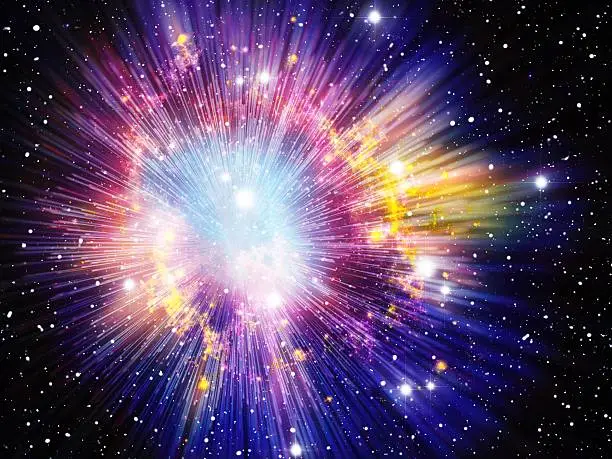
Supernovae are among the most violent events in existence. They occur when massive stars exhaust their nuclear fuel and collapse under their own gravity, or when white dwarfs accumulate too much mass and undergo runaway thermonuclear reactions.
In the observable universe, it is estimated that several supernovae occur every second. Most happen in distant galaxies far beyond our ability to see with the naked eye. But their combined brilliance briefly outshines entire galaxies.
When a supernova explodes, it releases an enormous amount of energy—sometimes more energy in a few weeks than the Sun will emit in its entire lifetime. The explosion forges heavy elements such as iron, gold, and uranium and scatters them into interstellar space.
Every atom of iron in your blood was once formed in the core of a massive star and released in a supernova explosion. Every second that passes, somewhere in the universe, another star ends its life in a cataclysmic burst, enriching the cosmos with the raw materials for planets and life.
The universe is constantly renewing itself through destruction.
4. Black Holes Consume Matter
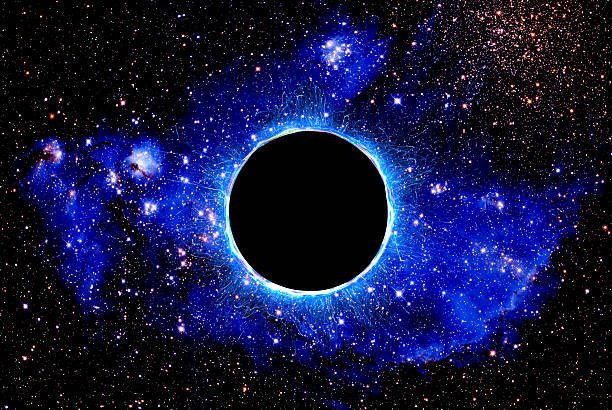
Black holes are not cosmic vacuum cleaners indiscriminately devouring everything around them. But when matter ventures too close, it cannot escape.
Across the universe, black holes are actively accreting material. In the centers of galaxies, supermassive black holes millions or billions of times the mass of the Sun feed on gas, dust, and sometimes entire stars.
As matter spirals inward, it forms an accretion disk, heating up to extreme temperatures due to friction and gravitational compression. This process can release tremendous amounts of energy, sometimes powering quasars—among the brightest objects in the universe.
Every second, countless black holes add mass to themselves. Some consume only small amounts of interstellar gas. Others devour entire stars, tearing them apart in tidal disruption events.
Even our own galaxy, the Milky Way, harbors a supermassive black hole at its center. Though relatively quiet now, it occasionally consumes small clouds of gas.
The universe contains gravity wells so deep that not even light can escape. And every second, somewhere, something crosses an event horizon forever.
5. Light Travels 300,000 Kilometers Through Space
Light moves at approximately 299,792 kilometers per second in a vacuum. That speed is not merely fast; it is the cosmic speed limit. Nothing with mass can travel faster.
Every second, a beam of light travels nearly 300,000 kilometers—enough to circle Earth more than seven times. But in cosmic terms, even this immense speed can feel slow.
Light from the Sun takes about eight minutes to reach Earth. Light from the nearest star beyond the Sun takes over four years. Light from distant galaxies may travel for billions of years before reaching our telescopes.
At this very second, photons emitted long before Earth formed are passing through space. Some are being captured by radio telescopes studying the cosmic microwave background—the faint afterglow of the Big Bang.
The universe is a vast arena of racing photons. Every second, light is bridging incomprehensible distances, carrying information about distant events across the cosmos.
6. The Universe Expands
Space itself is not static. It is expanding.
Since the Big Bang approximately 13.8 billion years ago, the fabric of spacetime has been stretching. Galaxies are not flying apart through pre-existing space; rather, space between them is increasing.
Every second, the observable universe grows larger. The rate of expansion is described by the Hubble constant, though its exact value remains under debate due to differing measurement techniques.
On large scales, galaxies recede from one another. The farther away a galaxy is, the faster it appears to move away from us. This expansion is not slowing down. Observations indicate it is accelerating due to dark energy.
In each passing second, new regions of space come into causal disconnection as they recede faster than light due to cosmic expansion. The observable universe subtly changes size with every tick of the clock.
Time moves forward, and space stretches with it.
7. Billions of Nuclear Reactions Occur in Your Body
The cosmos is not only out there. It is within you.
Every second, trillions upon trillions of chemical reactions occur inside your cells. At a deeper level, nuclear processes also play a role in sustaining life. The carbon in your body was forged in ancient stars. The oxygen you breathe is the product of stellar nucleosynthesis.
Within your cells, adenosine triphosphate molecules are being broken down and reformed, releasing energy for biological processes. Although these are chemical reactions rather than nuclear fusion like in stars, they are governed by quantum mechanics—the same physics that shapes galaxies.
Your heart beats due to electrical signals driven by ion movement across membranes. Neurons fire as charged particles shift in response to voltage changes.
In every second, your body performs a microscopic dance governed by physical laws. You are not separate from the universe’s processes. You are a temporary, organized expression of them.
The same forces that bind stars together allow your atoms to remain intact. The same electromagnetic interactions that shape galaxies enable your thoughts.
8. Gravitational Waves Ripple Through Spacetime
In 2015, scientists detected gravitational waves for the first time—ripples in spacetime predicted by general relativity a century earlier.
These waves are produced when massive objects accelerate, especially during cataclysmic events such as black hole mergers or neutron star collisions. When two black holes spiral together and merge, they release enormous energy in the form of gravitational waves.
Such mergers occur frequently across the universe. In any given second, multiple black hole or neutron star collisions may be generating gravitational waves.
By the time these waves reach Earth, they are incredibly faint, stretching and compressing spacetime by less than the width of a proton across kilometers-long detectors. Yet they carry information about events billions of light-years away.
Every second, spacetime itself trembles somewhere in the cosmos.
The universe is not only expanding—it is vibrating.
9. Thousands of Cosmic Rays Strike Earth
Cosmic rays are high-energy particles, mostly protons, that travel through space at nearly the speed of light. They originate from supernova remnants, active galactic nuclei, and possibly other extreme astrophysical sources.
Every second, thousands of cosmic rays strike Earth’s atmosphere. When they collide with atoms in the upper atmosphere, they produce showers of secondary particles, including muons that can penetrate deep underground.
Some cosmic rays carry energies far exceeding what human-made particle accelerators can produce. Their origins are still not completely understood.
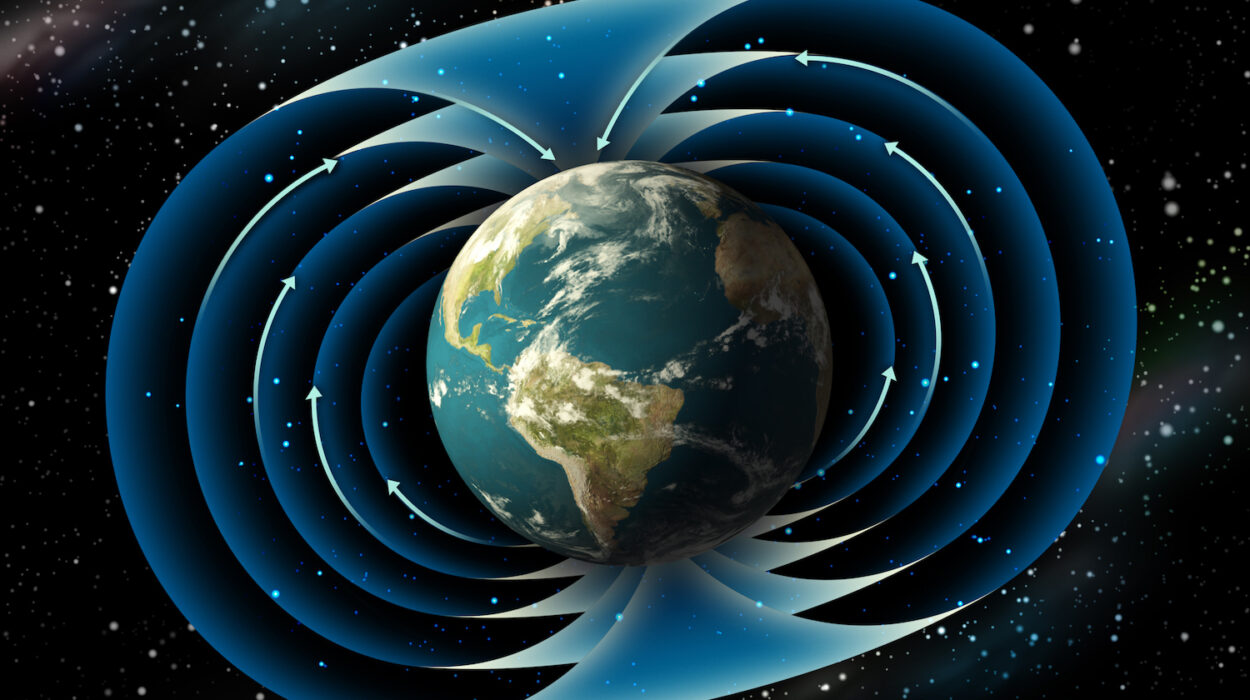
We are constantly being bombarded by particles accelerated in distant cosmic explosions. Most are harmless, shielded by Earth’s magnetic field and atmosphere. But they remind us that space is not empty or calm.
The universe is dynamic and energetic, and we are immersed within it.
The Cosmic Clock Never Stops
A single second feels fleeting. But in that brief interval, stars fuse millions of tons of hydrogen, supernovae erupt in distant galaxies, black holes grow, neutrinos pass through your body, and spacetime ripples with gravitational waves.
The universe does not wait. It does not rest. It operates continuously under laws that have held for billions of years.
To understand what happens every second is to recognize that existence is not static. It is a flowing, unfolding process. Each tick of the cosmic clock carries unimaginable activity.
You are alive in a universe that is alive with motion. The atoms in your body are ancient. The light reaching your eyes is old. The forces shaping your thoughts were forged in the first moments after the Big Bang.
Every second connects you to events across unimaginable distances and timescales.
And while a second may seem small, in the grand scale of the cosmos, it is filled with extraordinary wonder.