There is a hidden language spoken by the universe, one that does not use words but interactions. It is a language of atoms joining, breaking apart, reshaping, and rearranging themselves into endlessly varied forms. This language is chemistry.
Chemistry is the scientific study of matter—its composition, structure, properties, and the changes it undergoes. It is the discipline that explains how substances interact, why reactions occur, and how new materials are formed. At its core, chemistry is about transformation. It tells the story of how simple building blocks combine to create the astonishing complexity of the world around us.
From the oxygen we breathe to the water we drink, from the food we eat to the medicines that heal us, chemistry is always at work. It governs the processes that sustain life and the reactions that shape the Earth. Even the stars themselves are giant chemical laboratories, forging new elements in their fiery cores.
Chemistry is not confined to laboratories or textbooks. It lives in every moment of existence. Every heartbeat, every breath, every flicker of thought depends on chemical reactions unfolding with remarkable precision.
To understand chemistry is to understand the fabric of reality at a fundamental level.
The Essence of Matter
Everything in the universe is made of matter, and chemistry begins with understanding what matter is.
Matter is anything that has mass and occupies space. It can exist in different forms, from solid objects like rocks and metals to liquids like water and gases like air. Despite their differences, all forms of matter are composed of tiny particles called atoms.
Atoms are the basic units of matter. They are incredibly small—so small that billions of them can fit on the head of a pin. Yet within these tiny structures lies the key to understanding all chemical phenomena.
Each atom consists of a nucleus surrounded by electrons. The nucleus contains protons and neutrons, while electrons move in regions around the nucleus. The arrangement of these particles determines the identity and behavior of each atom.
Different types of atoms are known as elements. There are over a hundred known elements, each with its own unique properties. Some elements, like hydrogen and oxygen, are essential for life. Others, like gold and iron, have played crucial roles in human civilization.
Chemistry seeks to understand how these elements combine and interact to form the substances we encounter every day.
The Birth of Chemical Understanding
Long before chemistry became a formal science, humans were already practicing it without knowing its principles.
Ancient civilizations learned how to extract metals from ores, ferment beverages, and create dyes and medicines. These early practices laid the groundwork for chemical knowledge, even though they were guided by trial and error rather than scientific theory.
In ancient times, many believed that all matter was composed of a few basic elements such as earth, air, fire, and water. While this idea was not accurate, it reflected an early attempt to make sense of the natural world.
The transition to modern chemistry began when scientists started to study matter systematically. Careful experiments replaced guesswork, and measurement became essential.
Gradually, patterns began to emerge. Scientists discovered that substances combine in fixed proportions and that chemical reactions follow predictable rules. These discoveries marked the birth of chemistry as a true scientific discipline.
Atoms: The Building Blocks of Everything
At the heart of chemistry lies the atom.
Atoms are not indivisible, as once believed. They are composed of smaller particles with distinct properties. Protons carry a positive charge, electrons carry a negative charge, and neutrons are neutral.
The number of protons in an atom determines its identity. This number is known as the atomic number. For example, all atoms with one proton are hydrogen, while those with six protons are carbon.
Electrons play a crucial role in chemical behavior. They occupy regions called orbitals, and their arrangement determines how atoms interact with one another.
Atoms are naturally inclined to achieve stable configurations. This drive for stability leads them to form bonds with other atoms, creating molecules and compounds.
The study of atoms and their interactions forms the foundation of chemistry.
Chemical Bonds: The Forces That Unite Atoms
Atoms rarely exist in isolation. They tend to bond with other atoms, forming more complex structures.
Chemical bonds are the forces that hold atoms together. These bonds arise from interactions between electrons.
One common type of bond is the covalent bond, in which atoms share electrons. This type of bonding is responsible for the formation of molecules like water and carbon dioxide.
Another type is the ionic bond, which forms when one atom transfers electrons to another. This creates charged particles that attract each other, forming compounds such as salts.
There are also metallic bonds, where electrons are shared among many atoms, giving metals their unique properties like conductivity and malleability.
These bonding mechanisms allow atoms to combine in countless ways, producing the vast diversity of substances in the universe.
Molecules and Compounds: The Architecture of Matter
When atoms bond together, they form molecules and compounds.
A molecule is a group of atoms held together by chemical bonds. It can consist of atoms of the same element or different elements. For example, oxygen gas consists of two oxygen atoms bonded together, while water consists of hydrogen and oxygen atoms.
A compound is a substance made of two or more different elements chemically combined in fixed proportions. Compounds have properties that are different from the elements that compose them.
The arrangement of atoms within a molecule determines its properties. Even small changes in structure can lead to dramatic differences in behavior.
This is especially important in biological systems, where the structure of molecules like proteins and DNA determines their function.
Chemistry provides the tools to understand and manipulate these structures, revealing the intricate architecture of matter.
Chemical Reactions: The Dance of Transformation
Chemistry is not just about what substances are—it is about what they become.
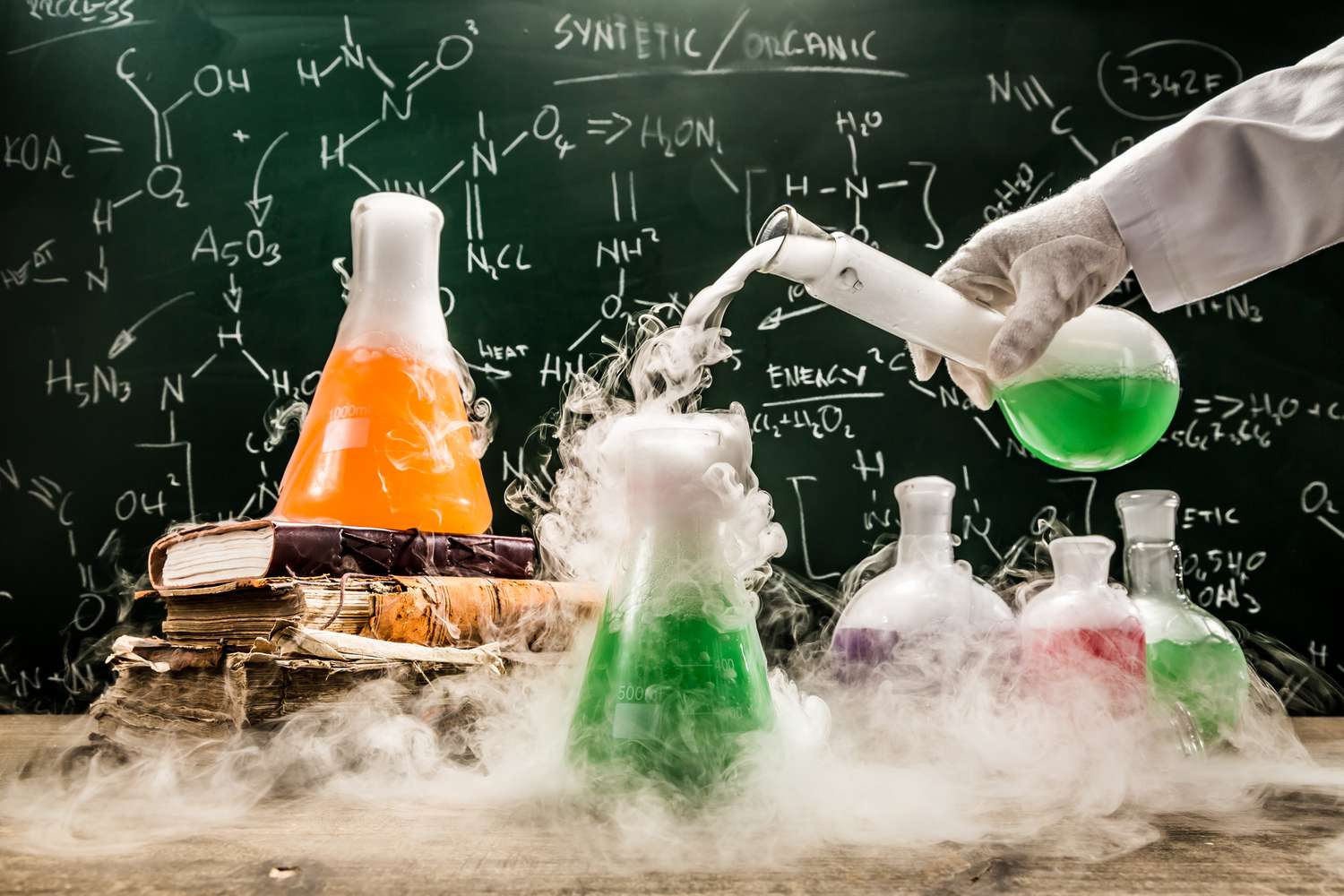
Chemical reactions are processes in which substances are transformed into new substances. During a reaction, bonds between atoms are broken and new bonds are formed.
These transformations can release energy, absorb energy, or rearrange matter in complex ways.
Reactions occur everywhere. When wood burns, it undergoes a chemical reaction with oxygen, releasing heat and light. When food is digested, complex molecules are broken down into simpler ones that the body can use.
Even the rusting of iron is a chemical reaction, as iron combines with oxygen to form new compounds.
Understanding chemical reactions allows scientists to predict how substances will behave and to design new materials and processes.
Energy and Chemistry
Energy plays a central role in chemistry.
Every chemical reaction involves a change in energy. Some reactions release energy, making them exothermic, while others absorb energy, making them endothermic.
The concept of energy helps explain why certain reactions occur and others do not. Reactions tend to move toward states of lower energy and greater stability.
Temperature also influences chemical behavior. Higher temperatures generally increase the speed of reactions by providing more energy to the reacting particles.
The study of energy changes in chemical processes is known as thermochemistry. It reveals the deep connection between chemistry and physics, showing that chemical transformations are governed by universal energy principles.
The States of Matter and Their Behavior
Matter exists in different states, and chemistry explains how these states arise and change.
In solids, particles are closely packed and vibrate in fixed positions. This gives solids a definite shape and volume.
In liquids, particles are still close together but can move past one another. Liquids have a definite volume but take the shape of their container.
In gases, particles are far apart and move freely. Gases have neither fixed shape nor fixed volume.
Changes between these states, such as melting, freezing, evaporation, and condensation, involve energy changes but do not alter the chemical identity of the substance.
Chemistry helps us understand these physical changes and the forces that govern them.
The Periodic Table: A Map of the Elements
One of the most powerful tools in chemistry is the periodic table.
The periodic table organizes elements based on their atomic number and chemical properties. It reveals patterns that help scientists predict how elements will behave.
Elements in the same column often share similar properties because they have similar electron arrangements. This allows chemists to understand relationships between elements and anticipate how they will react.
The periodic table is more than just a chart. It is a map of matter, showing the diversity of elements and the order underlying their behavior.
It reflects the deep structure of atomic physics and provides a framework for understanding chemical interactions.
Chemistry of Life: The Molecular Basis of Biology
Life itself is a chemical phenomenon.
All living organisms are composed of molecules that interact in highly organized ways. The processes that sustain life—metabolism, growth, reproduction—are driven by chemical reactions.
Carbon plays a central role in the chemistry of life. Its ability to form stable bonds with many other elements allows it to create complex molecules.
Proteins, carbohydrates, lipids, and nucleic acids are the fundamental molecules of life. Each has a specific structure and function, determined by its chemical composition.
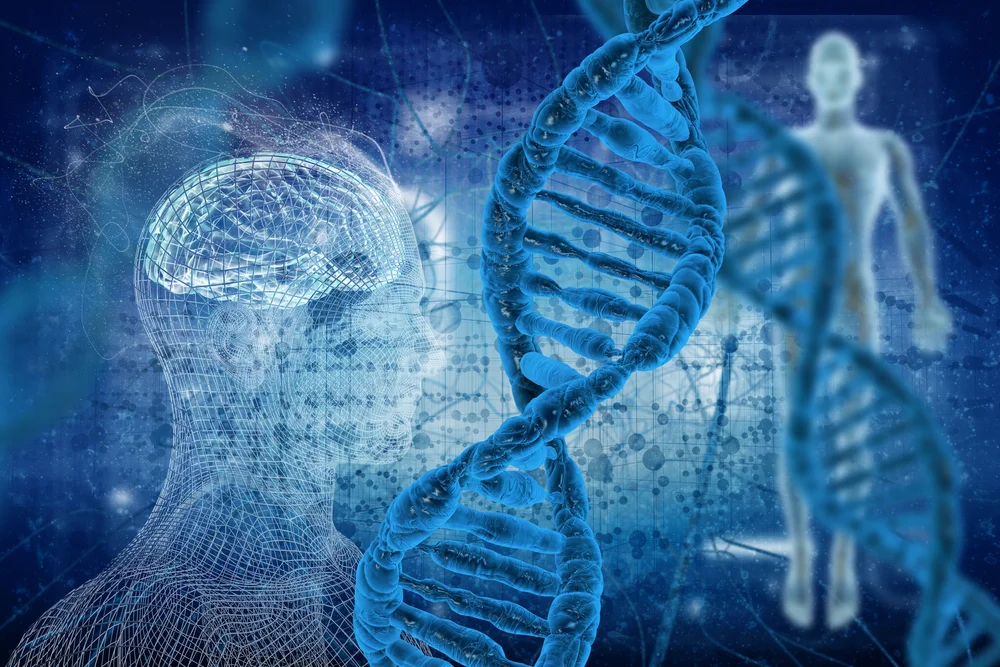
DNA, the molecule that carries genetic information, is a masterpiece of chemical design. Its structure allows it to store and transmit information across generations.
Understanding the chemistry of life provides insights into health, disease, and the nature of living systems.
Chemistry and the Environment
Chemistry also shapes the environment in which we live.
The composition of the atmosphere, the chemistry of oceans, and the cycles of elements like carbon and nitrogen are all governed by chemical processes.
Human activities have a profound impact on these systems. Pollution, climate change, and resource depletion are all linked to chemical changes in the environment.
By understanding these processes, scientists can develop solutions to environmental challenges.
Chemistry plays a vital role in creating sustainable technologies, reducing pollution, and protecting natural ecosystems.
Analytical Chemistry: Discovering What Things Are Made Of
To understand matter, scientists must be able to analyze it.
Analytical chemistry focuses on identifying substances and determining their composition. It uses a variety of techniques to detect and measure chemical components.
These methods allow scientists to study everything from the composition of distant planets to the trace elements in a drop of water.
Analytical chemistry is essential in medicine, environmental science, and industry. It ensures the safety of food, the purity of drugs, and the quality of materials.
It provides the tools needed to explore the chemical world with precision and accuracy.
Industrial Chemistry: Transforming Society
Chemistry has transformed human civilization.
Industrial chemistry applies chemical principles to large-scale production. It enables the manufacture of fuels, plastics, fertilizers, medicines, and countless other products.
These innovations have improved quality of life, increased food production, and advanced technology.
However, industrial chemistry also presents challenges. The production and disposal of chemicals can impact the environment and human health.
Balancing the benefits of chemical innovation with environmental responsibility is one of the key challenges of modern chemistry.
The Philosophy of Chemistry
Chemistry raises deep philosophical questions about the nature of matter and reality.
What does it mean for substances to be made of atoms? How do simple interactions give rise to complex structures? Can all chemical behavior be explained by fundamental physical laws?
These questions explore the relationship between chemistry and other sciences, particularly physics and biology.
Chemistry occupies a unique position. It connects the fundamental laws of physics with the complexity of living systems.
It shows how simple rules can lead to astonishing diversity and complexity.
The Human Connection to Chemistry
Chemistry is not just a scientific discipline—it is a human endeavor.
It reflects our desire to understand, to create, and to transform the world around us.
From ancient alchemists seeking to turn base metals into gold to modern scientists developing life-saving drugs, chemistry has always been driven by curiosity and imagination.
It has shaped cultures, economies, and technologies throughout history.
Chemistry teaches us that the world is not static but constantly changing. It reveals the hidden processes that shape our lives and our environment.
The Endless Frontier of Chemistry
Despite centuries of discovery, chemistry is far from complete.
New materials, new reactions, and new theories continue to emerge. Scientists are exploring the frontiers of nanotechnology, synthetic biology, and green chemistry.
They are developing ways to harness chemical processes for clean energy, sustainable materials, and advanced medicine.
The possibilities are vast, and the challenges are profound.
Chemistry stands at the forefront of scientific innovation, offering solutions to some of the most pressing problems facing humanity.
Seeing the World Through Chemistry
When you understand chemistry, the world transforms.
A simple glass of water becomes a network of hydrogen and oxygen atoms held together by bonds. A flame becomes a cascade of reactions releasing energy. A breath becomes a complex exchange of gases sustaining life.
Chemistry reveals the hidden beauty of the ordinary.
It shows that everything around us is part of a grand, interconnected system of matter and energy.
Through chemistry, we see not just what the world is, but how it becomes what it is.
The Living Universe of Atoms
In the end, chemistry is the story of atoms and their endless creativity.
From the simplest molecules to the most complex living systems, chemistry explains how the universe builds itself.
It is a science of transformation, connection, and possibility.
To study chemistry is to explore the very essence of existence—to understand how the universe takes shape, how life emerges, and how change unfolds at every moment.
And in that understanding, we find not only knowledge, but wonder.