When we look up at the night sky, it is easy to imagine other worlds as distant cousins of Earth—places where mountains rise under alien suns, oceans shimmer beneath unfamiliar constellations, and perhaps life stirs in strange forms. The discovery of thousands of exoplanets over the past three decades has transformed that dream into scientific reality. Planets are everywhere. They orbit red dwarfs and blue giants. They circle in tight embraces around their stars or wander far out in icy darkness.
But here is a truth that humbles and unsettles us: most planets are not merely unfriendly. They are lethally hostile beyond imagination.
Earth is an oasis precisely because it is rare. Our atmosphere shields us from radiation. Our magnetic field deflects charged particles from the Sun. Liquid water flows on our surface. Temperatures remain within a narrow, life-sustaining range. Remove just one of these conditions, and our world becomes dangerous. Remove several, and it becomes unrecognizable.
The planets below are not theoretical nightmares. They are real, observed, studied, and measured by astronomers. Each one pushes physics to extremes. Each one reminds us how fragile our own home truly is.
If interstellar tourism ever becomes possible, these are the destinations you must avoid at all costs.
1. HD 189733b – The Planet Where It Rains Glass
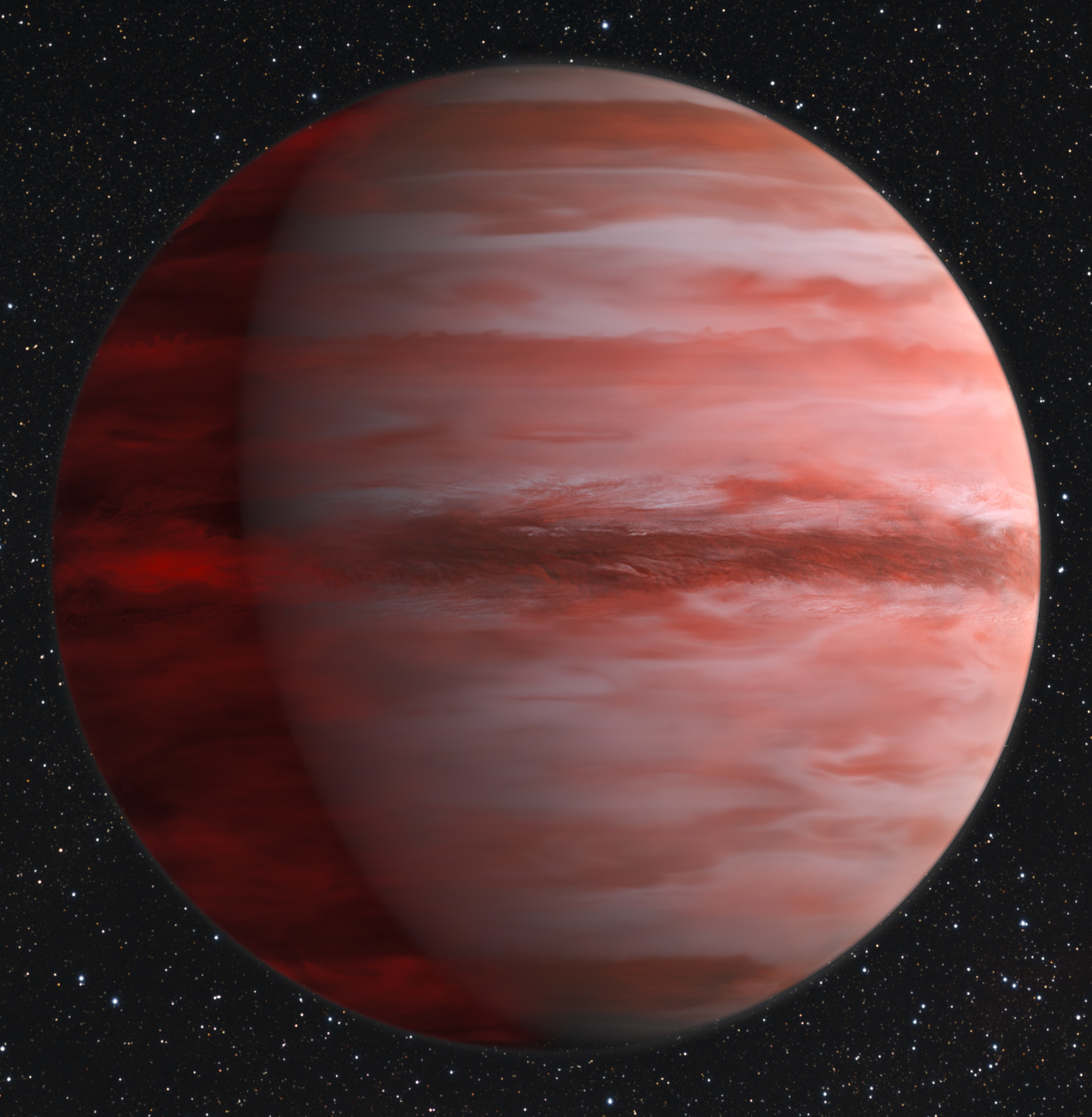
HD 189733b orbits its parent star in the constellation Vulpecula, about 64 light-years from Earth. At first glance, it sounds almost poetic. It is a deep blue world, its color reminiscent of Earth when viewed from space. But this beauty is a deception.
HD 189733b is classified as a “hot Jupiter,” a gas giant roughly the size of Jupiter but orbiting extremely close to its star. It completes an orbit in just over two Earth days. That proximity has catastrophic consequences.
Surface temperatures reach around 1,000 degrees Celsius. The planet is tidally locked, meaning one side permanently faces its star while the other lies in perpetual darkness. This creates enormous temperature differences between the day and night sides, driving ferocious winds that can exceed 8,000 kilometers per hour.
But the most horrifying feature is what those winds carry.
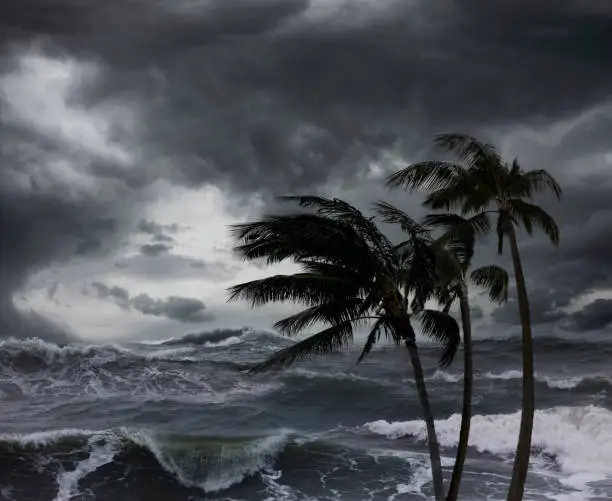
Observations from the Hubble Space Telescope have revealed the presence of silicate particles in the atmosphere. Under the intense heat, these particles vaporize and then condense into tiny shards. The result is a kind of sideways rain made of molten glass.
Imagine standing in a storm where microscopic razor blades whip across the sky at several times the speed of sound. There is no solid ground to stand on—only crushing atmospheric pressures and scorching temperatures. The blue color comes not from oceans, but from scattered light in a cloud-filled inferno.
HD 189733b is a reminder that beauty in the universe can hide unimaginable violence.
2. WASP-12b – The Planet Being Devoured
WASP-12b orbits so close to its star that it is being slowly torn apart. Located approximately 1,400 light-years away, this planet is another hot Jupiter, but even more extreme.
It circles its star in just about 1.1 Earth days. The gravitational pull from the nearby star is so intense that it has distorted the planet into an egg-like shape. Its atmosphere is stretched outward, forming a stream of material that flows directly into the star.
Temperatures on WASP-12b exceed 2,500 degrees Celsius—hot enough to melt many metals. Molecules cannot survive in such conditions for long. The atmosphere is likely filled with ionized gases, glowing under relentless radiation.
WASP-12b is not just dangerous. It is doomed.
Astronomers estimate that it may be spiraling inward, gradually losing mass as its star siphons away its outer layers. It is a planet in the final stages of destruction, caught in a gravitational death dance.
To visit WASP-12b would mean immediate incineration, followed by tidal forces strong enough to tear apart any spacecraft. It is a cosmic example of what happens when gravity’s embrace becomes fatal.
3. CoRoT-7b – The Lava Ocean World
CoRoT-7b was one of the first rocky exoplanets ever discovered. Located about 490 light-years away, it initially excited scientists because it is a “super-Earth”—a rocky planet larger than ours.
But any hope that it resembles Earth ends quickly.
CoRoT-7b orbits extremely close to its star, completing a year in just 20 hours. It is tidally locked, with one side permanently facing the star. On the day side, temperatures soar to around 2,000 degrees Celsius. That is hot enough to melt rock.
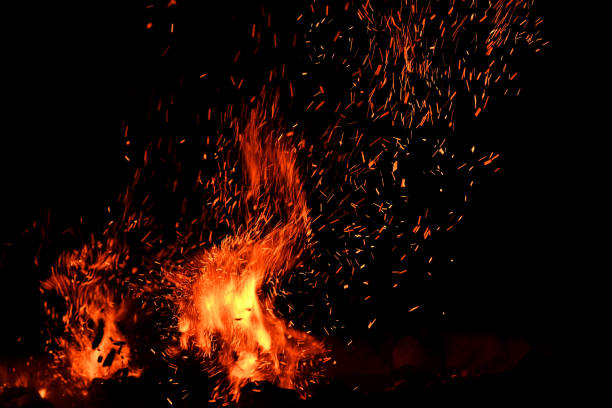
Instead of oceans of water, CoRoT-7b likely hosts vast oceans of molten lava. Silicate rock vaporizes into the atmosphere, forming mineral clouds that may condense and fall as rock rain on the cooler night side.
The night side is dramatically colder, potentially hundreds of degrees below zero. This extreme temperature contrast creates a world divided between a glowing sea of magma and a frozen wasteland.
Any attempt to land would result in immediate destruction. The ground itself is liquid fire. The air, composed of vaporized rock, would be toxic and scorching.
CoRoT-7b shows us that rocky planets are not necessarily habitable. They can be hellish realms where geology becomes an oceanic inferno.
4. Kepler-70b – The Planet That Shouldn’t Exist
Kepler-70b orbits a star that has already died.
Located around 4,000 light-years away, Kepler-70b circles a hot subdwarf star—essentially the exposed core of a red giant that shed its outer layers. The planet orbits extremely close to this stellar remnant, completing a revolution in just about 5.8 hours.
Temperatures on Kepler-70b likely exceed 7,000 degrees Celsius—hotter than the surface of many stars. It is possibly a rocky core stripped of its outer layers during the star’s violent transformation.
What makes Kepler-70b terrifying is not only its temperature, but its history. It survived the red giant phase of its star, a period when the star expanded massively and engulfed nearby planets. How it endured remains uncertain. Perhaps it was once a gas giant whose outer layers were ripped away.
If so, Kepler-70b is a planetary corpse—a remnant core orbiting a stellar remnant.
Landing here is beyond impossible. The radiation from the exposed stellar core would be intense. The surface would be molten or vaporized. The orbital speed required to remain stable is extreme.
Kepler-70b is a reminder that planetary systems evolve violently, and survival is never guaranteed.
5. PSR B1257+12 b – The Pulsar Planet
Some of the most frightening worlds orbit not stars, but pulsars.
PSR B1257+12 is a pulsar—a rapidly rotating neutron star left behind after a supernova explosion. It emits beams of radiation that sweep across space like lighthouse beams. Around this pulsar orbit several planets, including PSR B1257+12 b.
Neutron stars are among the densest objects in the universe. A single teaspoon of neutron star material would weigh billions of tons. They possess incredibly strong magnetic fields and emit intense radiation.
Any planet orbiting such a star would be bombarded with high-energy particles and X-rays. The radiation environment is lethal beyond measure. The pulsar’s rapid rotation and magnetic activity create conditions utterly hostile to life as we know it.
PSR B1257+12 b likely formed from the debris of the supernova explosion or from fallback material after the star’s collapse. It is a world born from cosmic catastrophe.
Imagine standing on a planet where the sky flashes with deadly radiation pulses, where the star above is a collapsed core spinning hundreds of times per second. There would be no atmosphere capable of shielding against such energy.
This is not merely a harsh world. It is a graveyard orbiting a stellar corpse.
6. TrES-2b – The Darkest Known Planet
TrES-2b, located about 750 light-years away, holds a strange distinction: it is one of the darkest planets ever discovered.
It reflects less than one percent of the light that hits it. It is darker than coal, darker than fresh asphalt. If you were somehow able to approach it, it would appear almost invisible against the backdrop of space.
TrES-2b is another hot Jupiter, orbiting extremely close to its star. Its temperature is around 1,000 degrees Celsius. The intense heat likely prevents the formation of reflective clouds. Instead, its atmosphere may contain light-absorbing chemicals such as vaporized sodium or potassium.
The darkness itself is not lethal—but the heat and proximity to its star certainly are. The planet’s atmosphere is likely turbulent, with powerful winds and extreme radiation levels.
The psychological horror of TrES-2b lies in its invisibility. It absorbs nearly all incoming light, becoming a black void drifting near a blazing star.
It is a reminder that not all threats shine brightly. Some hide in shadow.
7. Gliese 1214b – The Steam World
Gliese 1214b orbits a red dwarf star about 48 light-years from Earth. It is classified as a “sub-Neptune” or “water world,” with a mass several times that of Earth.
Early observations suggested it might be rich in water. But this does not mean oceans like Earth’s. Under the immense pressure and heat, water would exist not as liquid, but as superheated steam or exotic high-pressure ice phases.
Temperatures on Gliese 1214b may exceed 200 degrees Celsius. The atmosphere could be thick with water vapor, forming a dense, suffocating blanket.
The pressure at lower altitudes would be crushing. Any spacecraft attempting descent would face extreme atmospheric resistance and potential structural failure.
If water dominates the composition, it is not the gentle blue of Earth’s seas. It is a scalding, high-pressure environment where familiar chemistry behaves in unfamiliar ways.
Gliese 1214b teaches us that even worlds rich in water can be utterly inhospitable.
The Fragile Miracle of Earth
Each of these planets represents a different path planetary evolution can take. Some are scorched by proximity to their stars. Some are ripped apart by gravity. Some orbit the remnants of stellar explosions. Some are so dark they swallow light itself.
They are not science fiction. They are data points in the growing catalog of exoplanets discovered by missions such as Kepler, CoRoT, and ground-based observatories.
And they all share one truth: they are deadly to human life as we know it.
The study of these dangerous worlds is not merely an exercise in cosmic horror. It deepens our understanding of planetary formation, atmospheric physics, stellar evolution, and the delicate balance required for habitability.
When we examine these extreme planets, we begin to understand just how rare Earth’s conditions may be. A stable orbit. Moderate temperatures. A protective magnetic field. Liquid water in the right state. A relatively calm star.
The universe does not easily produce safe havens.
The seven planets described here are only a small sample of the violent diversity scattered across our galaxy. There are likely countless more worlds where iron rains from the sky, where tidal forces shred crusts, where radiation sterilizes surfaces, where gravity crushes atmospheres into exotic states.
Space exploration is often romanticized. And indeed, it is one of humanity’s greatest achievements. But exploration also requires humility.
The cosmos is not waiting to welcome us. It is vast, indifferent, and frequently lethal.
If one day we venture beyond our solar system, it will not be with naive hope alone. It will be with knowledge—earned by studying these terrifying worlds from afar.
Until then, we remain on a small blue planet, protected by a thin atmosphere and a magnetic shield, orbiting a relatively gentle star.
After learning about these worlds of glass storms, stellar cannibalism, lava oceans, pulsar radiation, eternal darkness, and crushing steam, Earth feels less ordinary.
It feels miraculous.