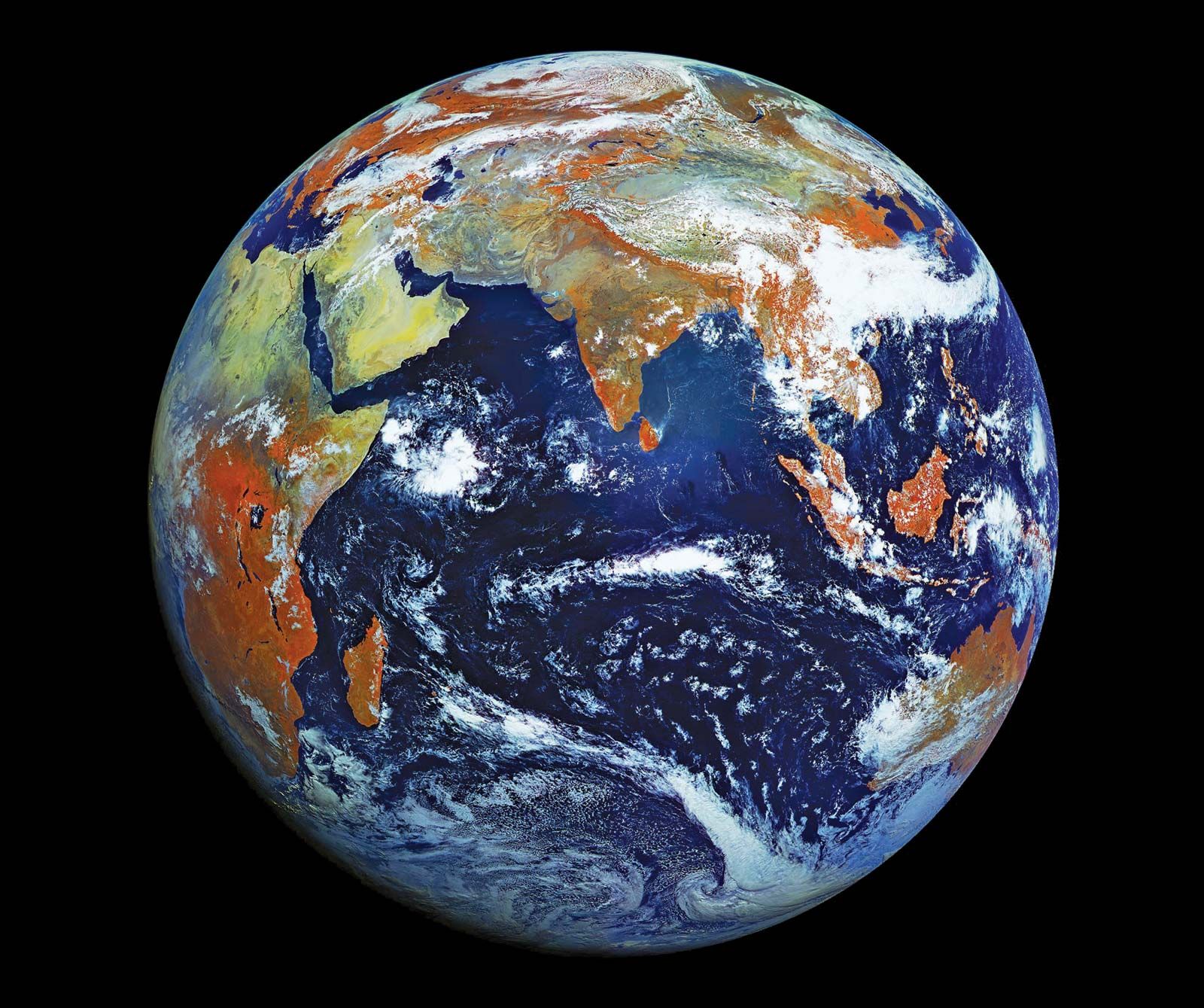
There is a quiet miracle beneath our feet, something so familiar that we rarely stop to marvel at it. The ground we walk on, the air we breathe, the oceans that stretch beyond the horizon—together, they form a single extraordinary world: Earth. It is our home, our cradle, and the only place in the known universe where life flourishes in dazzling abundance.
Earth is not just a planet among many. It is a living system, a dynamic and ever-changing sphere where geology, atmosphere, water, and life are woven together in a delicate, powerful balance. From the deepest ocean trenches to the highest mountain peaks, from microscopic bacteria to vast forests, Earth is a place of astonishing complexity and beauty.
To truly understand Earth is to look beyond its surface and explore its origins, structure, systems, and the countless processes that make it unique. It is a story that stretches across billions of years—a story of fire and ice, chaos and stability, destruction and renewal. It is also a story that includes us, because every human life is deeply connected to this remarkable planet.
The Birth of Earth
Earth’s story begins around 4.5 billion years ago, in a swirling cloud of gas and dust that surrounded the young Sun. This cloud, known as the solar nebula, was the leftover material from the Sun’s formation. Within it, particles collided and stuck together, gradually forming larger and larger bodies.
Over time, gravity pulled these growing clumps into a process called accretion. Small rocks became larger bodies, and larger bodies collided violently, releasing enormous amounts of energy. Eventually, one of these bodies grew large enough to become Earth.
In its earliest form, Earth was a molten world. The surface was a sea of magma, constantly reshaped by intense volcanic activity and frequent impacts from space debris. The young planet was chaotic and hostile, with temperatures far too high to support life.
One of the most dramatic events in Earth’s early history was the formation of the Moon. Scientists believe that a Mars-sized object collided with the young Earth, ejecting debris into space. This debris eventually came together to form the Moon, which has played a crucial role in stabilizing Earth’s rotation and influencing tides.
As time passed, Earth began to cool. The surface solidified into a crust, and volcanic activity released gases that formed the early atmosphere. Water vapor condensed into liquid water, creating the first oceans. Slowly, the conditions necessary for life began to emerge.
The Structure of Earth
Beneath the surface of Earth lies a complex internal structure composed of several distinct layers. These layers differ in composition, temperature, and physical properties, and together they shape the planet’s behavior.
At the very center is the inner core, a solid sphere primarily made of iron and nickel. Despite its extreme temperature, which rivals the surface of the Sun, the immense pressure keeps it in a solid state.
Surrounding the inner core is the outer core, a layer of molten metal. The movement of this liquid iron generates Earth’s magnetic field, a protective shield that deflects harmful solar radiation and helps preserve the atmosphere.
Above the core lies the mantle, a thick layer of semi-solid rock that makes up the majority of Earth’s volume. The mantle is not static; it slowly flows over long periods of time. This movement drives the shifting of tectonic plates at the surface.
The outermost layer is the crust, a thin shell where all known life exists. The crust is divided into continental and oceanic regions, each with different compositions and characteristics.
Though these layers are hidden from view, their interactions are responsible for many of the dynamic processes that shape Earth’s surface.
Plate Tectonics and the Moving Surface
Earth’s surface is not fixed or unchanging. It is divided into large pieces called tectonic plates that float on the semi-fluid mantle beneath them. These plates are constantly moving, though the motion is usually slow—only a few centimeters per year.
Where plates meet, powerful geological events occur. At convergent boundaries, plates collide, forming mountain ranges or causing one plate to sink beneath another in a process known as subduction. This process can generate earthquakes and volcanic activity.
At divergent boundaries, plates move apart, allowing magma to rise and create new crust. This occurs along mid-ocean ridges, where new ocean floor is continuously formed.
Transform boundaries occur where plates slide past each other, often resulting in earthquakes due to the buildup and release of stress.
Plate tectonics plays a crucial role in shaping Earth’s landscapes. It is responsible for the formation of continents, mountains, ocean basins, and many natural hazards. It also contributes to the recycling of materials between the surface and the interior, influencing long-term climate and atmospheric composition.
The Atmosphere: Earth’s Protective Envelope
Surrounding Earth is a thin layer of gases known as the atmosphere. Though it extends hundreds of kilometers into space, most of its mass is concentrated close to the surface.
The atmosphere is composed primarily of nitrogen and oxygen, along with smaller amounts of other gases such as carbon dioxide, argon, and water vapor. This mixture is essential for life as we know it.
The atmosphere serves several vital functions. It provides the air that organisms breathe, regulates temperature, and protects the planet from harmful radiation and meteoroids.
It is divided into several layers, each with distinct characteristics. The lowest layer, the troposphere, is where weather occurs. Above it lies the stratosphere, which contains the ozone layer that absorbs ultraviolet radiation.
Higher layers include the mesosphere, thermosphere, and exosphere, each playing roles in atmospheric dynamics and interactions with space.
Without the atmosphere, Earth would be a lifeless, frozen world. It acts as a blanket that traps heat and maintains conditions suitable for life.
The Hydrosphere: A World of Water
Water is one of Earth’s most defining features. About 71 percent of the planet’s surface is covered by oceans, making Earth unique among known planets.
The hydrosphere includes all forms of water on Earth—oceans, rivers, lakes, glaciers, groundwater, and even water vapor in the atmosphere. This vast system plays a critical role in regulating climate, shaping landscapes, and supporting life.
Oceans act as massive reservoirs of heat, absorbing and redistributing energy from the Sun. Ocean currents transport warm and cold water across the globe, influencing weather patterns and climate.
The water cycle continuously moves water between the surface and the atmosphere. Evaporation, condensation, precipitation, and runoff create a dynamic system that sustains ecosystems and replenishes freshwater sources.
Water is also essential for life at the cellular level. It acts as a solvent, a medium for chemical reactions, and a regulator of temperature within organisms.
The presence of abundant liquid water is one of the key reasons Earth is able to support life.
The Biosphere: Life on Earth
Earth is alive. From the tiniest microbes to the largest animals, life exists in nearly every corner of the planet. This vast network of living organisms forms the biosphere.
Life on Earth began at least 3.5 billion years ago, likely in the oceans. Early life forms were simple, single-celled organisms. Over time, evolution led to greater complexity, resulting in the incredible diversity of life we see today.
The biosphere includes ecosystems of all kinds—forests, deserts, oceans, grasslands, and more. Each ecosystem is a web of interactions between organisms and their environment.
Plants capture energy from the Sun through photosynthesis, forming the foundation of most food chains. Animals consume plants and other animals, transferring energy through the system. Decomposers break down organic matter, recycling nutrients back into the environment.
The balance of the biosphere is delicate. Changes in climate, habitat, or species populations can have cascading effects throughout ecosystems.
Human activity has become a major influence on the biosphere, altering landscapes, affecting climate, and impacting biodiversity. Understanding Earth’s living systems is essential for preserving the planet’s health.
Climate and Weather
Earth’s climate is the long-term pattern of temperature, precipitation, and atmospheric conditions. Weather, on the other hand, refers to short-term changes in the atmosphere.
Climate is influenced by many factors, including the Sun’s energy, the composition of the atmosphere, ocean currents, and the distribution of land and water.
The tilt of Earth’s axis creates seasons, as different parts of the planet receive varying amounts of sunlight throughout the year. This variation drives changes in temperature and weather patterns.
Weather systems are shaped by the movement of air masses, differences in temperature and pressure, and the rotation of Earth. These processes create phenomena such as storms, winds, and precipitation.
Climate has changed throughout Earth’s history. Ice ages and warm periods have occurred due to natural factors such as volcanic activity, changes in solar radiation, and variations in Earth’s orbit.
Today, human activities are influencing the climate by increasing the concentration of greenhouse gases in the atmosphere. This has led to global warming and changes in weather patterns, with significant implications for ecosystems and human societies.
Earth in the Solar System
Earth is the third planet from the Sun, located in a region known as the habitable zone. This is the distance from the Sun where conditions allow for the presence of liquid water on the surface.
Earth’s position is just right—not too close, where water would evaporate, and not too far, where it would freeze. This delicate balance is one of the reasons life can exist here.
Earth is part of a dynamic solar system that includes other planets, moons, asteroids, and comets. Its interactions with these objects have influenced its history.
The Moon, Earth’s natural satellite, affects tides and stabilizes the planet’s axial tilt, contributing to a stable climate. The Sun provides the energy that drives weather, climate, and photosynthesis.
Compared to other planets, Earth stands out for its diversity and habitability. While some planets are scorching hot and others are freezing cold, Earth maintains a relatively moderate environment.
Natural Resources and Human Civilization
Earth provides the resources necessary for human life and civilization. These include water, minerals, soil, energy sources, and biological resources.
Throughout history, humans have relied on these resources to build societies, develop technologies, and sustain populations. Agriculture depends on fertile soil and water. Industry relies on minerals and energy sources such as fossil fuels.
However, the use of Earth’s resources must be balanced with sustainability. Overexploitation can lead to environmental degradation, resource depletion, and ecological imbalance.
Renewable resources such as solar and wind energy offer alternatives that can reduce environmental impact. Conservation and responsible management are essential for ensuring that future generations can continue to benefit from Earth’s resources.
Natural Hazards and Earth’s Power
Earth is not a static or entirely gentle world. It is a dynamic planet with powerful natural forces that can create hazards.
Earthquakes result from the movement of tectonic plates, releasing energy that can shake the ground and cause widespread damage. Volcanic eruptions can reshape landscapes and affect climate.
Storms, hurricanes, floods, and droughts are part of Earth’s natural processes. While they can be destructive, they also play roles in maintaining ecological balance.
Understanding these hazards allows scientists to predict and prepare for them, reducing their impact on human populations.
These events remind us that Earth is a powerful system, one that demands respect and understanding.
The Interconnected Earth System
Earth is not simply a collection of separate components. It is an interconnected system where the atmosphere, hydrosphere, geosphere, and biosphere interact continuously.
Changes in one part of the system can affect others. For example, volcanic eruptions can release gases into the atmosphere, influencing climate. Ocean temperatures can affect weather patterns. Human activities can alter ecosystems and atmospheric composition.
This interconnectedness means that understanding Earth requires a holistic approach. Scientists study how different systems interact to gain a complete picture of the planet.
The Future of Earth
Earth has existed for billions of years, and it will continue to evolve. Natural processes will shape its future, but human influence has become a significant factor.
Climate change, biodiversity loss, and environmental degradation are challenges that require global attention. At the same time, advances in science and technology offer opportunities to address these issues.
The future of Earth depends on how humanity chooses to interact with the planet. Sustainable practices, conservation efforts, and scientific understanding can help ensure a healthy and stable environment.
The Emotional Connection to Earth
Beyond science, Earth holds a deep emotional significance. It is the place where every human story unfolds. Every culture, every memory, every dream exists within its boundaries.
There is a profound sense of belonging that comes from recognizing Earth as our home. The sight of a sunrise, the sound of waves, the feeling of wind on the skin—these experiences connect us to the planet in ways that go beyond words.
Earth is not just a subject of study. It is a source of inspiration, a place of wonder, and a reminder of the interconnectedness of all life.
To understand Earth is to understand ourselves. It is to recognize that we are part of a vast and intricate system, one that has nurtured life for billions of years.
In the end, Earth is more than a planet. It is a living world, a shared home, and a precious gift in the vastness of the cosmos.