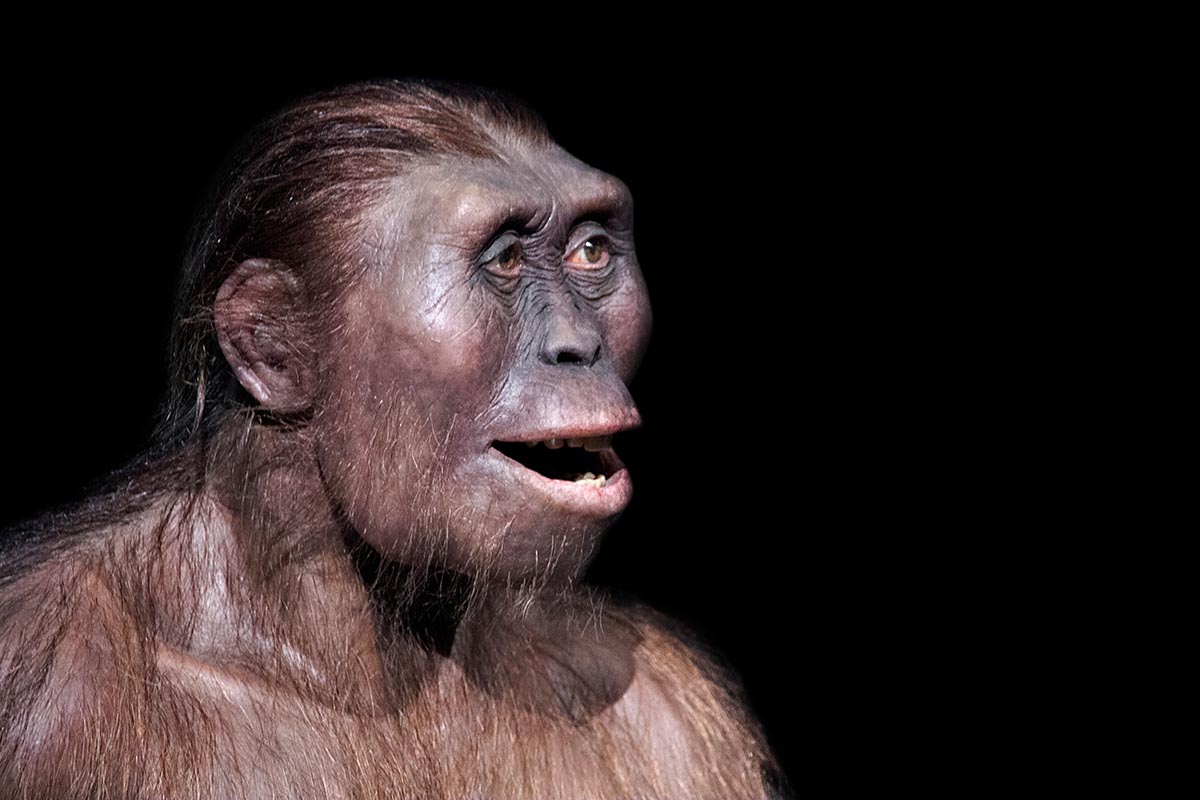
If you could travel back in time and meet one of your distant ancestors from a few million years ago, one of the first things you would notice is not their face, their posture, or their voice. It would be their fur. Thick, coarse body hair would have covered them like a living coat, much like the chimpanzees and gorillas that still roam the forests today. They would look unmistakably like an animal built for a world of claws, cold nights, and predators.
And then you would look at yourself.
Compared to nearly every other mammal, humans are shockingly bare. We have hair on our heads, eyebrows, eyelashes, and scattered patches across our bodies, but most of our skin is exposed. Even animals that live in hot climates, like lions or elephants, have some form of protective covering. But humans? We are the strange ones—upright, clever primates who walk through a harsh world wearing almost nothing but skin.
This raises a powerful question: why would evolution strip away one of the most useful survival tools mammals possess? Fur protects against cold, shields skin from sun and injury, and helps camouflage. Losing it seems like a reckless gamble.
Yet evolution does not gamble without reason. Humans did not lose body hair because nature made a mistake. We lost it because, under certain conditions, being naked became an advantage. Our hairlessness is not a flaw. It is a clue, written on our skin, about the environment our ancestors faced and the unique path our species took.
The story of human body hair is not just about biology. It is about heat, sweat, parasites, sexual selection, and the rise of a creature that could outrun the savannah itself.
The Mystery of the Naked Ape
Humans are sometimes called “the naked ape,” and the phrase is more than poetic. From an evolutionary perspective, our relative lack of fur is extraordinary. We are primates, and primates are typically hairy. Chimpanzees, our closest living relatives, are covered in dense hair. Even monkeys living in warm tropical climates maintain thick coats.
This means hair loss did not happen because we became primates in the first place. It happened after we split from the evolutionary line that led to chimpanzees and bonobos. Most scientists believe the major reduction of human body hair occurred somewhere between about 3 million and 1 million years ago, during the era when early members of the genus Homo were emerging and adapting to new ways of living.
But why would that happen?
The answer is that human hairlessness is not a single adaptation with one simple explanation. It is likely the result of multiple pressures acting together, pushing our ancestors toward a body built for endurance, intelligence, and survival in open landscapes.
Hair Loss Was Not Total—We Still Have Hair Follicles
Before diving into the reasons, it is important to understand a surprising fact: humans did not lose their hair follicles. We still have roughly the same number of hair follicles as chimpanzees. The difference is that most human body hair became thinner, shorter, and less pigmented. Instead of thick fur, we have fine “vellus hair,” the soft hair that covers much of the body but is almost invisible.
This is crucial because it shows evolution did not erase our hair-producing machinery. It modified it. Hair did not disappear; it became miniaturized.
That suggests hair loss was not simply due to random genetic drift. It was likely actively favored. Evolution kept the ability to grow hair but changed its expression across the body. That kind of transformation points toward selective pressure.
Nature was shaping the human body for a purpose.
The Heat Hypothesis: Hairlessness as a Cooling Strategy
One of the strongest scientific explanations for human hair loss is thermoregulation—the ability to manage body temperature.
Early humans likely moved from dense forests into more open savannah environments. This shift would have exposed them to direct sunlight, higher temperatures, and the need to travel long distances in search of food and water. In the open plains, heat becomes a serious enemy. Overheating can kill an animal quickly, especially one that hunts or scavenges under the sun.
Most mammals cool themselves by panting. Dogs pant. Big cats pant. Even many hoofed animals rely heavily on breathing to release heat. But panting has limitations. It works well when the animal is resting or moving moderately, but it becomes inefficient during sustained physical activity.
Humans evolved a different solution: sweating.
We are among the most efficient sweaters in the animal kingdom. Humans have millions of eccrine sweat glands distributed across the skin, producing watery sweat that evaporates and cools the body. This system is far more effective than panting during long-distance activity.
But sweat only works properly if it can evaporate.
Thick fur blocks airflow and traps moisture. It can prevent sweat from evaporating quickly, making cooling inefficient. In a hot environment, fur can become a deadly burden. A relatively hairless body allows sweat to spread and evaporate, turning the skin into a natural cooling surface.
This ability would have given early humans a remarkable advantage: we could remain active during the hottest parts of the day when many predators were forced to rest in the shade. In the harsh heat of the savannah, being hairless may have meant survival.
In other words, losing fur was not about becoming weaker. It was about becoming unstoppable.
Endurance Hunting and the Rise of the Marathon Predator
Humans are not built like lions. We do not have sharp claws or powerful jaws. We are not fast sprinters. But we have something else: endurance.
Humans can run long distances for extended periods. We can jog for hours. We can maintain a steady pace while other animals collapse from heat exhaustion. This is partly due to our upright posture, long legs, and efficient stride, but thermoregulation plays an equally vital role.
Some anthropologists believe early humans practiced persistence hunting, a method where hunters chased prey for hours until the animal overheated and collapsed. Many prey animals can sprint faster than humans, but they cannot cool themselves as effectively while running. Their fur traps heat, and panting becomes insufficient. Eventually, their body temperature rises to dangerous levels.
Humans, sweating and hairless, could keep going.
This would have been an extraordinary evolutionary advantage. It allowed humans to hunt without claws or fangs. It allowed them to exploit a niche no other predator dominated: hunting through exhaustion rather than speed.
If this hypothesis is correct, then our hairlessness is deeply tied to one of the defining traits of humanity. We became naked because it helped us become hunters who could outlast the wild.
The skin became our weapon.
Why Not Keep Fur and Sweat Under It?
A reasonable question arises: why not keep fur and simply sweat more? Wouldn’t fur protect from sun while still allowing cooling?
The problem is that fur and heavy sweating do not work well together. Fur traps sweat, preventing evaporation, and creates a humid microclimate near the skin. In such conditions, the body can actually gain heat instead of losing it. Evaporation is what removes heat. Without evaporation, sweat becomes useless water loss.
Hairlessness makes sweating dramatically more effective. It turns the entire surface of the body into a cooling radiator. It also allows the wind to carry away heat more easily.
In a hot, open environment, this is an enormous advantage. A hairy mammal is like a person wearing a thick coat while running. A hairless mammal is like a runner in breathable clothing.
Evolution likely favored the body that could stay cool.
The Parasite Hypothesis: Losing Hair to Lose Enemies
Heat is not the only enemy in the savannah. Parasites may have played a major role in pushing humans toward hairlessness.
Fur is an excellent habitat for ticks, lice, fleas, and other parasites. These organisms thrive in dense hair, hiding close to the skin where they can feed on blood. Parasites are not merely irritating. They spread disease, weaken immune systems, and can kill, especially in environments where infections are common.
As early humans began living in larger groups and spending more time in shared sleeping areas, parasite transmission would have become easier. A hairy body would have provided an ideal breeding ground.
Reducing body hair would have made it harder for parasites to hide and easier for humans to detect and remove them. Hairlessness also improves grooming efficiency, making it easier to spot ticks or lice and remove them before they cause harm.
In an evolutionary sense, this is not a minor benefit. Parasite-borne diseases can shape entire species. Many animals devote enormous time to grooming because parasites are such a constant threat.
If losing hair reduced parasite load, it could have significantly improved survival and reproductive success.
In this view, human hairlessness was not just about running in the heat. It was about escaping a hidden biological war.
The Sexual Selection Hypothesis: Attraction and Evolution
Not all evolutionary changes happen because of direct survival. Some happen because of mate choice.
Sexual selection is a powerful evolutionary force. If individuals consistently prefer certain traits in mates, those traits can spread even if they are not strictly necessary for survival. Peacock tails are the classic example: they are costly and dangerous, but they persist because peahens prefer them.
Some researchers propose that human hairlessness may have been shaped partly by sexual selection. Hairless skin might have been associated with youth, health, and freedom from parasites. It could have signaled fertility or cleanliness. Over time, individuals who preferred less hairy partners might have produced offspring with reduced hair, gradually shifting the population.
Human beings are also highly visual creatures. Unlike many mammals, we rely heavily on facial expressions and subtle cues. Bare skin allows for better visibility of body condition. It reveals bruises, scars, health, and sexual maturity. Skin can flush with emotion. It can display signals of arousal or stress.
In a species that became increasingly social and communicative, exposed skin may have gained new meaning.
If hairlessness became attractive, it could have been reinforced across generations, accelerating the loss of fur beyond what thermoregulation alone would produce.
Evolution is not only about staying alive. It is also about being chosen.
The Aquatic Ape Hypothesis: An Interesting but Weak Explanation
One of the most famous alternative theories is the aquatic ape hypothesis. This idea suggests that human ancestors spent significant time in water, perhaps hunting aquatic food along coastlines, and that hair loss occurred as an adaptation to swimming. Some aquatic mammals, like dolphins and whales, are hairless, and the theory tries to draw a connection.
While intriguing, this hypothesis is not strongly supported by mainstream scientific evidence. Humans do not have many of the specialized features typical of aquatic mammals, such as streamlined bodies, flippers, or thick layers of blubber designed for cold water insulation.
Humans are capable swimmers, but not naturally adapted for deep aquatic life in the way seals or otters are. Fossil evidence also does not clearly indicate a prolonged aquatic phase in human evolution.
That said, coastal living and seafood consumption likely played an important role in human brain development, because marine foods are rich in omega-3 fatty acids. But that does not necessarily explain hairlessness.
The aquatic ape hypothesis remains more of a speculative idea than a widely accepted explanation.
The more convincing evidence still points toward heat, endurance, and parasites.
The Sun Problem: Hair Loss Creates a New Danger
If hairlessness helped humans cool down, it created a serious new challenge: sun exposure.
Fur protects skin from ultraviolet radiation. Without it, early humans would have been vulnerable to sunburn, skin damage, and increased risk of skin cancer. So why would evolution allow hair loss unless there was a solution?
That solution was melanin.
Melanin is the pigment that gives skin its color. It absorbs ultraviolet radiation and protects deeper layers of skin from damage. As humans lost body hair, natural selection likely favored darker skin pigmentation in populations living under strong sunlight.
This explains why the earliest humans in Africa likely evolved dark skin. Hairlessness and dark pigmentation formed a protective partnership. Naked skin allowed sweating, while melanin provided protection against the Sun’s radiation.
Later, when humans migrated into regions with less sunlight, skin color evolved again. In areas with weaker UV radiation, lighter skin became advantageous because it allows more ultraviolet light to penetrate and stimulate vitamin D production. Vitamin D is essential for bone health and immune function. Without enough sunlight, dark skin can lead to deficiency.
Thus, human skin and hair evolution are deeply connected to geography and climate. Hair loss was not a simple change. It triggered a chain reaction of adaptations.
Why Keep Hair on the Head?
If hair was such a burden, why didn’t humans lose all of it? Why do we still have thick hair on our scalps?
The answer likely lies in the unique vulnerability of the human head.
The brain is extremely sensitive to heat. Even small increases in brain temperature can impair function and become dangerous. In an upright, bipedal animal, the head is exposed directly to intense sunlight for long periods. Unlike the rest of the body, the head cannot be easily shaded by posture.
Scalp hair acts like a natural sunshade. It reduces direct solar radiation reaching the skin and helps prevent overheating. Interestingly, hair can provide insulation against heat by blocking sunlight while still allowing air circulation.
This may explain why humans retained thick scalp hair even while losing much of their body hair. It provided protection against the sun without interfering too much with sweat evaporation on the body.
In other words, evolution did not remove hair randomly. It removed hair where it was a problem and kept it where it was useful.
The scalp became a protective canopy.
Why Keep Eyebrows and Eyelashes?
Eyebrows and eyelashes are small features, but they serve important functions.
Eyelashes help protect the eyes from dust, insects, and debris. They also trigger reflex blinking when something approaches the eye. Eyebrows help channel sweat and rain away from the eyes, preventing salty sweat from blinding us while running or working in heat.
These features would have been especially important in dusty open environments. A hunter running under the sun, sweating heavily, would benefit enormously from eyebrows that redirect sweat.
Hair loss in humans was selective. It was not an all-or-nothing event.
Even in hairlessness, evolution was careful.
What About Pubic and Underarm Hair?
Humans also retain thick hair in the pubic and underarm regions. This hair appears during puberty, suggesting a link to sexual maturity.
One likely explanation is that this hair helps reduce friction. Underarm and pubic areas experience frequent rubbing during movement. Hair may reduce skin irritation, especially in a sweaty environment.
Another possibility involves scent and communication. The underarm and genital regions contain apocrine sweat glands, which produce a different type of sweat rich in proteins and lipids. Bacteria break down these secretions, producing body odor. While modern humans often see body odor as unpleasant, in evolutionary history it may have carried social or sexual signals.
Hair in these regions may help trap and spread scent, functioning as a kind of biological communication tool. Many mammals use scent heavily in mating and social behavior. Humans rely less on smell than many animals, but scent still influences attraction and bonding.
Thus, underarm and pubic hair may have persisted because it served roles in protection, friction reduction, and chemical signaling.
Did Humans Lose Hair Before Clothing?
Another fascinating question is whether humans became hairless before they began wearing clothes. Evidence strongly suggests yes.
Humans likely began losing body hair long before the invention of clothing. Clothing is a relatively recent development, probably emerging within the last several hundred thousand years, whereas significant hair reduction may have occurred over a million years earlier.
Scientists have even used the evolution of human lice to estimate when clothing became common. Clothing lice are closely related to head lice but adapted to living in clothing fibers. Genetic studies suggest clothing lice diverged from head lice around 170,000 years ago, implying that humans were wearing clothing regularly by then.
But human hair loss likely began far earlier, meaning our ancestors were exposed to cold nights and variable climates without fur protection.
How did they survive?
The answer is that humans developed other strategies: fire, shelter, social cooperation, and eventually clothing. Hair loss may have pushed humans toward technological solutions, encouraging the growth of culture.
In a sense, losing fur may have helped make us human by forcing us to innovate.
The Evolutionary Trade-Off: Fur for Intelligence and Culture
Hairlessness came with costs. It increased vulnerability to cold, sun damage, and injury. But it also offered benefits: better cooling, fewer parasites, and perhaps stronger social and sexual signaling.
Evolution often works through trade-offs. A trait is not selected because it is perfect. It is selected because, in a particular environment, it provides more benefits than costs.
Human hair loss may represent one of the most dramatic trade-offs in mammalian evolution. Our ancestors exchanged physical protection for physiological efficiency. They became creatures that could operate in heat, travel far, and hunt long.
But perhaps the greatest advantage was what hairlessness enabled indirectly.
Once humans could remain active in daytime heat, they could exploit resources unavailable to other predators. They could travel longer distances and expand into new territories. This would have increased the need for memory, communication, and social coordination. Over time, these pressures could have contributed to brain expansion and the development of complex culture.
Hairlessness did not directly create intelligence, but it may have helped open the door to a lifestyle that demanded it.
Our nakedness may be tied to the rise of the human mind.
Human Hairlessness and the Evolution of Sweat
Sweat is so normal to us that we rarely consider how rare it is in the animal kingdom. Many mammals sweat only minimally, and some barely sweat at all. Horses sweat heavily, but humans are among the most extreme.
The human body can produce liters of sweat per hour under intense heat and exertion. This is not just impressive; it is evolutionary engineering. Sweating allows humans to maintain a stable internal temperature even during long pursuits.
But sweating also requires water, and water is precious. Early humans would have needed access to water sources and likely developed strategies for carrying water or remembering where it could be found. This may have influenced migration patterns and settlement choices.
Sweat and hairlessness also explain why humans are vulnerable to dehydration. We traded fur for sweat-based cooling, and the price was a dependence on water.
Evolution did not make us invulnerable. It made us specialized.
Why Aren’t Humans Completely Hairless Today?
Even though humans are relatively hairless compared to other mammals, we are not uniform. Some individuals have more body hair than others. Some populations have different hair density patterns. Facial hair in males varies greatly.
This variation exists because body hair is influenced by genetics and hormones, particularly androgens like testosterone. In males, increased androgen sensitivity can lead to more facial and body hair, especially after puberty.
The presence of variation suggests that body hair is not under extremely strict selection pressure today. Once humans developed clothing, shelter, and fire, the survival importance of hair density decreased. Evolution no longer needed to enforce strict hairlessness.
In modern environments, body hair is mostly a neutral trait. Cultural preferences may influence mate choice, but these pressures are relatively minor compared to the ancient survival challenges of the savannah.
Evolution continues, but the forces shaping hair today are weaker and more complex.
The Emotional Side of Hairlessness: Skin as Identity
Humans do not just live in bodies; we experience our bodies. Our exposed skin became a canvas for social communication. Blushing, pale fear, flushed anger, goosebumps—these are signals that reveal inner states. Fur would hide much of this subtle language.
Hairlessness may have increased the importance of visual cues in human society. Skin tone, scars, tattoos, paint, and adornment all became meaningful. Humans began to shape their identity through appearance in ways few other animals can.
Our bare skin also intensified physical touch. Skin-to-skin contact is powerful in human bonding. Parents hold babies against their skin. Partners touch and embrace. Social closeness becomes literal closeness.
In this way, hairlessness may have helped strengthen human social structures. It made warmth and comfort dependent on community. A hairless infant is vulnerable without caregivers. A hairless adult benefits from shelter and shared fire.
Perhaps that vulnerability was not weakness at all. It may have been the foundation of human cooperation.
Did Humans Really “Lose” Hair, or Did We Gain Something Better?
The question “Why did humans lose their body hair?” sounds like a story of subtraction, as if we became less animal and more fragile. But the deeper truth is that evolution rarely removes something without replacing it.
Humans did not simply lose fur. We gained a new relationship with the environment.
We gained the ability to sweat efficiently. We gained endurance. We gained the capacity to operate in conditions that would disable many predators. We gained freedom of movement and long-distance travel. We gained a body designed for persistence rather than brute strength.
We also gained culture. Fire became our fur. Clothing became our second skin. Homes became our dens. Cooperation became our survival strategy.
Hairlessness is a sign that humans stopped relying solely on biology and began relying on intelligence.
The naked human body is not unfinished. It is adapted for a species that would build its own protection.
Evolution’s Strange Decision Was Actually a Brilliant One
At first glance, losing body hair seems like one of evolution’s strangest decisions. It appears to strip away a mammal’s natural armor and leave it exposed to the world.
But when viewed through the lens of survival, the decision becomes clearer.
Our ancestors faced a world where heat could kill faster than predators. They needed to travel, hunt, and survive in open environments under a burning sun. Hairlessness improved cooling, made sweating effective, reduced parasite threats, and may have enhanced social and sexual communication.
It also pushed humans toward innovation, forcing them to create solutions that biology could no longer provide. Fire, tools, clothing, and shelter became extensions of the body.
The loss of fur was not a step backward. It was a leap into a new kind of existence.
Humans became the species that could survive not because we were the strongest, fastest, or most protected—but because we could adapt faster than the world could change.
And in that sense, our bare skin tells one of the most important stories in evolution: the moment nature began shaping an animal that would eventually shape the planet.