Science is humanity’s most powerful tool for understanding the universe. It allows us to peer into the microscopic world of atoms, measure the age of the cosmos, predict the paths of hurricanes, and decode the chemistry of life itself. Yet despite centuries of scientific progress, many misconceptions about science persist.
These myths often survive because they are simple, memorable, and repeated frequently in popular culture, school lessons, and everyday conversations. Sometimes they arise from outdated scientific ideas that were once believed to be true. Sometimes they come from misunderstandings of complex scientific concepts. And sometimes they simply spread because they sound plausible.
What makes science unique, however, is that it constantly corrects itself. Experiments challenge assumptions. New evidence replaces old beliefs. The scientific method encourages skepticism—even toward ideas that feel comfortable or familiar.
Many of the things people think they know about science turn out to be incomplete or entirely wrong.
Here are ten persistent science myths that millions of people still believe—and the fascinating truths behind them.
1. Humans Only Use 10 Percent of Their Brains
Few science myths are as widespread as the idea that humans use only ten percent of their brains. It appears in movies, motivational speeches, and self-help books. The implication is exciting: if we could unlock the remaining ninety percent, we might become geniuses with extraordinary abilities.
But neuroscience tells a very different story.
Modern brain imaging techniques such as functional magnetic resonance imaging (fMRI) and positron emission tomography (PET) allow scientists to observe brain activity in real time. These studies consistently show that nearly every region of the brain has a function and becomes active at different times depending on the task.
Even simple actions like walking, speaking, or remembering a name involve networks that span multiple brain regions. The brain is an incredibly energy-demanding organ, consuming roughly twenty percent of the body’s energy despite representing only about two percent of body weight. Evolution would not favor an organ that wastes ninety percent of its capacity.
The myth may have originated from misunderstandings of early neurological research or from misinterpretations of statements by psychologists in the early twentieth century. Some scientists once remarked that humans do not use the full potential of their brains. Over time, this idea was simplified into the misleading “ten percent” claim.
In reality, the brain is constantly active. Different areas specialize in tasks such as language, vision, movement, emotion, and reasoning. Damage to even a small region of the brain can cause significant impairments, which would not happen if large portions were unused.
The real truth is far more impressive than the myth. The brain is not a dormant powerhouse waiting to be unlocked. It is already one of the most complex and active systems in the known universe.
2. Lightning Never Strikes the Same Place Twice
You may have heard someone say that lightning never strikes the same place twice. The phrase is often used metaphorically to suggest that a rare event will not happen again.
Nature disagrees.
Lightning frequently strikes the same place multiple times, especially if that location is tall, conductive, or isolated. Lightning tends to follow the easiest path between clouds and the ground. Structures such as skyscrapers, towers, and trees provide convenient pathways.
A famous example is the Empire State Building, which is struck by lightning dozens of times each year. Lightning rods installed on tall structures are specifically designed to attract strikes and safely channel the electrical energy into the ground.
Lightning forms when electrical charges build up inside storm clouds. As the charge difference between the cloud and the ground grows large enough, an electrical discharge occurs. The strike travels along ionized pathways called stepped leaders before connecting with upward-moving streamers from the ground.
Once a conductive pathway exists, subsequent strikes can follow the same route in rapid succession. This is why a single lightning flash often appears to flicker.
The myth likely persists because lightning strikes are unpredictable and relatively rare for any specific small location. But from a scientific standpoint, there is nothing preventing lightning from striking the same place again—and again.
In fact, it often does.
3. Goldfish Have a Three-Second Memory
The belief that goldfish remember things for only three seconds has been repeated for decades. It has become a common joke used to describe forgetfulness.
But research in animal cognition shows that goldfish are far smarter than this myth suggests.
Experiments have demonstrated that goldfish can learn tasks, recognize patterns, and remember information for months. In one study, goldfish were trained to press a lever for food at specific times of day. The fish successfully learned the schedule and repeated the behavior long after training ended.
Goldfish can also navigate mazes and distinguish between shapes and colors. Some studies even show they can associate sounds with feeding times.
Fish brains may be small, but they are highly specialized for aquatic survival. Their sensory systems detect subtle changes in water movement, light, and chemistry. These abilities require memory and learning.
The myth may have originated from misunderstandings about fish behavior. In aquariums, fish often swim repetitive routes, giving the impression that they are constantly rediscovering their environment. In reality, this behavior is often related to territory, curiosity, or exploration.
Goldfish may not write poetry or solve complex puzzles, but they certainly remember more than three seconds of their lives.
4. Bats Are Blind
The phrase “blind as a bat” suggests that bats cannot see. This idea likely arose because bats rely heavily on echolocation—emitting high-frequency sounds and interpreting the echoes to navigate and hunt.
However, bats are not blind.
Most bat species have functional eyes and can see quite well. Some species even possess good night vision adapted for low-light environments. Vision helps bats navigate over longer distances where echolocation may be less effective.
Echolocation is a remarkable adaptation, but it supplements vision rather than replacing it. By emitting ultrasonic calls and analyzing returning echoes, bats can detect objects as thin as human hair. This allows them to hunt insects in complete darkness.
The evolutionary advantage of combining sight and echolocation makes bats extremely effective nocturnal predators.
The myth probably emerged because early observers focused on echolocation and assumed that bats must therefore lack vision. In truth, bats possess both sophisticated hearing and capable eyesight.
Nature rarely abandons a useful sense unless there is a strong evolutionary reason.
5. The Great Wall of China Is Visible from Space
Many schoolchildren grow up hearing that the Great Wall of China is the only human-made structure visible from space.
This statement sounds impressive, but it is not accurate.
From low Earth orbit, astronauts can see many human structures under the right conditions—cities, airports, highways, and agricultural fields. However, the Great Wall is not particularly easy to see because it is narrow and often blends with surrounding landscapes.
Astronauts aboard the International Space Station have reported that the wall is extremely difficult to distinguish with the naked eye.
The myth dates back centuries before spaceflight existed. In the 18th and 19th centuries, some writers speculated that the wall might be visible from the Moon due to its immense length. These imaginative claims persisted into the modern era.
Ironically, many modern cities are far more visible from space than the Great Wall because they produce strong contrasts in light and color.
The wall remains one of humanity’s most extraordinary engineering achievements, stretching thousands of kilometers across northern China. But its visibility from space has been exaggerated.
Reality is sometimes less dramatic—but no less impressive.
6. Water Conducts Electricity Easily
People often say that water conducts electricity, which is why mixing electricity and water can be dangerous.
But pure water is actually a very poor conductor of electricity.
Distilled water contains almost no ions—charged particles needed to carry electric current. Without these ions, electricity cannot flow easily.
The reason water in everyday life conducts electricity is because it contains dissolved substances such as salts and minerals. Tap water, seawater, and rainwater all contain ions that allow electric currents to pass through.
Seawater, for example, conducts electricity extremely well because it contains large amounts of dissolved sodium and chloride ions.
This distinction matters scientifically. Electrical conductivity depends on the presence of mobile charges in a medium. In liquids, those charges typically come from dissolved ions rather than the water molecules themselves.
So while water around us can conduct electricity, it is not the water itself doing the work—it is the substances dissolved within it.
7. Seasons Are Caused by Earth Being Closer to the Sun
Many people assume that summer occurs when Earth is closer to the Sun and winter occurs when it is farther away.
But this explanation does not hold up scientifically.
Earth’s orbit is slightly elliptical, but the difference in distance from the Sun during the year is relatively small—about three percent. In fact, Earth is closest to the Sun in early January, during winter in the Northern Hemisphere.
The real reason for seasons is Earth’s axial tilt.
Earth’s rotational axis is tilted about 23.5 degrees relative to its orbital plane. As Earth orbits the Sun, this tilt causes different parts of the planet to receive varying angles of sunlight.
When the Northern Hemisphere tilts toward the Sun, sunlight arrives more directly and days are longer, producing summer conditions. When it tilts away, sunlight arrives at a lower angle and days are shorter, creating winter.
The Southern Hemisphere experiences opposite seasons at the same time.
This tilt-driven mechanism explains seasonal patterns far better than changes in Earth–Sun distance.
Seasons are not about proximity—they are about geometry.
8. Sugar Makes Children Hyperactive
Parents often blame sugar when children become energetic or excitable. Birthday parties, candy, and desserts frequently get the blame for bursts of childhood activity.
But controlled scientific studies have repeatedly failed to find evidence that sugar causes hyperactivity.
In many experiments, parents were told that their children had consumed sugar even when they had not. Interestingly, the parents still perceived their children as more hyperactive. This suggests that expectations may influence perception.
Children naturally become excited during celebrations or social events where sugary foods are common. The environment—games, friends, excitement—plays a much larger role than the sugar itself.
Sugar does affect metabolism by providing quick energy, but it does not produce the dramatic behavioral changes commonly believed.
The myth persists largely because sugar consumption often coincides with stimulating situations.
Correlation, in this case, was mistaken for causation.
9. Evolution Means Humans Came from Monkeys
One of the most misunderstood ideas in biology is the statement that humans evolved from monkeys.
This oversimplifies and distorts the theory of evolution.
Modern evolutionary biology explains that humans and modern monkeys share a common ancestor that lived millions of years ago. Over time, different populations of that ancestor evolved along separate evolutionary paths.
One lineage eventually led to modern humans, while others led to today’s monkeys and apes.
Evolution works through natural selection, genetic mutation, and environmental pressures acting on populations over long periods. It produces branching trees of relationships rather than simple linear chains.
Humans are more closely related to chimpanzees and bonobos than to monkeys, but even these species are cousins rather than ancestors.
The confusion arises because evolutionary diagrams are often simplified, giving the impression of a straight progression from primitive to advanced forms.
In reality, evolution resembles a branching tree with many branches continuing to exist simultaneously.
Humans did not come from monkeys. Humans and monkeys share deep evolutionary roots.
10. The Dark Side of the Moon Is Always Dark
Many people imagine that one side of the Moon is permanently shrouded in darkness, hidden from sunlight forever.
This idea likely comes from the phrase “dark side of the Moon,” which became popular in culture and music.
In reality, every part of the Moon receives sunlight.
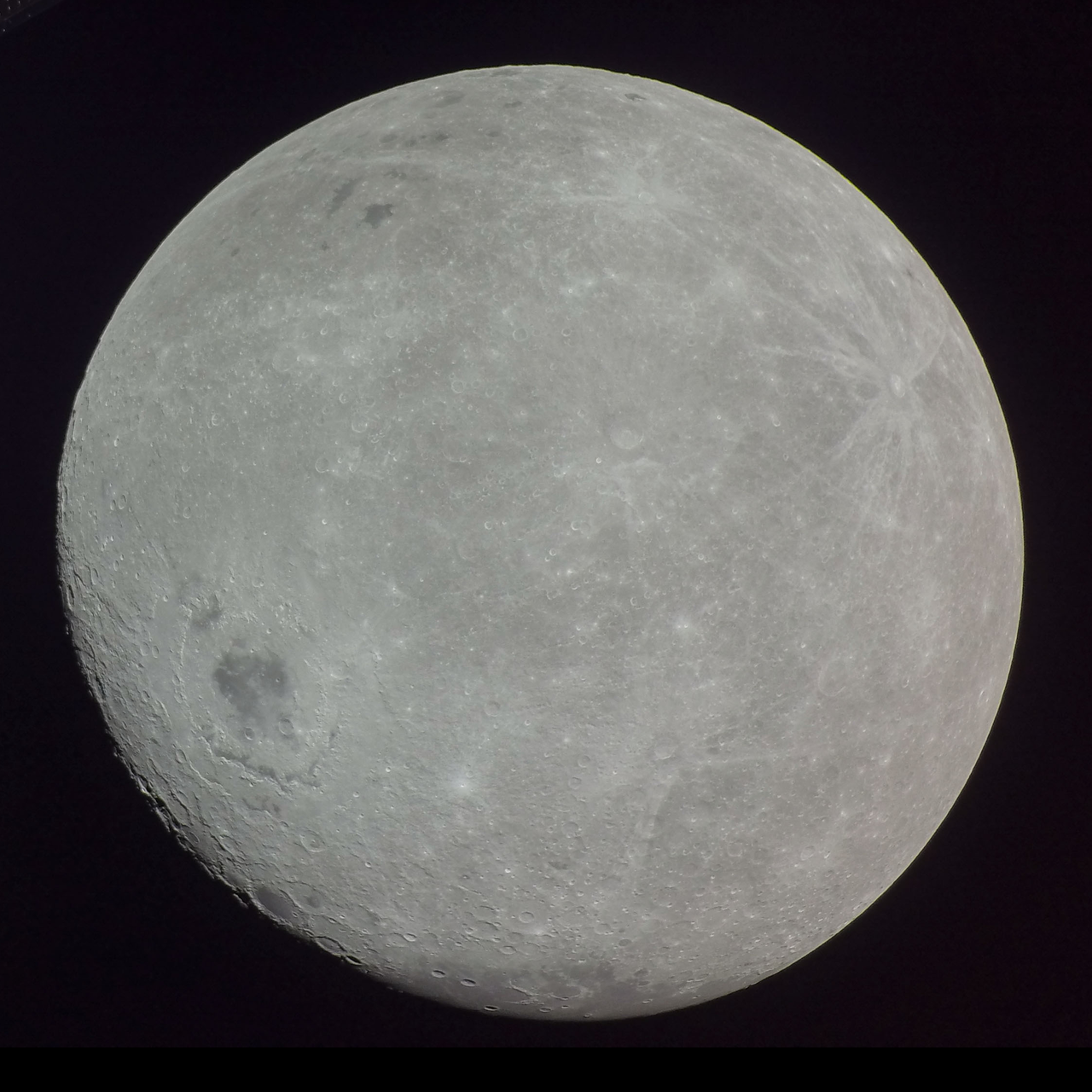
The reason we always see the same lunar face from Earth is because the Moon is tidally locked. Its rotation period matches its orbital period around Earth, causing the same hemisphere to face our planet.
The opposite hemisphere is better described as the “far side” rather than the dark side.
Both sides experience day and night cycles lasting about two Earth weeks each. When the near side is illuminated during a full moon, the far side is experiencing lunar night.
The far side remained unseen by humans until spacecraft photographed it during the space age.
Even celestial myths often arise from misunderstandings of simple orbital mechanics.
The Power of Questioning
Science myths persist because they are easy to remember and often repeated without verification. Yet science thrives on questioning assumptions.
Every experiment, observation, and measurement brings us closer to understanding how the universe actually works.
The truth is often more complex than myths—but also far more fascinating.
Lightning can strike twice. Fish remember. Bats can see. The Moon has no permanent darkness. The brain is fully alive with activity.
These corrections remind us of something essential: knowledge grows when curiosity challenges certainty.
And that process—the constant revision of what we think we know—is what makes science one of humanity’s greatest achievements.