There is something almost magical about the moment a reader sinks into a work of fiction. The outside world softens, time loosens its grip, and the boundary between self and story begins to blur. A person sitting alone with a book can feel heartbreak in a distant century, joy in an unfamiliar culture, fear in an imagined future. This experience is not a metaphorical trick of language alone. It is a measurable transformation occurring inside the brain. Reading fiction does more than entertain or pass time; it subtly reshapes how we understand other people and how different regions of our brain communicate with one another. At its deepest level, fiction trains the human mind to feel with others, to imagine lives beyond its own, and to connect ideas, emotions, and perceptions in complex and lasting ways.
The connection between fiction, empathy, and brain connectivity is one of the most fascinating intersections of neuroscience, psychology, and literature. It reveals that stories are not merely cultural artifacts but biological tools that have evolved alongside human social life. To understand how reading fiction enhances empathy and brain connectivity, we must look not only at what happens when we read, but why the human brain responds to stories so powerfully in the first place.
The Social Brain and the Need for Stories
Human beings are profoundly social creatures. Our survival has always depended on our ability to understand others, predict behavior, and cooperate within groups. Over thousands of years, the human brain evolved specialized networks dedicated to social cognition, including recognizing emotions, inferring intentions, and imagining the inner lives of others. These abilities are collectively referred to as empathy and theory of mind.
Stories appear to be deeply intertwined with this social evolution. Long before written language, humans shared narratives around fires, using stories to transmit knowledge, values, and emotional understanding. These early stories were not just entertainment; they were simulations of social life. By listening to stories, individuals could experience complex social situations without facing real-world risks.
Modern fiction continues this ancient function. When we read a novel, the brain treats the story not as abstract information but as a lived experience. Characters become social agents in our minds. Their struggles and triumphs activate the same neural systems we use when interacting with real people. This is why fiction has such a powerful effect on empathy: it repeatedly exercises the brain’s social muscles.
Entering Another Mind Through Narrative
One of the defining features of fiction is its ability to grant access to inner lives. Unlike real-world interactions, where thoughts and feelings must be inferred from behavior, fiction often provides direct insight into a character’s emotions, motivations, and conflicts. This narrative intimacy places unique demands on the reader’s brain.
As readers follow a character’s internal world, they engage neural systems involved in perspective-taking. The brain constructs a mental model of the character, integrating their past experiences, beliefs, desires, and emotional states. This process closely mirrors how we attempt to understand real people, but with greater depth and consistency.
Over time, repeated engagement with fictional minds strengthens the brain’s capacity to represent and navigate complex emotional states. Readers become more practiced at recognizing subtle emotional cues, holding multiple perspectives at once, and tolerating ambiguity in human behavior. These skills are not confined to the page; they carry over into real-life social interactions, enhancing empathy and emotional intelligence.
Emotional Engagement and the Brain’s Response
Emotion is the gateway through which fiction exerts its most profound effects. When a story moves us, the brain does not remain a detached observer. Emotional scenes activate limbic structures involved in feeling, memory, and motivation. The brain responds as if the events were personally meaningful, even though the reader knows the story is fictional.
This emotional engagement strengthens neural connections. When emotion and cognition are activated together, learning becomes more durable. The brain links characters, events, and emotions into richly interconnected networks. These connections do not fade immediately after reading; they can persist, subtly influencing how readers perceive and respond to the world.
Emotionally engaging fiction also encourages emotional regulation. Readers experience fear, sadness, anger, and joy in a safe context. This allows the brain to practice managing emotions without real-world consequences. Over time, this practice can enhance emotional resilience and sensitivity to others’ feelings.
Empathy as a Trainable Capacity
Empathy is often thought of as a fixed trait, something a person either has or lacks. However, scientific research increasingly shows that empathy is a skill that can be strengthened through experience. Reading fiction is one of the most effective ways to exercise this skill.
When readers emotionally invest in characters, they practice feeling with someone who is different from themselves. These differences may involve culture, personality, morality, or life circumstances. Fiction invites readers to temporarily suspend judgment and inhabit unfamiliar perspectives. This repeated exposure reduces emotional distance and increases understanding.
Importantly, fiction often portrays complex, flawed characters rather than idealized figures. Readers are asked to empathize with individuals who make mistakes, hold contradictory beliefs, or act against their own interests. This complexity mirrors real human behavior and trains readers to respond with compassion rather than simplistic judgment.
Brain Connectivity and Narrative Immersion
Beyond empathy, fiction has a profound impact on how different regions of the brain communicate. Reading a story is not a single mental task but a coordinated activity involving language processing, sensory imagery, memory, emotion, and social cognition. These processes must work together seamlessly for narrative immersion to occur.
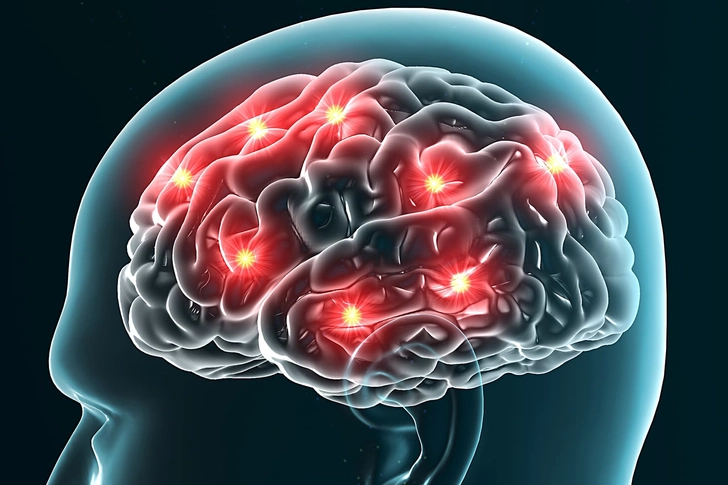
Neuroscientific studies show that when readers become absorbed in a story, connectivity increases between brain regions that do not always interact strongly. Language areas connect with sensory regions, allowing readers to visualize scenes and hear dialogue internally. Emotional centers connect with cognitive networks, integrating feeling with understanding. Social cognition networks link with memory systems, enabling readers to track relationships and character development over time.
This increased connectivity reflects a more integrated brain state. Rather than operating in isolated modules, the brain functions as a dynamic network. Repeated exposure to this state through reading fiction may strengthen these connections, enhancing cognitive flexibility and emotional integration.
Mental Simulation and the Brain’s Predictive Nature
The human brain is fundamentally predictive. It constantly generates models of the world to anticipate what will happen next. Fiction engages this predictive machinery in a uniquely rich way. As readers follow a narrative, they continually anticipate outcomes, infer motivations, and revise expectations based on new information.
This process is a form of mental simulation. The brain treats fictional scenarios as possible realities, testing emotional and social responses within them. This simulation activates many of the same neural pathways used in real-life decision-making and social interaction.
Through repeated simulation, the brain refines its predictive models of human behavior. Readers become better at anticipating emotional reactions, understanding consequences, and navigating social complexity. This contributes not only to empathy but also to improved social reasoning and adaptability.
Language, Metaphor, and Neural Richness
Fiction often uses language in ways that go beyond literal communication. Metaphors, imagery, and symbolic descriptions engage the brain more deeply than straightforward exposition. When readers encounter a metaphor, the brain must map one domain of experience onto another, creating new associations.
This process enhances neural richness. It encourages the brain to form connections between abstract concepts and concrete sensations. Over time, this can improve creativity, comprehension, and emotional nuance.
Moreover, emotionally charged language activates sensory and motor regions associated with the described experiences. Reading about warmth can activate regions associated with temperature; reading about movement can engage motor areas. This embodied response deepens immersion and strengthens brain connectivity.
Long-Term Changes and Lasting Effects
One of the most intriguing findings in research on fiction reading is that its effects may extend beyond the immediate reading experience. Changes in brain connectivity and empathic sensitivity can persist for days or even longer after finishing a story.
This suggests that fiction does not merely produce temporary emotional states but can induce lasting cognitive and neural changes. By repeatedly engaging integrated brain networks, reading fiction may promote a more interconnected and flexible neural architecture.
Over a lifetime, habitual reading of fiction could contribute to enduring differences in how the brain processes social information. Readers may become more attuned to emotional cues, more comfortable with ambiguity, and more capable of understanding perspectives different from their own.
Fiction Versus Other Forms of Reading
Not all reading engages the brain in the same way. Nonfiction often focuses on conveying information efficiently, while fiction prioritizes experiential immersion. This difference matters for empathy and brain connectivity.
Fiction typically emphasizes characters, emotions, and relationships. It requires readers to infer meaning, interpret motives, and imagine experiences. This active engagement is crucial for exercising social cognition networks.
While nonfiction can also be emotionally powerful, fiction’s sustained focus on inner lives and narrative arcs makes it particularly effective at enhancing empathy. It invites readers to live alongside characters over time, deepening emotional investment and neural engagement.
Cultural Diversity and Expanding Empathy
Fiction offers access to worlds beyond one’s immediate environment. Through stories, readers can experience lives shaped by different cultures, histories, and values. This exposure has important implications for empathy and social understanding.
By engaging with diverse narratives, readers practice understanding perspectives shaped by unfamiliar contexts. The brain learns to accommodate difference rather than resist it. Over time, this can reduce prejudice and increase openness.
Importantly, the empathic effects of fiction do not require readers to agree with characters or cultures. The act of understanding, rather than endorsement, is what matters. Fiction teaches that empathy does not mean sameness; it means recognizing the humanity within difference.
Emotional Safety and Moral Exploration
Fiction provides a unique space for exploring difficult emotions and moral dilemmas. Readers can confront fear, injustice, loss, and moral ambiguity without facing real-world consequences. This emotional safety allows for deeper exploration.
The brain responds to these challenges by engaging ethical reasoning and emotional regulation networks. Readers reflect on choices, consequences, and values, often questioning their own assumptions. This reflective process enhances moral sensitivity and emotional depth.
Because fiction does not demand immediate action, it allows the brain to process complex emotions at a manageable pace. This can strengthen empathy by encouraging thoughtful rather than reactive responses to emotional situations.
Development Across the Lifespan
The impact of fiction on empathy and brain connectivity is not limited to any single age group. In childhood, stories play a crucial role in developing emotional understanding and social skills. Young readers learn to recognize emotions, understand cause and effect in relationships, and imagine perspectives beyond their own.
In adolescence, fiction can support identity formation by offering models of struggle, growth, and self-discovery. The brain’s social networks are particularly sensitive during this period, making narrative engagement especially influential.
In adulthood, fiction continues to refine empathy and cognitive flexibility. Even in later life, reading fiction may help maintain neural connectivity and emotional engagement, contributing to cognitive health and social well-being.
The Role of Attention and Deep Reading
The empathic and neural benefits of fiction depend on deep engagement. Skimming or distracted reading does not produce the same effects as immersive reading. When attention is fragmented, the brain cannot fully integrate narrative elements.
Deep reading involves sustained focus, emotional openness, and imaginative involvement. This state allows the brain to synchronize multiple networks, creating the conditions for enhanced connectivity.
In an age of constant digital distraction, deep reading becomes increasingly valuable. Fiction offers an opportunity to slow down, engage fully, and exercise the brain’s capacity for sustained attention and emotional depth.
Individual Differences and Personal Resonance
Not all readers respond to fiction in the same way. Personal experiences, personality traits, and emotional openness influence how deeply a story resonates. However, this variability does not undermine the general effect of fiction on empathy and brain connectivity.
Instead, it highlights the importance of finding stories that resonate personally. When a reader feels genuinely connected to a narrative, the brain’s response is stronger. Emotional relevance amplifies neural engagement, making the experience more transformative.
Over time, exposure to a wide range of stories can broaden this resonance, allowing readers to connect with increasingly diverse perspectives.
Fiction as a Bridge Between Science and Humanity
The scientific study of fiction’s effects does not diminish its mystery; it deepens it. Understanding the neural mechanisms behind empathy and brain connectivity reveals why stories have always mattered so deeply to human beings.
Fiction operates at the intersection of biology and culture. It uses language, imagination, and emotion to shape the brain in ways that support social connection. In doing so, it reinforces the idea that empathy is not merely a moral ideal but a cognitive capacity rooted in neural networks.
This perspective invites a renewed appreciation for literature, not as a luxury or escape, but as a fundamental tool for human development.
The Ethical Implications of Storytelling
If fiction shapes empathy and brain connectivity, then the stories we tell and consume matter deeply. Narratives influence how we perceive others, how we interpret difference, and how we respond to suffering.
Responsible storytelling can foster understanding and compassion, while shallow or dehumanizing narratives can reinforce stereotypes. This does not mean fiction must always be morally uplifting, but it underscores the power of narrative to shape minds.
Readers, too, play an active role. By choosing to engage with challenging, diverse, and emotionally rich stories, they participate in their own cognitive and emotional growth.
A World Shaped by Stories
From ancient myths to modern novels, stories have shaped human consciousness. They have transmitted values, preserved knowledge, and connected individuals across time and space. Science now shows that this influence extends into the structure and function of the brain itself.
Reading fiction strengthens empathy by repeatedly engaging the neural systems that support understanding others. It enhances brain connectivity by integrating language, emotion, memory, and social cognition into unified experiences. These effects accumulate over time, shaping how readers perceive and relate to the world.
In a divided and complex world, this capacity for connection is more important than ever.
The Lasting Gift of Fiction
To read fiction is to practice being human in the fullest sense. It is to listen deeply, feel honestly, and imagine generously. Each story leaves a trace, a subtle reshaping of neural pathways and emotional awareness.
The science behind fiction’s effects does not strip stories of their magic. Instead, it reveals that the magic is real, woven into the biology of the brain. Fiction changes us because we are built to be changed by it.
In turning pages, readers are not merely consuming words. They are building empathy, strengthening connections, and participating in an ancient dialogue between mind and story. In this quiet act lies one of humanity’s most powerful tools for understanding itself and others.