Almost everyone has experienced it at least once. You walk into a room you have never visited before, hear a sentence you are certain you have never heard, or witness a moment that feels uncannily familiar. A quiet shock passes through you, a subtle tightening of the chest, and a thought arises almost instantly: “This has happened before.” And yet, reason quickly objects. You know it hasn’t. This unsettling, fleeting sensation is déjà vu.
Déjà vu is not dramatic or explosive. It does not announce itself loudly. Instead, it slips into consciousness like a whisper, creating a brief fracture between what you know and what you feel. Logic says this moment is new. Emotion insists it is old. The contradiction lasts only seconds, sometimes less, but it leaves behind a lingering sense of mystery. How can the mind feel familiarity where none should exist?
For centuries, people have tried to explain déjà vu through philosophy, spirituality, superstition, and mysticism. Some have called it evidence of past lives, fate, or prophetic dreams. Others have dismissed it as imagination. Modern science, however, offers a more grounded explanation, one that is no less fascinating. Déjà vu appears to be a window into the fragile machinery of memory itself, a momentary glitch in the brain’s ability to label experience as new or remembered.
What Déjà Vu Actually Means
The term “déjà vu” comes from French and translates to “already seen.” It describes the feeling that a current experience has been lived before, even when it clearly has not. Importantly, déjà vu is not the belief that something has happened before. It is the feeling of familiarity without supporting evidence.
This distinction matters. In conditions involving delusions or memory disorders, people may genuinely believe false memories to be real. Déjà vu is different. During a déjà vu episode, people remain aware that the experience is strange and likely incorrect. There is insight. The brain generates a sense of familiarity, but the conscious mind recognizes the mismatch.
This awareness suggests that déjà vu is not a failure of reality testing, but a temporary misfiring within the memory system. It is as if the brain accidentally tags a present moment with the emotional label of “remembered” instead of “new.”
The Brain’s Memory System and How It Normally Works
To understand déjà vu, it helps to understand how memory normally functions. Memory is not a single process or location in the brain. It is a coordinated system involving multiple regions working together.
When you experience something new, sensory information flows through the brain and is processed in stages. Some regions analyze sights, sounds, and smells. Others assess emotional significance. Meanwhile, the hippocampus and nearby structures help determine whether the experience is new or familiar. If it is new, the brain encodes it as a memory. If it resembles something from the past, the brain retrieves stored information to compare.
Familiarity itself is a distinct process. The brain can generate a sense that something is familiar without recalling specific details. This is why you may recognize a face without remembering where you have seen it before. Déjà vu appears to involve this familiarity system activating at the wrong time.
Familiarity Without Memory: The Core of Déjà Vu
One of the most widely accepted scientific explanations for déjà vu is that it results from a mismatch between familiarity and recollection. Familiarity is the vague feeling that something is known. Recollection is the ability to retrieve details about when and where something occurred.
In déjà vu, familiarity is present, but recollection is absent. The brain signals that something is known, but provides no memory to support that signal. This creates cognitive dissonance, a tension between feeling and knowledge.
Why would familiarity activate incorrectly? The answer likely lies in the complexity and speed of neural processing. The brain is constantly predicting, categorizing, and labeling experiences in fractions of a second. Occasionally, signals may fire out of sequence or overlap in unusual ways.
Temporal Glitches and Delayed Processing
One theory suggests that déjà vu arises from a tiny delay in processing sensory information. According to this idea, information reaches one part of the brain slightly later than another. The first signal is interpreted as new, while the second is interpreted as familiar, even though both refer to the same moment.
This delay is not something we consciously perceive. It occurs on a timescale far below awareness. Yet the brain may interpret the second signal as a memory of the first, creating the illusion that the experience has happened before.
While elegant, this explanation does not fully account for all features of déjà vu. It does, however, highlight how sensitive our perception of reality is to timing. A difference of milliseconds can reshape subjective experience.
The Role of the Hippocampus and Temporal Lobe
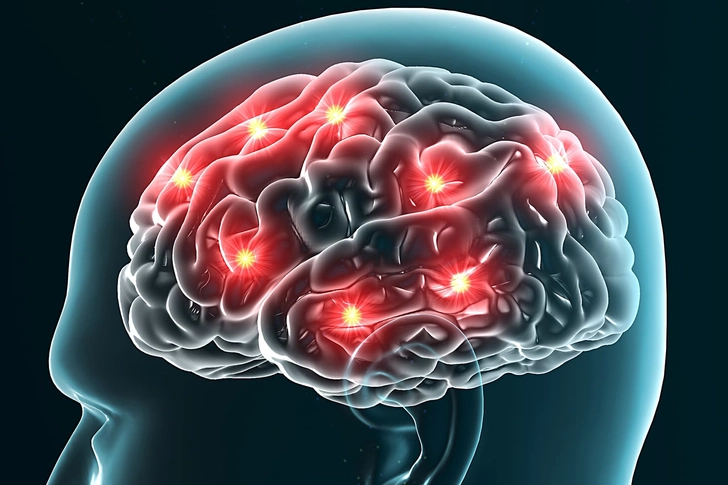
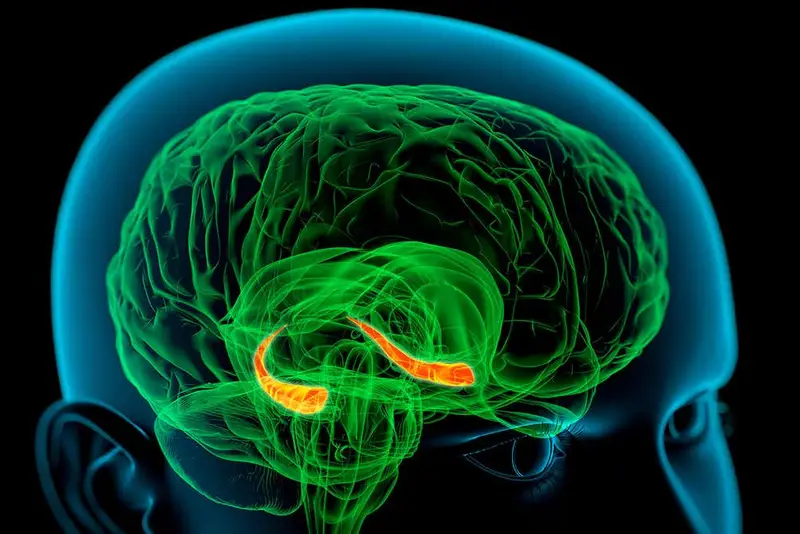
Research has shown that déjà vu is closely linked to activity in the temporal lobes of the brain, particularly regions involved in memory processing. The hippocampus, a structure essential for forming and retrieving memories, plays a central role.
Interestingly, people with certain types of epilepsy, especially temporal lobe epilepsy, often report frequent and intense déjà vu experiences. In these cases, abnormal electrical activity in memory-related brain regions can trigger powerful feelings of familiarity.
This connection suggests that déjà vu may result from brief, localized disruptions in neural activity. In healthy individuals, such disruptions are mild and fleeting. In epilepsy, they are stronger and more frequent. The similarity between normal déjà vu and pathological cases supports the idea that déjà vu is rooted in memory circuitry rather than imagination or fantasy.
Why Déjà Vu Feels So Convincing
Déjà vu is unsettling because it feels real. The emotional weight of familiarity is strong, often accompanied by a sense of inevitability or eeriness. This emotional quality may arise from the involvement of brain regions that link memory to emotion.
The brain does not treat familiarity as a neutral signal. Familiar things are usually safe, predictable, and important. When familiarity appears unexpectedly, it carries emotional significance. The mind instinctively searches for an explanation, even when none exists.
This emotional response may explain why people often interpret déjà vu in supernatural terms. The experience feels meaningful, even profound, despite its brevity. Science does not strip déjà vu of its mystery; it reframes that mystery as something arising from the deep complexity of the brain.
Déjà Vu and Predictive Processing
Modern neuroscience increasingly views the brain as a prediction machine. Rather than passively receiving information, the brain constantly generates expectations about what will happen next. These predictions help us navigate the world efficiently.
Déjà vu may occur when predictions align unusually well with incoming sensory data. If a new situation closely matches an internal model or expectation, the brain may mistakenly label it as familiar. This could happen in environments with repetitive patterns, similar layouts, or familiar emotional tones.
For example, a place you have never been may resemble another place you once visited. The similarity may not reach conscious awareness, but it may be enough to trigger a sense of familiarity. The brain recognizes the pattern without recognizing the source.
Memory Fragments and Unconscious Recognition
Another explanation involves the idea that fragments of memory can influence perception without conscious recall. The brain may have encountered elements of a situation before, such as a layout seen briefly, a phrase overheard, or a scene glimpsed in passing.
Later, when those elements reappear in a new context, the brain recognizes them without remembering when or where they were first encountered. The result is a sense of familiarity detached from explicit memory.
This explanation aligns with what is known about implicit memory, which influences behavior and perception without entering conscious awareness. Déjà vu may be the moment when implicit recognition bubbles up without an identifiable source.
Why Déjà Vu Is More Common in Certain People
Déjà vu is not evenly distributed across the population. It is more common in young adults than in children or older adults. It also appears more frequently in people who are tired, stressed, or traveling.
These patterns suggest that déjà vu may be linked to cognitive load and neural efficiency. When the brain is fatigued or overloaded, processing errors may be more likely. Similarly, novel environments may trigger comparisons with stored memories more frequently.
The decline of déjà vu with age may reflect changes in memory processing or reduced novelty in daily life. As experiences become more routine, the brain may generate fewer ambiguous familiarity signals.
Déjà Vu Versus False Memory
It is important to distinguish déjà vu from false memory. In false memory, people believe they remember events that never occurred. In déjà vu, people feel familiarity but know it is false.
This distinction highlights the integrity of the cognitive system during déjà vu. The brain’s monitoring mechanisms remain intact. The experience is strange precisely because it violates expectations while preserving awareness.
This awareness is why déjà vu rarely leads to lasting confusion. Once the moment passes, reality reasserts itself. The brain corrects the error and moves on.
The Evolutionary Perspective
From an evolutionary standpoint, familiarity detection is crucial. Recognizing known environments, faces, and patterns increases survival. A system that errs slightly on the side of false positives may be adaptive. Mistaking something new for something familiar is usually less dangerous than failing to recognize a real threat.
Déjà vu may be the rare byproduct of an otherwise highly efficient system. The same mechanisms that allow rapid recognition and learning may occasionally misfire, producing brief illusions of familiarity.
Seen this way, déjà vu is not a flaw but a side effect of cognitive sophistication. It reveals the brain’s remarkable ability to classify experience at lightning speed.
Cultural Interpretations and Human Meaning
Across cultures, déjà vu has inspired myths and interpretations. Some see it as evidence of reincarnation or destiny. Others view it as a spiritual signal or a moment when time folds in on itself.
These interpretations speak less about the nature of déjà vu and more about the human need for meaning. When an experience feels powerful and inexplicable, people naturally seek narratives that make sense of it.
Science does not invalidate these emotional responses. It simply offers a different kind of explanation, one grounded in biology rather than metaphysics. Understanding the mechanism does not make the experience less strange. In many ways, it makes it more impressive.
The Emotional Aftertaste of Déjà Vu
Even after the sensation fades, déjà vu often leaves an emotional residue. People may feel unsettled, curious, or reflective. Some report a sense of wonder, others a sense of unease.
This emotional aftertaste may arise because déjà vu momentarily destabilizes our trust in perception. It reminds us that memory and reality are not as solid as they seem. The mind, which we rely on to anchor us in the present, briefly reveals its fragility.
Yet this fragility is also a source of fascination. Déjà vu invites us to question how we know what we know, and how the brain constructs the feeling of certainty.
What Déjà Vu Is Not
Déjà vu is not a memory of the future. It is not evidence of psychic ability. It is not a sign of mental illness in healthy individuals. It is a common, benign experience rooted in normal brain function.
While it shares features with certain neurological conditions, occasional déjà vu is not cause for concern. It becomes clinically relevant only when it is frequent, intense, and accompanied by other symptoms.
Understanding what déjà vu is not helps dispel fear and misinformation. It grounds the experience in the reality of neural processing.
What Déjà Vu Teaches Us About Consciousness
Déjà vu offers a rare glimpse into the machinery of consciousness. It reveals that our sense of time, memory, and familiarity is constructed moment by moment. The present is not simply experienced; it is interpreted.
The fact that the brain can mislabel a moment as remembered shows how active perception truly is. We do not passively record reality. We continuously interpret it through layers of memory, expectation, and emotion.
In this sense, déjà vu is not an error but a revelation. It exposes the inner workings of the mind, usually hidden from awareness.
The Mystery That Remains
Despite decades of research, déjà vu is not fully understood. No single theory explains every aspect of the experience. It likely arises from multiple interacting mechanisms rather than a single cause.
This remaining mystery is not a failure of science. It reflects the complexity of the brain and the challenge of studying fleeting, subjective experiences. Déjà vu occurs unexpectedly and disappears quickly, making it difficult to capture in controlled settings.
Yet progress continues. Advances in brain imaging and cognitive science are bringing us closer to understanding how memory, perception, and emotion interact.
A Brief Glitch, A Deep Insight
Déjà vu lasts only seconds, but its implications are profound. It reminds us that memory is not a perfect recording device. It is an active, dynamic process prone to subtle errors. It shows that familiarity can exist without memory, and that feeling can diverge from fact.
In those brief moments when the present feels like the past, we glimpse the delicate balance that allows us to experience reality coherently. Déjà vu is a crack in the surface of consciousness, small but revealing.
Far from being meaningless, it is a testament to the brain’s complexity. It shows how finely tuned our cognitive systems are, and how easily they can slip into strange, beautiful illusions.
The Beauty of Not Fully Knowing
Perhaps the enduring fascination with déjà vu lies in the fact that it resists complete explanation. Even as science illuminates its mechanisms, the experience retains a sense of wonder.
This balance between understanding and mystery mirrors the human condition itself. We seek knowledge, but we are also moved by what eludes us. Déjà vu sits at that intersection, a moment where science and subjective experience meet.
In the end, déjà vu is not a message from another world or a sign of fate. It is something far more intimate. It is the brain briefly revealing itself to itself, showing us how memory, time, and awareness intertwine to create the feeling of being alive, here, now.