Mirror neurons are among the most fascinating discoveries in modern neuroscience because they sit at the crossroads of biology, emotion, and human connection. They offer a scientific window into something people have intuitively known for thousands of years: that humans are deeply social beings who feel with one another, not just for one another. When we flinch as someone else gets hurt, smile when a loved one laughs, or feel a knot in our stomach watching another person cry, something profound is happening inside the brain. Mirror neurons help explain why another person’s experience can echo so vividly within us.
The story of mirror neurons is not just a story about cells firing in the brain. It is a story about empathy, learning, imitation, culture, morality, and even the roots of language. It is a story that forces us to rethink what it means to understand another human being. To explore mirror neurons is to explore how deeply interconnected human minds truly are.
The Birth of a Revolutionary Idea
The discovery of mirror neurons was not the result of a grand philosophical quest to explain empathy. It emerged unexpectedly from careful, methodical research into motor control. In the early 1990s, neuroscientists studying the brains of monkeys were recording activity in a region of the brain involved in movement. Their goal was straightforward: to understand how the brain plans and executes actions like grasping an object.
Then something surprising happened. The same neurons that fired when a monkey reached for an object also fired when the monkey simply watched another individual perform that same action. The monkey was not moving. It was not preparing to move. Yet its brain responded as if it were acting. The neuron did not seem to care whether the action was performed or merely observed. It mirrored the action.
This was a radical finding. It suggested that perception and action were not as separate in the brain as previously thought. Observation was not passive. To see an action was, in a sense, to internally perform it. This discovery opened a door to a new way of understanding how brains connect perception, action, and understanding.
What Mirror Neurons Are and What They Do
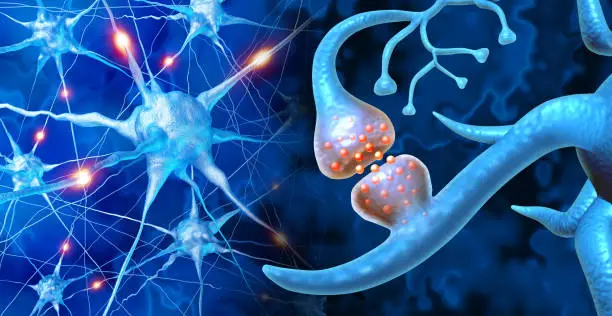
Mirror neurons are a class of neurons that become active both when an individual performs an action and when they observe another individual performing the same or a similar action. They are not simple visual neurons that respond to shapes or motion, nor are they merely motor neurons that control muscles. They link seeing with doing.
This link is crucial. When you watch someone pick up a cup, your brain activates patterns associated with picking up a cup yourself. You are not consciously deciding to imitate them, but your brain is mapping their action onto your own motor system. This mapping allows you to understand the action from the inside rather than merely observing it from the outside.
This internal simulation is thought to be the foundation of action understanding. Instead of reasoning abstractly about what another person is doing, your brain uses its own experience of action to make sense of theirs. Understanding, in this sense, is embodied. It arises from shared neural representations rather than detached analysis.
From Action to Intention
One of the most powerful implications of mirror neurons is their role in understanding intention. When you see someone reach for a glass of water, you do not merely see an arm moving through space. You understand that they intend to drink. This understanding feels immediate and effortless.
Mirror neuron systems appear to contribute to this process by encoding not just the physical movement but the goal of the action. Certain neurons respond differently depending on whether an observed action is directed toward a meaningful outcome. This suggests that the brain is tuned to the “why” behind actions, not just the “how.”
This capacity is essential for social life. Human interactions depend on rapidly interpreting others’ intentions. We constantly infer what people are trying to do, what they want, and what they might do next. Mirror neurons help make this possible by grounding social understanding in the body’s own action systems.
Mirror Neurons and the Roots of Empathy
Empathy is often described as the ability to feel what another person feels. Mirror neurons offer a neural mechanism that makes this possible. If the brain uses its own systems to simulate others’ actions, it may use similar mechanisms to simulate others’ emotions.
Research suggests that observing someone else’s emotional expression can activate brain regions involved in experiencing that emotion oneself. When you see a face twisted in pain, areas of your brain associated with pain processing may become active. When you see someone smile, regions linked to pleasure and reward may respond. Your brain mirrors not just actions but emotional states.
This mirroring does not mean that you feel exactly the same intensity or quality of emotion as the other person. Instead, it provides a shared neural framework that allows you to resonate with their experience. Empathy, in this view, is not a purely intellectual process. It is a bodily, neural response that arises automatically when we encounter another person’s emotional state.
Emotional Contagion and Shared Experience
Anyone who has walked into a room filled with tension or joy knows how emotions can spread. Laughter becomes contagious. Anxiety can ripple through a crowd. Mirror neuron systems are thought to play a role in this emotional contagion.
When one person expresses an emotion, others unconsciously mirror aspects of that expression, both behaviorally and neurologically. Facial muscles subtly mimic what is observed. Brain activity patterns shift in response. These changes can feed back into emotional experience, causing people to feel what they see.
This process helps explain why humans are so sensitive to social environments. Emotions are not confined within individual minds. They move through groups, shaping collective behavior. Mirror neurons provide a biological basis for this shared emotional landscape.
Learning Through Imitation
Long before formal education, humans learned by watching others. Infants observe caregivers and gradually reproduce actions, sounds, and expressions. Mirror neurons are believed to be central to this ability to learn through imitation.
When a child watches an adult perform an action, mirror neuron systems activate the child’s own motor representations. This internal rehearsal makes it easier to reproduce the action later. Learning does not require explicit instruction; it can emerge naturally from observation.
This mechanism is particularly important for learning complex behaviors that are difficult to describe verbally. Skills like using tools, playing musical instruments, or performing social rituals are often learned by watching and copying others. Mirror neurons help bridge the gap between observation and execution.
Language and Communication
Some scientists have proposed that mirror neuron systems played a role in the evolution of language. Human communication relies heavily on gestures, facial expressions, and vocalizations, all of which involve coordinated actions.
The idea is that neural systems originally evolved for understanding and imitating actions may have been repurposed to support symbolic communication. Gestures could be understood because they activated shared action representations. Over time, these systems may have contributed to the development of spoken language by linking sounds to motor patterns involved in speech.
While this theory remains debated, it highlights the broader significance of mirror neurons. They may not only explain how we understand actions and emotions but also how complex forms of communication emerged.
Mirror Neurons and Social Bonding
Human relationships are built on connection, trust, and shared experience. Mirror neuron systems help create these bonds by allowing individuals to resonate with one another at a neural level.
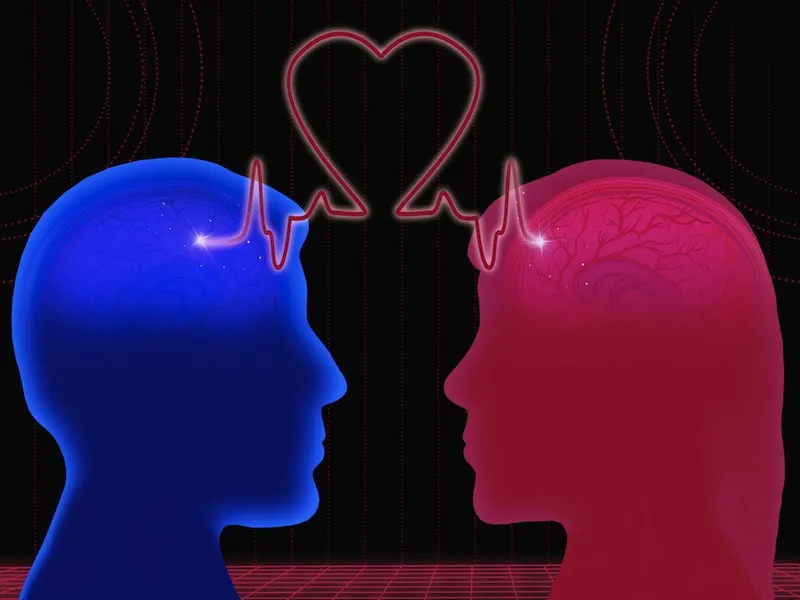
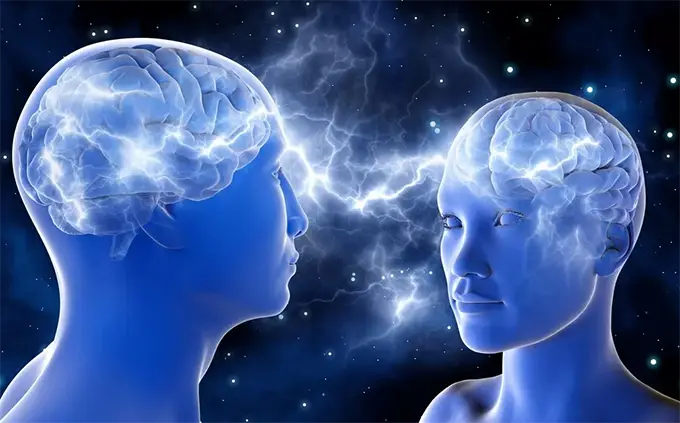
When people interact face-to-face, their brains can become synchronized. Neural rhythms align. Emotional states converge. This synchronization fosters feelings of closeness and understanding. It helps explain why physical presence, eye contact, and shared activities strengthen relationships in ways that remote interaction often cannot fully replicate.
Through mirroring, individuals do not remain isolated minds. They become part of a dynamic system in which experiences are partially shared. This neural interdependence is a foundation of social cohesion.
The Development of Mirror Neuron Systems
Mirror neuron systems do not emerge fully formed at birth. They develop through interaction with the environment and other people. Infants are born with brains that are highly plastic, ready to be shaped by experience.
As babies observe caregivers, their mirror systems begin to link observed actions with their own motor experiences. Smiling, reaching, vocalizing, and responding to emotions all contribute to the fine-tuning of these networks. Social interaction is not just beneficial for development; it is essential.
This developmental process underscores the importance of early relationships. A child’s brain is shaped by the quality and consistency of social engagement. Mirror neurons help embed social experience into neural architecture, influencing empathy and understanding throughout life.
Mirror Neurons and Autism Spectrum Conditions
The relationship between mirror neurons and social cognition has led researchers to explore their role in autism spectrum conditions. Autism is characterized by differences in social interaction, communication, and empathy. Some theories have suggested that atypical mirror neuron functioning may contribute to these differences.
Research in this area is complex and ongoing. While some studies have found differences in neural responses during action observation or imitation tasks, others have challenged the idea of a simple mirror neuron deficit. Autism is highly diverse, and social differences cannot be reduced to a single neural mechanism.
What this research does highlight is the intricate relationship between brain systems and social experience. Mirror neurons are part of a broader network involved in understanding others, and variations in these networks can shape how individuals perceive and engage with the social world.
Pain, Compassion, and Moral Response
One of the most striking aspects of mirror neuron research involves pain. When people observe someone else in pain, their brains often activate regions associated with their own pain experience. This neural resonance can motivate compassion and helping behavior.
Seeing another person suffer can feel uncomfortable precisely because the brain partially simulates that suffering. This discomfort is not merely emotional; it has a biological basis. It pushes individuals to alleviate others’ pain, strengthening social bonds and cooperation.
This mechanism may underlie moral behavior at a basic level. Empathy makes harm aversive and care rewarding. Mirror neurons do not dictate moral values, but they provide the emotional grounding that makes moral concern possible.
Art, Storytelling, and Shared Imagination
Art has the power to move us deeply, even when it depicts experiences far removed from our own lives. When we watch a film, read a novel, or observe a painting, we often feel what the characters feel. Mirror neuron systems may help explain this capacity for imaginative empathy.
Observing actions and expressions in art can activate the same neural systems involved in real-life experience. A painted gesture can evoke a sense of movement. A written description of grief can stir genuine sadness. Through neural mirroring, art becomes a shared emotional space.
Storytelling, in particular, relies on this capacity. When listeners or readers mentally simulate characters’ actions and emotions, stories become immersive. Mirror neurons help transform abstract symbols into lived experience.
The Body’s Role in Understanding the Mind
Mirror neurons challenge the traditional separation between mind and body. They suggest that understanding others is not purely a cognitive process but an embodied one. The brain uses systems evolved for action and sensation to make sense of social information.
This perspective aligns with broader ideas in neuroscience and psychology that emphasize embodiment. Thoughts, emotions, and perceptions are grounded in bodily experience. To understand another person is, in part, to use one’s own body-based representations as a reference.
This insight reshapes how we think about communication, education, and therapy. It highlights the importance of physical presence, gesture, and emotional expression in human understanding.
Scientific Debates and Limitations
Despite their popularity, mirror neurons have also been the subject of debate. Some scientists caution against attributing too much explanatory power to a single class of neurons. Human empathy and social understanding are complex phenomena involving many brain regions and networks.
Mirror neurons are part of a larger system that includes areas responsible for emotion, memory, attention, and reasoning. They do not operate in isolation. Moreover, much of the direct evidence for mirror neurons comes from animal studies, while human research often relies on indirect measures of brain activity.
These debates are healthy and important. They remind us that neuroscience is a developing field and that understanding the brain requires careful interpretation of evidence. Mirror neurons are a compelling piece of the puzzle, but not the entire picture.
Mirror Neurons in a Social World
In a world increasingly mediated by screens, understanding the biological roots of empathy takes on new significance. Face-to-face interaction engages mirror systems in ways that text and images may not fully replicate. Tone of voice, subtle expressions, and shared physical space all contribute to neural resonance.
This does not mean digital communication lacks emotional value, but it highlights what can be lost when social cues are reduced. Mirror neuron research underscores the importance of human presence and embodied interaction for deep understanding.
As societies grapple with loneliness, polarization, and misunderstanding, insights from neuroscience can inform how we design social spaces, educational systems, and technologies that support genuine connection.
The Evolutionary Perspective
From an evolutionary standpoint, mirror neurons make sense. Social animals benefit from understanding and predicting each other’s behavior. Those who could quickly interpret actions and emotions would have had advantages in cooperation, learning, and survival.
In humans, this capacity reached extraordinary levels, supporting complex cultures, shared knowledge, and moral systems. Mirror neurons likely contributed to this evolutionary trajectory by enabling individuals to learn from others and coordinate behavior.
This perspective places empathy not as a luxury but as a fundamental adaptation. The ability to resonate with others is woven into the fabric of human biology.
Mirror Neurons and Self-Understanding
Interestingly, the same systems that help us understand others may also contribute to understanding ourselves. By mapping actions and emotions, the brain creates a sense of agency and identity.
Observing others can influence self-perception. We learn who we are by seeing ourselves reflected in social interaction. Mirror neurons may play a role in this process by linking external observation with internal experience.
This dynamic relationship between self and other highlights the deeply relational nature of human consciousness. Identity is not formed in isolation but emerges through interaction.
The Emotional Power of Being Seen
One of the most profound human experiences is feeling understood. When someone truly “gets” what we are feeling, it creates a sense of validation and relief. Mirror neuron systems may contribute to this experience by enabling emotional alignment.
When two people resonate emotionally, their brains may partially synchronize. This shared neural state fosters trust and connection. It explains why empathy feels healing and why lack of understanding can feel isolating.
In this sense, mirror neurons are not just scientific curiosities. They are part of what makes human connection meaningful.
Looking Forward: What Mirror Neurons Teach Us
The study of mirror neurons is still evolving. New methods and perspectives continue to refine our understanding. What remains clear is that the brain is not designed for isolation. It is fundamentally social.
Mirror neurons reveal that empathy is not merely a moral choice or cultural construct. It has biological roots that shape how we perceive, feel, and relate to one another. This does not diminish the value of empathy; it deepens it by showing how profoundly it is embedded in who we are.
Understanding mirror neurons encourages humility. Our thoughts and emotions are influenced by others in ways we may not consciously recognize. We are shaped by what we observe and by whom we interact with.
A Shared Neural Humanity
At their deepest level, mirror neurons remind us that human experience is shared. The boundaries between minds are not as rigid as they appear. Through neural mirroring, we carry traces of one another within our brains.
When we witness joy, sorrow, effort, or pain, our brains respond as if those experiences were partly our own. This biological resonance forms the foundation of compassion, cooperation, and culture.
Mirror neurons do not make us empathetic on their own, but they make empathy possible. They provide the neural bridge that allows one human being to cross into the experience of another.
In a world often divided by differences, the science of mirror neurons offers a quiet but powerful message. Beneath language, belief, and identity, human brains are wired to connect. We are built to feel with one another. And in that shared capacity lies both our vulnerability and our greatest strength.