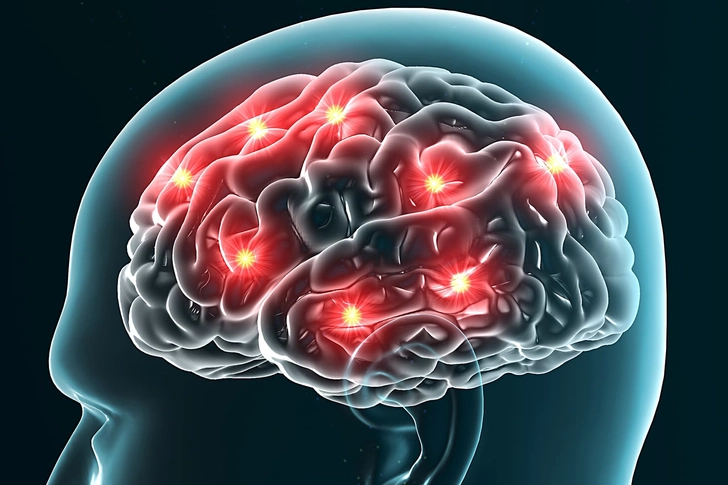
Meditation is often described as a quiet practice, something gentle and inward, a few minutes of stillness in an otherwise noisy life. Yet beneath this apparent calm, meditation is anything but passive. Inside the brain, profound and measurable changes are taking place. Neurons are adjusting their connections, networks are reorganizing, and gray matter—the living tissue that makes thought, emotion, and awareness possible—is slowly reshaped. This transformation is not mystical or symbolic. It is biological, structural, and increasingly well understood by modern neuroscience.
To understand how meditation changes the gray matter in your brain is to explore one of the most fascinating intersections between ancient inner practice and modern scientific discovery. It is a story about attention, emotion, habit, and plasticity. It is also a deeply human story about how the mind, when trained with patience and care, can literally change the brain that gives rise to it.
Understanding Gray Matter: The Living Substance of the Mind
Gray matter is often mentioned in discussions of brain health, intelligence, and neurological disease, yet it is rarely explained in emotional or human terms. Gray matter is not an abstract concept. It is living tissue, dense with neuronal cell bodies, dendrites, synapses, and glial cells. It is the part of the brain where information is processed, decisions are made, emotions are shaped, and awareness itself emerges.
Unlike white matter, which primarily serves as communication highways between regions, gray matter is where computation happens. It is where sensations become perceptions, where thoughts take form, where memories are encoded, and where impulses are either acted upon or restrained. When we talk about changes in gray matter, we are talking about changes in the very architecture of experience.
For much of the twentieth century, scientists believed that gray matter was largely fixed after childhood. The adult brain was thought to be stable, resistant to meaningful structural change. Learning might strengthen existing connections, but the idea that meditation or mental training could physically reshape gray matter was considered unlikely. This belief turned out to be profoundly wrong.
Neuroplasticity: The Brain’s Capacity to Change
The modern understanding of meditation’s effects on gray matter rests on the concept of neuroplasticity. Neuroplasticity is the brain’s ability to change its structure and function in response to experience. Every time you learn a new skill, practice a habit, or even repeatedly think a certain way, you are subtly reshaping your brain.
Meditation is a form of mental training. Like learning to play a musical instrument or mastering a sport, meditation involves repeated practice. But instead of training muscles or reflexes, meditation trains attention, awareness, and emotional regulation. Over time, this training leaves traces in the brain’s structure.
Neuroplasticity does not mean the brain is infinitely malleable. Change happens within biological constraints, and it requires consistent repetition. But meditation provides exactly the kind of sustained, focused mental activity that encourages plastic change. The brain adapts to what it does repeatedly, and meditation gives the brain a new pattern of activity to adapt to.
The Discovery of Meditation-Induced Brain Changes
The scientific exploration of meditation’s impact on gray matter gained momentum with the advent of advanced brain imaging techniques, particularly magnetic resonance imaging. These tools allowed researchers to look inside the living brain with unprecedented detail, measuring the thickness, density, and volume of gray matter in specific regions.
When scientists began comparing the brains of long-term meditators with those of non-meditators, intriguing differences emerged. Certain regions associated with attention, emotional regulation, self-awareness, and compassion appeared structurally altered. More importantly, longitudinal studies showed that even relatively short meditation programs could lead to detectable changes in gray matter over time.
This was a turning point. Meditation was no longer just a subjective experience reported by practitioners. It became an observable biological process, one that could be measured, analyzed, and understood within the framework of neuroscience.
Attention and the Reshaping of the Brain
One of the most consistent findings in meditation research involves changes in brain regions related to attention. Meditation often begins with a simple instruction: focus on something, such as the breath, and gently return to it when the mind wanders. This act of noticing distraction and returning attention is repeated again and again.
From a neural perspective, this repetition is powerful. Attention-related regions of the brain are activated each time the meditator notices wandering and refocuses. Over time, this repeated activation strengthens neural circuits involved in sustained attention and executive control.
Gray matter changes have been observed in areas associated with attentional regulation. These changes suggest increased neuronal density or altered synaptic connections, reflecting a brain that has become more efficient at directing and maintaining focus. The mind becomes less reactive, less scattered, not because thoughts disappear, but because the brain has been trained to handle them differently.
Emotional Regulation and Gray Matter Transformation
Meditation does not suppress emotion. Instead, it changes the relationship between awareness and emotion. Through mindful observation, practitioners learn to notice emotions as they arise without immediately reacting to them. This shift has profound neural consequences.
Brain regions involved in emotional processing and regulation show structural changes in meditators. These regions help interpret emotional signals and modulate responses. As meditation practice continues, the gray matter in these areas appears to adapt, supporting greater emotional balance.
This does not mean that meditators stop feeling strong emotions. Rather, they often experience emotions with greater clarity and less overwhelm. The brain becomes better at processing emotional information without being hijacked by it. This capacity is reflected in the structural refinement of gray matter networks that support emotional awareness and control.
Stress, the Brain, and Meditation’s Protective Effects
Chronic stress has well-documented effects on the brain. Prolonged exposure to stress hormones can negatively impact gray matter, particularly in regions involved in memory and emotional regulation. Stress can shrink certain neural structures, impairing cognitive flexibility and emotional resilience.
Meditation appears to counteract some of these effects. By reducing stress reactivity and promoting a calmer baseline state, meditation changes how the brain responds to challenges. This shift is not merely psychological. It is accompanied by structural changes in gray matter that reflect improved resilience.
When the brain spends less time in a state of chronic threat, it can allocate resources toward growth and repair rather than survival. Meditation helps create the conditions for this shift, allowing gray matter to maintain or even increase its integrity in key regions.
Self-Awareness and the Sense of Identity
Meditation often leads practitioners to report changes in how they experience themselves. Thoughts feel less personal, emotions less defining, and the sense of identity becomes more flexible. These subjective experiences correspond to changes in brain regions involved in self-referential processing.
Gray matter alterations in these regions suggest that meditation changes how the brain constructs the sense of self. Instead of a rigid narrative constantly reinforced by habitual thought patterns, the brain begins to support a more open, present-centered awareness.
This does not erase identity or personality. Rather, it softens the boundaries, allowing individuals to respond to life with greater adaptability. The brain’s structural changes reflect this shift, showing that the experience of self is not fixed but dynamically shaped by mental habits.
Memory, Learning, and Neural Efficiency
Meditation’s impact on gray matter also extends to regions involved in memory and learning. Attention and emotional regulation are deeply connected to how memories are formed and retrieved. A calmer, more focused mind creates conditions that support clearer encoding of experiences.
Structural changes in memory-related gray matter may reflect improved neural efficiency rather than simple growth. The brain learns to allocate resources more effectively, strengthening relevant connections while pruning unnecessary ones. Meditation encourages this efficiency by reducing mental noise and promoting sustained awareness.
This process aligns with a broader principle of brain plasticity. The brain does not merely add more tissue; it refines its networks. Meditation supports this refinement, leading to changes that enhance cognitive clarity and flexibility.
Compassion, Empathy, and Social Brain Networks
Many meditation practices cultivate qualities such as compassion and empathy. These practices are not just moral or emotional exercises; they engage specific neural circuits related to social cognition and emotional understanding.
Gray matter changes in regions associated with empathy and perspective-taking suggest that meditation can strengthen the brain’s capacity to understand and respond to others’ experiences. This does not make practitioners emotionally vulnerable in a harmful way. Instead, it supports a balanced form of empathy grounded in awareness rather than emotional contagion.
These structural changes highlight an important truth: the brain’s social capacities are trainable. Compassion is not merely a personality trait but a skill that can be developed through intentional mental practice, leaving measurable traces in gray matter.
Time, Consistency, and the Biology of Change
One of the most important aspects of meditation-induced gray matter changes is time. The brain does not transform overnight. Structural changes emerge gradually, reflecting the cumulative effect of repeated practice.
Consistency matters more than intensity. Regular, sustained meditation provides the brain with a stable pattern of activity to adapt to. This mirrors how physical training shapes the body. Occasional effort produces limited results, while steady practice leads to lasting change.
The biological processes underlying these changes involve synaptic growth, dendritic branching, and shifts in glial cell support. These are slow processes, governed by cellular mechanisms that require time and repetition. Meditation works with biology, not against it.
Aging, Brain Health, and Meditation
Aging is often associated with gradual loss of gray matter and cognitive flexibility. While this process is natural, its pace and impact vary widely among individuals. Meditation appears to influence this trajectory by supporting brain health over time.
Structural differences observed in meditators suggest that certain regions of gray matter may be preserved or decline more slowly with age. This does not imply immortality or immunity from aging, but it points to meditation as a potential factor in maintaining cognitive vitality.
By reducing stress, enhancing attention, and supporting emotional balance, meditation creates conditions that favor long-term neural health. The brain becomes better equipped to adapt to age-related changes rather than being overwhelmed by them.
The Subjective Experience and the Objective Brain
One of the most remarkable aspects of meditation research is how closely subjective experience aligns with objective brain changes. Practitioners describe increased clarity, emotional stability, and a sense of presence. Neuroscience reveals corresponding structural adaptations in gray matter.
This convergence bridges the gap between inner experience and external measurement. It suggests that subjective states are not vague or illusory but grounded in physical processes. Meditation offers a rare opportunity to observe this connection directly.
The brain becomes a living record of mental habits. Through meditation, individuals can shape this record intentionally, guiding the development of gray matter in ways that support well-being and insight.
Limits, Misconceptions, and Scientific Humility
While the evidence for meditation-induced gray matter changes is compelling, it is important to approach the topic with scientific humility. Meditation is not a cure-all, nor does it produce identical effects in every individual. Genetics, lifestyle, and the type of meditation practiced all influence outcomes.
Structural changes in gray matter do not automatically translate into enlightenment or constant happiness. Meditation is a skill, and like any skill, it develops unevenly. Some benefits are subtle, emerging gradually over time.
Science continues to refine its understanding of these processes. As research methods improve, our picture of how meditation shapes the brain will become more detailed and nuanced. What remains clear is that the adult brain is far more adaptable than once believed.
Meditation as a Dialogue Between Mind and Brain
Meditation challenges the traditional separation between mind and brain. It shows that mental training can lead to physical change, and that physical change can support new mental states. This relationship is not one-directional but reciprocal.
The mind influences the brain through attention and intention. The brain, in turn, influences the mind through its structure and function. Meditation sits at the center of this dialogue, offering a practical way to engage with both.
This perspective dissolves the false choice between psychological and biological explanations. Meditation is both. It is an experience and a mechanism, a subjective practice and an objective process.
The Broader Meaning of Gray Matter Change
Beyond the scientific details, the idea that meditation changes gray matter carries deep symbolic meaning. It suggests that we are not prisoners of our habits or past experiences. The brain we have today is not the brain we must have tomorrow.
Through intentional practice, individuals can participate in shaping their own neural architecture. This does not mean total control or limitless transformation, but it does mean agency. Meditation becomes an act of self-cultivation grounded in biology.
This realization is quietly revolutionary. It reframes mental health, personal growth, and even education as processes that involve training the brain through awareness and attention.
A Living Brain, A Living Practice
Meditation is not static. As the brain changes, the experience of meditation itself evolves. Early practice may feel effortful, filled with distraction and frustration. Over time, as gray matter adapts, meditation can become more natural, more integrated into daily life.
This evolution reflects the brain’s learning process. Just as muscles adapt to repeated movement, gray matter adapts to repeated awareness. The practice becomes embodied, supported by neural structures that make presence and clarity more accessible.
Meditation, then, is not about escaping the brain but about befriending it. It is about understanding how this remarkable organ responds to care, patience, and sustained attention.
Conclusion: The Quiet Power of Inner Change
How meditation changes the gray matter in your brain is not just a scientific question. It is a story about possibility. It is about the capacity for inner work to leave lasting marks on the physical structure of the mind.
In a world that often emphasizes external achievement, meditation reminds us that change can begin within. The brain listens to what we repeatedly do with our attention. When we offer it stillness, curiosity, and compassion, it responds by reshaping itself.
Gray matter is not merely tissue. It is the living expression of experience. Through meditation, experience becomes intentional, and intention becomes structure. The result is not a perfect mind or an untroubled life, but a brain better equipped to meet reality with clarity, balance, and understanding.
In this way, meditation stands as one of the most intimate sciences we can practice. It is the study of the mind by the mind, leaving its signature not only in moments of calm, but etched into the very fabric of the brain itself.