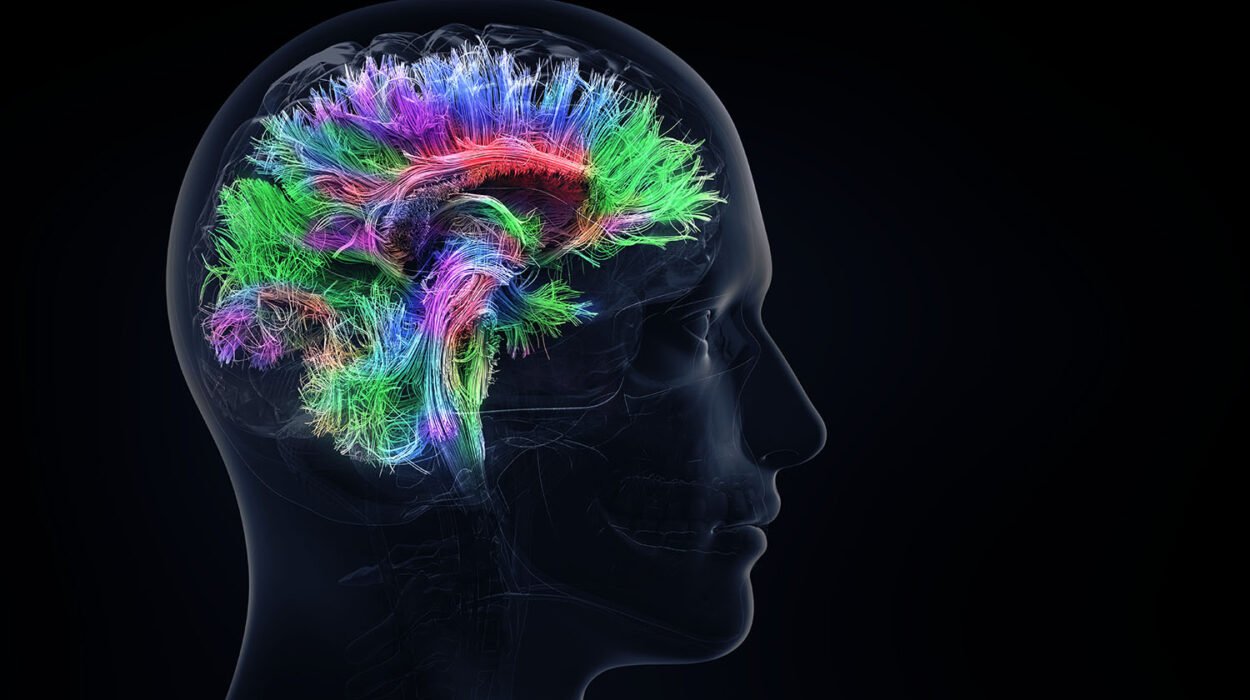
Memory is not a static storage system, nor is it a fragile gift bestowed on a lucky few. It is a living, dynamic biological process that responds rapidly to how the brain is used, challenged, and cared for. Every experience you have ever had is encoded in networks of neurons, strengthened or weakened depending on attention, emotion, and repetition. Contrary to popular belief, improving memory does not always require months of training or expensive programs. Certain scientifically grounded techniques can produce noticeable improvements almost immediately by working with the brain’s natural mechanisms rather than against them.
Neuroscience over the past few decades has dramatically reshaped our understanding of memory. Once thought to be localized in specific brain “centers,” memory is now known to be distributed across interacting neural systems. Encoding, consolidation, and retrieval depend on attention networks, emotional circuits, sensory regions, and executive control systems. When these systems are engaged in the right way, memory becomes faster, stronger, and more reliable.
This article explores three evidence-based “brain hacks” that can enhance memory performance almost instantly. These are not gimmicks or motivational slogans, but practical strategies grounded in cognitive psychology and neuroscience. Each hack targets a different stage of the memory process and can be applied immediately in everyday situations such as studying, learning names, remembering facts, or retaining complex information. Understanding why these techniques work is as important as knowing how to use them, because insight into the brain’s workings empowers you to adapt and refine them over time.
1. Strategic Attention: Training the Brain to Encode More Powerfully
Memory begins with attention. If the brain does not attend to information properly, it is never encoded in a form that can be reliably retrieved later. This is one of the most fundamental principles of cognitive neuroscience: memory failures often occur not because information was forgotten, but because it was never truly registered in the first place. Strategic control of attention is therefore one of the fastest and most powerful ways to improve memory performance.
From a neurological perspective, attention acts as a gatekeeper. Sensory information constantly floods the brain, but only a fraction of it receives the neural resources necessary for long-term storage. The prefrontal cortex, which governs executive control, works together with sensory cortices and the hippocampus to determine what information is prioritized. When attention is focused, neural firing becomes more synchronized, increasing the likelihood that synaptic connections will be strengthened through a process known as long-term potentiation.
One of the most effective ways to harness attention instantly is deliberate attentional framing. This involves consciously deciding, before encountering information, that it is important and worthy of memory. Studies have shown that when individuals expect to be tested on material, their brains encode that material more deeply. This expectation activates the dopaminergic reward system, which enhances hippocampal plasticity. In practical terms, simply telling yourself that you will need to remember something later can measurably improve recall.
Another immediate attentional technique involves reducing divided attention. Multitasking has a particularly harmful effect on memory encoding. Neuroimaging studies demonstrate that when attention is split between tasks, the hippocampus shows reduced activation, while information is instead processed by regions associated with habitual learning. This leads to weaker, less flexible memories. By contrast, even brief periods of single-task focus can significantly enhance encoding quality. Putting away distractions for just a few minutes while learning something new can have a disproportionately large impact on retention.
Emotionally tagging information is another powerful attentional amplifier. The brain is evolutionarily tuned to remember emotionally relevant events because they often signal threat or reward. The amygdala, which processes emotion, modulates memory formation by influencing hippocampal activity. You can exploit this system instantly by adding emotional significance to otherwise neutral information. This does not require dramatic feelings; mild curiosity, personal relevance, or humor can be sufficient. When information is framed as meaningful to your goals or identity, it is encoded more robustly.
Finally, active engagement transforms attention from passive exposure into deliberate processing. Reading or listening without interaction leads to shallow encoding, whereas asking questions, paraphrasing, or predicting outcomes recruits deeper cognitive processing. This principle, known as levels of processing, has been repeatedly confirmed in experimental psychology. Information processed semantically, rather than superficially, forms stronger and more accessible memory traces. Engaging actively with material, even briefly, can therefore improve memory almost instantly.
Strategic attention is not about exerting mental strain. It is about aligning the brain’s natural prioritization systems with your intention to remember. When attention is focused, emotionally tagged, and actively engaged, memory encoding becomes both faster and more durable.
2. Neural Association: Turning Isolated Facts into Connected Networks
The human brain is fundamentally an association-making organ. Memories do not exist as isolated units, but as patterns of connections distributed across neural networks. The stronger and more numerous these connections are, the easier a memory is to retrieve. One of the most effective instant memory hacks, therefore, is to deliberately create associations between new information and existing knowledge.
At the neural level, association works by co-activating multiple brain regions simultaneously. When two ideas are linked, the neurons representing those ideas fire together, strengthening their synaptic connections. This principle, often summarized as “neurons that fire together wire together,” lies at the core of learning and memory. By intentionally creating associations, you accelerate this wiring process.
One of the most powerful associative techniques is mental imagery. The brain processes visual information using large, highly developed cortical areas. When information is encoded visually, it benefits from richer neural representation. Even abstract concepts can be transformed into vivid mental images, engaging the visual cortex and enhancing memory strength. Neurocognitive studies show that imagined images activate many of the same brain regions as actual perception, making imagery a potent memory tool.
Association becomes even more effective when it is exaggerated or unusual. The brain is particularly sensitive to novelty and distinctiveness, as these features signal potential importance. Creating bizarre, humorous, or emotionally striking images engages attentional and emotional circuits, boosting encoding efficiency. This is why mnemonic techniques that rely on vivid imagery have been used successfully for centuries and continue to be supported by modern neuroscience.
Another associative strategy involves linking new information to personal experience. The self-referential processing effect demonstrates that information related to oneself is remembered better than information processed in other ways. This effect is associated with activation in the medial prefrontal cortex, a region involved in self-related thought. By asking how new information connects to your own life, goals, or experiences, you recruit this powerful memory-enhancing system.
Contextual association also plays a crucial role in memory retrieval. Memories are encoded along with contextual cues such as location, mood, and sensory environment. When similar cues are present during retrieval, recall is improved. You can use this knowledge instantly by deliberately associating information with a specific context or mental state. For example, imagining where you will need to recall the information can create retrieval cues that make access easier later.
Perhaps the most underestimated associative technique is verbal elaboration. Explaining information in your own words forces the brain to integrate new material with existing linguistic and conceptual frameworks. This process strengthens semantic networks and increases retrieval pathways. Teaching or pretending to teach information to someone else can produce immediate improvements in recall, even after a single explanation.
Association transforms memory from a fragile trace into a resilient network. By embedding new information within rich webs of imagery, emotion, personal relevance, and meaning, you make it far easier for the brain to retrieve that information when needed.
3. Retrieval Activation: Strengthening Memory by Using It Immediately
One of the most counterintuitive discoveries in memory research is that retrieval itself is one of the most powerful ways to strengthen memory. Contrary to the common assumption that memory improves primarily through repeated exposure, scientific evidence shows that actively recalling information produces greater long-term retention than passive review. This phenomenon, known as the testing effect or retrieval practice effect, can be harnessed instantly to enhance memory.
When you retrieve a memory, the neural representation of that memory is reactivated and modified. This process strengthens synaptic connections and integrates the memory more deeply into existing networks. Neuroimaging studies reveal that retrieval engages the hippocampus and prefrontal cortex in ways that differ from initial encoding, effectively “reconsolidating” the memory in a more stable form.
An important aspect of retrieval-based learning is that effortful recall is more beneficial than easy recall. When retrieval requires mental work, the brain responds by reinforcing the memory trace more strongly. This does not mean retrieval should be frustrating, but that slight difficulty enhances learning. Even unsuccessful retrieval attempts can be beneficial if followed by feedback, as they prime neural circuits for stronger encoding.
One of the fastest ways to apply retrieval activation is to pause after learning something and try to recall it without looking at the source. This can be done mentally or by writing down what you remember. Even a brief retrieval attempt immediately after exposure can significantly improve retention. The key is to actively reconstruct the information rather than simply re-reading it.
Another powerful technique involves spaced retrieval within short time frames. While long-term spacing is important for durable learning, even short delays between exposure and retrieval can enhance memory. Waiting a few minutes before attempting recall introduces desirable difficulty, prompting deeper neural processing. This can be applied instantly by taking brief breaks before testing yourself on new information.
Retrieval also benefits from variation. Recalling information in different contexts or formats strengthens its flexibility and accessibility. For example, recalling facts verbally, visually, or in written form engages different neural pathways, increasing the number of retrieval routes. This diversification can be implemented immediately by changing how you test yourself.
Emotion and confidence also influence retrieval effectiveness. Stress and anxiety can impair recall by disrupting prefrontal-hippocampal communication. Conversely, a calm and confident mental state supports efficient retrieval. Simple breathing techniques or positive framing before recall can therefore have an immediate impact on memory performance.
Retrieval activation highlights a fundamental truth about memory: it is not a static archive, but a dynamic process that improves with use. By deliberately recalling information soon after learning it, you turn memory into an active skill rather than a passive store.
The Biological Foundations That Make These Hacks Work
The effectiveness of these three memory hacks is rooted in well-established biological mechanisms. Synaptic plasticity, the brain’s ability to strengthen or weaken connections between neurons, underlies all learning and memory. Attention enhances plasticity by increasing neural firing synchrony. Association expands plasticity by linking multiple neural representations. Retrieval consolidates plasticity by stabilizing and integrating memory traces.
Neurotransmitters also play a crucial role. Dopamine signals salience and reward, enhancing learning when information is perceived as important. Acetylcholine supports attention and encoding by modulating sensory processing. Glutamate drives synaptic strengthening during learning, while inhibitory neurotransmitters help refine and stabilize memory networks. The brain hacks described in this article naturally engage these chemical systems without external intervention.
Sleep, nutrition, and physical activity further influence memory, but the hacks discussed here operate within minutes rather than hours or days. They take advantage of real-time neural dynamics, making them particularly valuable for immediate memory improvement.
Applying These Hacks in Real Life
Memory challenges rarely occur in laboratory conditions. They arise in classrooms, workplaces, conversations, and everyday decision-making. The true value of these brain hacks lies in their adaptability to real-world contexts.
Strategic attention can be applied before meetings, lectures, or conversations by consciously deciding what matters most. Neural association can transform names, concepts, and ideas into memorable mental structures on the spot. Retrieval activation can be used immediately after learning, during brief pauses, or even during conversations to reinforce memory traces.
These techniques do not replace long-term learning strategies, but they provide immediate leverage over memory performance. Used consistently, they can also contribute to lasting improvements by reshaping how the brain approaches learning.
Memory as a Skill, Not a Fixed Trait
Perhaps the most empowering insight from modern memory science is that memory is not a fixed capacity determined at birth. It is a trainable skill shaped by habits, strategies, and understanding. The brain remains plastic throughout life, capable of forming new connections and strengthening existing ones.
The three brain hacks described in this article demonstrate that even small, intentional changes in how information is processed can produce immediate benefits. By aligning attention, association, and retrieval with the brain’s natural learning mechanisms, memory becomes more reliable, more flexible, and more resilient.
Improving memory is not about forcing the brain to work harder, but about allowing it to work smarter. When science-informed strategies are applied with awareness and curiosity, memory transforms from a source of frustration into a powerful cognitive ally.