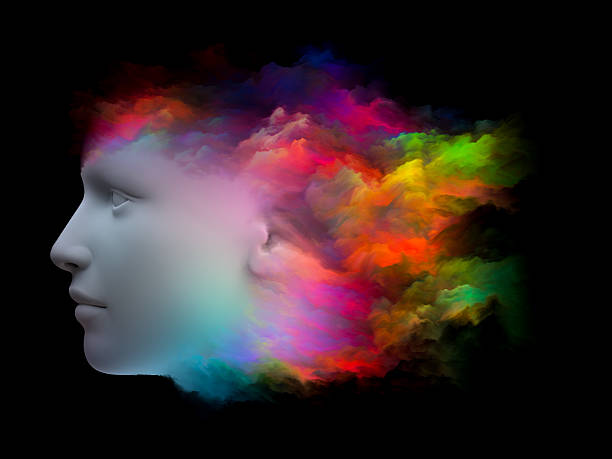
The idea is as old as fear itself and as modern as the latest computer chip: what if death is not the end? What if the fragile boundary between life and oblivion could be crossed not by faith, but by science? The notion of uploading the human consciousness—of preserving the self beyond the biological body—sits at the intersection of neuroscience, physics, computer science, and philosophy. It is a question that stirs excitement and dread in equal measure, because it forces us to confront the deepest mystery of all: what does it truly mean to be “you”?
To ask whether consciousness can be uploaded is not merely to ask a technical question. It is to ask whether identity is information, whether memory and personality can survive translation, and whether the human mind is something that can be copied without being destroyed. At its core, this is a question about immortality, not as a spiritual promise, but as a neuroscientific possibility.
What Do We Mean by Consciousness?
Before asking whether consciousness can be uploaded, we must confront a more basic problem: we do not yet fully understand what consciousness is. Neuroscience has made extraordinary progress in mapping the brain, identifying regions associated with perception, memory, emotion, and decision-making. Yet consciousness itself—the subjective feeling of being aware, the inner movie of thoughts and sensations—remains elusive.
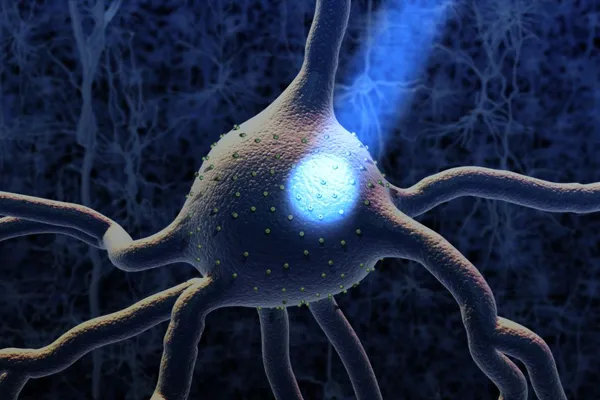
From a scientific perspective, consciousness is not a single thing but a process. It emerges from the coordinated activity of billions of neurons communicating through electrical and chemical signals. These neurons form networks that constantly change, strengthening some connections while weakening others. Consciousness appears to arise when information is integrated across these networks in a particular way.
Crucially, consciousness is not located in one specific spot in the brain. There is no single “seat of the self.” Damage to certain areas can alter personality, memory, or perception, but rarely does consciousness vanish entirely unless large-scale brain function is disrupted. This distributed nature of consciousness complicates the idea of uploading it, because there is no single component to extract or copy.
The Brain as an Information System
One of the strongest arguments in favor of consciousness uploading comes from viewing the brain as an information-processing system. Neurons transmit signals, store information in synaptic connections, and update those connections through experience. Memories, skills, habits, and preferences are encoded in physical changes within neural circuits.
From this perspective, the mind is what the brain does. If that is true, then in principle, if all the relevant information and processes of the brain could be replicated in another medium, the mind might continue to exist there. This idea treats consciousness not as a mystical substance, but as a dynamic pattern.
However, the phrase “in principle” hides immense complexity. The human brain contains roughly eighty-six billion neurons, each with thousands of connections. These connections are not static; they fluctuate depending on context, chemistry, and internal states. Capturing not just the structure but the ongoing activity of this system is an extraordinary challenge.
Whole Brain Emulation: The Core Idea
The most discussed scientific approach to consciousness uploading is known as whole brain emulation. The idea is to scan a living or preserved brain in extreme detail, map every neuron and synapse, and then recreate that structure in a computational system that behaves the same way.
If the emulation is accurate enough, the argument goes, it would respond to stimuli just as the original brain did. It would remember the same experiences, exhibit the same personality traits, and make decisions in the same manner. From the inside, it might feel like waking up in a new form.
This is not science fiction in the sense of pure fantasy. Researchers already simulate small neural circuits and even entire brains of simple organisms. The challenge lies in scaling this up to the complexity of the human brain and capturing not only connectivity but biochemistry, timing, and plasticity.
The Role of the Body in Consciousness
One major complication often overlooked in discussions of mind uploading is the role of the body. Consciousness does not exist in isolation from physical experience. Sensations from muscles, organs, hormones, and the immune system constantly influence mental states. Emotions are deeply tied to bodily processes, from heart rate to gut activity.
Neuroscience increasingly recognizes that cognition is embodied. The brain evolved not as a detached thinking machine, but as a control system for a living organism. Pain, pleasure, fear, and desire are grounded in bodily signals that shape perception and behavior.
If consciousness were uploaded into a digital environment, what would replace the body? Would a simulated body provide equivalent input, or would the absence of real biological signals fundamentally alter experience? These questions suggest that copying the brain alone may not be sufficient to preserve the full richness of human consciousness.
Is Consciousness Transfer or Copy?
Even if we assume that a perfect brain emulation is possible, a profound philosophical problem remains: would the uploaded consciousness actually be you, or merely a copy that thinks it is you? This question cuts to the heart of personal identity.
If a perfect digital replica of your brain were created while your biological brain remained intact, there would now be two entities claiming to be you. Both would share your memories up to the moment of copying. From the outside, they might be indistinguishable in behavior. Yet from the inside, your subjective experience would continue only in your biological body.
This suggests that uploading consciousness may not involve transferring the self, but duplicating it. The original consciousness would still face death, while the copy would continue. For many, this undermines the promise of immortality, turning it instead into a form of legacy.
Continuity of Experience and the Self
Some proponents argue that continuity is the key. If the uploading process gradually replaces biological neurons with artificial ones while consciousness remains uninterrupted, perhaps the sense of self would persist. This idea resembles thought experiments involving neural prosthetics, where damaged neurons are replaced one by one.
Neuroscience already uses devices that interface with the brain, restoring lost functions or altering neural activity. In theory, increasingly sophisticated replacements could maintain ongoing mental processes. If at no point consciousness is extinguished, the transition might feel seamless.
Yet this remains speculative. We do not know whether consciousness depends on the biological substrate itself or only on functional organization. If subtle properties of living neurons matter, even perfect functional replacement might fail to preserve subjective experience.
The Hard Problem of Consciousness
At the core of this debate lies what philosophers call the hard problem of consciousness: why does physical processing give rise to subjective experience at all? Neuroscience can explain correlations between brain activity and conscious states, but it does not yet explain why those states feel like something from the inside.
This gap matters deeply for mind uploading. Even if a digital brain behaves exactly like a human brain, does it actually experience anything, or is it merely simulating experience? From the outside, the difference might be impossible to detect.
Science currently has no definitive test for consciousness. We infer it from behavior and reports, but subjective experience itself is private. This uncertainty casts a long shadow over claims of digital immortality.
Memory, Identity, and Change
Human identity is not static. Over time, memories fade, personalities shift, and values evolve. The self is a process, not a fixed object. Any attempt to upload consciousness must grapple with this fluidity.
Which version of you would be uploaded? The person you are now, or a future version shaped by experiences yet to come? If the upload continues to change independently, at what point does it become someone else entirely?
Neuroscience shows that memory is reconstructive, not a perfect recording of the past. Each recall reshapes the memory itself. This suggests that identity is constantly being rewritten. Uploading consciousness would freeze a moment in this flow, creating a snapshot rather than an ongoing biological journey.
The Neuroscience of Death and Irreversibility
Another critical issue is timing. Consciousness depends on ongoing brain activity. When that activity stops, as in death, consciousness appears to vanish. If uploading requires scanning a brain at sufficient resolution, doing so without destroying it is an enormous challenge.
Some proposed methods involve destructive scanning, meaning the original brain would be destroyed in the process. This raises ethical and existential questions. If the scan kills you but produces a copy that believes it is you, has immortality been achieved or has death simply been disguised?
Neuroscience currently suggests that once large-scale brain activity ceases, the specific patterns underlying consciousness cannot be recovered. This makes preservation before death essential, further complicating the promise of immortality.
Artificial Intelligence and Consciousness
The rapid advancement of artificial intelligence adds another layer to the debate. Modern AI systems can mimic aspects of human language, perception, and decision-making, yet there is no evidence that they are conscious in the human sense.
This distinction matters because it highlights the difference between intelligence and consciousness. Intelligence involves problem-solving and adaptation. Consciousness involves experience. Uploading consciousness would require not just replicating intelligence, but preserving subjective awareness.
Neuroscience suggests that consciousness depends on specific patterns of information integration and feedback. Whether artificial systems can achieve these patterns in a way that produces experience remains an open question.
Ethical Implications of Consciousness Uploading
If consciousness uploading were possible, it would raise profound ethical issues. Who would have access to such technology? Would it deepen social inequality, granting extended existence to a privileged few? Would digital minds have rights?
There is also the question of psychological impact. Would an uploaded consciousness suffer from isolation, identity confusion, or existential distress? Immortality may not be a gift if it lacks meaning, connection, or the possibility of growth.
Neuroscience reminds us that mental health depends on social interaction, emotional regulation, and a sense of purpose. Preserving consciousness without preserving these contexts could lead to forms of suffering unlike anything currently known.
The Role of Time in Conscious Experience
Consciousness is deeply tied to time. The brain predicts the future, recalls the past, and experiences the present as a flowing moment. This temporal structure is shaped by neural dynamics and bodily rhythms.
In a digital environment, time could be manipulated. Consciousness might run faster or slower, experience pauses, or exist without a natural lifespan. Such changes could profoundly alter subjective experience, potentially making it unrecognizable compared to human life.
Neuroscience does not yet know how flexible consciousness is with respect to time. This uncertainty suggests that even if uploading were possible, the resulting experience might not resemble human consciousness as we know it.
Immortality and the Meaning of Death
The dream of uploading consciousness is ultimately a response to mortality. Death gives life urgency and shape. It defines beginnings and endings, losses and legacies. Removing death would transform not just individuals, but culture itself.
From a neuroscientific perspective, the awareness of death influences behavior, motivation, and emotion. Fear of loss and desire for continuity shape human decisions. If immortality were achievable, these psychological dynamics would change in unpredictable ways.
It is possible that the value of consciousness lies partly in its fragility. The knowledge that moments are finite gives them weight. Immortality might dilute meaning rather than enhance it.
Current Scientific Reality
Despite bold visions, the current state of neuroscience does not support near-term consciousness uploading. Brain imaging lacks the resolution to capture all relevant details. We do not fully understand how neural activity produces subjective experience. Computational models remain vastly simplified.
However, progress is real. Advances in brain-machine interfaces, neural recording, and computational neuroscience continue to deepen understanding. These developments may one day allow partial preservation of mental functions or detailed simulations of aspects of the mind.
Yet there is a vast gap between restoring a function and preserving a self. Recognizing this gap is essential to maintaining scientific honesty.
The Boundary Between Science and Speculation
The neuroscience of immortality sits on a fragile boundary between legitimate scientific inquiry and speculative imagination. Asking whether consciousness can be uploaded is a valid scientific question, but answering it requires humility about what we do not yet know.
History shows that science often achieves what once seemed impossible. At the same time, it also reveals limits that imagination alone cannot overcome. Consciousness may turn out to be deeply tied to biological processes in ways that resist translation.
Maintaining this balance between hope and skepticism is crucial. It prevents both blind optimism and cynical dismissal.
What Uploading Consciousness Would Mean for Humanity
If one day consciousness uploading became possible, it would redefine what it means to be human. Identity would no longer be bound to flesh. The line between life and machine would blur. Concepts like birth, death, and individuality would require rethinking.
Neuroscience would no longer be merely a descriptive science, but a creative one, capable of shaping minds beyond biology. Such power would demand unprecedented ethical responsibility.
Whether this future is desirable remains an open question. The promise of immortality must be weighed against the risks of losing what makes human life meaningful.
A Question That Defines Us
Can we upload the human consciousness? Neuroscience cannot yet give a definitive answer. What it can tell us is that consciousness is deeply complex, embodied, and dynamic. It is not a simple file to be copied, but a living process shaped by brain, body, and world.
The question of uploading consciousness forces humanity to confront its deepest fears and hopes. It challenges us to define the self, to understand the brain, and to consider the value of mortality. Even if the answer turns out to be no, the pursuit itself reveals something profound about who we are.
In seeking immortality through neuroscience, we are really seeking understanding. And perhaps that search, with all its uncertainty and wonder, is the most human act of all.