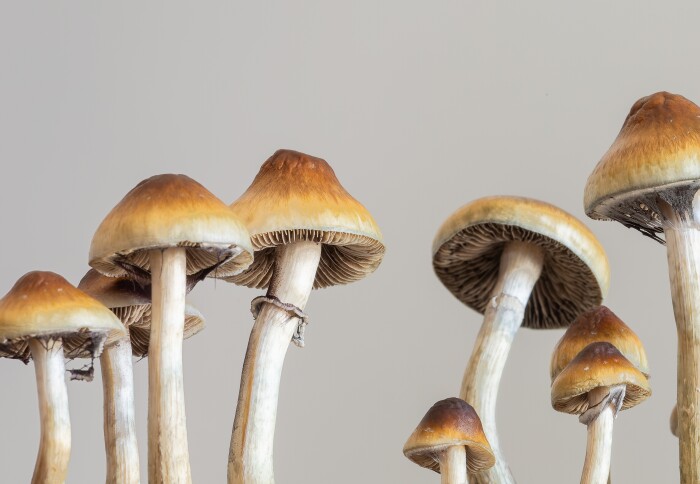
Depression is not just sadness. It is a heavy, persistent state that alters how a person thinks, feels, remembers, hopes, and even perceives time itself. For millions of people around the world, depression is not a temporary emotional low but a chronic condition that reshapes the brain and quietly narrows life. As modern medicine struggles to help everyone who suffers, a provocative question has emerged from neuroscience and psychiatry: could psilocybin, the psychoactive compound found in certain mushrooms, help “reset” a depressed brain?
This question sits at the crossroads of science, culture, and deeply personal human suffering. It is not about escapism or hallucinations for their own sake. It is about whether the brain, when trapped in rigid patterns of despair, can be gently shaken loose and guided back toward flexibility, connection, and meaning. The future of mental health may depend on how seriously we explore this possibility.
Depression as a Disorder of the Brain and the Self
To understand why psilocybin has attracted scientific interest, it is necessary to understand how depression affects the brain. Depression is not simply a chemical imbalance, a phrase once popular but overly simplistic. It is better understood as a disorder of brain networks, emotional regulation, and self-related thinking.
In depression, certain brain circuits become overactive while others fall quiet. Areas involved in negative self-reflection, rumination, and emotional pain can dominate mental life. Thoughts loop endlessly around guilt, failure, fear, or hopelessness. The brain becomes less flexible, less able to shift perspective or respond creatively to new experiences. This rigidity is not just psychological; it has measurable neural signatures.
Over time, depression can feel like being trapped inside a narrowed version of oneself. The world loses color. Motivation fades. Even positive events may fail to register emotionally. Many people describe depression not as intense sadness but as emotional numbness, a sense of being cut off from life. Any treatment that claims to help depression must address this deep, structural aspect of the condition.
The Limits of Current Treatments
Modern psychiatry has made significant progress, yet many people with depression do not fully recover with existing treatments. Antidepressant medications help some individuals, especially in reducing acute symptoms, but they often take weeks to work and may not address underlying cognitive and emotional patterns. Psychotherapy can be transformative, but it requires time, access, and emotional energy that not everyone has.
For a substantial number of patients, depression proves resistant. Symptoms return again and again, sometimes with increasing severity. This reality has forced clinicians and researchers to confront an uncomfortable truth: our current tools, while valuable, are not enough for everyone. This gap has opened space for new approaches, including a renewed scientific interest in psychedelic compounds.
Psilocybin’s Unlikely Journey from Taboo to Therapy
Psilocybin has a long and complex history. For centuries, it was used in ceremonial and spiritual contexts by Indigenous cultures, often as a means of healing, insight, and connection. In the mid-twentieth century, it entered Western scientific research, where early studies suggested it could profoundly alter perception, emotion, and cognition.
However, cultural backlash and legal restrictions halted most research for decades. Psilocybin became associated with counterculture, risk, and misuse rather than medicine. Only recently has rigorous scientific study resumed, under controlled conditions and ethical oversight. This revival is not driven by nostalgia or rebellion, but by urgent clinical need and advances in neuroscience.
What researchers found upon returning to psilocybin was not chaos, but surprising consistency. Under the right conditions, the compound appeared to produce experiences that were deeply meaningful, emotionally powerful, and potentially therapeutic. These findings challenged long-held assumptions about how mental health treatment must work.
How Psilocybin Affects the Brain
Psilocybin works primarily by interacting with serotonin receptors, especially those involved in mood, perception, and cognition. Unlike conventional antidepressants, which are taken daily and subtly alter brain chemistry over time, psilocybin produces a temporary but intense shift in brain activity.
Brain imaging studies suggest that psilocybin reduces activity in certain brain networks associated with rigid self-focused thinking. At the same time, it increases communication between brain regions that do not usually interact as strongly. The brain becomes more interconnected, more fluid, and less locked into habitual patterns.
This state has been described as one of heightened neural plasticity. Plasticity refers to the brain’s ability to change, adapt, and form new connections. In depression, plasticity is often reduced. Psilocybin appears to temporarily reopen a window in which the brain can reorganize itself, potentially allowing healthier patterns to emerge.
The Experience of Ego Softening and Emotional Release
One of the most striking aspects of psilocybin is its effect on the sense of self. Many people report a temporary softening or dissolution of rigid self-boundaries. Thoughts that once felt absolute, such as “I am worthless” or “nothing will ever change,” may lose their grip.
This does not mean the self disappears. Rather, it becomes more flexible. People often describe feeling connected to others, to nature, or to a broader sense of meaning. Emotional barriers can fall away, allowing grief, love, fear, or joy to be felt more fully.
For someone with depression, who may feel isolated within their own mind, this experience can be profoundly relieving. It offers a glimpse of life beyond the depressive lens. Importantly, this glimpse is not merely intellectual; it is felt deeply, often remembered vividly long after the drug has left the body.
Can a Single Experience Change a Brain?
One of the most intriguing findings in psilocybin research is that meaningful psychological changes can occur after just one or two guided sessions. This challenges the conventional medical model, which often relies on continuous treatment.
From a neuroscientific perspective, this raises fascinating questions. If psilocybin can trigger a period of increased plasticity, then the experiences and insights that occur during that period may become integrated into lasting neural changes. The brain, briefly loosened from its habitual grooves, may lay down new pathways.
This idea of a “reset” does not mean erasing memory or personality. Rather, it suggests recalibration. A system stuck in maladaptive patterns may regain the capacity to reorganize itself in healthier ways. The term “reset” is metaphorical, but it captures the sense of renewed flexibility that many patients report.
The Role of Therapy and Context
It is crucial to understand that psilocybin is not being studied as a standalone cure. The context in which it is used appears to be as important as the compound itself. In clinical settings, psilocybin is typically administered alongside psychological support, before, during, and after the experience.
Preparation helps individuals approach the experience with intention and trust. Support during the session provides safety and reassurance. Integration afterward allows insights to be understood, processed, and applied to daily life. Without this structure, the experience may be confusing or overwhelming rather than healing.
This emphasis on context represents a shift in how medicine approaches mental health. It acknowledges that healing is not purely chemical, but relational and experiential. Psilocybin may act as a catalyst, but therapy helps translate that catalyst into lasting change.
Scientific Evidence and What It Actually Shows
Research into psilocybin and depression, while still developing, has produced promising results. In carefully controlled studies, many participants show significant reductions in depressive symptoms, sometimes lasting for months after treatment. Some individuals who had not responded to other treatments report meaningful relief.
However, scientific accuracy requires caution. These studies often involve small sample sizes and highly controlled conditions. Participants are carefully screened, supported, and followed. Psilocybin is not equally effective for everyone, and it is not without risks.
Side effects can include anxiety, confusion, and emotional distress during the experience. For individuals with certain psychiatric conditions, psilocybin may be unsafe. This is why research emphasizes medical supervision and strict protocols.
Beyond Symptoms: Meaning and Perspective
One reason psilocybin may be particularly powerful for depression lies in how it affects meaning-making. Depression often shrinks a person’s sense of purpose. Life feels empty, repetitive, or futile. Psilocybin experiences frequently involve a renewed sense of meaning, connection, or acceptance.
These experiences are not necessarily religious, though some describe them as spiritual. At their core, they involve a shift in perspective. Problems that once felt overwhelming may be seen in a broader context. Pain may be acknowledged without total identification with it.
From a psychological standpoint, this shift can weaken the grip of depressive thought patterns. Meaning does not eliminate suffering, but it can change how suffering is held. This dimension of treatment is difficult to quantify, yet it may be central to lasting improvement.
Ethical and Cultural Questions
The reintroduction of psilocybin into medicine raises important ethical questions. How should such powerful experiences be offered responsibly? Who should have access? How do we avoid repeating past mistakes of misuse or commercialization without care?
There is also a need to respect the cultural origins of psilocybin use. Indigenous traditions have long understood these substances as tools requiring reverence and guidance. Modern science, in rediscovering their therapeutic potential, must avoid erasing this history.
Ethical practice demands humility. Psilocybin is not a miracle cure, nor is it a recreational toy. It occupies a space that challenges conventional categories of medicine, therapy, and spirituality.
The Future Landscape of Mental Health Treatment
If ongoing research continues to support the safety and effectiveness of psilocybin-assisted therapy, mental health care could change in profound ways. Treatment may become less about daily symptom management and more about transformative experiences supported by skilled professionals.
This does not mean replacing existing treatments, but expanding the toolkit. Depression is a diverse condition with many causes and expressions. A future-oriented mental health system would offer multiple paths to healing, tailored to individual needs.
Psilocybin may be particularly valuable for people whose depression involves deep rumination, emotional rigidity, or loss of meaning. For others, different approaches may be more appropriate. The goal is not uniformity, but responsiveness.
The Risk of Overhyping a Fragile Hope
As excitement grows, there is a danger of exaggeration. Media narratives sometimes frame psilocybin as a breakthrough that will end depression. Such claims are not only inaccurate, but potentially harmful. They create unrealistic expectations and may pressure vulnerable individuals.
Scientific progress is gradual. Each study adds a piece to the puzzle, not the entire picture. Responsible discussion must balance hope with realism. Psilocybin offers a new direction, not a guaranteed solution.
Acknowledging limitations does not diminish the significance of the research. On the contrary, it strengthens credibility and protects those seeking help.
A Deeper Question About Healing
At its core, the interest in psilocybin reflects a deeper shift in how we think about mental health. For decades, treatment has often focused on suppressing symptoms. Psilocybin research invites us to consider healing as a process of reconnection, flexibility, and insight.
This perspective does not reject biology. It integrates it with psychology and lived experience. The brain is not a machine to be adjusted mechanically, but a dynamic system shaped by meaning, relationships, and perception.
If depression is partly a disorder of narrowed consciousness, then expanding consciousness in a safe, guided way may indeed offer relief. This idea challenges traditional medical boundaries, but it is grounded in observable neural and psychological changes.
What Reset Really Means
The word “reset” can be misleading if taken literally. Psilocybin does not erase pain, rewrite memories, or guarantee happiness. What it may do is interrupt entrenched patterns long enough for new ones to take hold.
A depressed brain is not broken; it is stuck. Psilocybin may help it move again. That movement, guided by therapy and support, can lead toward healthier ways of thinking and feeling.
In this sense, the reset is not an endpoint but a beginning. It opens a door that must still be walked through with effort, reflection, and care.
Looking Forward with Cautious Optimism
The future of mental health will likely be shaped by a combination of neuroscience, psychology, social understanding, and compassion. Psilocybin-assisted therapy represents one promising thread in this tapestry. It reminds us that the mind is not only something to be corrected, but something to be understood and engaged.
As research continues, society will need thoughtful conversation, ethical regulation, and public education. Fear and stigma must be replaced with evidence and empathy. Enthusiasm must be balanced with responsibility.
Depression remains one of the great challenges of human suffering. If psilocybin can help even some people rediscover flexibility, meaning, and hope, then it deserves careful attention. The question is not whether it offers a magical reset, but whether it can help the brain remember its capacity to change.
In that possibility lies a quiet, profound hope for the future of mental health.