Every morning, without thinking, you may reach for your phone before your eyes are fully open. You might brush your teeth in the same order, take the same route to work, or feel an urge for tea or coffee at a particular hour. These moments feel ordinary, even boring, yet they reveal something extraordinary about the human brain. Your brain is a pattern-seeking organ. It does not merely notice patterns; it craves them. Habits are the living evidence of that craving.
Habit formation is not a flaw in human design. It is one of the brain’s greatest survival strategies. Long before modern life filled our days with schedules, screens, and routines, habits helped our ancestors conserve energy, react quickly to danger, and navigate a complex world without constant conscious effort. Today, the same neural machinery that once kept humans alive now shapes everything from productivity and creativity to addiction and personal growth.
Understanding why your brain craves patterns is not just an academic exercise. It is a deeply human story about efficiency, emotion, identity, and change. When you understand habits, you understand how your brain quietly shapes your life, often without asking permission.
The Brain as a Prediction Machine
At its core, the brain is not primarily a thinking machine. It is a prediction machine. Every second, it is trying to guess what will happen next. This ability to predict allows you to move smoothly through the world instead of being constantly surprised by it. Patterns are the raw material of prediction.
From infancy, the brain begins searching for regularities. When a baby hears a voice repeatedly associated with comfort, the brain learns that pattern. When a child notices that crying brings attention, another pattern forms. These early patterns are not logical conclusions; they are emotional and experiential connections built deep into neural circuits.
Prediction reduces uncertainty, and uncertainty is expensive for the brain. The brain consumes a significant amount of the body’s energy, and conscious decision-making is one of the most energy-intensive processes it performs. Habits emerge as shortcuts, allowing the brain to operate efficiently by relying on past patterns instead of re-evaluating every situation from scratch.
This is why repetition is so powerful. Every repeated action strengthens the brain’s expectation that the same action will be useful again. Over time, prediction becomes automatic, and behavior shifts from conscious choice to habit.
The Emotional Comfort of Familiar Patterns
Patterns do more than save energy. They provide emotional comfort. Familiar routines create a sense of safety because they reduce the unknown. When your brain recognizes a pattern, it relaxes. The world feels manageable.
This emotional aspect of habit formation explains why people often cling to routines even when they are no longer useful. A familiar habit can feel comforting even if it causes harm. The brain does not evaluate habits morally; it evaluates them based on predictability and reward.
When life becomes chaotic or stressful, the brain’s craving for patterns intensifies. You may find yourself returning to old routines, familiar foods, or repetitive behaviors because they offer psychological stability. Habits become anchors in uncertain environments.
This connection between emotion and habit also explains why changing habits can feel threatening. Breaking a pattern introduces uncertainty, and uncertainty triggers anxiety. The brain resists change not because it is lazy, but because it is protective.
How Habits Are Built in the Brain
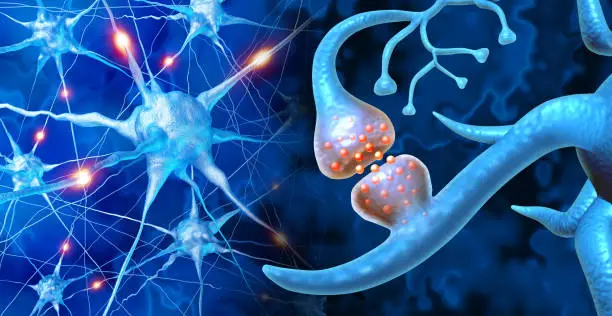
Habit formation is a biological process shaped by neural pathways. When you perform an action, groups of neurons activate together. With repetition, these neurons become more efficient at firing together, strengthening their connections. This process is often described as “neurons that fire together wire together.”
Over time, the brain shifts control of repeated behaviors from regions involved in conscious decision-making to regions specialized in automatic action. This transition allows habits to run in the background, freeing mental resources for new challenges.
Once a habit is established, it can be triggered by cues that the brain has learned to associate with the behavior. These cues can be external, such as a time of day or a specific location, or internal, such as an emotion or bodily sensation. The brain learns not just the action, but the entire pattern surrounding it.
Importantly, habits are not stored as isolated behaviors. They are embedded in networks of emotion, memory, and expectation. This is why habits can feel deeply personal and difficult to explain rationally.
Reward: The Fuel That Strengthens Habits
Habits do not form without reward. The brain needs a reason to repeat an action. Reward does not always mean pleasure in the obvious sense. Sometimes the reward is relief, comfort, or the removal of discomfort.
When an action leads to a rewarding outcome, the brain releases chemical signals that reinforce the neural pathway involved. This reinforcement does not require conscious awareness. You do not need to think, “This feels good, I should do it again.” The brain handles that calculation automatically.
Over time, the brain begins to anticipate the reward before the action occurs. This anticipation can be more powerful than the reward itself. The desire to complete the pattern becomes a driving force, pulling behavior forward.
This mechanism explains why habits can persist even when the reward diminishes. The brain remembers the pattern of reward and continues to seek it, sometimes long after the original benefit has faded.
Why Bad Habits Feel So Strong
People often describe habits as good or bad, but the brain does not make this distinction. From a neural perspective, a habit is simply a well-learned pattern that reliably produces a predictable outcome.
Habits labeled as “bad” often provide immediate rewards, such as pleasure, distraction, or emotional relief. These rewards can be especially powerful because the brain prioritizes short-term certainty over long-term outcomes. The future is abstract, but the present reward is real and measurable.
Stress amplifies this effect. Under stress, the brain shifts toward habitual behavior because habits require less cognitive effort. This is why people often revert to unwanted habits during difficult times. The brain is not sabotaging you; it is trying to cope efficiently.
Understanding this removes shame from the conversation about habits. Struggling with habits does not mean you lack willpower. It means your brain is doing what it evolved to do: repeat patterns that once worked.
Identity and the Power of Repetition
Habits do not just shape behavior; they shape identity. When you repeat an action consistently, the brain begins to associate that pattern with who you are. This association is subtle but powerful.
Over time, habits influence self-perception. A person who regularly exercises may begin to see themselves as “someone who is active.” A person who writes daily may begin to identify as a writer. Conversely, unwanted habits can shape negative self-beliefs, reinforcing a sense of limitation.
This identity connection explains why habit change is emotionally charged. Changing a habit can feel like changing who you are. The brain resists not only the loss of a pattern but the threat to identity that change represents.
Yet this same mechanism can be harnessed for growth. When habits align with desired identity, change becomes more sustainable. The brain is more likely to protect patterns that feel consistent with the self.
The Role of Attention in Habit Formation
Although habits operate automatically, attention plays a critical role in their formation and modification. In the early stages of a habit, attention is required to initiate the behavior. Repetition gradually reduces this requirement.
Modern environments constantly compete for attention, and this competition can accelerate habit formation. Repeated exposure to cues, combined with easy rewards, can rapidly build strong habits. Digital technologies are particularly effective at exploiting this process because they provide immediate feedback and variable rewards.
At the same time, attention is the doorway to change. Becoming aware of a habit disrupts its automatic flow. This moment of awareness creates a small window in which choice becomes possible. The brain briefly shifts from automatic mode to reflective mode.
This does not mean awareness alone is enough to change habits, but it is a necessary starting point. Without awareness, patterns remain invisible and unchallenged.
Why Habits Never Truly Disappear
One of the most surprising findings in habit science is that habits do not vanish completely. Even when a habit is no longer expressed, the neural pathways associated with it can remain dormant.
This persistence explains why old habits can resurface under stress or in familiar environments. The brain remembers patterns that were once useful and keeps them available as fallback options.
Rather than erasing habits, change typically involves building new patterns that compete with old ones. Over time, the new habit becomes stronger and more accessible, while the old habit becomes less likely to activate.
This understanding shifts the goal from eliminating habits to reshaping them. The brain is not a blank slate; it is a layered system of experience.
The Myth of Pure Willpower
Popular culture often frames habit change as a test of willpower. This framing misunderstands how the brain works. Willpower relies on conscious control, which is limited and easily depleted.
Habits exist precisely because the brain prefers not to rely on willpower. Automatic patterns conserve mental energy and reduce decision fatigue. Expecting willpower to overpower deeply ingrained habits is like asking a whisper to drown out a crowd.
This does not mean effort is irrelevant. Effort is essential, especially in the early stages of change. But sustainable habit change works with the brain’s preference for patterns rather than against it.
When new habits are designed to be rewarding, predictable, and aligned with existing routines, they stand a much better chance of taking root.
The Brain, Time, and Repetition
The brain does not experience time the way clocks do. It measures time through change and repetition. Habits compress time by making experiences feel familiar and predictable.
This compression can be comforting, but it can also make life feel like it is passing quickly. When days are filled with repeated patterns, fewer moments stand out in memory. Novelty creates rich memories; habits create efficiency.
Understanding this dynamic allows for intentional balance. Habits provide structure and stability, while novelty keeps the brain engaged and emotionally alive. Both are essential.
Breaking Patterns Without Breaking Yourself
Because habits are tied to emotion and identity, aggressive attempts to break them can backfire. Harsh self-judgment increases stress, which strengthens reliance on habitual behavior.
A more effective approach involves curiosity and compassion. Asking why a habit exists reveals the need it fulfills. Once that need is understood, alternative patterns can be created to meet it.
The brain is remarkably adaptable. It does not demand perfection; it responds to consistency. Small, repeated changes can reshape neural pathways over time.
Habits as Stories the Brain Tells Itself
Every habit is a story about cause and effect. The brain learns that in a certain situation, a certain action leads to a certain outcome. These stories are not written in words, but in neural activity.
Changing a habit involves rewriting the story. This takes time because the brain trusts stories that have been confirmed by repeated experience. New stories must be proven through action.
Emotion plays a key role in which stories the brain believes. Experiences that carry emotional weight are remembered more strongly. This is why emotionally meaningful habits are easier to form and harder to change.
The Social Dimension of Habit Formation
Humans are social creatures, and habits are influenced by social context. The brain is highly sensitive to patterns in other people’s behavior. Shared routines create belonging and reinforce identity.
Social environments can either support or undermine habit change. When a new pattern aligns with group norms, it is easier to maintain. When it conflicts, the brain experiences social friction, which can trigger stress and relapse.
This does not mean individuals are powerless, but it highlights the importance of environment. The brain responds to cues around it, not just intentions within it.
Habits, Meaning, and the Shape of a Life
Over years and decades, habits accumulate into a life pattern. They shape health, relationships, skills, and opportunities. Small daily actions compound into profound outcomes.
This realization can feel overwhelming, but it can also be empowering. You do not need to transform your life overnight. You only need to understand how patterns work and choose which ones to repeat.
The brain’s craving for patterns is not a prison. It is a tool. When understood, it becomes possible to design habits that support growth, creativity, and well-being.
Embracing the Brain’s Love for Patterns
Your brain craves patterns because patterns make life navigable. They reduce uncertainty, conserve energy, and create emotional stability. Habits are not signs of weakness; they are signs of an efficient, adaptive nervous system.
The challenge of habit formation is not to fight the brain, but to collaborate with it. When habits are aligned with values and supported by environment, change becomes less about force and more about flow.
Understanding the science of habit formation reveals something deeply human. We are not creatures of pure reason, nor are we prisoners of instinct. We are pattern-builders, constantly shaping and reshaping our lives through repetition.
In the end, habits are how the brain turns experience into structure. They are the invisible architecture of daily life. By understanding why your brain craves patterns, you gain not just knowledge, but agency. You begin to see that behind every habit is a story, and with patience, awareness, and compassion, that story can evolve.