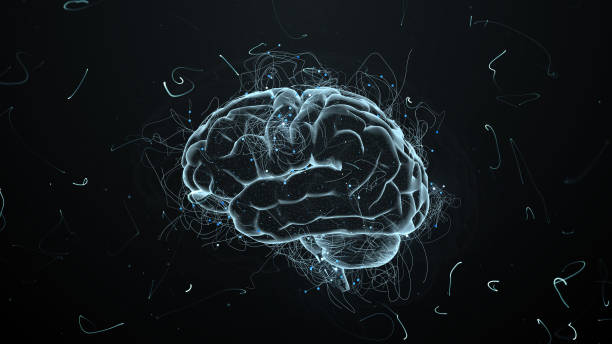
Fear is not a weakness. It is not a flaw in your character, nor a sign that something is “wrong” with you. Fear is ancient. It is older than language, older than culture, older even than conscious thought. Long before humans built cities or wrote stories, fear kept our ancestors alive. It sharpened their senses, prepared their bodies for danger, and pushed them to act when hesitation meant death. Yet in the modern world, this same life-saving system often turns against us. What once protected us now traps us. This is the phenomenon known as the amygdala hijack, a state where the brain’s fear center seizes control and keeps the mind and body locked in a constant state of threat.
To understand why so many people today feel anxious, overwhelmed, reactive, or perpetually on edge, we must journey into the brain itself. We must understand how fear is wired, how it evolved, and how modern life relentlessly presses on a system that was never designed for constant stimulation. The amygdala hijack is not just a psychological concept. It is a biological reality that shapes thoughts, emotions, relationships, health, and even identity.
The Amygdala: The Brain’s Ancient Alarm System
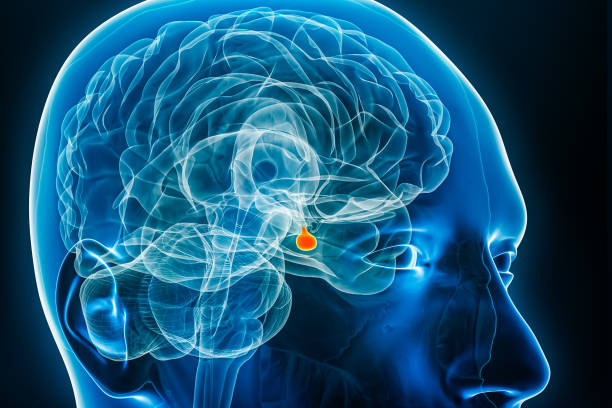
Deep within the brain, buried beneath layers of more recently evolved structures, sits the amygdala. This small, almond-shaped cluster of neurons is one of the oldest parts of the human brain. It predates rational thought, language, and conscious decision-making. Its job is simple and ruthless: detect danger and respond immediately.
The amygdala does not think. It does not reason. It does not analyze context or consider long-term consequences. It scans the environment for patterns associated with threat and reacts before you are even aware that something has happened. When it detects danger, it sends urgent signals throughout the brain and body, triggering the fight-or-flight response.
This speed is intentional. In a world of predators, hesitation could be fatal. The amygdala’s power lies in its ability to bypass slower, rational systems. It acts first and asks questions later. In evolutionary terms, false alarms were far less costly than missed threats. Overreacting kept ancestors alive. Underreacting got them killed.
How Fear Bypasses Rational Thought
One of the most unsettling aspects of the amygdala hijack is how completely it overrides rational thinking. When the amygdala perceives a threat, it can divert information away from the prefrontal cortex, the part of the brain responsible for reasoning, impulse control, and decision-making. This means that in moments of fear, your ability to think clearly is biologically reduced.
This is why people say or do things in moments of fear or anger that they later regret. It is why logical arguments fail during heated conflicts. It is why anxiety feels impossible to “talk yourself out of.” The brain has shifted control from reflective systems to reactive ones. Survival has taken priority over understanding.
In this state, the world feels narrower. Nuance disappears. Everything becomes urgent, personal, and threatening. The brain is no longer asking, “Is this true?” It is asking, “Is this dangerous?”
The Amygdala Hijack Explained
The term “amygdala hijack” describes what happens when the amygdala takes over cognitive processing in response to perceived threat. The hijack is not subtle. It floods the body with stress hormones like adrenaline and cortisol, accelerates heart rate, tightens muscles, sharpens attention toward danger, and suppresses systems that are not immediately necessary for survival.
Digestion slows. Immune responses shift. Long-term planning fades into the background. The body prepares to fight, flee, or freeze. This response is incredibly effective in short bursts. It is disastrous when activated constantly.
In a hijacked state, emotions feel overwhelming and uncontrollable. Thoughts loop obsessively around worst-case scenarios. Small stressors feel catastrophic. The nervous system never fully relaxes, and the body begins to treat everyday life as a battlefield.
Fear Memory and the Speed of Association
One reason the amygdala is so powerful is its ability to form fear memories quickly. Unlike other forms of memory that require repetition and conscious effort, fear memories can form after a single intense experience. This makes sense from a survival perspective. If something nearly killed you once, remembering it vividly increases your chances of avoiding it in the future.
The amygdala stores emotional associations rather than detailed narratives. It does not remember what happened in a logical sequence. It remembers how something felt. A tone of voice, a facial expression, a smell, or a bodily sensation can all become linked to fear without conscious awareness.
This is why fear responses can feel irrational. The amygdala is responding to patterns, not facts. It reacts to resemblance, not reality. The brain is not asking whether the current situation is actually dangerous. It is asking whether it feels similar to something that once was.
Modern Life and the Constant Triggering of Fear
The human brain evolved in environments where threats were intermittent and concrete. A predator appeared, danger rose sharply, action followed, and then the threat ended. The nervous system returned to baseline. Recovery was built into the rhythm of life.
Modern life breaks this rhythm. Threats today are abstract, symbolic, and relentless. Deadlines, financial stress, social comparison, political conflict, digital overload, and constant news exposure keep the amygdala activated without resolution. The brain cannot distinguish between a physical threat and a psychological one. To the amygdala, a hostile email can feel as dangerous as a predator.
Because these threats rarely resolve cleanly, the stress response never fully shuts off. The amygdala stays alert, scanning for danger, interpreting neutral events as threats, and reinforcing a cycle of fear. Over time, this becomes the brain’s default mode.
Chronic Amygdala Activation and the Body
When fear becomes chronic, it stops being adaptive and starts being destructive. Constant activation of the stress response wears down the body. Elevated cortisol disrupts sleep, impairs memory, weakens immune function, and increases inflammation. Muscles remain tense. Breathing becomes shallow. Digestion suffers.
The nervous system becomes sensitized, meaning it reacts more strongly to smaller triggers. What once caused mild stress now provokes intense anxiety. The threshold for fear lowers, and the amygdala becomes more dominant. This creates a feedback loop where fear begets more fear.
Over time, this state can contribute to anxiety disorders, depression, burnout, cardiovascular disease, and a sense of emotional numbness. The body is not designed to live in survival mode indefinitely.
The Emotional Experience of Living Hijacked
Living under an amygdala hijack does not always feel like panic. Often, it feels like constant unease. A background tension that never fully disappears. A sense that something is wrong, even when nothing obvious is happening.
People describe feeling irritable, defensive, or emotionally reactive. Small problems feel overwhelming. Rest feels unsafe. Silence feels uncomfortable. The mind races, scanning for potential threats or replaying past ones.
There is often shame attached to this experience. People wonder why they cannot “calm down” or “be more positive.” They blame themselves for reactions that are deeply biological. This self-blame only reinforces the stress response, keeping the amygdala engaged.
Fear, Identity, and the Story of the Self
When fear becomes chronic, it begins to shape identity. The brain constructs narratives to explain its internal state. If the body feels constantly threatened, the mind concludes that the world must be dangerous or that the self must be inadequate.
These narratives become deeply ingrained. People begin to see themselves as anxious, weak, or broken. They interpret neutral events through a lens of threat. Relationships become strained as fear-driven reactions push others away.
The tragedy of the amygdala hijack is not just the suffering it causes, but the way it distorts self-perception. People are not broken. Their brains are responding exactly as they evolved to respond, just in an environment that never allows them to rest.
Trauma and the Hijacked Brain
Trauma intensifies the amygdala hijack. When experiences involve overwhelming fear, helplessness, or lack of control, the amygdala becomes hypervigilant. It learns that the world is unpredictable and dangerous.
In trauma, the brain’s fear circuitry becomes disconnected from contextual awareness. Past threats feel present. The nervous system reacts as if the danger is happening now, even when it is not. This is why trauma survivors often experience intrusive memories, exaggerated startle responses, and emotional flashbacks.
The amygdala does not understand time. It cannot distinguish between past and present. Healing trauma involves teaching the nervous system that the threat has ended, a process that requires patience, safety, and repetition.
The Prefrontal Cortex: The Counterbalance to Fear
While the amygdala drives fear, another part of the brain offers balance. The prefrontal cortex allows for reflection, emotional regulation, and conscious choice. It can reinterpret threats, soothe emotional responses, and bring perspective.
However, the prefrontal cortex is slower and more energy-intensive. Under stress, its function is reduced. This is why chronic fear weakens self-control, focus, and decision-making. It is not a moral failure. It is a physiological shift.
Strengthening the connection between the prefrontal cortex and the amygdala is key to reducing hijacks. This does not mean suppressing fear, but learning to regulate it so that it no longer dominates experience.
Why Logic Alone Cannot Stop Fear
Many people try to overcome fear by thinking their way out of it. They reason, analyze, and argue with themselves. While logic is valuable, it is often ineffective against an amygdala hijack.
Fear is not a cognitive error. It is a bodily response. The amygdala does not respond to arguments. It responds to signals of safety. Until the nervous system feels safe, rational reassurances will feel hollow.
This is why calming practices that engage the body, such as slow breathing or grounding sensations, are often more effective than positive thinking. They speak the language of the nervous system, not just the mind.
Social Fear and the Modern Brain
Human beings are social creatures, and social threats activate the amygdala powerfully. Rejection, criticism, and isolation trigger the same fear circuitry as physical danger. In ancestral environments, social exclusion could be deadly.
Modern social environments amplify this fear. Social media exposes people to constant evaluation. Comparison becomes unavoidable. Conflict spreads rapidly and emotionally. The brain interprets these signals as threats to belonging.
This keeps the amygdala activated, especially in individuals who are already stressed or traumatized. Fear of judgment, failure, or abandonment becomes chronic, shaping behavior and self-worth.
The Illusion of Control and the Fear Response
One of the deepest triggers of the amygdala is loss of control. Uncertainty signals danger to the brain. In unpredictable environments, the nervous system stays alert.
Modern life is filled with uncertainty. Economic instability, rapid technological change, global crises, and information overload all undermine the sense of control. The amygdala responds by staying on high alert, even when there is nothing immediate to act upon.
This creates a paradox. The more people try to control everything to feel safe, the more anxious they become. True regulation comes not from eliminating uncertainty, but from building resilience within it.
Breaking the Cycle of the Amygdala Hijack
Healing the amygdala hijack does not mean eliminating fear. Fear is essential. It means restoring balance so that fear responds appropriately rather than constantly.
This process begins with understanding. When people recognize that their reactions are biological rather than personal failures, shame begins to dissolve. Awareness creates space between stimulus and response.
Regulation requires practices that signal safety to the nervous system. Consistent sleep, gentle movement, rhythmic breathing, and supportive relationships all help recalibrate fear responses. Over time, the amygdala learns that the world is not constantly dangerous.
The Role of Safety and Connection
The nervous system regulates best in safe environments. Safety is not just physical. It is emotional and relational. Being seen, heard, and understood calms the amygdala more effectively than any argument.
Human connection acts as a powerful regulator of fear. Calm voices, warm facial expressions, and compassionate presence send signals of safety directly to the brain. This is why isolation worsens anxiety and why support accelerates healing.
The brain evolved in tribes, not in isolation. Regulation is a shared process.
Rewriting the Brain’s Fear Patterns
The brain is not fixed. It is plastic, capable of change throughout life. Fear circuits can be reshaped through repeated experiences of safety and agency.
This does not happen overnight. The amygdala learns slowly and through repetition. Each time a person remains present through fear without being overwhelmed, new neural pathways form. Each time safety is felt in a situation that once triggered fear, the brain updates its predictions.
Healing is not about erasing the past. It is about teaching the nervous system that the present is different.
The Deeper Meaning of Fear
Fear is not the enemy. It is a messenger. It signals needs, boundaries, and unresolved wounds. When fear becomes chronic, it is often pointing to a nervous system that has not had enough safety, rest, or connection.
Listening to fear with curiosity rather than judgment transforms the relationship with it. Instead of asking, “What is wrong with me?” the question becomes, “What does my nervous system need?”
This shift opens the door to compassion, both for oneself and for others who are also living under invisible states of fear.
Living Beyond the Hijack
A life less dominated by fear does not mean a life without challenges. It means responding rather than reacting. It means feeling emotions without being consumed by them. It means having access to choice even in difficult moments.
As the amygdala learns that it does not need to be on constant alert, the mind regains clarity. Creativity returns. Relationships deepen. The body relaxes into a state that supports health rather than survival alone.
This is not a return to some perfect state of calm. It is a dynamic balance, a dance between awareness and instinct.
The Amygdala Hijack as a Collective Experience
The amygdala hijack is not just an individual issue. It is a cultural one. Societies built on fear, urgency, and constant stimulation keep collective nervous systems dysregulated.
Understanding fear at a biological level invites compassion on a societal scale. It explains why people become polarized, reactive, and defensive under stress. Fear narrows perception and amplifies division.
Healing, therefore, is not only personal. It is communal. Environments that prioritize safety, empathy, and rest reduce fear for everyone.
A New Relationship with Fear
Fear will always be part of being human. The goal is not to eliminate it, but to integrate it. When fear is understood, regulated, and respected, it becomes a guide rather than a tyrant.
The amygdala hijack teaches a profound lesson. Our brains are not broken. They are ancient, powerful, and doing their best in a world that often overwhelms them. With understanding, patience, and compassion, the grip of fear can loosen.
In learning to calm the amygdala, we do not lose our edge. We regain our humanity.