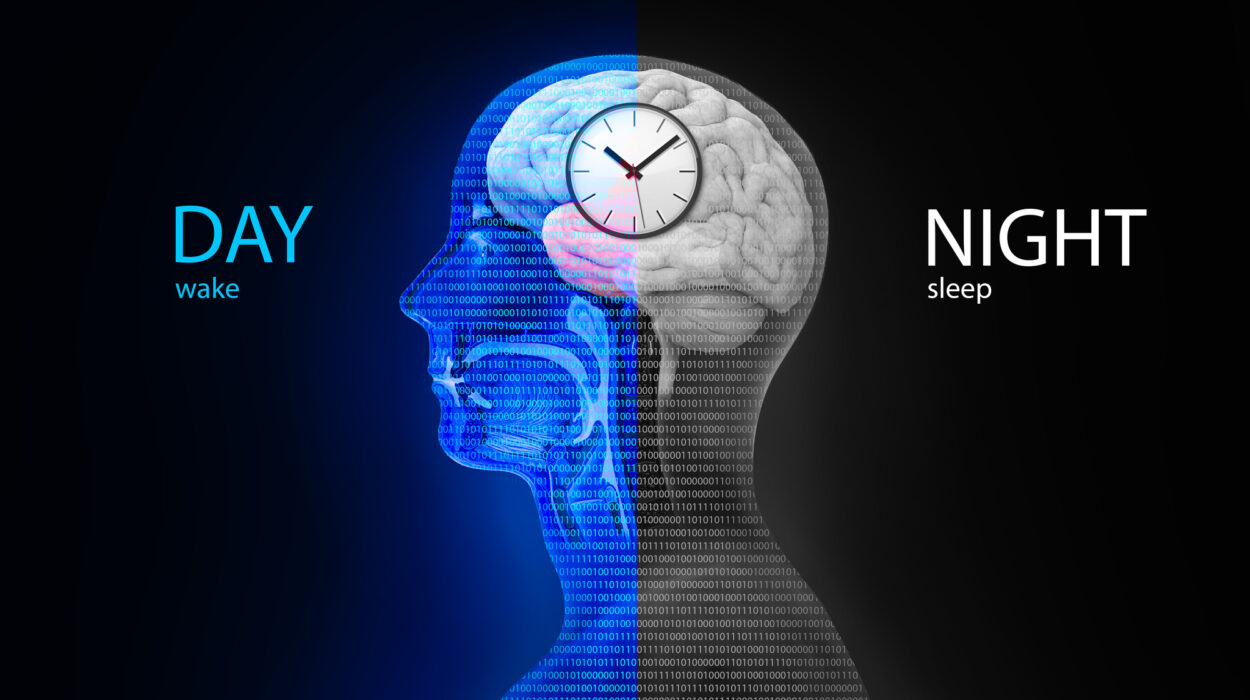
Every night, without effort or permission, the human mind slips into another world. The body lies still, the eyes close, and consciousness loosens its grip on the physical environment. In this quiet surrender, dreams arise. They can be vivid or vague, emotional or strange, logical or impossible. Most of the time, we drift through them as passive observers, unaware that we are dreaming at all. Yet for some people, at certain moments, something extraordinary happens. In the middle of a dream, awareness flickers on. The dreamer realizes, “This is a dream.” At that instant, a door opens between consciousness and the subconscious. This phenomenon is known as lucid dreaming.
Lucid dreaming sits at a fascinating crossroads between neuroscience, psychology, and philosophy. It challenges the idea that sleep is a state of complete unconsciousness and raises a tantalizing question: if we can become aware within a dream, can we also influence or control our subconscious mind? The science of lucid dreaming does not promise magical powers, but it does reveal something profound about how the mind works when it is freed from the constraints of waking reality.
What Lucid Dreaming Really Is
Lucid dreaming is not a mystical state or a supernatural ability. It is a scientifically recognized form of dreaming in which the dreamer is aware that they are dreaming while the dream continues. This awareness can range from a fleeting realization to a sustained state in which the dreamer can think clearly, remember waking life, and sometimes influence the dream’s events.
Importantly, lucid dreaming occurs during normal sleep, most often during rapid eye movement sleep. This is the stage of sleep associated with vivid dreams, heightened brain activity, and temporary paralysis of most voluntary muscles. In a lucid dream, the brain is asleep, but certain networks associated with self-awareness and decision-making become active again.
This hybrid state blurs the boundary between waking consciousness and dreaming. The dreamer is not awake in the usual sense, yet they are not fully unconscious either. They are experiencing a unique blend of imagination and awareness, one that reveals how flexible and layered human consciousness truly is.
The Brain During a Lucid Dream
To understand lucid dreaming, we must look at what happens in the brain during sleep. In ordinary dreaming, especially in rapid eye movement sleep, the brain is highly active in areas related to emotion, memory, and visual imagery. At the same time, regions involved in critical thinking and self-reflection are less active. This imbalance helps explain why dreams can feel real yet illogical, and why we rarely question their strange events.
During lucid dreaming, this pattern changes. Brain imaging studies suggest that areas of the frontal cortex associated with self-awareness, planning, and reflection show increased activity. These regions are usually quieter during typical dreams. Their partial reactivation allows the dreamer to recognize the dream state while still remaining asleep.
This does not mean the brain returns to full waking consciousness. Instead, it enters a mixed mode. Sensory input from the outside world remains largely blocked, and the dream environment continues to be generated internally. The lucid dreamer is aware, but awareness exists within the dream rather than replacing it.
This delicate balance explains why lucidity can be fragile. Too much arousal can wake the dreamer, while too little can cause lucidity to fade. The brain must hover in a narrow zone between sleep and wakefulness.
The Subconscious Mind and Dreams
Dreams have long been associated with the subconscious. They draw on memories, emotions, fears, and desires that are not always accessible during waking life. While modern neuroscience does not define the subconscious in exactly the same way as early psychological theories, it does recognize that much of mental processing happens outside conscious awareness.
During sleep, especially in rapid eye movement sleep, the brain continues to process emotional experiences, consolidate memories, and integrate new information with existing knowledge. Dreams reflect this activity, often in symbolic or distorted forms. They are not random noise, but neither are they deliberate messages. They are expressions of how the brain organizes experience when freed from external demands.
Lucid dreaming offers a rare opportunity to interact with this process. By becoming aware within a dream, the dreamer gains access to a mental space that is usually automatic and uncontrollable. This raises an intriguing possibility: can conscious intention influence the subconscious patterns that shape dreams?
Can We Control Our Dreams?
Control in lucid dreaming exists on a spectrum. Some lucid dreamers can change small details, such as moving their dream body or deciding where to look. Others report the ability to transform entire dream environments, summon characters, or alter the narrative of the dream. However, control is neither guaranteed nor absolute.
Scientific research suggests that lucid dream control depends on several factors, including the dreamer’s experience, emotional state, and cognitive stability within the dream. The dream environment is generated by the subconscious brain, and it does not always obey conscious commands. Attempting too much control can sometimes destabilize the dream, leading to awakening.
Rather than domination, lucid dreaming is better understood as negotiation. The conscious mind can influence the dream, but it must work within the logic and emotional tone already present. This interaction reflects the broader relationship between conscious intention and subconscious processes in waking life.
Lucid dreaming demonstrates that the subconscious is not a sealed vault. It is responsive, dynamic, and capable of dialogue with conscious awareness, even if it retains a degree of autonomy.
Learning to Become Lucid
Lucid dreaming can occur spontaneously, but many people learn to experience it more frequently through practice. This learning process reveals important insights about attention, memory, and self-awareness.
Becoming lucid requires recognizing the difference between waking and dreaming. During dreams, this distinction is usually lost. Training lucidity often involves strengthening metacognition, the ability to think about one’s own mental state. This skill does not turn off during sleep entirely; it can reappear under the right conditions.
From a scientific perspective, lucid dreaming training highlights the continuity between waking and dreaming consciousness. Skills developed during the day, such as reflection and mindfulness, can influence mental states during sleep. The mind does not reset completely at bedtime; it carries habits and patterns across states.
Emotional Experience Inside Lucid Dreams
Lucid dreams can be emotionally intense. The realization that one is dreaming often brings excitement, joy, or awe. At the same time, emotions within the dream remain vivid and genuine. Fear feels real, happiness feels real, and surprise feels real, even though the dreamer knows the experience is not physically happening.
This emotional realism reveals how deeply emotions are rooted in brain activity rather than external circumstances. The brain generates emotional responses based on internal simulations just as powerfully as it does in response to real-world events.
For this reason, lucid dreaming has attracted interest as a potential tool for emotional exploration. Facing fears, rehearsing responses, or revisiting emotionally charged situations in a lucid dream can feel meaningful and impactful. However, scientific caution is essential. While dreams can influence emotions, they do not replace waking experiences or therapy.
Lucid Dreaming and Memory
Memory plays a central role in lucid dreaming. To become lucid, the dreamer must remember the concept of dreaming and apply it within the dream. This involves a form of prospective memory, the ability to remember to do something in the future.
Research suggests that lucid dreamers show differences in how they process and recall experiences. Lucidity itself requires the brain to access waking memories while dreaming. This blending of memory systems demonstrates that the sleeping brain is not isolated from waking identity.
Lucid dreams can also be remembered more clearly than ordinary dreams, especially when awareness is sustained. This enhanced recall provides scientists with valuable subjective reports, allowing them to study dream experiences with greater detail.
Communication from Within Sleep
One of the most striking scientific findings about lucid dreaming is that communication between dreamers and researchers is possible. In laboratory settings, lucid dreamers have been trained to perform specific eye movement patterns while dreaming. Because eye muscles are not paralyzed during rapid eye movement sleep, these signals can be detected and interpreted.
This discovery confirmed that lucid dreaming is not merely imagined after waking. It occurs during genuine sleep and can be observed objectively. It also demonstrated that the dreaming mind can respond intentionally to external instructions, even while remaining asleep.
This ability to communicate across the boundary of sleep challenges traditional views of consciousness. It shows that awareness is not an all-or-nothing phenomenon but a flexible spectrum that can exist in unexpected forms.
The Subconscious as a Creative Partner
Dreams are often creative, weaving together memories, emotions, and ideas in novel ways. Lucid dreaming allows conscious awareness to witness this creativity in real time. Rather than suppressing the subconscious, lucidity can amplify its expressive potential.
Many lucid dreamers describe moments of profound insight, imaginative imagery, or emotional clarity. While these experiences should not be romanticized as guaranteed sources of truth, they do illustrate the brain’s capacity for spontaneous synthesis.
From a scientific standpoint, this creativity arises from the brain’s associative networks, which are highly active during rapid eye movement sleep. Lucidity does not shut down these networks; it adds a layer of observation and sometimes direction.
The Limits of Control
Despite popular claims, lucid dreaming does not grant unlimited power over the subconscious. The dreamer cannot simply rewrite deep-seated emotional patterns or resolve complex psychological issues overnight. The subconscious mind is shaped by long-term learning, biology, and experience, and it does not yield instantly to conscious commands.
In some cases, attempts to force control can backfire, increasing anxiety or causing the dream to collapse. This underscores an important lesson: effective interaction with the subconscious often requires patience, acceptance, and curiosity rather than domination.
Lucid dreaming reveals that the subconscious is not an enemy to be conquered but a system to be understood. Control, when it occurs, is cooperative rather than absolute.
Lucid Nightmares and Fear
Lucidity can occur not only in pleasant dreams but also in nightmares. In these cases, awareness can be especially powerful. Realizing that a terrifying situation is a dream can reduce fear and provide a sense of agency.
Research suggests that some individuals use lucid dreaming to confront recurring nightmares, particularly those associated with stress or trauma. By changing how they respond within the dream, they may alter the emotional impact of the experience.
However, this area requires careful scientific interpretation. While lucid dreaming may help some people manage nightmares, it is not a universal solution and should not replace professional care when needed.
Lucid Dreaming and the Sense of Self
One of the most philosophically interesting aspects of lucid dreaming is its effect on the sense of self. In waking life, identity feels stable and continuous. In dreams, identity can shift, fragment, or dissolve. Lucid dreaming allows the dreamer to observe these shifts consciously.
Some lucid dreamers report moments in which the boundaries between self and environment blur, or in which they experience multiple perspectives. These experiences reflect the brain’s capacity to construct the sense of self dynamically rather than as a fixed entity.
From a scientific perspective, this suggests that the feeling of being “me” is an ongoing process, not a static thing. Lucid dreaming exposes this process by placing awareness inside a world that is entirely generated by the mind.
Ethical and Psychological Considerations
As interest in lucid dreaming grows, so do questions about its psychological effects. Most research indicates that lucid dreaming is generally safe for healthy individuals. However, it may not be appropriate for everyone.
For individuals prone to dissociation or confusion between imagination and reality, frequent lucidity could potentially blur boundaries in unhelpful ways. Sleep quality is also an important consideration. Excessive focus on controlling dreams may interfere with restful sleep for some people.
Science emphasizes balance. Lucid dreaming is a fascinating state of consciousness, but it should be approached with respect for the mind’s complexity and limits.
What Lucid Dreaming Teaches Us About Consciousness
Perhaps the greatest value of lucid dreaming lies not in dream control but in what it reveals about consciousness itself. It demonstrates that awareness can exist independently of sensory input, grounded entirely in internally generated experience.
Lucid dreaming shows that consciousness is not tied exclusively to the waking world. It can arise in altered states, shaped by brain activity rather than external reality. This insight has implications for understanding meditation, imagination, and other altered states of awareness.
By studying lucid dreaming, scientists gain a window into how the brain constructs experience, how awareness emerges, and how flexible the mind truly is.
Can We Truly Control the Subconscious?
The question at the heart of lucid dreaming is not whether we can dominate the subconscious, but whether we can interact with it consciously. The evidence suggests that we can, to a limited and nuanced degree.
Lucid dreaming allows conscious intention to enter a space usually governed by automatic processes. This interaction can influence emotions, imagery, and behavior within the dream. However, the subconscious remains a powerful and largely autonomous system.
Rather than control, lucid dreaming offers communication. It provides a meeting ground where awareness and automatic processing overlap. In this space, the mind can learn about itself, experiment safely, and experience new perspectives.
The Ongoing Science of Lucid Dreams
Lucid dreaming remains an active area of research. Scientists continue to explore how it arises, why some people experience it more easily than others, and what it reveals about brain function. Advances in neuroscience, sleep research, and technology are opening new possibilities for studying this elusive state.
As understanding deepens, lucid dreaming may help answer broader questions about learning, memory, and emotional regulation. It may also inspire new approaches to studying consciousness itself.
Yet even as science advances, lucid dreaming retains an element of mystery. It reminds us that the mind is not fully mapped, that subjective experience holds secrets that cannot be reduced entirely to data.
A Window into the Inner Universe
Lucid dreaming is not a promise of mastery over the mind, but an invitation to explore it. It shows that the boundary between conscious and subconscious is more permeable than once believed. It reveals that awareness can arise in unexpected places, even in the depths of sleep.
In a lucid dream, the dreamer stands inside their own imagination, aware yet immersed, observing the mind at work from within. This experience does not grant ultimate control, but it offers understanding, wonder, and humility.
The science of lucid dreaming teaches us that the subconscious is not a dark, unreachable realm. It is an active, creative partner in human experience. While we may never fully control it, we can learn to listen, engage, and marvel at its depth.
In the quiet space between waking and dreaming, lucid dreaming reminds us that consciousness is not confined to daylight. Even in sleep, the mind can awaken to itself, asking timeless questions in a language made of images, emotions, and fleeting awareness.