There is a particular kind of fog that settles over the mind after too little sleep. Words feel slower to arrive. Decisions feel heavier than they should. Emotions swing more sharply, patience thins, and even simple problems seem strangely difficult. You may know what needs to be done, yet your brain resists cooperation. This experience is so universal that it is often joked about, normalized, even worn as a badge of productivity. But beneath this familiar struggle lies a profound neurological story, centered on one of the most important regions of the human brain: the prefrontal cortex.
Sleep deprivation does not merely make you feel tired. It temporarily changes who you are cognitively and emotionally. It alters how you think, judge, plan, control impulses, and understand consequences. At the heart of these changes is the prefrontal cortex, the brain’s executive center, which depends on sleep more than almost any other region. When sleep is lost, the prefrontal cortex does not simply slow down; it begins to malfunction in ways that explain why tired minds make poor decisions, struggle with logic, and feel emotionally overwhelmed.
Understanding this relationship between sleep deprivation and the prefrontal cortex is not just an academic exercise. It is a deeply human story about limits, vulnerability, and the biological cost of ignoring rest in a world that constantly demands more.
The Prefrontal Cortex: The Brain’s Command Center
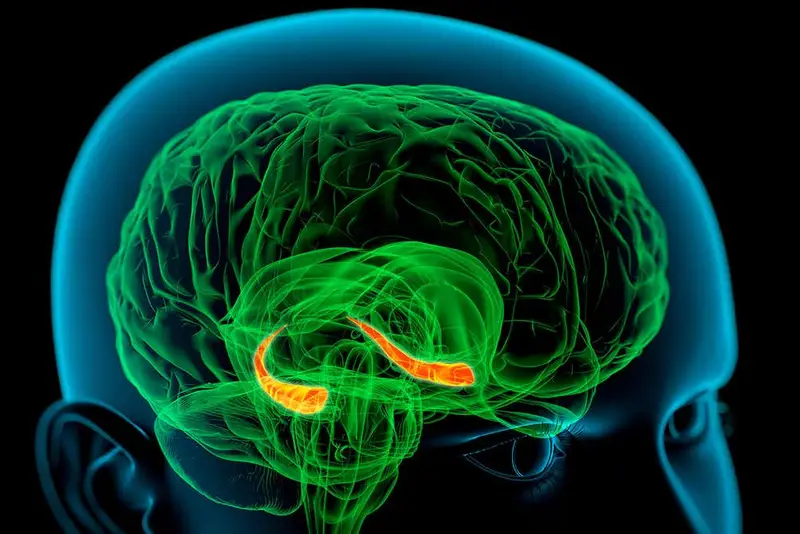
The prefrontal cortex sits at the front of the brain, just behind the forehead. Though it occupies a relatively small portion of total brain volume, its influence is enormous. This region is responsible for what neuroscientists call executive functions: planning, reasoning, decision-making, working memory, impulse control, attention regulation, and emotional moderation.
When you weigh the pros and cons of a choice, the prefrontal cortex is active. When you resist an urge, delay gratification, focus on a task despite distractions, or adapt your behavior based on rules or goals, the prefrontal cortex is doing the work. It allows humans to think abstractly, imagine future outcomes, and behave in socially appropriate ways.
Unlike older brain regions involved in basic survival functions, the prefrontal cortex is evolutionarily young. It develops slowly, continuing to mature into early adulthood. This prolonged development makes it powerful but also fragile. It is highly sensitive to stress, fatigue, and disruptions in brain chemistry. Among all these stressors, sleep deprivation is one of the most damaging.
Sleep as Active Brain Maintenance
Sleep is often misunderstood as a passive state, a simple shutdown period when the brain rests. In reality, sleep is an intensely active process, especially for the brain. While the body may appear still, the brain cycles through complex stages, each with specific functions essential for cognitive health.
During sleep, neural connections are reorganized, memories are consolidated, and metabolic waste products are cleared from brain tissue. Neurotransmitter systems are recalibrated, synaptic strength is adjusted, and energy stores are replenished. These processes are not optional. They are maintenance operations without which the brain cannot function properly when awake.
The prefrontal cortex is especially dependent on these restorative processes. Its high-level functions require precise timing, balanced neurochemistry, and sustained metabolic support. Sleep deprivation disrupts all of these foundations simultaneously.
Why the Prefrontal Cortex Suffers First
Not all parts of the brain respond to sleep deprivation equally. Some regions involved in basic sensory processing or reflexive behavior remain relatively resilient. The prefrontal cortex, however, is among the first to show impairment.
This vulnerability arises from the prefrontal cortex’s reliance on sustained neural firing and complex network coordination. Executive functions require neurons to maintain activity over time, hold information in working memory, and suppress competing signals. These tasks are metabolically expensive and sensitive to chemical imbalance.
When sleep is reduced, glucose metabolism in the prefrontal cortex drops significantly. Blood flow decreases. Neurotransmitters that support alertness and cognitive flexibility become dysregulated. The result is a brain region that is still structurally intact but functionally compromised.
This is why someone who is sleep deprived may still be able to perform automatic tasks yet struggle with reasoning, judgment, and emotional regulation. The brain’s most advanced capabilities degrade first, leaving behind more primitive responses.
The Collapse of Attention and Focus
One of the earliest and most noticeable effects of sleep deprivation is the inability to sustain attention. The prefrontal cortex plays a central role in focusing mental resources on relevant information while filtering out distractions. When sleep is lost, this filtering mechanism weakens.
Tired brains drift. Thoughts fragment. External stimuli intrude more easily. Even when motivation is high, focus feels slippery and unstable. This is not a moral failure or lack of discipline; it is a neurological limitation.
Sleep deprivation reduces the prefrontal cortex’s ability to maintain stable activity patterns. Instead of sustained engagement, the brain slips into brief lapses known as microsleeps, even while the eyes remain open. During these moments, awareness drops dramatically, sometimes without conscious realization.
This explains why tired individuals may reread the same sentence repeatedly without comprehension or miss obvious details in their environment. The prefrontal cortex simply cannot hold the reins of attention for long.
Working Memory Under Sleep Loss
Working memory is the mental workspace that allows you to hold and manipulate information over short periods. It is essential for reasoning, problem-solving, and learning. The prefrontal cortex is the central hub of working memory.
Sleep deprivation severely reduces working memory capacity. Information that would normally be easy to juggle slips away. Mental calculations feel overwhelming. Instructions are forgotten moments after being heard.
This impairment occurs because sleep loss disrupts the neural circuits that allow information to be actively maintained. Neurons in the prefrontal cortex normally fire in coordinated patterns to represent held information. Sleep deprivation weakens these patterns, causing them to decay prematurely.
As a result, complex tasks that require multiple steps become disproportionately difficult. The tired brain struggles not because it lacks intelligence, but because its mental workspace has shrunk.
Decision-Making and the Illusion of Competence
Perhaps the most dangerous effect of sleep deprivation is its impact on decision-making, coupled with the illusion that one is still thinking clearly. The prefrontal cortex is essential for evaluating options, anticipating consequences, and integrating emotional and rational information.
When sleep deprived, people tend to make riskier choices. They overestimate potential rewards and underestimate potential losses. They rely more heavily on immediate gratification and less on long-term outcomes. This shift reflects reduced prefrontal control over deeper brain regions involved in emotion and reward.
At the same time, sleep deprivation impairs insight into one’s own cognitive state. The tired brain often does not recognize how impaired it has become. This lack of self-awareness is itself a function of prefrontal dysfunction.
This combination is particularly hazardous. It explains why tired individuals may confidently make poor decisions, insist they are functioning well, or dismiss warnings. The very system responsible for recognizing impairment is compromised.
Emotional Regulation and the Tired Mind
Sleep deprivation profoundly alters emotional life. Small frustrations feel overwhelming. Negative emotions intensify. Emotional reactions become more extreme and less proportional to events.
The prefrontal cortex normally acts as a regulator of emotional responses generated by deeper brain structures such as the amygdala. It helps interpret emotional signals, apply context, and dampen excessive reactions.
When sleep is lost, this regulatory control weakens. The amygdala becomes more reactive, while the prefrontal cortex loses its moderating influence. Emotional responses become faster, stronger, and less filtered.
This neural imbalance explains why tired people may feel irritable, anxious, or emotionally raw. It also explains why conflicts escalate more easily under sleep deprivation. The brain’s emotional brakes fail, leaving raw impulses exposed.
Impulse Control and Self-Regulation
Impulse control is another casualty of sleep deprivation. The prefrontal cortex is critical for suppressing inappropriate or unhelpful impulses. It allows you to pause, reflect, and choose actions aligned with goals and values.
Sleep loss weakens this inhibitory function. People become more impulsive, more reactive, and less patient. They interrupt more often, take shortcuts, and struggle to resist temptations.
This is not a matter of willpower alone. The neural circuits that enable self-control require adequate rest to function. When the prefrontal cortex is fatigued, impulses generated elsewhere in the brain face less resistance.
This helps explain why sleep deprivation is associated with overeating, substance use, aggressive behavior, and poor judgment. The tired brain loses its capacity to regulate itself.
The Neurochemistry of Sleep Deprivation
At the chemical level, sleep deprivation disrupts the delicate balance of neurotransmitters that support prefrontal function. Dopamine, norepinephrine, serotonin, and acetylcholine all play roles in attention, motivation, and cognitive flexibility.
Sleep loss alters the release and receptor sensitivity of these chemicals. Some systems become overstimulated, leading to jittery alertness without clarity. Others become depleted, reducing motivation and cognitive stamina.
The result is a brain that feels wired but ineffective, awake yet incapable of deep thinking. This state is often mistaken for productivity, especially when fueled by caffeine, but it masks underlying dysfunction.
Caffeine may temporarily increase alertness, but it does not restore prefrontal function. It cannot replace the restorative processes of sleep. The illusion of wakefulness does not equal cognitive health.
Chronic Sleep Deprivation and Long-Term Consequences
Occasional sleep loss is a common human experience. The brain can recover from short-term deprivation with sufficient rest. Chronic sleep deprivation, however, tells a different story.
Repeated nights of insufficient sleep lead to cumulative impairment of prefrontal cortex function. Baseline cognitive performance declines. Emotional regulation becomes persistently weaker. Decision-making biases become entrenched.
Over time, the brain adapts to chronic sleep loss by recalibrating its expectations, but this adaptation comes at a cost. The individual may feel subjectively normal while objectively functioning below optimal levels. This normalization of impairment is particularly dangerous in professions requiring judgment, precision, and emotional stability.
Long-term sleep deprivation has also been associated with structural and functional changes in brain networks involving the prefrontal cortex. While research continues to explore the extent and reversibility of these changes, the evidence strongly suggests that chronic sleep loss undermines cognitive health.
Sleep Deprivation and Social Cognition
Thinking clearly is not only about logic and memory; it is also about understanding others. The prefrontal cortex plays a key role in social cognition, including empathy, perspective-taking, and interpretation of social cues.
Sleep deprivation impairs these abilities. Tired individuals are more likely to misinterpret facial expressions, assume negative intent, and respond defensively. Empathy declines as emotional resources are depleted.
This erosion of social cognition contributes to misunderstandings, conflicts, and feelings of isolation. Relationships suffer not because people care less, but because their brains are less capable of nuanced social processing.
In this way, sleep deprivation quietly reshapes not only individual cognition but social dynamics.
The Evolutionary Perspective on Sleep and Cognition
From an evolutionary standpoint, the vulnerability of the prefrontal cortex to sleep deprivation makes sense. Executive functions evolved to operate in environments where rest cycles were relatively stable. The brain was not designed for continuous wakefulness or artificial extension of the day.
Modern society, with its constant stimulation and demands, pushes the brain beyond conditions it evolved to handle. Sleep deprivation is not a test of toughness; it is a mismatch between biology and environment.
Understanding this mismatch helps reframe sleep not as laziness or indulgence, but as a biological necessity for high-level cognition. The prefrontal cortex, the seat of reason and self-control, depends on it.
Why You Feel Like a Different Person When Tired
Many people report feeling unlike themselves when sleep deprived. They may say things they regret, make choices they normally wouldn’t, or feel emotionally unstable. This experience reflects real changes in brain function.
The prefrontal cortex supports personality traits related to self-regulation, values, and long-term goals. When its influence weakens, behavior becomes more driven by immediate emotions and impulses.
In a sense, sleep deprivation temporarily alters the balance of power within the brain. The reflective, planning-oriented self steps back, while more reactive systems take over. The result can feel like a loss of identity.
This is not a character flaw. It is a predictable outcome of neural fatigue.
Restoring the Prefrontal Cortex Through Sleep
The good news is that sleep is remarkably restorative. Adequate, high-quality sleep can rapidly improve prefrontal cortex function. Attention sharpens. Working memory expands. Emotional regulation stabilizes. Decision-making becomes more balanced.
Recovery is not instantaneous, especially after prolonged deprivation, but the brain is resilient. Given time and consistent rest, neural systems recalibrate and performance improves.
This recovery highlights an important truth: many cognitive struggles attributed to stress, motivation, or ability are actually symptoms of sleep loss. Addressing sleep can unlock mental clarity more effectively than pushing harder.
The Cultural Undervaluing of Sleep
Despite overwhelming scientific evidence, sleep is often undervalued in modern culture. Productivity is celebrated, exhaustion is normalized, and rest is seen as negotiable. This cultural attitude ignores the central role of sleep in cognitive health.
The prefrontal cortex, responsible for planning and judgment, ironically suffers most from the very behaviors society encourages. Long hours, constant connectivity, and sleep sacrifice undermine the cognitive capacities required for meaningful productivity.
Reframing sleep as essential brain care rather than downtime is a crucial step toward healthier thinking.
Thinking Clearly Begins With Sleeping Well
The inability to think clearly when tired is not a mystery of motivation or discipline. It is a direct consequence of how the brain works. The prefrontal cortex, the engine of human thought and self-control, cannot function properly without sleep.
Sleep deprivation strips away the brain’s highest capabilities, leaving behind a version of the mind that is reactive, impulsive, and emotionally unbalanced. This is not a failure of character, but a signal of unmet biological needs.
To protect your ability to think, decide, and relate to others, sleep must be treated as non-negotiable. In a world that constantly asks for more, sleep is not a luxury. It is the foundation of clarity, judgment, and humanity itself.
When you sleep, you are not stepping away from thinking. You are making thinking possible.