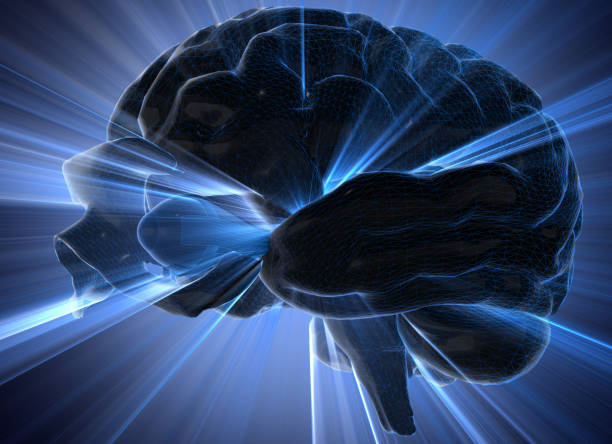
The human brain sits quietly inside the skull, weighing little more than a kilogram, yet it is the most intricate structure we know to exist. It generates thoughts, emotions, memories, creativity, morality, and self-awareness. It allows a species made of biological tissue to ask questions about the universe, to imagine futures that do not yet exist, and to reflect on its own existence. When scientists describe the brain as the most complex object in the universe, they are not speaking poetically. They are making a statement grounded in anatomy, physics, biology, information theory, and evolutionary history.
Complexity, in a scientific sense, does not merely mean that something is complicated. It refers to the number of interacting components, the diversity of those components, the richness of their connections, and the emergent behaviors that arise from their interactions. By every one of these measures, the human brain stands apart. No galaxy, no star system, no machine, and no artificial network rivals its density of connections, its adaptability, or its capacity to generate meaning.
Understanding why the brain holds this unique status requires a journey across multiple scientific domains. It demands that we explore how the brain is built, how it functions, how it develops, how it evolved, and how it gives rise to the subjective experience we call the mind. This is not merely a story of neurons and synapses, but a story of how matter organizes itself into thought.
Defining Complexity in a Scientific Sense
Before examining the brain itself, it is essential to clarify what scientists mean by complexity. In physics and biology, complexity is often associated with systems composed of many interacting parts whose collective behavior cannot be easily predicted from the properties of the individual components alone. Such systems exhibit emergence, meaning that new properties arise at higher levels of organization that do not exist at lower levels.
A single water molecule has no temperature, but a collection of them does. An individual neuron does not think, but a network of neurons can produce consciousness. Complexity, therefore, is not simply about size or energy, but about organization, connectivity, and dynamic interaction across scales.
The universe contains objects of immense scale and power. Stars contain more atoms than the brain contains cells. Galaxies span distances that dwarf human comprehension. Yet these structures are governed by relatively simple physical laws and exhibit limited internal diversity in their interactions. The brain, by contrast, contains billions of distinct elements, each capable of multiple states, interacting in patterns that change from moment to moment. Its complexity is not static but fluid, continuously reshaping itself in response to experience.
The Anatomical Architecture of the Brain
At the most basic level, the human brain is composed of approximately eighty-six billion neurons. Each neuron is a living cell with a specialized structure designed to receive, process, and transmit information. Neurons vary widely in shape, size, and function, forming a diverse population rather than a uniform mass.
These neurons are connected by synapses, microscopic junctions through which signals pass from one cell to another. The total number of synaptic connections in the human brain is estimated to be in the hundreds of trillions. This staggering number alone sets the brain apart from any known physical system. Each connection can change its strength over time, making the brain not just complex in structure but also in function.
Beyond neurons, the brain contains glial cells, once thought to be mere support elements but now recognized as active participants in information processing. Glia regulate neurotransmitter levels, modulate synaptic activity, maintain metabolic balance, and contribute to neural development and plasticity. The inclusion of glial networks adds another layer of complexity, expanding the brain’s computational and regulatory capabilities.
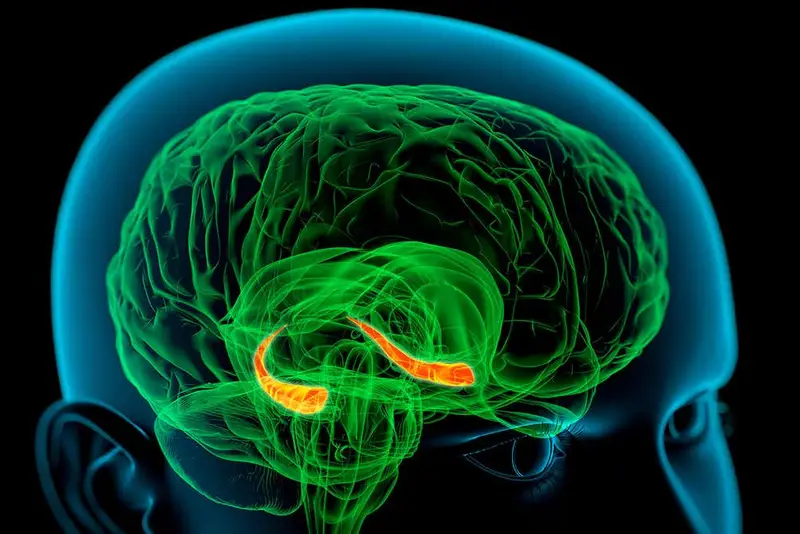
The brain’s anatomy is further organized into regions with specialized roles, such as the cerebral cortex, hippocampus, thalamus, and brainstem. These regions do not operate in isolation. They form overlapping, interconnected networks that integrate sensory input, motor output, emotional regulation, and cognitive control. The brain’s structure reflects a balance between specialization and integration, a hallmark of complex systems.
Electrical and Chemical Signaling at Massive Scale
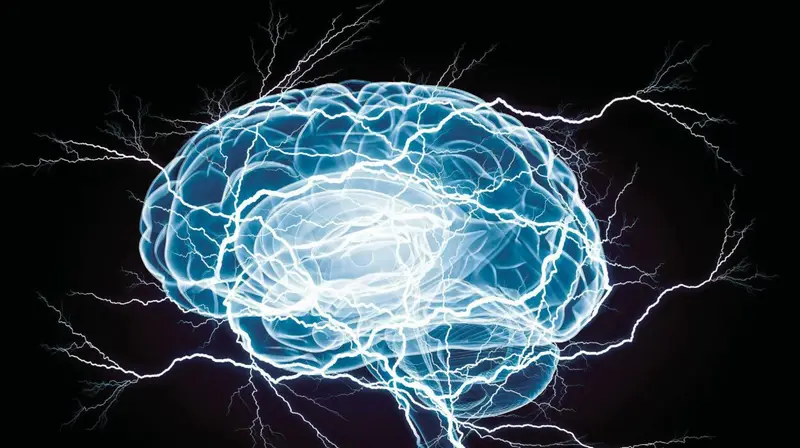
Neural communication relies on a combination of electrical and chemical processes. Neurons generate electrical impulses known as action potentials, which travel along axons at high speed. When these impulses reach a synapse, they trigger the release of chemical messengers called neurotransmitters. These molecules cross the synaptic gap and influence the activity of the receiving neuron.
This dual mode of signaling allows for extraordinary flexibility. Electrical signals are fast and precise, while chemical signals are slower but highly modulatable. Different neurotransmitters can excite, inhibit, or fine-tune neural responses, enabling a vast range of functional states.
What makes the brain uniquely complex is the simultaneous operation of these signaling processes across enormous networks. At any given moment, millions of neurons are firing, releasing neurotransmitters, adjusting synaptic strengths, and influencing one another in cascading patterns. These patterns are not random. They are shaped by genetics, development, experience, and ongoing feedback from the environment.
The brain operates near the edge of chaos, a state in which systems are neither rigidly ordered nor completely random. This balance allows for stability without stagnation and flexibility without collapse. It is within this delicate regime that perception, learning, and creativity emerge.
Developmental Complexity from Embryo to Adulthood
The complexity of the human brain is not fully encoded at birth. While genetic instructions provide a blueprint, much of the brain’s final structure arises through development and experience. During embryonic growth, neural stem cells divide, migrate, and differentiate into diverse neural types. Axons grow and seek their targets, guided by molecular signals in a process of extraordinary precision.
After birth, the brain undergoes extensive remodeling. Synapses are formed in excess, creating a dense network of potential connections. Over time, experience-dependent processes strengthen some connections while pruning others. This refinement enhances efficiency and specificity, tailoring the brain to its environment.
Critical periods in development highlight the brain’s sensitivity to experience. Language acquisition, sensory processing, and social cognition depend on timely interactions between genetic programs and environmental input. The result is a brain that is not merely constructed but sculpted, its complexity shaped by both nature and nurture.
This developmental plasticity is rare in the universe. Most physical systems do not reorganize themselves in response to experience. The human brain, by contrast, remains adaptable throughout life, capable of learning new skills, forming new memories, and recovering partially from injury.
Neural Plasticity and Lifelong Adaptation
Plasticity refers to the brain’s ability to change its structure and function in response to experience. At the synaptic level, plasticity involves changes in the strength of connections between neurons. At larger scales, it includes the reorganization of neural circuits and even the generation of new neurons in certain regions.
Learning and memory are direct consequences of plasticity. When a person acquires a new skill or forms a new memory, specific patterns of neural activity lead to lasting changes in synaptic connectivity. These changes encode information in a distributed and dynamic manner, making memories resilient yet flexible.
Plasticity also underlies recovery from brain injury. When damage occurs, surviving neurons can sometimes reorganize their connections to compensate for lost functions. This capacity reflects the brain’s remarkable ability to adapt, a property unmatched by most engineered systems.
The coexistence of stability and change is a defining feature of the brain’s complexity. Core functions are preserved, while peripheral connections remain modifiable. This balance allows the brain to maintain identity while remaining open to growth.
Information Processing Beyond Any Machine
From an information-theoretic perspective, the human brain is unparalleled. It processes sensory data, integrates contextual information, generates predictions, and guides behavior, all in real time and with remarkable energy efficiency. Despite consuming only about twenty percent of the body’s energy, the brain performs computations that surpass even the most advanced supercomputers in adaptability and contextual understanding.
Unlike digital computers, which operate using discrete symbols and explicit instructions, the brain employs massively parallel, analog computation. Information is represented not in single locations but across patterns of activity distributed over networks. This redundancy enhances robustness and allows for graceful degradation rather than catastrophic failure.
The brain’s information processing is deeply embodied. It is shaped by sensory input, motor action, emotional states, and social interaction. Cognition does not occur in isolation but emerges from continuous interaction with the world. This integration of perception, action, and meaning adds layers of complexity absent from artificial systems.
Consciousness as an Emergent Phenomenon
Perhaps the most profound aspect of the brain’s complexity is its ability to generate consciousness. Consciousness encompasses subjective experience, awareness, and the sense of self. It is the reason complexity in the brain matters not only scientifically but philosophically.
Neuroscience has shown that consciousness correlates with specific patterns of neural activity distributed across cortical and subcortical regions. These patterns involve integration across multiple domains, including sensory processing, attention, memory, and emotion. No single neuron or region is conscious on its own. Consciousness arises from coordinated activity across networks.
This emergent quality distinguishes the brain from other complex systems. A galaxy does not experience itself. A storm does not reflect on its own dynamics. The brain, through its organization, gives rise to an inner world. Explaining how subjective experience emerges from physical processes remains one of the greatest scientific challenges, highlighting the depth of the brain’s complexity.
Emotion, Meaning, and the Social Brain
The brain is not merely a computational device. It is also an emotional and social organ. Neural circuits dedicated to emotion interact closely with those involved in cognition, shaping perception, decision-making, and memory. Emotions provide value signals that guide behavior, helping organisms prioritize what matters for survival and well-being.
Human brains are especially attuned to social information. Specialized networks support language, empathy, moral reasoning, and theory of mind, the ability to understand the mental states of others. These capacities depend on intricate interactions between sensory, cognitive, and emotional systems.
Culture further amplifies brain complexity. Through language, education, and shared practices, human brains become embedded in symbolic systems that extend cognition beyond the individual. Knowledge accumulates across generations, shaping neural development and creating feedback loops between brain, society, and environment.
Evolutionary Origins of Neural Complexity
The extraordinary complexity of the human brain did not arise suddenly. It is the product of a long evolutionary history marked by incremental changes and selective pressures. Early nervous systems in simple organisms coordinated basic responses to stimuli. Over time, increasing environmental challenges favored greater neural integration and flexibility.
In primates, the expansion of the cerebral cortex supported enhanced sensory processing, social interaction, and learning. In humans, further cortical expansion, particularly in frontal and temporal regions, enabled advanced language, abstract reasoning, and long-term planning.
Evolutionary processes do not aim for complexity per se. They favor traits that enhance survival and reproduction. The human brain’s complexity reflects the demands of navigating social environments, using tools, transmitting knowledge, and adapting to diverse ecological niches. Complexity became advantageous because it enabled behavioral flexibility.
Energy Constraints and Optimization
One of the most remarkable aspects of the brain is how it achieves such complexity within tight energy constraints. Neural activity is metabolically expensive. Action potentials and synaptic transmission require continuous energy input. Despite this, the brain operates efficiently, balancing performance with resource limitations.
This efficiency is achieved through sparse coding, modular organization, and predictive processing. Rather than representing every detail explicitly, the brain emphasizes relevant information and anticipates future states. This predictive nature reduces computational load and enhances responsiveness.
The ability to optimize complexity under constraints is a hallmark of biological systems. The brain exemplifies this principle, achieving extraordinary functionality without excessive energy consumption.
Comparing the Brain to Cosmic Structures
When scientists compare the brain to the universe, they do not claim that the brain is larger or more powerful in a physical sense. Instead, they highlight differences in organizational complexity. A galaxy contains billions of stars, but interactions between those stars are governed by relatively simple gravitational laws. The number of distinct interaction patterns is limited.
In the brain, each neuron can interact with thousands of others in context-dependent ways. The number of possible network states is astronomically large, exceeding the number of particles in the observable universe. This combinatorial richness gives the brain its unparalleled capacity for representation and creativity.
The brain, in effect, is a universe unto itself, a dynamic landscape of activity where patterns emerge, dissolve, and recombine, giving rise to thought and experience.
Limits of Understanding and the Brain Studying Itself
A unique challenge in neuroscience is that the brain is both the object of study and the instrument of study. We use our brains to understand brains. This self-referential nature adds epistemological complexity. It raises questions about whether there are inherent limits to our understanding.
Despite advances in imaging, computation, and theory, the brain remains only partially understood. Each discovery reveals new layers of complexity, new interactions, and new questions. This does not diminish scientific progress but underscores the richness of the subject.
The brain’s complexity may be such that complete understanding, in the sense of total predictability, is unattainable. Instead, neuroscience may continue to develop explanatory frameworks that capture key principles without exhaustively detailing every interaction.
Artificial Intelligence and the Uniqueness of the Brain
Advances in artificial intelligence have reignited debates about brain complexity. Artificial neural networks are inspired by biological neurons, yet they remain vastly simpler. While AI systems can excel at specific tasks, they lack the generality, adaptability, and embodied understanding of human cognition.
The brain’s complexity arises not only from its architecture but from its developmental history, emotional grounding, and social embedding. These dimensions are difficult to replicate in artificial systems. Current AI lacks consciousness, subjective experience, and intrinsic motivation, features that emerge naturally from biological brains.
Comparisons between brains and machines highlight what makes the brain unique. It is not merely a processor but a living system shaped by evolution, development, and experience.
The Brain as a Meaning-Making System
Perhaps the deepest reason the brain is the most complex object in the universe is its role in creating meaning. Meaning is not a physical property like mass or charge. It arises from interpretation, context, and value. The brain transforms sensory signals into experiences, memories into narratives, and information into understanding.
Through this process, the universe becomes intelligible to itself. Stars do not know they are stars, but through human brains, the cosmos can be observed, described, and contemplated. This reflexive quality elevates the brain’s significance beyond its physical structure.
The brain is where matter becomes aware of matter. It is where the laws of physics give rise to art, ethics, and curiosity. This capacity for meaning is not an add-on but an emergent consequence of the brain’s complexity.
Conclusion: Complexity with Purpose
The human brain is the most complex object in the universe not because it is the largest or most energetic, but because it is the most richly organized, adaptive, and meaningful. It integrates billions of components into coherent, self-modifying networks capable of perception, thought, emotion, and self-awareness.
Its complexity spans scales, from molecular interactions to global network dynamics. It evolves over time, shaped by development, experience, and culture. It generates emergent phenomena that cannot be reduced to simple physical descriptions.
In studying the brain, science confronts both its greatest triumphs and its deepest mysteries. The brain challenges us to rethink what complexity means, what knowledge entails, and what it means to be human. In a universe vast and ancient, the human brain stands as a remarkable concentration of complexity, a place where the cosmos reflects upon itself and asks, with genuine wonder, why it exists at all.