Crying is one of the most familiar yet most misunderstood human behaviors. We cry when we are overwhelmed by grief, when joy becomes too large to contain, when frustration reaches a breaking point, and sometimes without knowing exactly why. Tears fall silently in the dark, stream openly in moments of celebration, and well up unexpectedly at the sound of a memory or a piece of music. Crying feels deeply personal, yet it is also profoundly universal. Every human culture knows tears. Every human body is built to produce them. And still, for centuries, people have asked the same question: why do we cry?
At first glance, crying seems like a vulnerability, a loss of control, or even a biological mistake. Tears blur vision, weaken the voice, and expose emotion in a world that often rewards composure. Yet evolution does not preserve useless traits. The act of crying has survived hundreds of thousands of years of human history, suggesting that emotional tears serve important purposes—both chemical and social. To understand why we cry, we must look at the human body, the human brain, and the long evolutionary story that shaped both.
Tears as a Biological Substance, Not Just a Symbol
Tears are not merely poetic expressions of sadness. They are a carefully regulated biological fluid produced by specialized glands, containing a complex mixture of water, salts, proteins, hormones, and signaling molecules. The human body produces tears constantly, even when we are not crying. These basal tears lubricate the eyes, nourish the cornea, and protect against infection. Without them, vision would quickly deteriorate.
There are also reflex tears, which flood the eyes in response to irritation such as smoke, dust, or onion fumes. These tears are a defense mechanism, washing away harmful substances and protecting delicate eye tissue. They are largely mechanical in purpose and shared widely among mammals.
Emotional tears, however, are something different. Humans are the only known species that sheds tears in response to emotions. These tears are triggered not by physical irritation, but by activity deep within the brain’s emotional centers. They emerge from feelings too intense to remain contained, turning invisible inner states into visible, physical signals.
The Chemical Signature of Emotional Tears
Emotional tears are chemically distinct from other types of tears. Scientific analysis has shown that they contain different concentrations of proteins, hormones, and neurotransmitter-related compounds. Among these are stress-related hormones and peptides that accumulate in the body during emotional strain.
When a person experiences psychological stress, the brain activates systems that release hormones associated with alertness, tension, and emotional arousal. Crying appears to be one way the body helps regulate these chemical states. By releasing tears rich in certain stress-related substances, the body may be participating in a form of biochemical relief, subtly altering internal balance.
This does not mean that crying magically removes all stress. But it suggests that tears are part of a broader regulatory system, helping the nervous system shift from heightened emotional arousal toward recovery. Many people report feeling calmer or lighter after crying, a subjective experience that aligns with this physiological perspective.
The Brain’s Role in Triggering Tears
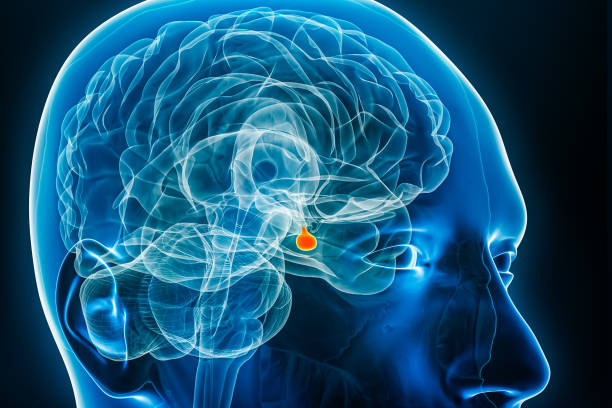
Crying begins in the brain, not in the eyes. Emotional tears are initiated by structures involved in processing feelings, memory, and meaning. These areas interpret experiences not as mere sensory inputs, but as events that matter. Loss, connection, empathy, relief, and longing are all processed through networks that tie emotion to bodily response.
When emotional intensity crosses a certain threshold, signals travel from the brain to the autonomic nervous system. This system controls involuntary bodily functions such as heart rate, breathing, and tear production. The lacrimal glands receive instructions to release tears, while other systems activate changes in breathing, facial muscles, and vocal tone.
Crying is therefore a whole-body event. The tightness in the chest, the trembling breath, the lump in the throat, and the wetness of the eyes are all part of a coordinated physiological response to emotional overload. The body is not malfunctioning when it cries. It is responding exactly as it evolved to do.
Evolutionary Origins: Why Emotional Tears Survived
From an evolutionary perspective, any trait that persists across generations must provide some advantage. Emotional crying, despite its apparent vulnerability, likely offered significant benefits to early humans living in social groups.
Human survival has always depended on cooperation. Our ancestors relied on one another for protection, food, childcare, and knowledge. In such environments, communication was critical. Emotional tears may have evolved as a powerful nonverbal signal, communicating distress, need, or sincerity in ways that words could not.
A crying individual sends a clear message: something is wrong, and help is needed. Tears impair vision and physical readiness, making it difficult to fight or flee. This helplessness itself may function as a signal of non-threat, encouraging caregiving rather than aggression from others. In social species, signals that reduce conflict and promote bonding can be strongly favored by natural selection.
Tears as Social Glue
Crying does not happen in a vacuum. It almost always occurs in a social context, even when no one else is present. Humans cry not only because they feel, but because they are wired to connect. Tears draw attention, evoke empathy, and strengthen bonds.
Research has shown that observing someone cry often triggers emotional and physiological responses in others. Heart rates change, facial muscles subtly mirror expressions, and emotional understanding deepens. Tears make inner suffering visible, allowing others to respond appropriately. They transform private pain into shared experience.
This social function may explain why emotional tears are uniquely human. While many animals express distress through vocalizations or body language, human tears add a visual chemical signal that reinforces emotional communication. Tears are difficult to fake convincingly, which may make them an honest signal of genuine emotion.
Crying and Trust
In human relationships, tears often appear at moments of deep trust. People cry in front of those they feel safe with, those they believe will not exploit their vulnerability. This suggests that crying plays a role in establishing and maintaining emotional intimacy.
When someone cries, observers often lower their defenses. Aggression tends to decrease, and nurturing behaviors increase. Over evolutionary time, groups that responded to tears with support rather than punishment may have enjoyed greater cohesion and survival.
In this sense, tears are not a weakness but a social strategy. They allow humans to negotiate care, forgiveness, and understanding without violence. They help repair relationships after conflict and deepen bonds during moments of shared emotion.
The Paradox of Crying and Strength
Modern societies often send mixed messages about crying. On one hand, tears are associated with honesty, emotional depth, and compassion. On the other, they are sometimes labeled as signs of weakness or lack of control, particularly in certain cultural or gender contexts.
From a biological standpoint, this stigma is misplaced. Crying is not a failure of emotional regulation but a component of it. It represents a release valve, a transition from internal tension to outward expression. Suppressing tears does not eliminate the underlying emotion; it merely forces the body to manage it in other ways, sometimes with negative consequences.
Understanding the evolutionary and chemical purposes of crying reframes it as a sign of engagement with life rather than fragility. Tears appear when something matters deeply. They mark moments when the emotional stakes are high.
Crying and Emotional Regulation
Emotions are dynamic processes, not static states. They rise, peak, and eventually fall. Crying often appears at the peak of emotional intensity, acting as a turning point in this cycle. After tears flow, emotional arousal often decreases, allowing cognitive processing to resume.
This does not mean that crying always brings immediate relief. In some cases, particularly when crying is prolonged or occurs without social support, distress may persist. However, the capacity to cry provides a pathway for emotional expression that prevents feelings from becoming locked inside the body.
Neuroscientific studies suggest that crying engages parasympathetic nervous system activity after an initial stress response. This shift supports calming processes such as slower heart rate and deeper breathing. Crying, then, may help the body move from alarm toward recovery.
The Role of Hormones and Neurochemistry
Crying is closely linked to hormonal systems that govern stress, attachment, and emotional bonding. Hormones associated with stress rise during emotional distress, preparing the body for action. Emotional tears appear to interact with these systems, potentially helping to modulate their effects.
At the same time, crying often occurs in emotionally meaningful contexts involving attachment, such as loss, reunion, or empathy. These situations engage neurochemical pathways associated with social bonding. The overlap between stress and attachment chemistry helps explain why crying can feel both painful and comforting at the same time.
This complex chemical interplay underscores that tears are not a simple reflex. They are part of a sophisticated emotional regulation system shaped by millions of years of social living.
Joyful Tears and Emotional Overflow
Not all crying is rooted in sadness. People cry at weddings, at the birth of a child, at moments of triumph, relief, or awe. These joyful tears can be puzzling, especially when happiness seems like it should produce smiles, not sobs.
Joyful crying appears to emerge when positive emotion becomes overwhelming, pushing the nervous system beyond its usual bounds. The body responds using the same mechanisms it uses for distress, because the underlying issue is intensity, not negativity.
These tears may serve a similar regulatory function, helping the nervous system return to balance after extreme emotional arousal. They also signal sincerity and depth of feeling to others, reinforcing social bonds during moments of shared meaning.
Crying Across Cultures
While crying is universal, cultural attitudes toward it vary widely. Some cultures encourage open emotional expression, viewing tears as healthy and authentic. Others emphasize restraint, associating emotional control with maturity or strength.
These cultural differences shape when and how people cry, but they do not eliminate the underlying biological capacity. Even in cultures where crying is discouraged, people still experience the urge to cry in private or during intense moments.
This universality suggests that crying is not merely a cultural habit but a deeply rooted biological function. Culture can shape expression, but it cannot erase the human need for emotional release.
Gender, Crying, and Social Expectations
Men and women both cry, but social norms often influence how freely they do so. In many societies, women are granted more permission to cry openly, while men are encouraged to suppress tears. These expectations can shape emotional habits over time.
Biologically, there is no evidence that emotional crying is inherently inappropriate for any gender. Differences in crying frequency are influenced by hormonal factors, socialization, and learned behavior rather than fundamental emotional capacity.
When social pressure discourages crying, emotional distress may find other outlets, sometimes through anger, withdrawal, or physical symptoms. Understanding crying as a natural regulatory behavior can help reduce harmful stigma and promote emotional health for everyone.
Crying in Childhood and Development
Crying appears early in human life. Infants cry long before they can speak, using tears and vocalizations as their primary means of communication. These early cries are essential for survival, signaling needs such as hunger, discomfort, or fear.
As children grow, crying becomes more complex, incorporating emotional meaning and social awareness. Children learn when crying brings comfort, when it brings attention, and when it may be discouraged. These early experiences shape lifelong emotional expression patterns.
The developmental role of crying highlights its function as a bridge between internal states and social response. From the very beginning, tears connect the individual to the group.
Crying and Mental Health
Crying is often associated with emotional pain, but it is not itself a sign of mental illness. In many cases, the inability to cry, rather than frequent crying, may indicate emotional numbness or suppression.
That said, persistent crying that feels uncontrollable or disconnected from specific events can be a sign of underlying emotional distress that deserves attention. Like all behaviors, crying must be understood in context.
Healthy emotional functioning includes a range of responses, including tears. When crying occurs alongside the ability to recover, reflect, and connect, it serves its adaptive role. When it becomes overwhelming or isolating, support can help restore balance.
Tears as a Window into Human Empathy
One of the most remarkable aspects of crying is its ability to evoke empathy. Tears bypass intellectual defenses and speak directly to shared emotional experience. They remind observers of their own vulnerability and capacity for care.
This empathetic response may be rooted in mirror systems within the brain that allow humans to resonate with others’ emotional states. Tears act as a powerful trigger for these systems, fostering understanding without words.
In a species built on cooperation, such mechanisms are invaluable. They help maintain social cohesion, reduce conflict, and encourage mutual support.
The Misconception of Crying as Weakness
The idea that crying is a weakness likely arises from misunderstanding its purpose. Weakness implies failure or inadequacy, but crying is neither. It is an evolved response to emotional significance.
Tears appear when something matters enough to overwhelm ordinary regulation. They mark moments of truth, vulnerability, and authenticity. Far from undermining strength, crying often accompanies courage, whether in grief, honesty, or compassion.
Recognizing this helps reframe emotional expression as part of human resilience rather than its opposite.
Crying and the Meaning of Being Human
To cry is to acknowledge that we are affected by the world and by one another. It is to admit that experiences leave marks, that love and loss matter, that joy can be too large for silence.
Physics may explain the universe, but crying explains humanity. It reveals that we are not detached observers of reality but participants in it, emotionally woven into our surroundings and our relationships.
Tears are the visible trace of this engagement, tiny drops of chemistry carrying the weight of memory, meaning, and connection.
Why We Still Cry
Despite advances in technology, medicine, and psychology, humans still cry for the same fundamental reasons our ancestors did. We cry because we care. We cry because we bond. We cry because our nervous systems evolved to express emotion through the body.
Crying persists because it works. It regulates emotion, communicates need, fosters empathy, and strengthens social ties. It transforms inner experience into shared understanding.
In a world that often values control and efficiency, tears remind us of something essential: being human means being moved.
Tears as a Biological and Emotional Truth
In the end, tears are neither a flaw nor a mystery once stripped of myth. They are a biological truth shaped by evolution and chemistry, woven into the fabric of human social life. They carry stress, signal meaning, and invite connection.
When we cry, we are participating in an ancient dialogue between body and emotion, self and society. Each tear is a small testament to survival, connection, and the complexity of feeling.
To ask why we cry is to ask why we are human. And the answer, written in salt and water, is that we are creatures who feel deeply, live socially, and evolved not just to endure the world, but to respond to it with emotion.