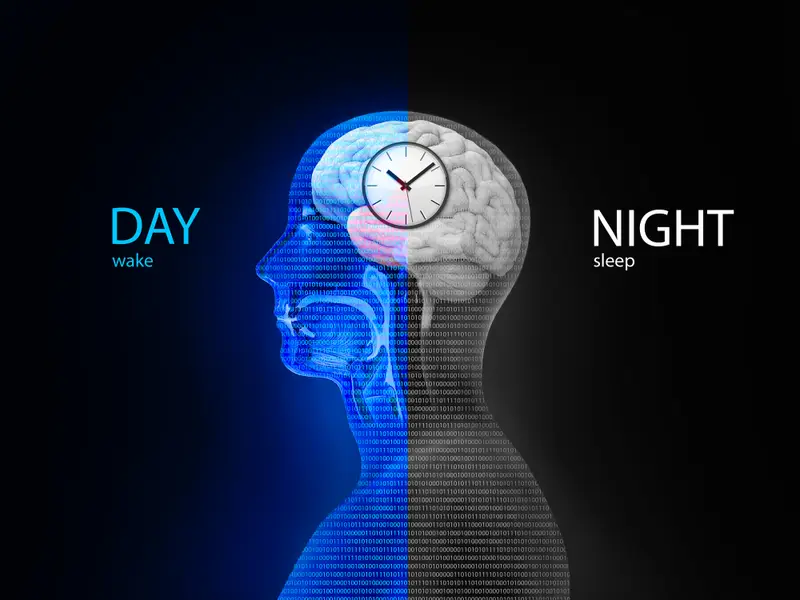
Every morning, before you open your eyes, your body has already made a decision. Hormones are rising, brain activity is shifting, temperature is subtly changing, and cells across your body are preparing you to wake. At night, long before sleep arrives, another decision begins unfolding. Alertness fades, thoughts slow, and the body starts releasing signals that say it is time to rest. These invisible transitions are not random. They are guided by a powerful internal system known as the circadian rhythm, your body’s biological clock.
The circadian rhythm is not just about sleep. It shapes mood, attention, memory, emotional resilience, and mental health itself. When it functions well, life feels more balanced, emotions more stable, and thoughts clearer. When it is disrupted, the effects can ripple through the mind, contributing to anxiety, depression, burnout, and cognitive fog. Understanding the circadian rhythm is therefore not just a matter of biology, but a deeply human concern tied to how we feel, think, and live.
What the Circadian Rhythm Really Is
The circadian rhythm is an internal timing system that follows a cycle of approximately twenty-four hours. The word “circadian” comes from Latin roots meaning “about a day,” and that is exactly what this rhythm is designed to track. It helps the body anticipate daily changes in the environment, especially the cycle of light and darkness caused by the Earth’s rotation.
At the core of this system is a small region in the brain called the suprachiasmatic nucleus, located in the hypothalamus. Though tiny, this cluster of neurons acts as the master clock, coordinating timing signals throughout the body. Almost every organ, tissue, and even individual cells have their own clocks, but they rely on this central pacemaker to stay synchronized.
This clock does not simply react to the world. It predicts it. Long before dawn, it prepares the body for waking. Long before bedtime, it initiates the processes that lead to sleep. This predictive nature is essential for efficiency, allowing the brain and body to work in harmony with the day-night cycle rather than constantly playing catch-up.
Light: The Primary Conductor of the Body Clock
Light is the most powerful signal influencing the circadian rhythm. Specialized cells in the retina detect light and send direct signals to the brain’s master clock. Morning light, especially blue-rich daylight, tells the clock that a new day has begun. Darkness, or the absence of light, signals that night has arrived.
This relationship between light and the circadian rhythm is deeply ancient. Long before artificial lighting existed, human biology evolved under the predictable rhythm of sunrise and sunset. Our nervous system learned to associate light with alertness and darkness with rest. Even today, despite living in a world filled with screens and electric bulbs, our brains still respond to light as if it were the sun itself.
When light exposure follows a natural pattern, the circadian rhythm stays aligned. When light arrives at unusual times, especially at night, the clock becomes confused. This confusion does not stay confined to sleep; it affects emotional regulation, stress hormones, and mental clarity.
The Hormonal Symphony of the Circadian Rhythm
One of the most important ways the circadian rhythm influences mental health is through hormones. Hormones act as chemical messengers, shaping mood, energy, and emotional balance. The timing of their release is just as important as their quantity.
Cortisol, often called the stress hormone, follows a daily rhythm. It naturally rises in the early morning, helping you wake up, focus, and meet the demands of the day. When this rhythm is healthy, cortisol gradually declines as evening approaches. When circadian timing is disrupted, cortisol patterns can become erratic, leading to chronic stress, anxiety, and difficulty relaxing.
Melatonin, the hormone most closely associated with sleep, is another key player. It begins to rise in the evening as light fades, signaling to the brain that night has arrived. Melatonin does more than promote sleep; it also has calming effects on the nervous system and supports emotional stability. Suppressing melatonin with late-night light exposure can interfere not only with sleep but with mood regulation as well.
Serotonin and dopamine, neurotransmitters essential for mental health, are also influenced by circadian timing. Their production, release, and receptor sensitivity fluctuate throughout the day. When the clock is aligned, these systems function smoothly. When it is disrupted, emotional balance can suffer.
Circadian Rhythm and the Architecture of Sleep
Sleep is the most visible expression of the circadian rhythm, but it is not the whole story. Sleep depends on the interaction between circadian timing and sleep pressure, the gradual buildup of the need for rest as time awake increases. The circadian rhythm determines when sleep is most restorative and when alertness is most natural.
When the circadian rhythm is aligned, falling asleep feels effortless. The brain transitions smoothly into deeper stages of sleep, allowing memory consolidation, emotional processing, and neural repair to occur. When the rhythm is misaligned, sleep may still happen, but it is often fragmented, shallow, and less restorative.
Poor sleep quality has profound effects on mental health. Emotional regulation weakens, negative thoughts become more persistent, and stress responses intensify. Over time, chronic sleep disruption can increase vulnerability to mood disorders, anxiety disorders, and cognitive decline.
The Circadian Rhythm and Emotional Regulation
Emotions are not constant throughout the day. Anyone who has felt irritable late at night or unusually optimistic in the morning has experienced circadian influence on mood. The brain’s ability to regulate emotions fluctuates with circadian timing.
During periods when the circadian rhythm supports alertness, the prefrontal cortex functions more effectively. This region of the brain plays a crucial role in emotional control, decision-making, and impulse regulation. When circadian alignment is poor, prefrontal control weakens, and emotional reactions become more intense and less regulated.
This is one reason why sleep deprivation and circadian disruption can make minor stressors feel overwhelming. The emotional brain becomes louder while the rational, regulating systems become quieter. Over time, this imbalance can contribute to chronic emotional instability and mental health challenges.
Circadian Rhythm and Depression
The relationship between circadian rhythm and depression is deep and complex. Many people with depression experience disrupted sleep patterns, early morning awakenings, or difficulty falling asleep at night. These are not just symptoms; they are often part of the underlying biology of the condition.
Research shows that circadian rhythms in people with depression are often shifted or weakened. Hormone release may occur at inappropriate times, and the internal clock may struggle to synchronize with the external day-night cycle. This misalignment can worsen mood symptoms and make recovery more difficult.
Depression is also associated with reduced exposure to natural light and irregular daily routines, both of which further disrupt circadian timing. This creates a feedback loop where mood and rhythm influence each other, reinforcing the disorder.
Understanding depression through the lens of circadian biology highlights why regular sleep schedules, morning light exposure, and consistent daily routines can be powerful components of treatment.
Circadian Rhythm and Anxiety
Anxiety is closely tied to the body’s stress systems, which are deeply regulated by circadian timing. When the circadian rhythm is healthy, the body has a predictable pattern of arousal and relaxation. When it is disrupted, the nervous system can remain in a state of heightened alertness even when rest is needed.
Many people with anxiety disorders experience racing thoughts at night, difficulty winding down, or early morning anxiety. These experiences often reflect a mismatch between circadian signals and behavioral patterns. The body may still be releasing alertness signals when the mind is trying to rest.
Chronic circadian disruption can also sensitize the stress response, making the body react more strongly to perceived threats. Over time, this heightened reactivity can sustain anxiety and reduce resilience.
The Impact of Modern Life on the Body Clock
Human biology evolved in a world governed by sunlight, darkness, and regular daily rhythms. Modern life has dramatically altered this environment. Artificial lighting, screens, shift work, irregular schedules, and constant stimulation all place stress on the circadian system.
Exposure to bright light at night, especially from phones and computers, delays the release of melatonin and shifts the circadian clock later. This makes it harder to fall asleep and harder to wake up, creating a cycle of sleep deprivation and circadian misalignment.
Irregular schedules disrupt the clock’s ability to predict daily events. When sleep and wake times vary widely, the circadian rhythm loses stability. This instability can manifest as mood swings, fatigue, and difficulty concentrating.
The mental health consequences of these disruptions are increasingly evident. Rising rates of anxiety, depression, and burnout parallel lifestyles that ignore the needs of the biological clock.
Circadian Rhythm Across the Lifespan
The circadian rhythm is not static; it changes across the lifespan. Infants gradually develop circadian organization, learning to distinguish day from night. Adolescents experience a natural shift toward later sleep and wake times, reflecting changes in circadian timing and hormone release.
In adulthood, the circadian rhythm typically stabilizes, but it remains sensitive to lifestyle factors. In older age, circadian signals often weaken, leading to earlier awakenings, lighter sleep, and increased vulnerability to mood disturbances.
These changes highlight that circadian health is not a one-time achievement but a lifelong process. Supporting the body clock at each stage of life can protect mental well-being and cognitive function.
Circadian Rhythm and Cognitive Performance
Mental health is not only about mood; it also includes attention, memory, and decision-making. The circadian rhythm plays a crucial role in all of these cognitive functions.
Alertness and reaction time follow a daily rhythm, peaking at certain times and declining at others. Memory formation and recall are also influenced by circadian timing, with sleep playing a key role in consolidating learning.
When the circadian rhythm is disrupted, cognitive performance suffers. Concentration becomes harder, mistakes increase, and mental flexibility declines. These cognitive effects can worsen emotional distress, creating a cycle of frustration and self-doubt.
The Social and Emotional Cost of Circadian Misalignment
Circadian disruption does not affect individuals in isolation. It shapes relationships, work performance, and social engagement. Irritability, emotional withdrawal, and reduced empathy are common consequences of chronic sleep and rhythm problems.
When people are out of sync with their internal clocks, they may feel disconnected from others who follow different schedules. This social misalignment can deepen feelings of loneliness and isolation, further impacting mental health.
Understanding circadian rhythm as a social as well as biological phenomenon emphasizes the importance of shared rhythms in families, communities, and workplaces.
Healing the Relationship Between Mind and Time
Restoring circadian alignment is not about rigid control or perfection. It is about rebuilding a respectful relationship with time. The body clock thrives on consistency, natural light, and regular patterns of activity and rest.
Small changes can have profound effects. Morning light exposure strengthens circadian signals. Consistent sleep and wake times reinforce predictability. Evening darkness allows the brain to transition into rest. These changes support not only sleep but emotional balance and mental clarity.
Mental health improves when the nervous system knows what to expect. The circadian rhythm provides that expectation, offering a stable foundation upon which psychological resilience can grow.
Circadian Rhythm and Self-Understanding
Learning about the circadian rhythm can be an act of self-compassion. Many people blame themselves for fatigue, low motivation, or emotional instability without realizing that their biology is struggling against an unsupportive environment.
Understanding that mood and energy fluctuate with circadian timing allows for gentler self-expectations. It reframes struggles not as personal failures but as signals that the body clock needs care.
This perspective encourages a more holistic approach to mental health, one that honors the deep connection between brain, body, and time.
The Circadian Rhythm as a Bridge Between Biology and Meaning
The circadian rhythm is more than a physiological mechanism. It is a reminder that humans are part of a larger natural order. Our minds and emotions are shaped by the same cycles that govern the rising and setting of the sun.
In honoring the body clock, we acknowledge that mental health is not only psychological but biological and environmental. We recognize that well-being emerges from alignment, not constant struggle.
This understanding invites a slower, more intentional way of living, one that respects the rhythms within us as much as the demands around us.
Why the Body Clock Deserves Attention and Respect
The circadian rhythm quietly orchestrates countless processes that sustain mental health. It regulates hormones, emotions, cognition, and sleep with remarkable precision. When supported, it offers stability, clarity, and resilience. When ignored, it can become a source of vulnerability and distress.
In a world that often values productivity over rest and speed over balance, the circadian rhythm stands as a biological truth that cannot be overridden without consequence. Listening to it is not weakness; it is wisdom.
By understanding and respecting the body clock, we take a powerful step toward protecting mental health, not through force or discipline, but through alignment with the rhythms that have guided human life for millennia.