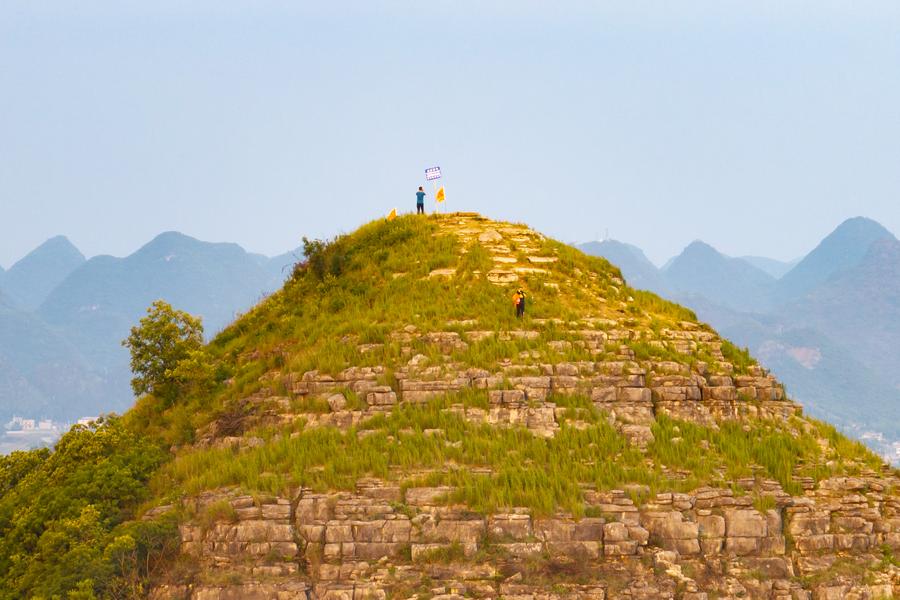
The fertile plains of Guanghan, located in China’s Sichuan Province, have long held secrets that defy the conventional timeline of human history. For decades, the Sanxingdui archaeological site has captivated the world, revealing a lost civilization that flourished between 2800 and 600 BCE. This was the heart of a massive Shang Dynasty city, a place of advanced urban planning, palatial zones, and mysterious sacrificial pits. Within these deep earth pockets, archaeologists have previously pulled forth haunting bronze masks, towering metallic trees, and enigmatic figurines that suggest a culture obsessed with the divine. Yet, a recent discovery spearheaded by Dr. Haichao Li and his team has shifted the focus from the brilliance of bronze to the rusted, dark allure of a metal that literally fell from the heavens.
A Gift from the Stars Found in the Earth
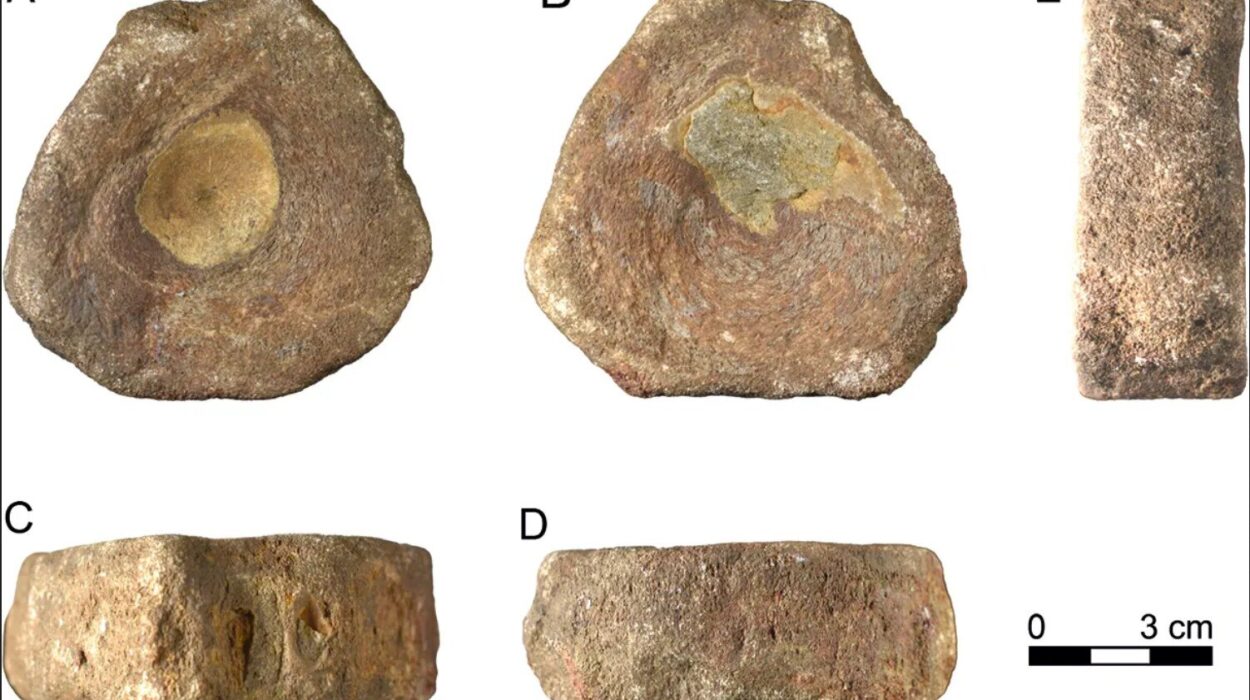
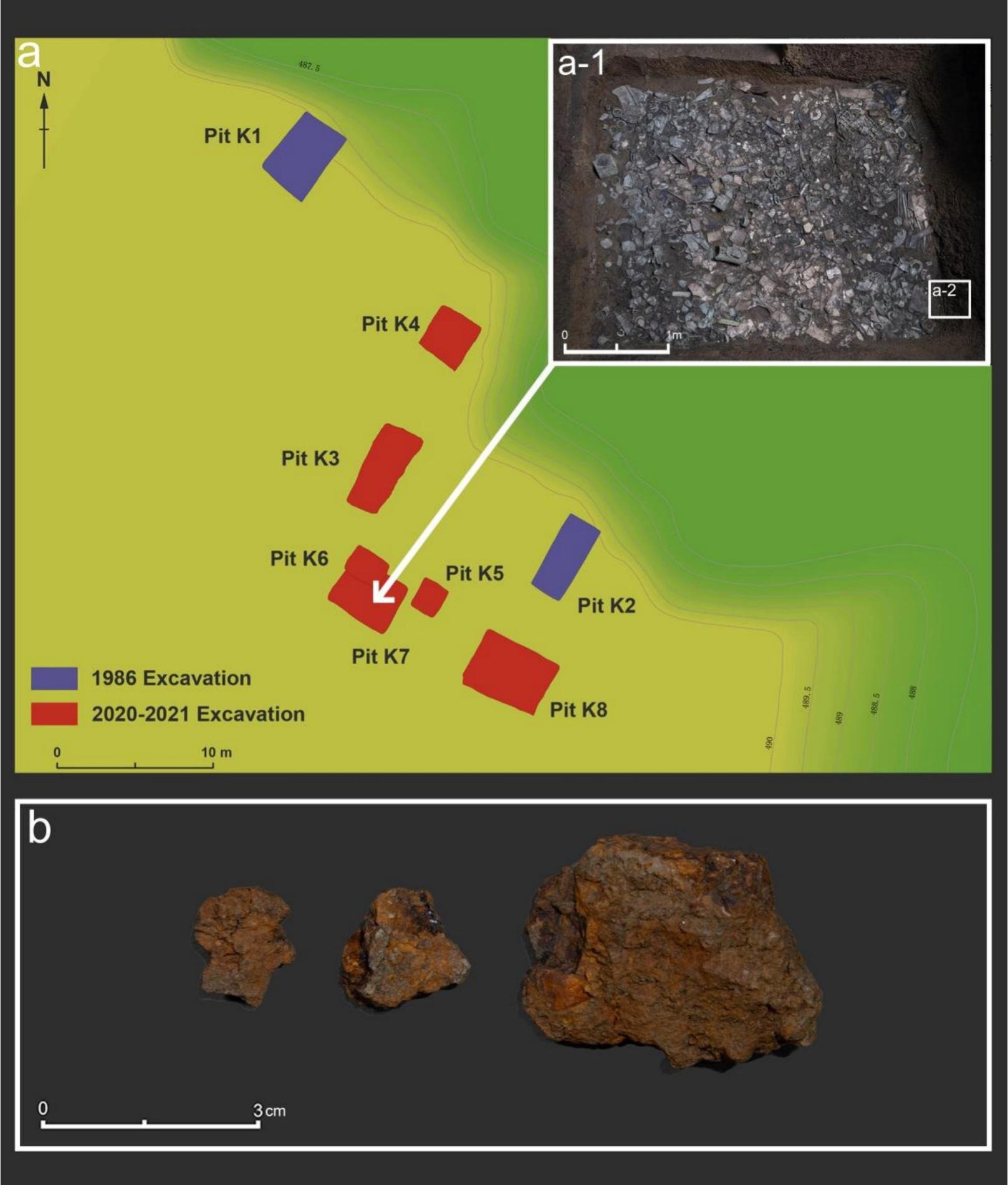
The story of this particular discovery begins in the depths of Pit No. 7, a site that has become a cornerstone of modern Chinese archaeology. Amidst the shattered remains of ritual objects, researchers identified a fragile, fragmented artifact labeled K7QW-TIE-1. At first glance, it appeared to be a simple, axe-like tool or weapon, measuring roughly 20.05 centimeters in length. Broken into three distinct pieces, the object seemed humble compared to the giant bronze statues found nearby. However, its composition told a much more cosmic story. Through the use of scanning electron microscopy–energy dispersive spectroscopy (SEM-EDS), the team realized they were looking at something that should not have existed in such a form during the Late Shang Dynasty.
The artifact was made of iron, but it dated to a period long before iron smelting—the process of extracting metal from ore using intense heat—had become widespread in China. The researchers were puzzled by the metal’s high chemical homogeneity. It was a consistent blend of nickel-iron, a level of purity and structural uniformity that would have been nearly impossible for the smiths of the time to achieve with the technology available to them. This led to a startling conclusion: the metal was not of this earth. It was meteoritic iron, harvested from a fallen star and forged by human hands into a tool of power.
The Mystery of the Celestial Forges
While the use of meteoritic iron has been documented in various ancient cultures, it remains an extreme rarity in China. To date, only 13 meteoritic iron artifacts have been identified across the entire country. Most of these finds are concentrated in the northern regions, such as Beijing, Hebei, and Henan. What makes the Sanxingdui find so significant is its status as the largest meteoritic iron artifact ever found in China. It also represents a departure from the “central” style of metallurgy. In the Central Plains, meteoritic iron was typically used as small inserts or blades within bimetallic weapons, where the handle or base was made of bronze. These were status symbols, often buried with the elite.
The Sanxingdui artifact, however, is monometallic. Along with a much older knife found in Xinjiang dating back to 3000 BCE, this axe stands as a rare example of an object crafted entirely from a meteorite. This suggests that the metallurgical practices in southwestern China were distinct and perhaps more experimental than those of their northern neighbors. Dr. Zishu Yang, a co-author of the study, notes that while they know the metal is celestial, they cannot yet pinpoint exactly which meteorite fall it originated from. The SEM-EDS results provide a preliminary look, but the precise classification of the space rock remains an unresolved mystery that the team hopes to solve by comparing it to known meteorite impact sites in the region.
Between the Tool and the Temple
In the ancient world, the line between a practical tool and a sacred relic was often blurred. For the people of Sanxingdui, the arrival of a “star-stone” would have been an event of profound spiritual significance. Dr. Yang explains that while early metals were initially scarce and imbued with sacred significance, they eventually became more pragmatic as large-scale production took over. However, because meteoritic iron remained so impossibly rare, it likely never lost its holy aura.
The context of the find is the strongest evidence for its divine status. It was recovered from a sacrificial area, surrounded by objects used exclusively for ceremonial contexts. While it takes the shape of a utilitarian weapon, its purpose was likely not for the battlefield or the woodshop. Instead, its ritual significance almost certainly outweighed its practical use. It was a bridge between the heavens and the earth, a piece of the sky shaped into a symbol of authority or a medium for sacrifice. The fact that the metal was not significantly cold-worked further suggests that the artisans treated the material with a specific type of reverence, perhaps hesitant to over-manipulate a substance that came from the gods.
Why This Heavenly Metal Matters
This research is more than just a study of a rusted blade; it is a vital piece of a missing puzzle in human history. It fills a critical gap in the metallurgical record of southwestern China, proving that ancient civilizations in this region were engaged in sophisticated metalwork far earlier and more independently than previously thought. By identifying the earliest Bronze Age meteoritic iron artifact in the region, scientists are gaining a clearer picture of how humanity transitioned from the Stone Age into the Metal Age—a journey that, it turns out, was guided by the stars.
As excavations continue in Pit No. 7, the goal is to recontextualize this axe within the broader history of Sanxingdui. Every new analysis brings us closer to understanding how these ancient people viewed their universe. The discovery of the K7QW-TIE-1 artifact reminds us that our ancestors were not just looking at the ground to survive; they were looking at the sky, waiting for the heavens to provide the tools they needed to define their civilization. Future research using advanced analytical techniques promises to reveal even more about the origin of this celestial metal, ensuring that the legacy of the Sanxingdui star-fall continues to illuminate the history of ancient China.
Study Details
Haichao Li et al, The earliest meteoritic iron artefact of the Chinese Bronze Age discovered at Sanxingdui, Southwest China, Archaeological Research in Asia (2026). DOI: 10.1016/j.ara.2026.100692