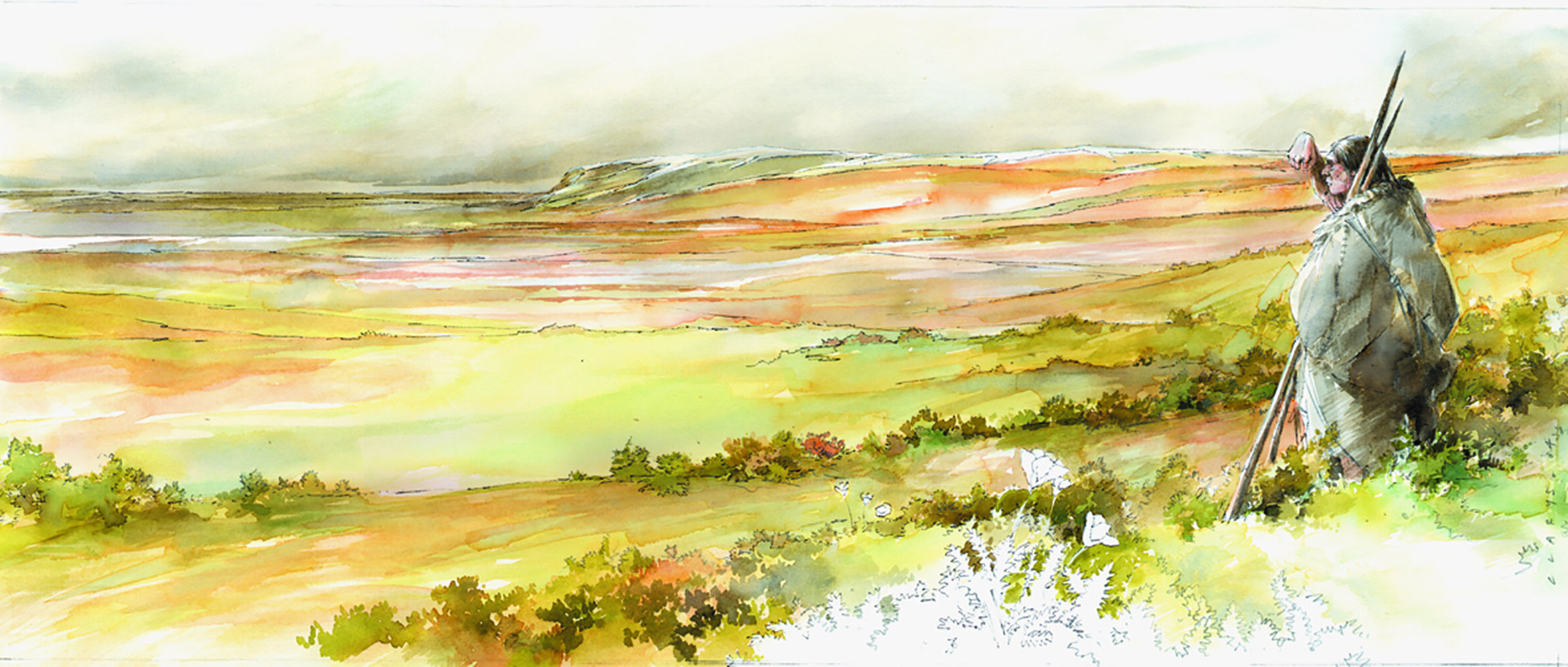
For hundreds of thousands of years, the rugged landscapes of Europe belonged to a resilient, thick-boned relative of humanity: the Neanderthals. They were the masters of the Ice Age, weathering frozen tundras and shifting forests with a tenacity that allowed them to inhabit the continent continuously from 400,000 to 40,000 years ago. Yet, for all their long-term success, their final chapters remained shrouded in mystery. We knew they vanished, replaced by our own ancestors, Homo sapiens, but the biological story of their decline was written in fragments of bone and dust.
Now, a sweeping international study led by Professor Cosimo Posth at the University of Tübingen has pulled back the curtain on the dramatic genetic upheaval that preceded their end. By peering into the very building blocks of life, researchers have discovered that the Neanderthals we imagine as a vast, diverse people were, in their final millennia, the survivors of a near-total collapse. Their history was not a steady line, but a story of retreat, a narrow escape from the cold, and a final, rapid decline into a genetic dead end.
The Fortress in the Frozen South
The story of the “Late Neanderthals”—those living between 60,000 and 40,000 years ago—actually begins much earlier, during a period of catastrophic environmental change. Around 75,000 years ago, the grip of the Ice Age tightened. Harsh climatic conditions began to scour the European continent, making much of their traditional territory uninhabitable.
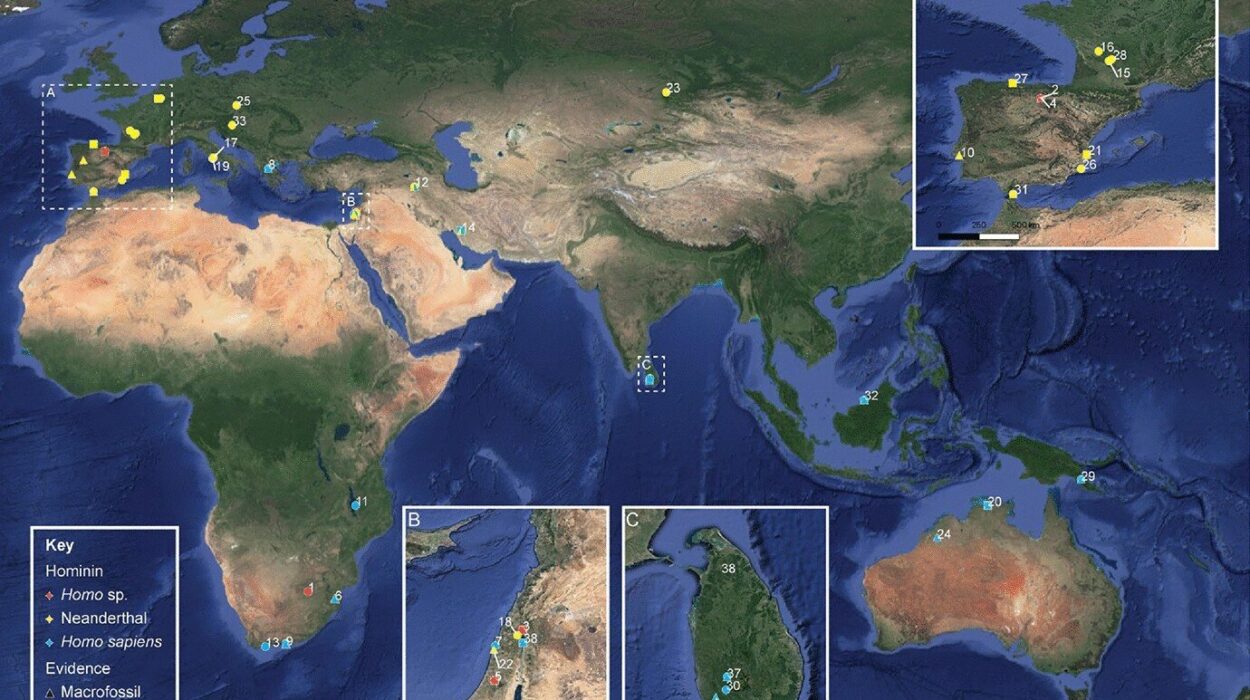
As the ice expanded, the once-widespread and genetically diverse populations of Neanderthals began to flicker out. Archaeological evidence pulled from the ROAD database (The Role of Culture in Early Expansions of Humans) shows a haunting trend: the number of inhabited sites began to dwindle across the map. The Neanderthals were being pushed to the brink.
However, a small, hardy group found a way to endure. The research team identified a climate refuge in what is now southwestern France. In this localized pocket of the world, a specific lineage of Neanderthals managed to survive the worst of the deep freeze. They were a biological “bottleneck,” a tiny remnant of a once-vast population.
When the climate eventually allowed for movement again, around 65,000 years ago, the descendants of these few survivors began to reclaim the continent. They spread from the Iberian Peninsula all the way to the Caucasus. But because they all hailed from that one tiny group in France, they carried the same limited genetic blueprint with them. The diversity that had defined their ancestors for hundreds of millennia was gone, replaced by a single, uniform lineage.
Whispers from the Mitochondrial Ghost
To reconstruct this ancient migration, the scientists turned to a specialized form of evidence: mitochondrial DNA. Unlike the DNA found in a cell’s nucleus, which provides the full blueprint of a person, mitochondrial DNA is found in the mitochondria—the tiny “power plants” of the cell.
Charoula Fotiadou, the study’s first author, explains that while this DNA is less detailed than the full genome, it is a hardy traveler through time. It survives longer in ancient remains and is easier for scientists to extract from the teeth and bones found in the dark, damp silence of caves and rockshelters.
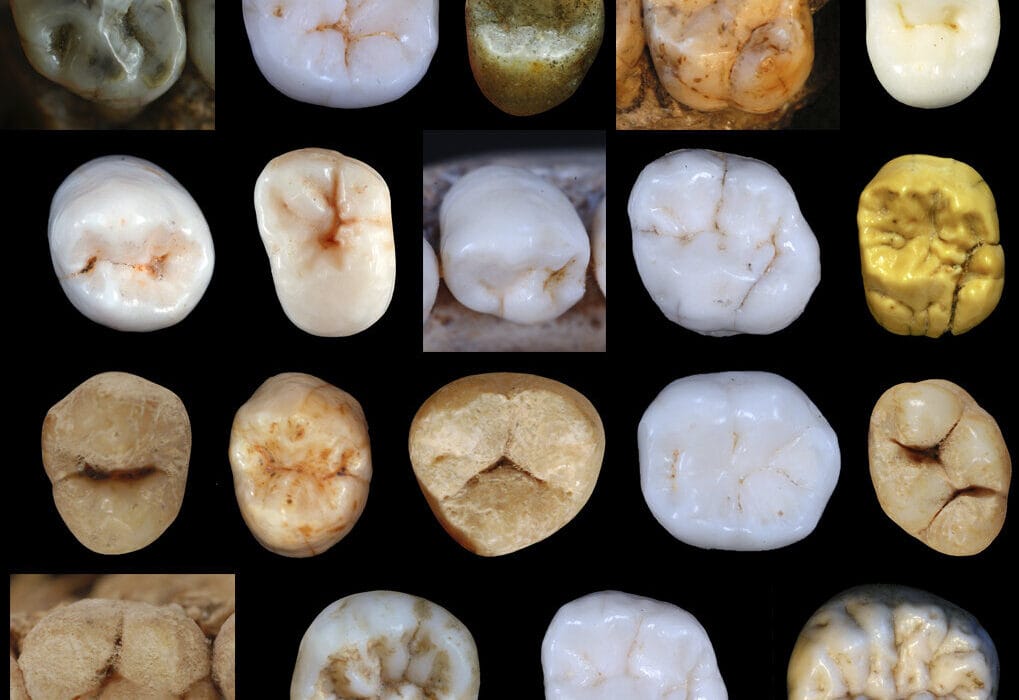
The team successfully sequenced the mitochondrial DNA of ten rare new individuals recovered from six different archaeological sites spanning Belgium, France, Germany, and Serbia. When they compared these new samples to 49 previously published genetic sequences, the pattern became undeniable. Despite being separated by thousands of miles, the Late Neanderthals were almost identical “of the same stock.” They were a homogeneous group, a family of distant cousins who shared the same narrow ancestry born in that French refuge.
The Final Threshold of Silence
Having survived the Great Freeze 75,000 years ago, the Neanderthals appeared to be back on the rise. But their genetic homogeneity may have been a ticking clock. Using advanced statistical programs, the researchers calculated whether the genetic changes they observed matched a stable, healthy population. The numbers told a different story.
Around 45,000 years ago, just as Homo sapiens were beginning to make their presence felt, the Neanderthal population suffered a sharp and rapid decline. This wasn’t a slow fade; it was a plummet. By 42,000 years ago, their numbers had reached a minimum. They were isolated, living in small, disconnected groups.
This low genetic diversity may have been their Achilles’ heel. When a species loses its genetic variety, it loses its ability to adapt to new diseases or changing environments. The isolation of these small groups likely accelerated their disappearance. By the time they officially vanished around 40,000 years ago, they were already a shadow of their former selves, weakened by a history of near-extinctions and the loss of the biological “tools” that diversity provides.
Why This Ancient Echo Matters
Understanding the fall of the Neanderthals is about more than just cataloging the dead; it is about understanding the fragile nature of survival. This research highlights how climate shifts can act as a sieve, filtering out diversity and leaving even the most successful species vulnerable.
By combining archaeological data with genetics, Professor Posth and his team have shown that the “Late Neanderthals” were not a failing species by design, but a population that had been through a demographic wringer. Their story serves as a profound reminder of how environmental pressure and genetic isolation can converge to end a lineage that had reigned supreme for hundreds of thousands of years. It provides the “missing link” in our understanding of the evolutionary developments that led to the final silence of our closest ancient relatives, leaving Homo sapiens as the sole survivors of the human story.
Study Details
Charoula M. Fotiadou et al, Archaeogenetic insights into the demographic history of Late Neanderthals, Proceedings of the National Academy of Sciences (2026). DOI: 10.1073/pnas.2520565123