The damp, humid air of the Red River Delta in northern Vietnam holds secrets that have been buried in the earth for four millennia. For years, archaeologists and bioarchaeologists have sifted through the soil of ancient settlements, looking for more than just pottery or tools. They are looking for the story of human suffering and survival etched into the very fabric of our ancestors’ bones. Recently, a team of international researchers, led by Dr. Melandri Vlok from Charles Sturt University, uncovered a biological mystery that upends decades of scientific certainty. Their journey into the past, published in the International Journal of Osteoarchaeology, began at sites like Man Bac, where the skeletal remains of children began to whisper a different version of medical history.
The Silent Testimony of Ancient Teeth
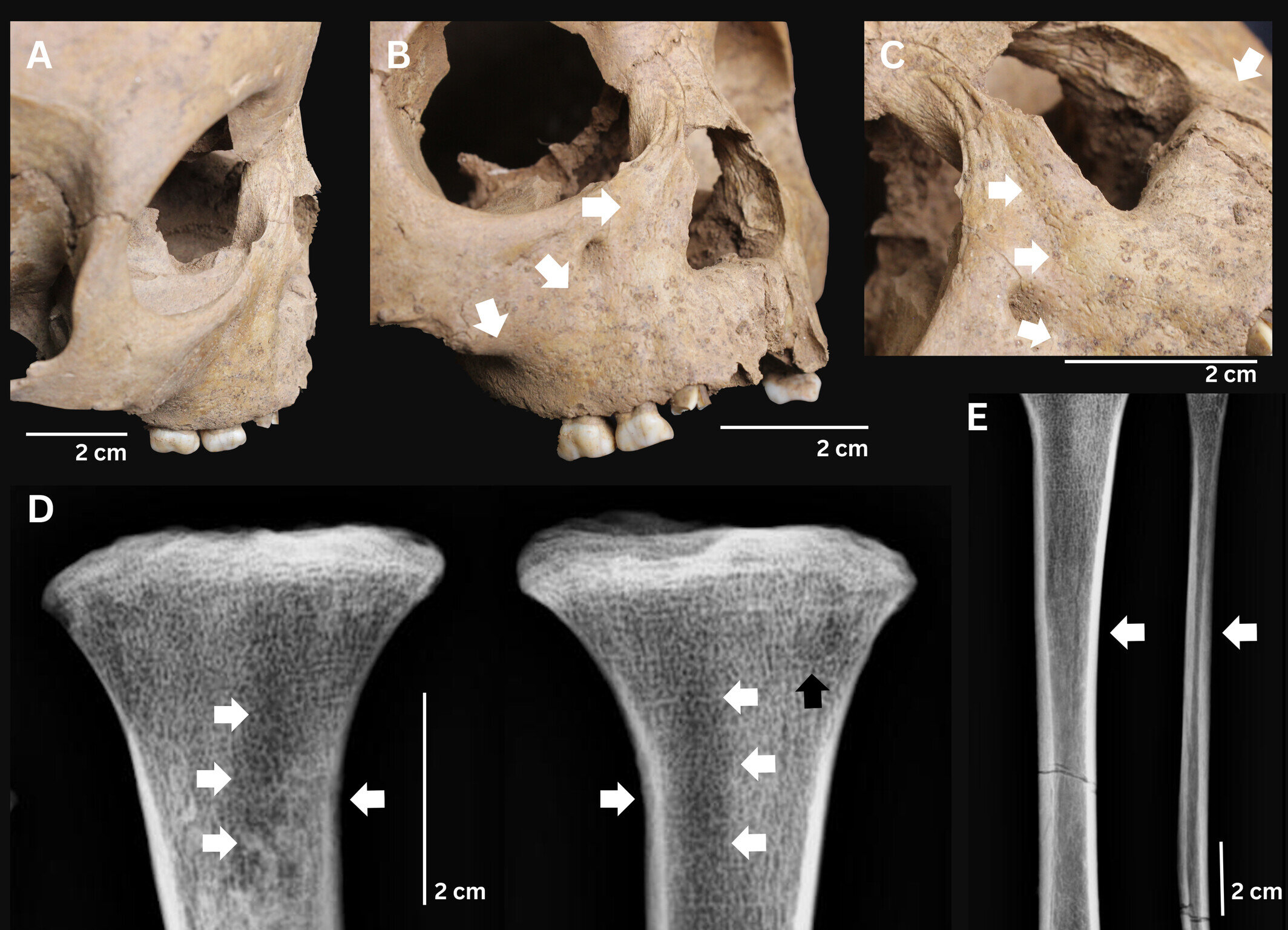
The investigation focused on a massive collection of 309 individuals recovered from 16 archaeological sites across Vietnam, spanning a vast timeline from 10,000 to 1,000 years ago. Among this large population, the researchers narrowed their gaze onto three specific children. These children, who lived between 4,000 and 3,200 years ago, carried a burden that was visible even after death. Their teeth and bones bore the unmistakable hallmarks of congenital treponematosis.
In the world of paleopathology, seeing a child with these specific dental abnormalities and skeletal lesions usually leads to a single, swift diagnosis: venereal syphilis passed from mother to child in the womb. For a long time, the scientific community operated under a rigid assumption. If a skeleton showed signs of an infection acquired before birth, it was considered “smoking gun” evidence that the mother had been infected with the sexually transmitted version of the disease. However, as the team looked closer at the community these children belonged to, the traditional narrative began to crumble.
A Tropical Fever in the Skin
To understand why the researchers grew skeptical of the syphilis diagnosis, one must look at the neighborhood. At the site of Man Bac, the epidemiology—the pattern of how disease spreads—didn’t look like a landscape of a sexually transmitted infection. Instead, the evidence showed unusually high levels of treponemal disease that overwhelmingly affected children and adolescents. This is the classic signature of non-venereal diseases, specifically yaws.
Yaws is a tropical relative of syphilis caused by the bacterium Treponema pallidum. Unlike its venereal cousin, it isn’t whispered about in shadows; it is a disease of the playground and the village square, transmitted through simple skin-to-skin contact. Even today, it affects more than 150,000 people in tropical regions, leading to permanent disability and disfigurement. The researchers realized that if the community was rife with a skin-contact disease like yaws, then the congenital transmission they found in the three children might not be syphilis at all. It might be evidence that other forms of the disease were also capable of leaping from mother to child—a possibility that had been largely ignored in the history books.
Shattering the Columbus Myth
This discovery ripples far beyond the borders of prehistoric Vietnam; it lands right in the middle of one of the most heated debates in the history of medicine. For centuries, historians and scientists have argued over the origins of syphilis. Did it exist in Europe before Christopher Columbus returned from the Americas, or was it a “gift” brought back across the Atlantic? Researchers have long used congenital cases found in ancient graveyards as the primary weapon in this debate, using them to prove or disprove the presence of the venereal strain in different parts of the world.
But Dr. Vlok’s findings suggest that the weapon might be blunt. If non-venereal treponematoses can also be passed to a fetus, then a skeleton with congenital markers cannot be used as a reliable “barcode” for venereal syphilis. The study suggests that many cases previously labeled as syphilis in the archaeological record might actually represent entirely different diseases. Currently, there is still no confirmed biological or genetic evidence of pre-Columbian venereal syphilis anywhere in the world, inside or outside the Americas. Instead, the past seems to have been a complex mosaic of multiple treponemal diseases evolving and shifting alongside human migration.
The Ethical Struggle in the Heat
Uncovering these truths is not as simple as taking a DNA swab. The researchers faced a grueling technical and ethical landscape. In the tropical environments of Southeast Asia, the heat and moisture are the enemies of preservation. Ancient DNA degrades rapidly in these conditions, making it “incredibly difficult” to confirm a diagnosis through genetic sequencing. This leaves scientists relying on the physical shapes of bones and teeth, which, as this study proves, can be deceptive.
Beyond the biology, there is the human element. Ms. Minh Tran, a co-lead author from the University of the Philippines, points out that the field is changing. Destructive sampling—the process of grinding up ancient bone for analysis—is no longer something scientists do without deep reflection. The team advocates for a new direction in research: one that involves genuine partnership with local communities and prioritizes the preservation of human remains before any high-tech lab work begins. This ethical shift ensures that while we seek to understand the diseases of the past, we do so with respect for the people who carried them.
Why This Ancient Fever Matters Today
The story of three children in prehistoric Vietnam is more than just a footnote in an archaeology textbook. It is a revelation about the remarkable adaptability of the Treponema pallidum bacterium. By proving that congenital transmission isn’t exclusive to one strain, the study forces us to view infectious diseases as dynamic, evolving entities that change based on the environment and the way societies interact.
This research matters because the past is currently echoing into the present. Yaws, the non-venereal disease suspected in this study, is re-emerging today, fueled in part by the global climate crisis. As our world warms and tropical zones shift, understanding the complex history of how these pathogens evolved and spread becomes essential. By dismantling old assumptions, Dr. Vlok and her team are providing a more accurate map of our shared medical history. This clarity is vital for modern science to understand how diseases shaped human survival in the past—and how they might continue to shape our future.
Study Details
Melandri Vlok et al, Dental Stigmata and Skeletal Lesions of Congenital Treponematosis in Early Agricultural Vietnam (4000–3500 BP), International Journal of Osteoarchaeology (2026). DOI: 10.1002/oa.70096