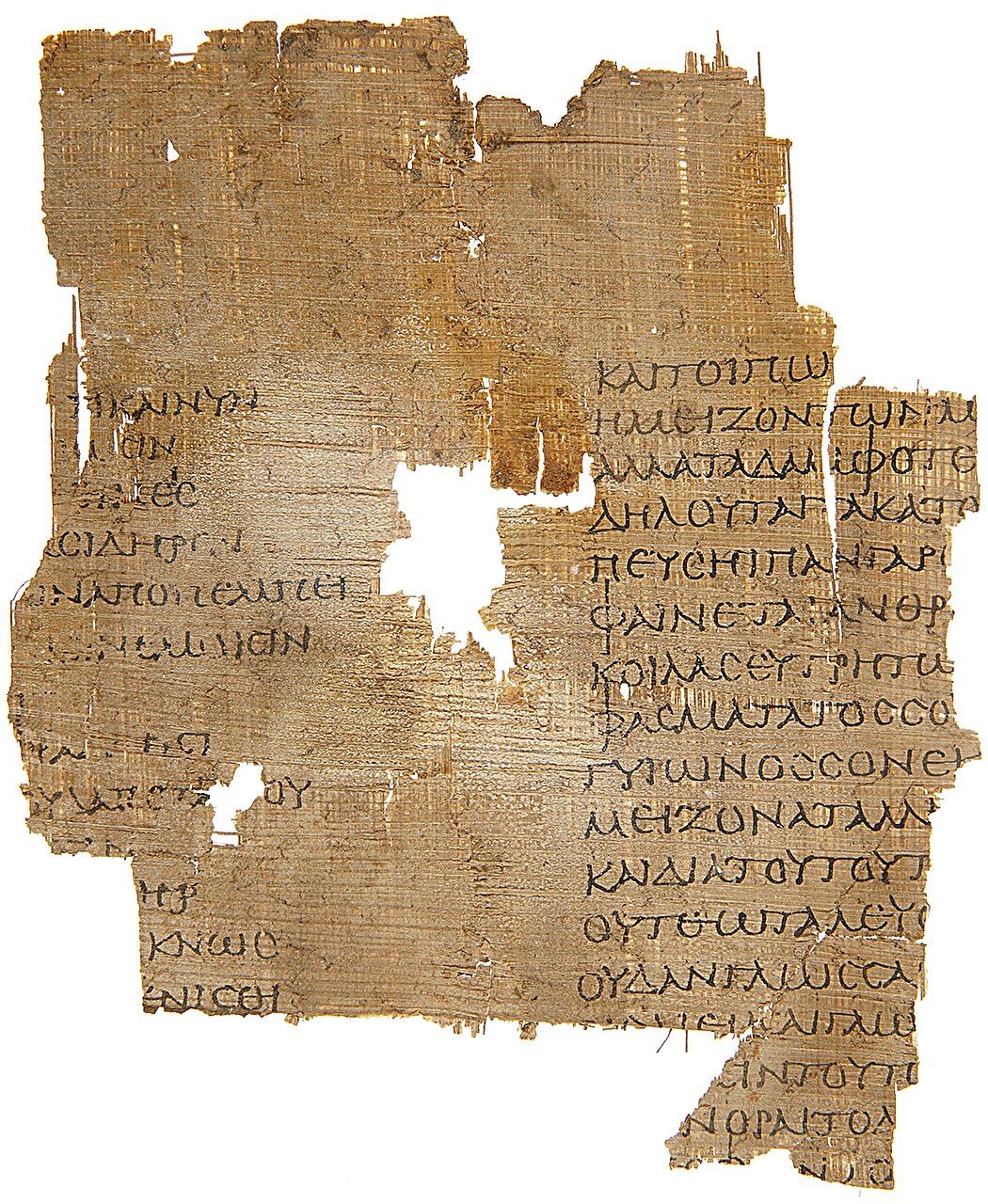
Deep within the quiet archives of the French Institute of Oriental Archaeology in Cairo, a small, fragile scrap of papyrus lay dormant for centuries. To a casual observer, it might have looked like little more than ancient debris, but to Nathan Carlig, a papyrologist from the University of Liège, it represented a bridge across two millennia. This artifact, cataloged as P. Fouad inv. 218, was not just another bureaucratic record of the ancient world; it was a lost voice from the fifth century BCE. As Carlig carefully examined the fibers, he realized he was looking at the original words of Empedocles of Agrigentum, a pre-Socratic philosopher whose direct writings had largely vanished from the face of the earth.
The Ghostly Echoes of a Master
For hundreds of years, our understanding of Empedocles has been like trying to reconstruct a grand symphony by listening to people hum a few bars of the melody. We knew of him only through indirect sources—the summaries, allusions, and fragmentary quotations left behind by other giants of history like Plato, Aristotle, and Plutarch. These later authors often used his ideas to bolster their own arguments, creating a version of his philosophy that was filtered through their own partial or biased perspectives. We were reading a copy of a copy, separated from the source by layers of interpretation and time.
The discovery of this fragment changes the landscape of ancient history because it offers direct access to the philosopher’s own text. It contains 30 previously unpublished verses from his epic poem, the Physica. This is a rare treasure, as it is the only known copy of this specific section of the work. Interestingly, the scroll is not an isolated find; other fragments from the same original scroll are currently preserved in Strasbourg, meaning this discovery in Cairo is a missing piece of a much larger, historical puzzle.
A New Vision of the Physical World
The verses revealed on this fragment delve into the heart of ancient science, specifically Empedocles’s theory of particle effluvia and sensory perceptions. He was obsessed with how we interact with the world around us, particularly the mechanics of vision. The text explores the idea that everything in the universe emits tiny particles, and our senses perceive these “effluvia” to create our reality. By reading his original words, researchers can finally see the raw mechanics of his thought process before it was smoothed over by later scholars.
This newfound clarity has sparked a chain reaction of realizations. By analyzing these thirty lines, experts have found unexpected connections across the timeline of Greek thought. They have identified the probable direct source for passages written by Plutarch in the second century CE, as well as influences on a dialogue by Plato and a text by Theophrastus from the fourth century BCE. It turns out that Empedocles was the invisible foundation upon which much of Western philosophy was built. His “echoes” have even been detected in the satirical plays of the comic poet Aristophanes and the deep musings of the Latin philosopher Lucretius.
Perhaps most strikingly, these verses suggest that Empedocles should be viewed as a vital precursor to the atomist philosophers, such as Democritus of Abdera. He was laying the groundwork for the idea that the world is composed of tiny, discrete building blocks, a concept that would eventually evolve into our modern understanding of chemistry and physics.
The Great Library of the Desert
To understand why a few scraps of paper cause such a stir among historians, the editors of the research, Nathan Carlig, Alain Martin, and Olivier Primavesi, offer a vivid comparison. Imagine a future, centuries from now, where the works of Victor Hugo have all but vanished. Suppose the only evidence that he ever existed were a few excerpts of Les Misérables found in an old school textbook, a stray program from a performance of Hernani, or the lyrics to a musical. In such a world, finding a few original pages from a first edition of Hugo’s work would be a monumental, world-changing event.
This is the “momentous event” that papyrologists are living through today. Since the late 19th century, these researchers have been engaged in a quest that mirrors the great humanists of the Renaissance, who once searched through European libraries to recover lost manuscripts of antiquity. By scouring the papyrus records found in the sands of Egypt, modern scholars are conducting what Carlig describes as a second Renaissance of ancient literature. They are not just finding old paper; they are resurrecting the lost intellect of humanity.
Why This Ancient Voice Still Matters
The publication of these verses in the book L’Empédocle du Caire represents more than just a win for archaeology; it is a fundamental shift in our understanding of the history of Greek philosophy. By removing the “intermediary” of later authors, we can finally situate Empedocles accurately within his own time. We can better define his relationship with the thinkers who came before him and the many who followed in his footsteps.
This research matters because it reminds us that history is not a closed book. Even after 2,000 years, there are still secrets waiting to be found in the archives, capable of changing what we know about the origins of scientific thought. This fragment provides a clearer lens through which to view the pre-Socratic world, proving that even the smallest piece of the past can illuminate the foundations of the present. Through these 30 verses, a philosopher who has been a shadow for two millennia has finally stepped back into the light.
Study Details
Nathan Carlig et al, L’Empédocle du Caire (P.Fouad inv. 218). Introduction, texte, commentaire (2025). hdl.handle.net/2268/329390