High in the Jebel Semmama massif, where the wind moves across the steppes like a traveler with ancient stories to tell, archaeologists are uncovering an industrial world hidden beneath centuries of dust. The terrain is harsh and quiet, marked by sharp temperature swings and meager rainfall stored carefully in deep wells. Yet it was in this unforgiving environment that Roman Africa once thrived on a resource so valuable it connected villages, empires, and cultures: olive oil.
Today, Ca’ Foscari University of Venice stands at the heart of a major international archaeological mission in the Kasserine region of Tunisia. Their work focuses on the remnants of ancient Roman Cillium, perched near the present-day border with Algeria. What they are finding is not just another piece of the Roman frontier, but one of the most important centers of olive oil production ever identified in the Empire.
A Frontier of Trade, Culture, and Ambition
In antiquity, this borderland of proconsular Africa was more than a line on a map. It was a meeting place where Roman officials, veteran colonists, and indigenous Musulamii communities mingled, negotiated, and traded. Tunisia’s rugged landscapes made it the main supplier of oil to Rome, and the Jebel Semmama region offered everything olive trees needed to flourish. Across the 3rd to 6th centuries AD, two large olive farms operated at the heart of this mountain massif, their machinery and architecture revealing a world built on agricultural expertise and economic ambition.
Prof. Luigi Sperti of Ca’ Foscari has been part of this mission since 2025, helping guide an excavation that blends historical curiosity with cutting-edge research. The mission itself is the product of scientific collaboration that began in 2023, initiated by Prof. Samira Sehili of Université La Manouba and Prof. Fabiola Salcedo Garcés of Universidad Complutense de Madrid. Since 2025, Prof. Sperti has served as co-director under the recognition of the Italian Ministry of Foreign Affairs and International Cooperation, strengthening partnerships between Tunisia, Spain, and Italy.
The Lost Estate of Henchir el Begar
One site in particular has captured researchers’ imaginations: Henchir el Begar, identified as the ancient Saltus Beguensis. In the 2nd century AD, it formed the heart of a vast rural estate belonging to the vir clarissimus Lucillius Africanus. The place carried political and cultural weight, preserved through a remarkable Latin inscription reporting a senate consultation from 138 AD. This official text authorized a bimonthly market, hinting at a lively rhythm of social, religious, and economic exchange.
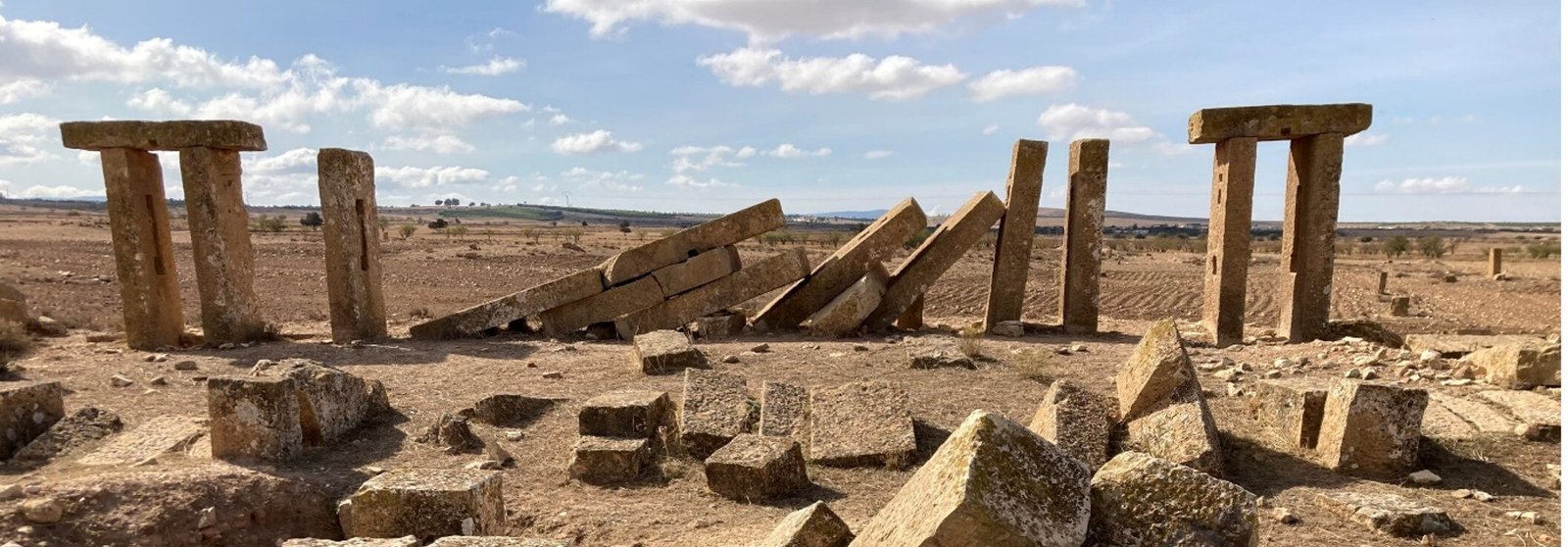
Stretching over roughly 33 hectares, Henchir el Begar is divided into two sectors known as Hr Begar 1 and Hr Begar 2. Each holds its own olive presses, water-collection basin, and multiple cisterns. Hr Begar 1 hosts the jewel of the discovery: the largest Roman oil mill ever found in Tunisia, and the second largest known in the entire Empire. Its monumental torcularium once operated twelve enormous beam presses. Hr Begar 2, nearby, houses a second facility equipped with eight presses of the same type.
The sheer scale suggests an industrial landscape driven by a relentless demand for oil. Stone millstones and milling equipment appear scattered across the surface, pointing to a dual production of cereals and oil. At its height, the site supported a rural vicus where colonists and locals lived together, sustaining a commercial network tied firmly to the broader Mediterranean economy.
Revealing the Hidden City Beneath the Soil
As excavations progress, modern technology is revealing what the naked eye cannot. Ground-penetrating radar surveys have mapped a dense web of residential buildings and roads below the surface, revealing a highly organized rural settlement. What may appear today as an empty expanse of earth once pulsed with coordinated activity—pressing, storing, transporting, and trading the oil that helped fuel Roman life.
Every structure pulled from the soil pushes the story further. Archaeologists are uncovering remains that span from the modern age back to the Byzantine era, including a decorated copper and brass bracelet, a white limestone projectile, and sculptural fragments that highlight centuries of reuse. One particularly evocative find is a portion of a Roman press discovered repurposed inside a Byzantine wall, a material memory of technologies reinvented across generations.
A Window into Everyday Life in Roman Africa
For Prof. Sperti, the discoveries illuminate not only architecture and machinery but the lives that unfolded around them. “This mission offers an unprecedented insight into the agricultural and socio-economic organization of the frontier regions of Roman Africa,” he says. These olive farms were more than simple outposts; they were engines of livelihood, work, and identity.
Olive oil, he explains, was inseparable from Roman daily experience. It flavored meals, softened skin, and fueled lamps across the empire. High-quality oil accompanied athletes and medical practitioners, while lower grades provided light in homes and streets. Understanding how such an essential product was produced, marketed, and transported on a massive scale opens a new window into the past.
Why This Research Matters
The excavation in Kasserine is more than an exploration of ancient ruins. It brings into focus a region that once fed an empire, showing how frontier communities used ingenuity, resilience, and precision to thrive in a demanding environment. It also reveals the roots of economic networks that shaped the Mediterranean world and continue to influence it today through the enduring culture of olive oil.
As Prof. Sperti notes, “Shedding light on the production, marketing, and transport of this product on such a large scale presents an exceptional opportunity to combine research, valorization and economic development, confirming the importance of archaeology as a field of excellence at our university.” By understanding how past societies organized their resources, adapted to their climates, and connected with others through trade, modern researchers gain insights that resonate far beyond the ancient Roman frontier.
This mission in Tunisia shows that archaeology is not simply about reconstructing what was lost. It is about rediscovering the human choices, vulnerabilities, and ambitions that created the world we inherit today.