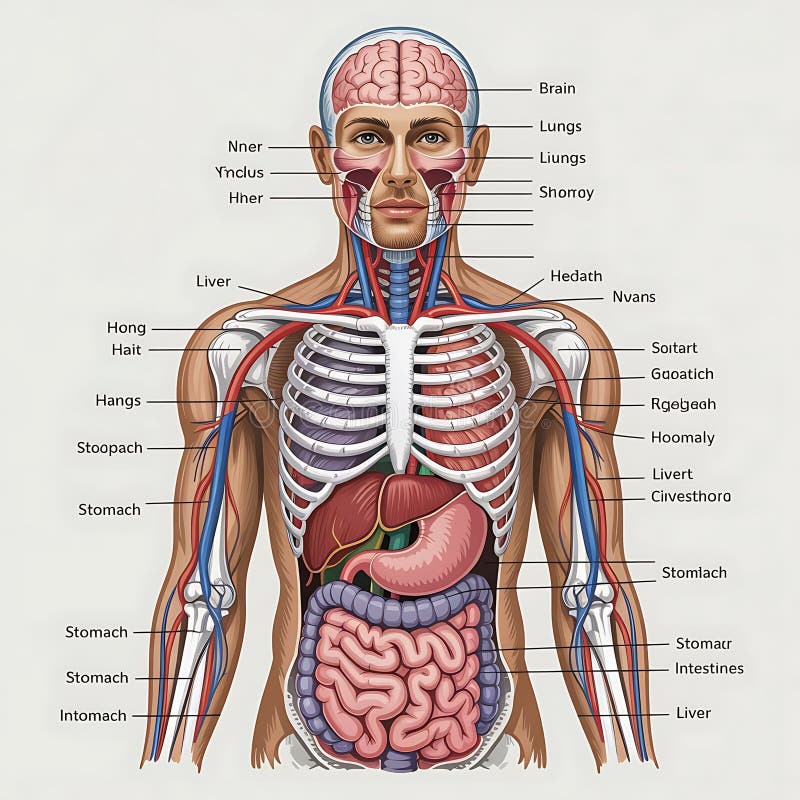
The human body is one of the most extraordinary structures in the known universe. It is a living, breathing system made of trillions of cells, each performing specialized tasks with astonishing precision. Beneath the surface of our skin lies a dynamic world of electrical signals, chemical reactions, microscopic machinery, and biological architecture that scientists have spent centuries trying to understand. Every heartbeat, every breath, every thought is the result of intricate processes working together in perfect harmony.
Human anatomy is not merely a collection of organs and tissues. It is a story of evolution, adaptation, and survival. Over millions of years, the human body has developed systems capable of repairing themselves, responding to threats, and performing feats of endurance and intelligence unmatched by most life forms on Earth. Even with the incredible advances of modern medicine and biology, the body still holds mysteries that continue to surprise researchers.
Many of the most fascinating truths about human anatomy sound almost unbelievable. Some involve microscopic structures performing tasks more complex than advanced machines. Others involve abilities hidden within our bodies that we rarely notice but depend on every second of our lives. From the astonishing strength of bone to the speed of neural communication, the body constantly reminds us that biology can be as impressive as any technological invention.
What follows are fifteen remarkable facts about human anatomy—facts that reveal just how extraordinary the human body truly is.
1. Your Body Contains Enough Blood Vessels to Circle the Earth
If every blood vessel in the human body were laid end to end, the total length would be astonishing—about 100,000 kilometers. That distance is long enough to circle the Earth more than twice. These vessels form a vast transportation network that carries oxygen, nutrients, hormones, and waste products throughout the body.
The circulatory system is powered by the heart, a muscular organ that pumps blood through arteries, veins, and capillaries. Each heartbeat sends blood surging through this immense network, delivering life-sustaining oxygen to every cell. Capillaries, the smallest vessels, are so tiny that red blood cells must pass through them in single file.
Despite their microscopic size, capillaries collectively make up the majority of the body’s blood vessel length. They create an intimate connection between blood and tissues, allowing nutrients to diffuse into cells and waste products to be removed. Without this vast network, the body’s trillions of cells could not survive.
The efficiency of this system is extraordinary. Blood circulates through the entire body in about one minute. Even while resting, the heart pumps roughly five liters of blood every minute, ensuring that every corner of the body remains supplied with oxygen and energy.
2. Your Bones Are Stronger Than Steel
Human bones may appear fragile, but their internal structure gives them remarkable strength. Pound for pound, bone is actually stronger than steel. A cubic inch of bone can bear a load of several tons before breaking.
This strength comes from the complex architecture of bone tissue. Bones are composed of a mineral matrix rich in calcium phosphate, reinforced by a network of collagen fibers. This combination creates a material that is both strong and slightly flexible, preventing fractures under normal stress.
Bone is also a living tissue. Cells within bone constantly break down old material and replace it with new tissue in a process known as remodeling. This allows bones to adapt to physical activity. Athletes often develop denser bones because repeated stress signals the body to strengthen them.
Beyond their strength, bones serve many essential roles. They protect vital organs, produce blood cells in the bone marrow, and store minerals necessary for bodily functions. Far from being static structures, bones are dynamic components of the living body.
3. The Brain Generates Enough Electricity to Power a Small Light Bulb
The human brain is one of the most energy-demanding organs in the body. Although it accounts for only about two percent of body weight, it consumes roughly twenty percent of the body’s energy supply.
Neurons communicate using electrical signals generated by the movement of charged particles across cell membranes. These signals travel along nerve fibers and jump between neurons at specialized junctions called synapses. The collective activity of billions of neurons produces measurable electrical patterns known as brain waves.
The electrical activity in the brain can generate around twenty watts of power, roughly equivalent to the energy needed to illuminate a small light bulb. While this electricity is not harnessed in the way household power is, it reflects the immense level of neural activity occurring every second.
The brain’s electrical signals control everything from movement and sensation to memory and emotion. Every thought you have, every word you read, and every decision you make depends on these tiny bursts of electrical communication.
4. Your Skin Is the Largest Organ in Your Body
The skin is often overlooked, yet it is the largest organ of the human body. In an average adult, the skin covers about two square meters and weighs around four kilograms.
This remarkable organ performs several vital functions. It acts as a protective barrier against bacteria, chemicals, and physical injury. It helps regulate body temperature by controlling blood flow and producing sweat. It also plays a crucial role in sensory perception.
Embedded within the skin are millions of specialized nerve endings that detect pressure, temperature, pain, and vibration. These receptors allow us to interact with the environment and respond quickly to potential danger.
The skin is also constantly renewing itself. The outermost layer, the epidermis, sheds dead cells and replaces them with new ones every few weeks. This ongoing renewal helps maintain the skin’s protective barrier and keeps it resilient against daily wear and tear.
5. Your Heart Beats More Than Three Billion Times in a Lifetime
The heart is an extraordinary muscular pump that begins beating before a person is even born. During a typical lifetime, it will beat more than three billion times without ever taking a break.
Each heartbeat is triggered by a small electrical signal generated within specialized cells of the heart. These signals coordinate the contraction of heart muscle, pushing blood through the circulatory system.
Despite its relentless workload, the heart is remarkably efficient. It adjusts its rate and strength according to the body’s needs. During exercise, the heart beats faster and pumps more blood to supply muscles with oxygen. During rest, it slows down to conserve energy.
The durability of the heart is a testament to the resilience of human anatomy. Few machines built by humans could operate continuously for decades without maintenance, yet the heart performs this task effortlessly.
6. Your Stomach Produces Acid Strong Enough to Dissolve Metal
The human stomach contains a powerful digestive fluid known as gastric acid. This acid is primarily composed of hydrochloric acid, which gives it a pH between 1 and 2—strong enough to dissolve many materials, including certain metals.
This acidity plays a critical role in digestion. It helps break down food, activates digestive enzymes, and destroys harmful bacteria that may enter the body with meals.
Despite its strength, gastric acid does not normally damage the stomach itself. The stomach lining is protected by a thick layer of mucus and rapidly regenerating cells. These defenses prevent the acid from eroding the stomach walls.
If this protective barrier is compromised, however, ulcers can develop. These painful sores occur when stomach acid begins to damage the underlying tissue. Even so, the stomach’s ability to safely contain such powerful acid remains one of the most remarkable features of the digestive system.
7. Your Body Replaces Most of Its Cells Regularly
The human body is constantly renewing itself. Many cells live only a short time before being replaced by new ones. Skin cells, for example, are replaced approximately every few weeks.
Red blood cells survive for about four months before the body removes and replaces them. Cells lining the digestive tract are replaced even more quickly, often within a few days.
This process of cellular turnover helps maintain healthy tissues and repair damage. Stem cells play a crucial role in generating new cells that replace old or injured ones.
Although not every cell in the body is replaced frequently—neurons in the brain can last a lifetime—the overall effect is that much of the body gradually renews itself over time. In a sense, the body you have today is not exactly the same as the one you had years ago.
8. The Human Brain Contains About 86 Billion Neurons
The human brain is a network of staggering complexity. It contains roughly 86 billion neurons, each capable of forming thousands of connections with other neurons.
These connections, called synapses, create an intricate communication network responsible for thought, memory, sensation, and movement. The total number of synaptic connections in the brain may exceed 100 trillion.
This immense connectivity allows the brain to process enormous amounts of information simultaneously. It enables humans to learn languages, create art, solve mathematical problems, and imagine entirely new worlds.
Despite decades of research, scientists are still uncovering how this network produces consciousness and intelligence. The brain remains one of the most fascinating and mysterious structures in biology.
9. Your Nose Can Detect Trillions of Different Smells
For many years scientists believed the human nose could detect around 10,000 odors. Modern research has revealed that this estimate was dramatically too low.
In reality, the human olfactory system can distinguish trillions of different scents. This ability arises from specialized receptors located in the upper region of the nasal cavity.
Each receptor responds to certain molecular shapes present in airborne chemicals. The brain then interprets the pattern of receptor activity as a specific smell.
This remarkable sensitivity helps humans detect food, recognize danger such as smoke or spoiled food, and experience the rich world of fragrances that shape memory and emotion.
10. Your Eyes Can Distinguish Millions of Colors
The human eye is a sophisticated optical instrument capable of detecting an incredible range of colors. Under ideal conditions, the average human eye can distinguish several million different shades.
This ability comes from three types of cone cells located in the retina. Each type is sensitive to a different range of wavelengths corresponding roughly to red, green, and blue light.
The brain combines signals from these cones to produce the vast spectrum of colors we perceive. This process allows us to appreciate subtle differences in hues, from the delicate shades of a sunset to the complex colors of a forest landscape.
Color perception also plays important roles in recognizing objects, interpreting visual signals, and navigating the environment.
11. Your Liver Can Regenerate Itself
The liver is one of the most resilient organs in the human body. It possesses a remarkable ability to regenerate lost tissue. Even if a large portion of the liver is removed or damaged, the remaining tissue can grow and restore the organ to its original size.
This regenerative capacity is unique among major organs. Liver cells can divide rapidly in response to injury, replacing lost tissue and restoring normal function.
Because of this ability, surgeons can sometimes remove part of a diseased liver while leaving enough tissue for regeneration. In some cases, a portion of a healthy liver can even be transplanted into another person.
Despite its resilience, the liver still requires protection from toxins, excessive alcohol, and disease. When damage becomes severe or repeated, regeneration may no longer be sufficient to restore health.
12. Your Body Contains Trillions of Microorganisms
The human body is home not only to human cells but also to vast communities of microorganisms collectively known as the microbiome.
These bacteria, viruses, and fungi live on the skin, in the mouth, and especially in the digestive system. In fact, microbial cells in the body may number in the trillions.
Far from being harmful, many of these microorganisms perform essential functions. They help digest certain foods, produce vitamins, and support the immune system.
Scientists are discovering that the microbiome influences many aspects of health, including metabolism, immunity, and even mood. The human body is therefore not just a single organism but a complex ecosystem.
13. Your Muscles Work in Coordinated Networks
The human body contains more than 600 muscles. These muscles rarely work alone. Instead, they operate in coordinated groups that produce movement with remarkable precision.
When you lift an arm, walk across a room, or smile, multiple muscles contract and relax in carefully timed sequences. This coordination is controlled by the nervous system, which sends signals from the brain and spinal cord to individual muscle fibers.
Muscles also vary widely in function. Some produce powerful movements, such as those in the legs, while others perform delicate tasks like controlling eye movements.
Even when you are resting, muscles continue to work. The diaphragm contracts with every breath, and the heart muscle beats continuously to circulate blood.
14. Your Body Produces Its Own Natural Painkillers
The human body has an internal system for reducing pain. During moments of stress or injury, the brain releases chemicals known as endorphins.
Endorphins bind to receptors in the nervous system and reduce the perception of pain. They can also produce feelings of well-being or even mild euphoria.
This natural pain-relief system likely evolved to help humans and other animals continue functioning during dangerous situations. For example, someone injured during an emergency might temporarily feel less pain while escaping danger.
Endorphins are also released during exercise, laughter, and certain enjoyable activities, contributing to the sense of pleasure and satisfaction associated with them.
15. The Human Body Emits Light—But It Is Invisible
Perhaps one of the most astonishing discoveries about human anatomy is that the body actually emits small amounts of light. This phenomenon is known as ultraweak photon emission.
The light is produced during biochemical reactions within cells, particularly those involving energy metabolism. These reactions release tiny bursts of photons as byproducts.
The intensity of this light is extremely faint—about a thousand times weaker than what the human eye can detect. Only highly sensitive instruments can measure it.
Although invisible to us, this faint glow is a reminder that the human body is not just a collection of tissues but a dynamic system of chemical reactions continuously producing energy and light.
The Endless Wonder of Human Anatomy
The human body is more than a biological machine. It is a masterpiece of natural engineering shaped by millions of years of evolution. Every system—from the beating heart to the firing neurons of the brain—works together to sustain life in ways that are both intricate and beautiful.
The facts explored here represent only a small glimpse into the astonishing complexity of human anatomy. With every scientific discovery, researchers uncover new layers of understanding about how the body functions, heals, adapts, and survives.
Perhaps the most remarkable aspect of all is that this incredible biological universe exists within each of us. Every breath, every heartbeat, and every thought reflects the silent cooperation of countless cells and systems working together. The more we learn about the human body, the more we realize that its true wonder lies not only in its complexity but in its ability to sustain the miracle of life itself.