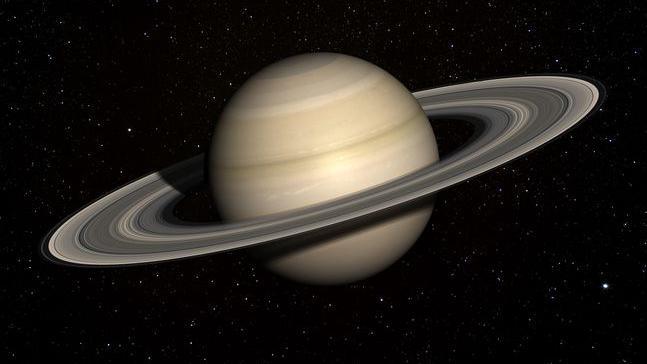
Among all the planets orbiting our Sun, few inspire as much fascination as Saturn. Suspended in the darkness of space, adorned with its magnificent rings, Saturn looks like something crafted by imagination rather than nature. Even through small telescopes, its beauty is unmistakable. The rings stretch outward like cosmic jewelry, transforming an ordinary gas giant into one of the most iconic objects in astronomy.
But Saturn’s beauty is only the beginning of its story.
Beneath those rings lies a world filled with astonishing mysteries. It is a planet of colossal storms, strange atmospheric chemistry, unusual moons, and physical properties that challenge intuition. Despite centuries of observation, Saturn continues to surprise scientists with new discoveries.
Many people know Saturn primarily for its rings, but the planet hides far more extraordinary secrets. Some of them reshape how we understand planets, while others reveal strange phenomena that seem almost impossible at first glance.
The deeper scientists explore Saturn, the more they realize that this distant giant is one of the most complex and fascinating worlds in the solar system.
What follows are ten remarkable facts about Saturn—each one revealing a new layer of wonder about this extraordinary planet.
1. Saturn Is So Light It Could Float in Water
One of the most astonishing facts about Saturn is its incredibly low density.
Density measures how much mass is packed into a given volume. Saturn is enormous—its diameter is about nine times larger than Earth’s—but much of the planet is made of light gases, primarily hydrogen and helium. Because of this composition, Saturn has a very low average density.
In fact, Saturn is the only planet in the solar system whose average density is lower than that of water.
If a hypothetical ocean large enough existed, Saturn could theoretically float on it.
Of course, such an ocean could never exist in reality. A body of water large enough to hold a planet would collapse under its own gravity and form a spherical object of its own. Nevertheless, the comparison highlights just how light Saturn is compared with other planets.
Despite its enormous size, Saturn is not especially heavy for a gas giant. Much of its structure consists of compressed gases rather than solid materials.
This strange characteristic makes Saturn a fascinating example of how different planetary structures can be across the solar system.
2. Saturn’s Rings Are Surprisingly Thin
When people imagine Saturn’s rings, they often picture massive thick structures surrounding the planet.
In reality, the rings are astonishingly thin.
While the rings stretch outward for more than 280,000 kilometers, their vertical thickness in many regions is only around tens of meters to about a kilometer. Compared to their enormous width, they are almost paper-thin.
To visualize this, imagine a gigantic disk wider than Earth but thinner than a mountain range.
The rings are composed primarily of water ice particles, along with smaller amounts of rock and dust. These particles range in size from tiny grains similar to sand all the way to chunks as large as houses.
Despite their thinness, the rings contain an immense number of particles. They move in orbit around Saturn, following the laws of gravity and orbital mechanics.
Because particles closer to the planet orbit faster than those farther away, the rings behave like a constantly shifting system of icy debris. Collisions between particles help maintain the rings’ flat structure.
Seen from far away, the rings look smooth and continuous. Up close, however, they resemble a vast swarm of orbiting ice fragments.
3. Saturn Has a Giant Hexagon at Its North Pole
One of the most bizarre atmospheric phenomena in the solar system exists at Saturn’s north pole: a gigantic hexagon-shaped storm.
This feature was first observed by the spacecraft Voyager 1 during its flyby of Saturn in 1980. Later observations by the spacecraft Cassini–Huygens revealed the structure in remarkable detail.
The hexagon is a massive jet stream forming a six-sided pattern around the pole. Each side of the hexagon is longer than the diameter of Earth.
Unlike hurricanes on Earth, which change shape frequently, Saturn’s hexagon has remained stable for decades. Its edges appear remarkably sharp and geometric, giving it an almost artificial appearance.
Scientists believe the hexagon is created by powerful atmospheric winds interacting in a way that forms standing wave patterns in the atmosphere.
At the center of the hexagon lies a massive polar vortex—essentially a gigantic storm system swirling above the pole.
The exact reason the storm forms a hexagonal shape rather than a circle remains one of the most intriguing mysteries in planetary science.
4. Saturn Experiences Powerful Planet-Wide Storms
Saturn’s atmosphere is far from calm.
The planet periodically experiences enormous storms that can engulf vast portions of its atmosphere. Some of these storms grow so large that they wrap entirely around the planet.
One of the most dramatic examples occurred in 2010 when a massive storm erupted in Saturn’s northern hemisphere. The storm eventually stretched across the entire circumference of the planet.
These storms are driven by the planet’s deep atmospheric dynamics. Saturn’s atmosphere contains layers of hydrogen, helium, ammonia clouds, and other compounds. Energy rising from the planet’s interior can trigger violent weather systems.
Lightning within Saturn’s storms can be thousands of times more powerful than lightning on Earth.
These storms may last for months or even years before dissipating.
Saturn’s turbulent atmosphere reminds scientists that gas giants are not quiet worlds but dynamic systems shaped by powerful internal forces.
5. A Day on Saturn Is Incredibly Short
Although Saturn is enormous, it rotates very quickly.
A single day on Saturn lasts only about 10 and a half hours. This means the entire massive planet completes one rotation in less than half an Earth day.
This rapid rotation has dramatic effects on Saturn’s shape.
Because the planet spins so quickly, centrifugal force causes the equatorial region to bulge outward. As a result, Saturn is noticeably flattened at its poles and wider around the equator.
The difference between Saturn’s equatorial diameter and polar diameter is enormous—much larger than the corresponding difference on Earth.
This flattening makes Saturn one of the most oblate planets in the solar system.
The fast rotation also contributes to the formation of powerful winds in the atmosphere. Some winds on Saturn reach speeds of more than 1,800 kilometers per hour.
6. Saturn Has More Moons Than Any Other Planet
Saturn is surrounded by an astonishing collection of moons.
Over the years, astronomers have discovered more than 140 confirmed moons orbiting the planet. This makes Saturn the planet with the largest known number of moons in the solar system.
These moons vary dramatically in size and composition. Some are tiny irregular chunks of rock, while others are large spherical worlds with complex geology.
The most famous of these moons is Titan, which is larger than the planet Mercury and possesses a thick atmosphere.
Another remarkable moon is Enceladus, which ejects enormous geysers of water vapor and ice into space from beneath its icy crust.
These moons interact gravitationally with Saturn’s rings, shaping their structure and creating gaps and waves within the rings.
The diversity of Saturn’s moons has turned the planet into one of the most exciting targets for planetary exploration.
7. Titan Has Lakes and Rivers—But Not of Water
Among Saturn’s many moons, Titan stands out as one of the most extraordinary worlds in the solar system.
Titan possesses a thick nitrogen-rich atmosphere and a surface covered with rivers, lakes, and seas.
But these liquids are not water.
The temperatures on Titan are extremely cold, around −179 degrees Celsius. At such temperatures, water becomes solid ice as hard as rock.
Instead, Titan’s rivers and lakes are made of liquid methane and ethane—hydrocarbons that behave like water does on Earth under Titan’s conditions.
Rain falls from the sky, filling lakes and carving channels through the surface.
In many ways, Titan resembles a frozen version of Earth with an entirely different type of liquid cycle.
Scientists are deeply interested in Titan because its chemistry may resemble conditions that existed on early Earth before life emerged.
8. Saturn’s Rings May Be Temporary
Although Saturn’s rings appear timeless, they may actually be temporary features.
Evidence suggests that the rings could have formed relatively recently in astronomical terms, possibly within the last few hundred million years.
One possible explanation is that a moon once ventured too close to Saturn and was torn apart by tidal forces. The debris from this destroyed moon could have spread into orbit and formed the rings we see today.
At the same time, the rings are slowly losing material.
Tiny particles from the rings are gradually pulled toward Saturn’s atmosphere by gravitational and electromagnetic interactions. This process is sometimes referred to as ring rain.
Over tens or hundreds of millions of years, the rings may gradually fade away.
If this is true, humanity happens to exist during a rare period in Saturn’s history when its rings are fully visible.
9. Saturn Emits More Heat Than It Receives
One of the strangest aspects of Saturn is that the planet gives off more energy than it receives from the Sun.
This means Saturn is slowly releasing internal heat into space.
The source of this heat lies deep within the planet’s interior. As helium droplets form within Saturn’s hydrogen-rich atmosphere, they slowly sink toward the planet’s core. This process releases gravitational energy as heat.
Scientists sometimes refer to this phenomenon as “helium rain.”
This internal heat helps power Saturn’s atmospheric activity, including its powerful winds and storms.
Even though Saturn is nearly ten times farther from the Sun than Earth, its internal heat keeps the planet’s atmosphere dynamic and energetic.
10. Saturn Is Visible to the Naked Eye
Despite its enormous distance from Earth—over a billion kilometers away—Saturn can be seen without a telescope.
On clear nights, the planet appears as a bright golden star in the sky. Ancient civilizations observed Saturn long before the invention of telescopes.
The Romans named the planet after the agricultural god Saturnus, while earlier cultures also recognized it as a wandering star moving slowly across the heavens.
Because Saturn takes about 29.5 Earth years to orbit the Sun, it moves gradually through the constellations of the zodiac.
Although the rings cannot be seen with the naked eye, even small telescopes reveal their stunning structure.
For many people, the first time they see Saturn’s rings through a telescope is an unforgettable moment. The view feels almost unreal, as if a photograph has suddenly come to life.
The Endless Fascination of Saturn
Saturn is more than just a beautiful planet. It is a world of mysteries that continues to challenge and inspire scientists.
Its delicate rings, bizarre storms, unusual moons, and surprising physical properties reveal how diverse and complex planetary systems can be. Each new mission and observation uncovers additional layers of understanding.
The more humanity learns about Saturn, the more we realize that our solar system is filled with extraordinary worlds.
Saturn reminds us that even familiar objects in the night sky can hold secrets waiting to be discovered. Its golden glow, visible from Earth across the vastness of space, continues to invite curiosity and wonder.
And as long as people look upward and ask questions about the universe, Saturn will remain one of the most captivating destinations in the cosmic story of exploration.