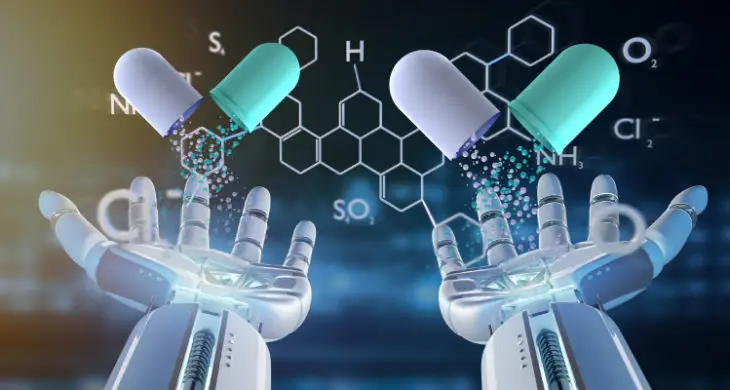
For most of human history, discovering a new medicine was an act of patience, luck, and persistence bordering on obsession. Scientists spent years testing chemicals one by one, guided by intuition, experience, and sometimes sheer hope. Many failed. Some succeeded by accident. A few discoveries changed the course of civilization. Today, something extraordinary is happening in laboratories around the world. Artificial intelligence, once a dream of science fiction, is quietly reshaping how medicines are discovered. It is not replacing human scientists. Instead, it is amplifying human imagination, accelerating insight, and opening doors that were previously locked by time, cost, and complexity.
This transformation is not just technical. It is emotional. Behind every algorithm lies a human story: patients waiting for treatments, families hoping for cures, researchers driven by the belief that suffering can be reduced. AI is becoming a partner in that story, one capable of seeing patterns too vast, too subtle, or too fast for the human mind alone.
The Immense Challenge of Drug Discovery
To understand why AI matters so deeply in medicine discovery, one must first understand the scale of the problem. The human body is staggeringly complex. Diseases are not caused by single failures but by networks of molecular interactions that shift over time. A potential drug must interact with specific biological targets while avoiding countless others. It must be effective, safe, stable, and manufacturable. Even then, it must work not just in cells or animals, but in diverse human populations.
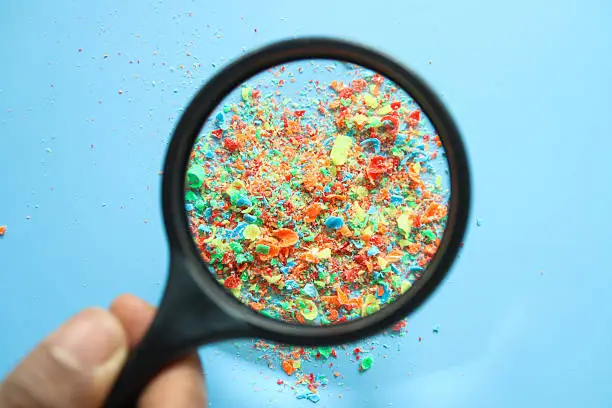
Traditionally, this process takes many years and enormous financial investment. Thousands of candidate molecules are screened to find a handful worth testing further. Most fail along the way. Some fail because they do not work. Others fail because of toxicity discovered late in development. Each failure represents lost time and lost opportunity for patients.
This is where AI enters with transformative promise. By learning from vast amounts of biological and chemical data, AI systems can guide scientists toward better candidates earlier, reducing uncertainty and focusing effort where it matters most.
What Artificial Intelligence Really Means in Medicine
Artificial intelligence in medicine discovery does not mean a single machine “thinking” like a human. It refers to a collection of computational methods that learn patterns from data and make predictions. These methods include machine learning, deep learning, and other statistical approaches designed to handle complexity at scale.
In drug discovery, AI systems are trained on enormous datasets that include chemical structures, biological activity measurements, genetic information, protein structures, clinical outcomes, and scientific literature. By learning relationships within this data, AI can predict how a molecule might behave before it is ever synthesized or tested in a lab.
This ability to predict does not eliminate experimentation. Instead, it makes experimentation smarter. AI helps scientists decide which experiments are worth doing, which hypotheses are most promising, and which paths are unlikely to succeed.
Learning the Language of Molecules
At the heart of medicine discovery lies chemistry. Drugs are molecules, and molecules are arrangements of atoms connected in precise ways. For decades, chemists relied on experience and intuition to design new molecules. AI now brings a new way of “reading” and “writing” chemical language.
Machine learning models can be trained to recognize patterns in molecular structures that correlate with biological activity. They learn which shapes, charges, and functional groups tend to interact with specific proteins. Over time, these models become remarkably skilled at predicting whether a new molecule is likely to bind to a target of interest.
Some AI systems go further, generating entirely new molecular structures that have never existed before. These systems do not randomly assemble atoms. They generate molecules guided by learned rules of chemistry and biology, optimizing for desired properties such as potency, safety, and stability. What once took months of iterative design can now happen in days or even hours.
Understanding Proteins Through AI
Most modern medicines work by interacting with proteins, the molecular machines that carry out biological functions. Understanding protein structure and behavior is therefore essential. Proteins are complex, flexible molecules that fold into intricate three-dimensional shapes. Predicting these shapes from genetic information has been one of biology’s greatest challenges.
AI has made remarkable progress in this area. By learning from known protein structures, AI systems can predict the likely shape of previously uncharacterized proteins with impressive accuracy. This knowledge allows scientists to understand how proteins function and how drugs might interact with them.
Knowing a protein’s structure transforms drug discovery. It allows researchers to design molecules that fit precisely into binding sites, much like a key fitting into a lock. AI-driven protein structure prediction has expanded the range of druggable targets, including proteins once considered too complex or elusive to tackle.
Revealing Hidden Patterns in Biology
Diseases are rarely caused by single genes or proteins acting alone. They emerge from networks of interactions involving genes, proteins, cells, and environmental factors. Traditional analysis struggles to capture this complexity. AI excels at it.
By analyzing large biological datasets, AI can identify patterns that suggest new disease mechanisms. It can reveal connections between genetic variations and disease outcomes, uncover signaling pathways involved in illness, and highlight potential intervention points. These insights can lead to entirely new therapeutic strategies rather than incremental improvements on existing ones.
This ability is especially powerful in complex diseases such as cancer, neurodegenerative disorders, and autoimmune conditions. In these areas, AI helps scientists move beyond surface symptoms to understand underlying biological processes.
Accelerating Early Drug Screening
One of the most time-consuming stages of drug discovery is early screening, where thousands or millions of compounds are tested for biological activity. AI transforms this stage by acting as a virtual screening tool.
Instead of physically testing every compound, scientists can use AI models to predict which compounds are most likely to succeed. These predictions are based on learned relationships between chemical structure and biological response. Only the most promising candidates are then tested experimentally.
This approach saves time, reduces cost, and minimizes wasted effort. More importantly, it allows researchers to explore broader chemical spaces than ever before, increasing the chance of finding truly novel medicines.
Predicting Safety Before It Is Too Late
Many drug candidates fail because of safety issues discovered late in development. Toxicity to the liver, heart, or other organs can end years of work. AI offers a way to anticipate these risks much earlier.
By learning from historical data on toxic compounds, AI models can predict the likelihood that a new molecule will cause specific adverse effects. These predictions guide chemists in modifying structures to reduce risk or abandoning unsafe candidates before significant resources are invested.
This proactive approach not only saves money but also reduces ethical concerns by limiting exposure to harmful compounds in animal and human testing.
AI and Personalized Medicine
No two patients are exactly alike. Genetic differences, lifestyle factors, and environmental exposures all influence how a person responds to medicine. AI is helping scientists embrace this complexity rather than ignore it.
By analyzing genetic and clinical data, AI can identify patient subgroups likely to benefit from specific treatments. This knowledge informs the design of targeted therapies and more efficient clinical trials. Instead of testing drugs on broad populations with mixed responses, researchers can focus on those most likely to respond.
This shift toward precision medicine has profound implications. It increases the chances of success, reduces side effects, and brings medicine closer to the individual rather than the average.
Reinventing Clinical Trials
Clinical trials are essential but costly and slow. Recruiting appropriate participants, monitoring outcomes, and interpreting results are major challenges. AI is beginning to transform this phase as well.
AI systems can analyze medical records to identify suitable trial participants more efficiently. They can monitor patient data in real time, detecting patterns that indicate efficacy or adverse events sooner. They can also help design trials that are more adaptive, adjusting parameters as data accumulates.
These improvements do not compromise scientific rigor. Instead, they enhance it by making trials more responsive and informative, potentially bringing effective treatments to patients faster.
Mining the World’s Scientific Knowledge
Every year, scientists publish millions of research papers. No human can read them all. AI can. Natural language processing systems can analyze vast bodies of scientific literature, extracting relevant information and identifying connections across disciplines.
This capability allows researchers to build on existing knowledge more effectively. AI can highlight overlooked findings, suggest new hypotheses, and prevent duplication of effort. It acts as a tireless research assistant, scanning the global scientific conversation for insights that might otherwise remain hidden.
In medicine discovery, this means faster translation of basic research into therapeutic ideas.
AI as a Creative Partner
There is a common fear that AI will make science mechanical or soulless. In practice, the opposite is happening. AI is becoming a creative partner, freeing scientists from repetitive tasks and allowing them to focus on higher-level thinking.
By handling data-intensive analysis, AI gives researchers more time to ask meaningful questions, design insightful experiments, and interpret results with nuance. The human role becomes more strategic and imaginative, not less.
Some of the most exciting discoveries arise when human intuition and AI-driven insight intersect. Scientists describe moments when AI suggests an unexpected solution that challenges assumptions and opens new directions. These moments are not replacements for human creativity; they are amplifications of it.
Ethical Responsibility in AI-Driven Medicine
With great power comes great responsibility. The use of AI in medicine discovery raises important ethical considerations. Data quality matters deeply. Biased or incomplete data can lead to biased predictions. Transparency is essential so that scientists understand how AI systems reach conclusions.
There is also the question of access. AI-driven medicine discovery has the potential to reduce costs and increase availability of treatments, but only if its benefits are distributed equitably. Ensuring that these technologies serve global health, not just privileged populations, is a moral imperative.
Responsible development requires collaboration between scientists, ethicists, regulators, and society at large. AI must be guided by human values as well as technical excellence.
Challenges and Limitations
Despite its promise, AI is not a miracle cure for drug discovery’s difficulties. Models are only as good as the data they learn from. Biological systems remain profoundly complex and sometimes unpredictable. Experimental validation remains essential.
AI predictions can fail, especially when applied outside the domain of their training data. Overreliance on algorithms without critical human judgment can be dangerous. Successful integration of AI requires deep domain expertise and careful oversight.
Recognizing these limitations is part of scientific maturity. AI is a powerful tool, not an oracle.
Collaboration Across Disciplines
The rise of AI in medicine discovery has fostered unprecedented collaboration. Chemists, biologists, clinicians, computer scientists, and engineers are working together more closely than ever before. This interdisciplinary approach is not optional; it is essential.
Understanding disease biology requires biological insight. Designing algorithms requires computational expertise. Translating discoveries into therapies requires clinical understanding. AI serves as a bridge, but people remain the builders of that bridge.
This collaborative spirit reflects a broader truth about science: the most important problems are solved together.
Stories of Hope Behind the Data
It is easy to focus on algorithms and forget the human lives behind them. Every improvement in medicine discovery represents potential relief for someone suffering. For patients with rare diseases, where traditional drug development is often unprofitable, AI offers new hope by reducing costs and enabling targeted approaches.
Families waiting for treatments do not see machine learning models. They see the possibility of more time, less pain, and better quality of life. Scientists working with AI often describe a renewed sense of purpose, knowing that their work may reach patients faster than ever before.
These human stories give meaning to the technology.
Transforming the Economics of Drug Development
Drug discovery has long been constrained by economics. High costs limit risk-taking and narrow the range of pursued ideas. AI has the potential to change this landscape.
By reducing failure rates and development time, AI can lower overall costs. This opens the door to exploring treatments for neglected diseases and smaller patient populations. It also encourages innovation by making bold ideas more feasible.
Economic transformation is not guaranteed, but the potential is real. Realizing it requires thoughtful integration of AI into existing systems and incentives.
Education and the Next Generation of Scientists
As AI becomes integral to medicine discovery, education must evolve. Future scientists need not only biological and chemical knowledge but also an understanding of data science and machine learning. At the same time, they must develop critical thinking skills to evaluate and guide AI systems.
This educational shift does not diminish traditional expertise. It enriches it. Scientists who can bridge disciplines are uniquely positioned to lead the next era of discovery.
Teaching students to work with AI as a collaborator rather than a black box will shape the future of medicine.
The Future Horizon of AI-Driven Discovery
Looking ahead, the role of AI in medicine discovery will continue to expand. Models will become more accurate, more interpretable, and more integrated with experimental systems. Automation combined with AI may enable continuous cycles of hypothesis generation, testing, and refinement.
As data grows and methods improve, AI may help uncover fundamental principles of biology that remain hidden today. It may reveal patterns that unify seemingly unrelated diseases or suggest entirely new therapeutic paradigms.
The future is not one where machines replace scientists. It is one where human insight and artificial intelligence evolve together.
A New Relationship Between Humanity and Medicine
At its deepest level, the use of AI in discovering new medicines represents a shift in how humanity relates to illness and healing. It reflects a belief that complexity can be understood, that suffering can be addressed more intelligently, and that technology can be guided by compassion.
AI brings speed and scale, but humans bring meaning and purpose. Together, they form a partnership capable of transforming medicine from a slow and uncertain endeavor into a more precise, responsive, and hopeful enterprise.
Conclusion: Intelligence in Service of Life
How AI is helping scientists discover new medicines is not just a story of technology. It is a story of human ambition tempered by humility, of data guided by empathy, of machines learning to assist rather than dominate. It is the story of science reaching for something better.
In laboratories illuminated by screens and hope alike, AI is quietly accelerating the search for cures. It does not eliminate uncertainty, but it reduces blindness. It does not guarantee success, but it increases possibility.
In the end, the greatest achievement of AI in medicine discovery may not be faster algorithms or smarter models. It may be the way it helps humanity listen more carefully to biology, respond more wisely to disease, and move closer to a future where fewer lives are defined by illness and more are shaped by healing.