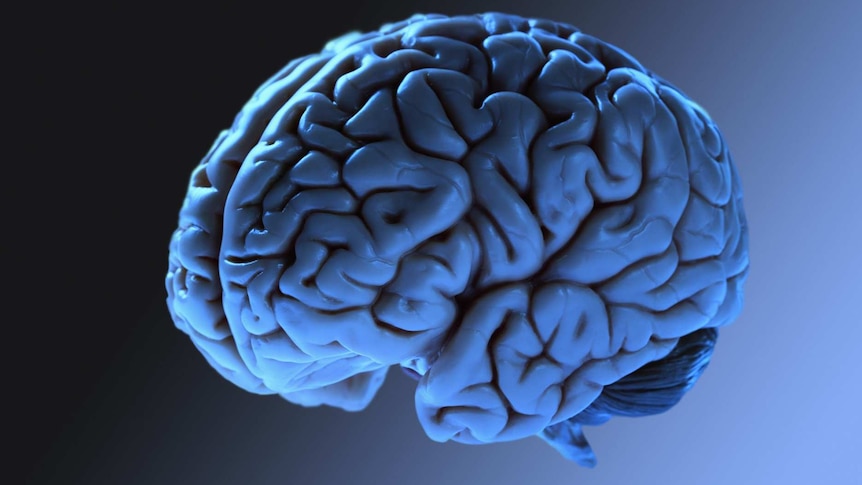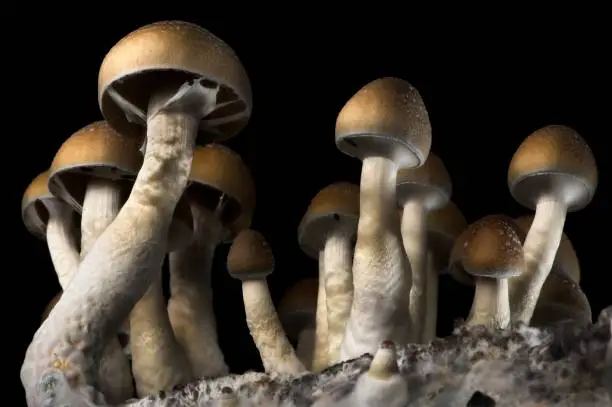
The story starts with a puzzle that has shadowed psychedelic research for years. Psilocybin, the active ingredient in magic mushrooms, has shown remarkable promise in clinical trials, easing symptoms of depression for weeks or even months after just one treatment. Yet a central mystery remained unsolved. How does this compound actually rewire the brain. Where do the new connections form, and why do they matter.
These were the questions driving an international collaboration led by Cornell researchers, who set out not only to watch psilocybin reshape the brain but to trace the exact pathways it alters. Their work, published Dec. 5 in Cell, reveals a sweeping map of neural change far more expansive than expected. In the words of senior author Alex Kwan, Ph.D. ’09, professor of biomedical engineering in Cornell Engineering, the goal was simple but ambitious. “One of the key questions was that, even though we show that new connections are being made, we don’t know where they connect. The goal of this study is to figure out: what exactly are the parts of the circuit that get rewired.”
When Curiosity Meets a Dangerous Ally
To follow psilocybin’s journey inside the brain, the researchers needed a tool capable of moving through neural circuits with purpose and precision. Instead of microscopes or optical tricks, they turned to something far more daring: the rabies virus.
This particular strain, engineered by collaborators at the Allen Institute for Brain Science in Seattle, does what rabies naturally excels at. It hops from one neuron to the next, tracing connections with ruthless efficiency. Kwan likened it to a fleet of mapping vehicles. “With psilocybin, it’s like we’re adding all these roads to the brain, but we don’t know where the roads go,” he said. “Here we use the rabies virus to read out the connectivity in the brain, because these viruses are engineered in nature to transmit between neurons. That’s how they’re so deadly. It jumps a synapse and goes from one neuron to another.”
The team began by injecting a single dose of psilocybin into a mouse’s frontal cortical pyramidal neurons, a region tied closely to thought, mood, and behavior. A day later, they introduced the modified rabies virus, engineered to label each newly contacted neuron with fluorescent proteins. After a week, the mouse brain glowed with the evidence of psilocybin’s path. Then the researchers compared it to a control brain that received only the virus. The differences were striking.
When Negative Loops Begin to Loosen
What emerged from the fluorescent tracings was a clear weakening of recurrent connections inside the cortex. These cortico-cortical feedback loops are often associated with rumination, the mental trap where a person returns again and again to the same distressing thoughts.
“Rumination is one of the main points for depression, where people have this unhealthy focus and they keep dwelling on the same negative thoughts,” Kwan explained. “By reducing some of these feedback loops, our findings are consistent with the interpretation that psilocybin may rewire the brain to break, or at least weaken, that cycle.”
The image is vivid. Psilocybin, long suspected of opening mental space and freeing thought patterns, seems to literally loosen the grip of self-reinforcing negative loops. Instead of thoughts circling endlessly inside the cortex, those circuits soften, and new pathways emerge.
When Sensation Pushes Toward Action
But the brain did not simply grow quieter in the regions associated with internal rumination. It grew louder elsewhere. The sensory areas of the brain showed strengthened wiring to subcortical regions that convert perception into action. This suggests an enhanced sensory-motor link, a shift that aligns closely with what many describe during and after psychedelic experiences: a feeling of being more connected to the external world, more responsive, more engaged.
The study shows that psilocybin is not only dialing down the loops that trap a person in thought. It is simultaneously reinforcing pathways that help the brain move from sensing to doing.
A Whole-Brain Surprise
Even with years of research behind him, Kwan expected something narrower, something local. Perhaps psilocybin would rewire one or two targeted regions. But the data told a different story.
“This is really looking at brain-wide changes,” he said. “That’s a scale that we have not worked at before. A lot of times, we’re focusing on a small part of the neural circuit.”
Instead of isolated edits, psilocybin appeared to reshape the brain’s landscape on a broad scale, altering networks that span sensory, cortical, and subcortical regions. This sweeping effect led the team to an unexpected insight. The amount of neural firing in any given region might determine how that region gets rewired.
To test this idea, the researchers actively perturbed the firing activity of one brain area. The result was astonishing. They could change the way psilocybin rewired the circuitry simply by altering the region’s neural activity.
“That opens up many possibilities for therapeutics, how you maybe avoid some of the plasticity that’s negative and then enhance specifically those that are positive,” Kwan said.
Why This Research Matters
Depression is not a single mechanism or a single cause. It is a complex tangle of biology and lived experience, often anchored by patterns of thought that feel impossible to escape. Psilocybin’s unusual ability to provide long-lasting relief has raised both hope and uncertainty. What is happening inside the brain that allows a single treatment to echo for weeks or months.
This study brings the field closer to an answer. By revealing where psilocybin strengthens pathways, where it weakens them, and how its effects ripple across the brain, the research opens the door to intentional, targeted therapeutic design. It shows that psilocybin’s impact is not random but structured. It suggests that circuits tied to rumination can be softened, while circuits tied to perception and action can be strengthened. And it demonstrates that brain activity itself can influence how the rewiring unfolds.
For those seeking better treatments for depression, the implications are profound. Instead of guessing at where psychedelics act, scientists now have a detailed map. Instead of relying on the unpredictable nature of a broadly acting drug, future therapies may guide the brain toward healthier patterns with precision.
The story that began with a single dose and a dangerous virus ends with something powerful. A clearer picture of psilocybin’s journey through the brain. A deeper understanding of how thought patterns can shift. And a new horizon for treatments that could help people escape the cycles that hold them back.
More information: Quan Jiang et al, Psilocybin triggers an activity-dependent rewiring of large-scale cortical networks, Cell (2025). DOI: 10.1016/j.cell.2025.11.009