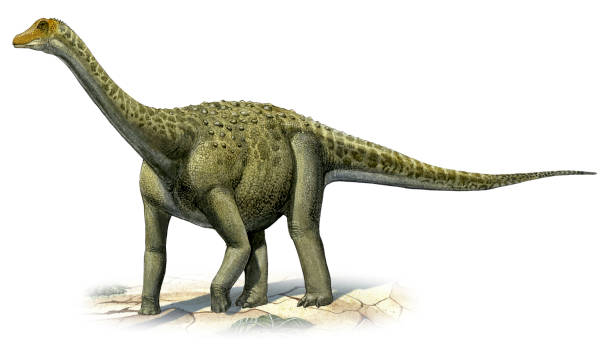
More than sixty-six million years ago, long before humans walked the Earth, the planet belonged to creatures so enormous that even modern imagination struggles to fully grasp their scale. Among these titans of the prehistoric world were the Titanosaurs—an extraordinary group of long-necked dinosaurs that included some of the largest animals ever to walk on land.
The name itself sounds almost mythical. Titanosaurus evokes images of creatures so large they might have stepped straight out of legend. Yet these animals were very real. Their fossilized bones have been unearthed across nearly every continent, revealing an astonishing story about evolution, survival, and the limits of biological size.
Titanosaurs lived during the Late Cretaceous period and represented one of the final great radiations of the sauropod dinosaurs, the long-necked herbivores famous for their towering bodies and immense weight. While some earlier sauropods had already reached enormous sizes, Titanosaurs pushed those limits even further.
They walked across ancient floodplains, browsed from treetops, laid eggs in vast nesting grounds, and evolved strange adaptations that scientists are still trying to understand today. Their story is not just about size. It is about resilience, diversity, and the remarkable evolutionary pathways that allowed these giants to dominate ecosystems across the globe.
Below are ten mind-blowing facts about the giant Titanosaurus and the titanosaur family that reveal just how extraordinary these ancient animals truly were.
1. Titanosaurs Included the Largest Land Animals in Earth’s History
When scientists speak about the largest animals that have ever lived on land, they are almost always referring to Titanosaurs.
Some members of this dinosaur group reached sizes that challenge comprehension. Estimates suggest that the largest titanosaurs, such as the colossal Patagotitan and Argentinosaurus, could reach lengths of over thirty meters and weigh more than seventy tons. That is heavier than a fully loaded commercial airplane.
To picture such a creature standing in a prehistoric landscape is almost surreal. Its body would have stretched longer than a basketball court. Its neck alone could be longer than a city bus. Its legs were like living pillars supporting an immense biological structure.
Despite their gigantic mass, Titanosaurs were herbivores. They spent their lives feeding on plants, likely consuming hundreds of kilograms of vegetation each day. Their digestive systems were adapted to process enormous quantities of plant material, converting leaves, branches, and ferns into the energy needed to sustain their vast bodies.
The existence of Titanosaurs forces scientists to ask an important question: how could land animals become so large without collapsing under their own weight?
Part of the answer lies in the unique skeletal adaptations of sauropods. Their bones contained air-filled cavities that reduced weight while maintaining strength. Their long necks allowed them to reach food across wide areas without moving their massive bodies constantly.
Evolution discovered a way to build giants that could survive.
2. Titanosaurs Lived Across Nearly the Entire Planet
Unlike many dinosaur groups that were restricted to certain continents, Titanosaurs were global travelers.
Fossils have been discovered in South America, Africa, Europe, Asia, Australia, and even Antarctica. This widespread distribution makes them one of the most successful dinosaur groups in evolutionary history.
During the time Titanosaurs flourished, Earth’s continents were still slowly drifting apart after the breakup of the supercontinent Gondwana. Land connections between regions allowed animals to disperse across enormous distances.
Different titanosaur species adapted to unique environments as they spread. Some lived in humid forests, others roamed semi-arid plains, and some inhabited coastal ecosystems.
This adaptability likely contributed to their evolutionary success. Titanosaurs were not a single species but a vast family of dinosaurs with many different forms, sizes, and ecological roles.
Their fossils tell a story of migration, diversification, and survival across an ever-changing planet.
3. Titanosaurs Had Remarkably Long Necks
One of the most iconic features of titanosaurs—and sauropods in general—was their incredibly long necks.
These necks were not merely decorative. They served an important biological purpose. A long neck allowed Titanosaurs to reach high vegetation without needing to move their enormous bodies constantly. Instead of walking from tree to tree, they could sweep their necks across large areas like living cranes.
Some titanosaurs likely browsed at heights unreachable by most other herbivores, giving them access to food sources that smaller dinosaurs could not exploit.
Their necks were supported by a series of elongated vertebrae that contained air sacs connected to the respiratory system. These air sacs reduced the weight of the neck while also helping with breathing efficiency.
Despite their enormous size, titanosaurs were remarkably well engineered by evolution. Their necks were not solid bone but lightweight structures reinforced by internal chambers.
This combination of strength and lightness allowed titanosaurs to carry their necks high above the ground without excessive strain.
4. Titanosaurs Laid Eggs in Massive Nesting Grounds
Perhaps one of the most fascinating discoveries about titanosaurs came from fossilized nesting sites.
In several regions around the world, paleontologists have uncovered enormous colonies of titanosaur nests. These nesting grounds contain hundreds, sometimes thousands, of fossilized eggs arranged in clusters.
The eggs themselves were relatively small compared to the size of the adults—roughly the size of a large grapefruit. Inside each egg was a developing dinosaur that would eventually grow into an animal weighing tens of tons.
This reproductive strategy makes sense from an evolutionary perspective. Giant animals often produce many offspring to ensure that at least some survive.
Titanosaurs likely returned to the same nesting sites year after year, much like modern sea turtles. The adults may have laid their eggs in shallow pits and then covered them with vegetation or soil, allowing environmental heat to incubate them.
The discovery of these nesting grounds provides a rare glimpse into dinosaur family life and reproductive behavior.
5. Some Titanosaurs Had Body Armor
It might seem strange to imagine such enormous animals needing protection, but some titanosaurs possessed a unique defensive feature: body armor.
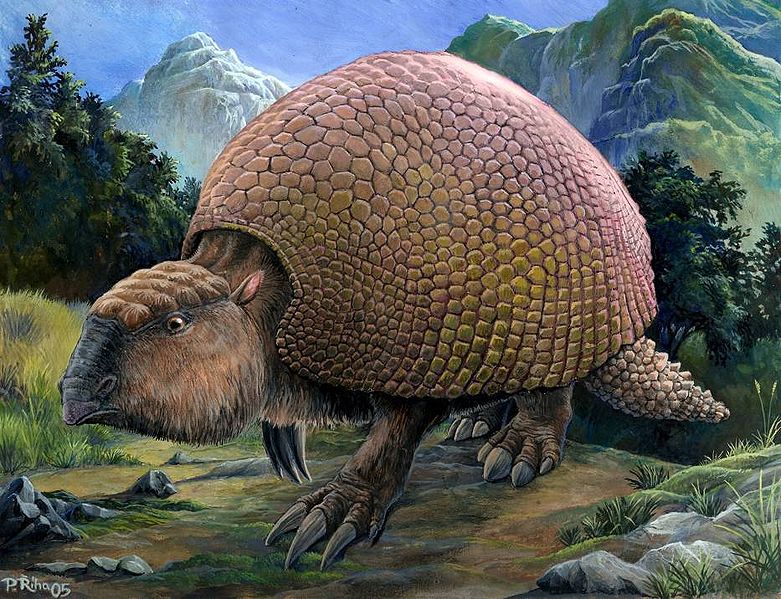
Certain species had small bony plates embedded in their skin called osteoderms. These structures are similar to the armor found in animals like crocodiles and armadillos.
The exact purpose of these osteoderms is still debated. They may have provided protection against large predators such as theropod dinosaurs. Another possibility is that they helped store minerals like calcium, which could be useful during egg production.
Whatever their function, these armored plates show that titanosaurs were more complex than simply being enormous plant-eaters.
Even giants sometimes needed defenses.
6. Titanosaurs Had Unique Bone Structures
Titanosaurs possessed some of the most unusual skeletal adaptations in the dinosaur world.
Their vertebrae often contained intricate internal structures filled with air pockets. These pneumatic bones reduced weight while maintaining strength, an essential feature for animals of such massive size.
In some species, the vertebrae had elaborate honeycomb-like patterns inside them. These internal cavities were connected to the respiratory system, much like the air sacs found in modern birds.
This respiratory design likely allowed titanosaurs to breathe more efficiently than mammals of similar size would be able to.
Without these evolutionary innovations, animals of such enormous size might never have been able to survive on land.
7. Titanosaurs Coexisted With Powerful Predators
The Late Cretaceous world was not a peaceful paradise for giant herbivores. Titanosaurs lived alongside some of the most formidable predators in dinosaur history.
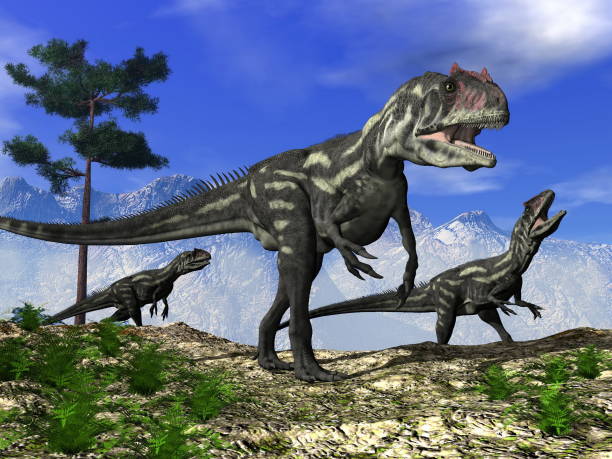
In South America, giant carnivorous dinosaurs such as Giganotosaurus and Mapusaurus roamed the same ecosystems. These predators were enormous in their own right and may have hunted titanosaurs, particularly younger individuals.
However, adult titanosaurs were likely too large for most predators to attack successfully. Their massive size alone served as a powerful deterrent.
Young titanosaurs, on the other hand, would have been far more vulnerable. This may explain why titanosaur nesting sites produced so many eggs. High numbers increased the chances that some juveniles would survive long enough to grow into near-invincible giants.
Predator-prey dynamics shaped the ecosystems of the Late Cretaceous, and titanosaurs played a central role in that balance.
8. Titanosaurs Were Among the Last Sauropods
Sauropods had dominated the dinosaur world for over one hundred million years. Yet by the Late Cretaceous period, many earlier sauropod groups had disappeared.
Titanosaurs were among the last surviving members of this once-great lineage.
While other sauropods declined, titanosaurs diversified and spread across the globe. They became the final representatives of the long-necked giants before the catastrophic mass extinction that occurred sixty-six million years ago.
When the asteroid impact ended the age of dinosaurs, titanosaurs vanished along with countless other species.
Their disappearance marked the end of the largest land animals that had ever lived.
9. Titanosaurs Helped Shape Ancient Ecosystems
Animals as enormous as titanosaurs were not just inhabitants of ecosystems—they were ecosystem engineers.
Their feeding habits likely shaped vegetation patterns across entire landscapes. By consuming large quantities of plants, titanosaurs could influence forest structure and plant diversity.
Their massive footsteps would have churned soil, potentially affecting plant growth and water flow. Their dung would have provided nutrients for insects, fungi, and microorganisms.
In many ways, titanosaurs played roles similar to those of modern megafauna like elephants.
When such large animals disappear from ecosystems, the effects ripple through entire food webs.
10. Titanosaurs Continue to Reveal New Discoveries
Despite decades of research, titanosaurs remain one of the most exciting areas of paleontology.
New fossil discoveries continue to reveal previously unknown species. Advances in imaging technology allow scientists to study bone structures in unprecedented detail. Even fossilized footprints provide clues about how these giants moved and behaved.
Each discovery adds another piece to the puzzle of how these animals lived.
Titanosaurs remind us that Earth’s past is still filled with mysteries waiting to be uncovered.
The Legacy of the Giant Titanosaurs
The story of titanosaurs is ultimately a story about the extraordinary possibilities of life on Earth.
Through millions of years of evolution, natural selection produced animals so large that they stretch the limits of biological imagination. They roamed across continents, shaped ecosystems, and left behind fossil clues that still captivate scientists today.
Although titanosaurs disappeared with the extinction of the dinosaurs, their legacy remains preserved in stone beneath ancient landscapes.
Every fossil bone, every egg, every footprint tells a fragment of their story—a story of giants who once walked the Earth.
And with every new discovery, we come one step closer to understanding how such magnificent creatures lived, thrived, and ultimately vanished from our world.