If you’ve ever looked at a deep-space photograph and felt your breath catch—if you’ve ever stared at a glowing cloud shaped like a flower, a ghost, a horse’s head, or a burning flame—then you’ve already met a nebula.
A nebula is not a planet, not a star, not a galaxy. It is something stranger and more poetic: a vast cloud of gas and dust floating in space, sometimes quietly drifting, sometimes violently expanding, sometimes giving birth to new stars, and sometimes marking the death of old ones.
Nebulae are among the most visually stunning objects in the universe. They appear in space images as colorful curtains of light, like cosmic smoke illuminated from within. Some shine with eerie blues and reds. Some look like torn fabric. Some glow like embers in the dark.
But nebulae are not just pretty. They are essential. Without nebulae, stars could not form. Without stars, planets could not form. Without planets, there would be no chemistry complex enough for life. In a very real sense, nebulae are part of our origin story.
To understand what a nebula is, you have to understand how matter behaves in space, how stars are born, how they die, and how the universe recycles itself. Nebulae are not random clouds—they are evidence that the cosmos is alive with motion and transformation.
They are the universe’s brightest clouds, but also its most important laboratories.
The Meaning of the Word “Nebula” and Why It Matters
The word “nebula” comes from Latin, meaning “mist” or “cloud.” Early astronomers used the term to describe any fuzzy object in the sky that didn’t look like a sharp point of light. Through telescopes, many distant objects appeared like smudges. Some were star clusters. Some were galaxies. Some were truly clouds of gas.
Before modern astronomy, humans couldn’t tell the difference.
Over time, as telescopes improved, astronomers realized that some of these misty objects were enormous clouds inside our own galaxy, the Milky Way. These were true nebulae.
Today, the term nebula has a more precise meaning. A nebula is an interstellar cloud of gas and dust, usually made mostly of hydrogen and helium, with traces of heavier elements such as oxygen, nitrogen, carbon, neon, and sulfur. These heavier elements exist because they were created in stars and spread into space through stellar winds and supernova explosions.
Nebulae are not rare. They exist throughout galaxies, but they are often difficult to see. Many are cold and dark, hiding their matter until something lights them up.
Some nebulae are like cosmic nurseries, where stars are being born. Others are like cosmic graveyards, where dead stars have left behind glowing shells of gas.
Either way, nebulae represent change. They represent the ongoing cycle of creation and destruction that drives the evolution of the universe.
What Are Nebulae Made Of?
At first glance, a nebula seems like it should be thick and smoky, like a cloud on Earth. But space is not like Earth. Space is almost completely empty. Even inside a dense nebula, matter is incredibly thin compared to anything we experience.
A nebula is mainly made of gas, especially hydrogen, the most common element in the universe. Hydrogen is the basic fuel for star formation. It is the simplest atom: one proton and one electron.
Along with hydrogen, nebulae contain helium, the second most common element, produced in the early universe shortly after the Big Bang and also inside stars.
Nebulae also contain dust, which is not dust like the dust in your house. Cosmic dust is made of tiny solid particles, often microscopic, composed of silicates, carbon compounds, and sometimes ice-coated grains. These particles may include elements like iron, magnesium, oxygen, and carbon.
Dust plays a surprisingly important role in nebulae. It absorbs and scatters light. It helps cool gas clouds by radiating heat. It provides surfaces for chemical reactions, including the formation of molecules such as water, carbon monoxide, and even complex organic compounds.
In some nebulae, you can find molecules like ammonia, methane, formaldehyde, and other building blocks of chemistry. Space is not chemically dead. Nebulae are places where atoms meet, collide, and combine into more complex structures.
Even though nebulae are thin, they can span enormous distances—tens, hundreds, or even thousands of light-years across. That is why they contain so much mass overall, even if each cubic centimeter has only a few particles.
A nebula is like a whisper stretched across the galaxy, but when you gather enough whispering matter, it becomes the raw material for suns.
Why Nebulae Glow: The Secret Behind Their Colors
One of the most common questions people ask is why nebulae are so colorful. If space is dark, where does the light come from?
Nebulae glow because energy is interacting with their gas and dust. In many cases, nearby stars provide intense ultraviolet radiation that excites the gas. When the gas relaxes back to lower energy states, it emits light at specific wavelengths.
This is called emission.
The colors we see depend on the elements present and the energy levels involved. Hydrogen often produces red light in a specific wavelength known as hydrogen-alpha. Oxygen can produce green or blue-green light. Sulfur can produce reddish tones.
However, it is important to understand that many famous nebula images show enhanced or false color. Telescopes often capture light beyond what human eyes can see, such as infrared or ultraviolet. Scientists then assign visible colors to these wavelengths so we can interpret the data.
Even so, nebulae truly do emit colorful light. The physics behind this is real and fascinating. Atoms absorb energy, their electrons jump to higher states, and then they release that energy as photons when they fall back down.
Nebulae can also reflect light. Some nebulae do not emit their own light but shine because they reflect starlight, similar to how clouds on Earth reflect sunlight.
Others are dark because their dust blocks light behind them, appearing as black shapes against glowing backgrounds.
In a single nebula, you may see emission, reflection, and absorption happening all at once. That is why nebulae can look like layered paintings, with bright regions, shadowy regions, and glowing edges.
Nebulae are not just clouds. They are light interacting with matter in complex and beautiful ways.
How Big Is a Nebula?
Nebulae come in many sizes, but almost all are unimaginably large compared to anything on Earth.
Some smaller nebulae, such as planetary nebulae, might be a few light-years across. That still means they are trillions of kilometers wide.
Large star-forming nebulae can span hundreds of light-years. Some giant molecular clouds, which are the largest type of nebula, can be thousands of light-years wide and contain enough material to form tens of thousands of stars.
To put this into perspective, the nearest star system to Earth is more than four light-years away. A nebula that is 100 light-years wide could fit dozens of solar neighborhoods inside it.
Nebulae can also contain enormous mass. Some contain the equivalent of hundreds of thousands of suns worth of hydrogen gas.
They may look delicate in photographs, but nebulae are not fragile. They are massive structures shaped by gravity, radiation, and shockwaves from stellar explosions.
The Main Types of Nebulae in Space
Nebulae are not all the same. They exist for different reasons and in different stages of cosmic evolution. Astronomers classify nebulae based on how they form and how they interact with light.
The main categories include emission nebulae, reflection nebulae, dark nebulae, planetary nebulae, and supernova remnants. There are also giant molecular clouds, which overlap with star-forming regions.
Each type tells a different story about the life cycle of stars and matter in the universe.
Emission Nebulae: The Glowing Nurseries of the Galaxy
Emission nebulae are among the most famous and visually striking nebulae. These are clouds of gas that glow brightly because they are being energized by nearby hot stars.
The stars that power emission nebulae are usually young, massive, and extremely hot. They emit large amounts of ultraviolet radiation. When ultraviolet photons hit hydrogen gas, they can strip electrons away from atoms, ionizing the gas.
This creates what is called an H II region, pronounced “H two,” meaning ionized hydrogen.
In these regions, free electrons eventually recombine with protons, forming hydrogen atoms again. When this happens, the electron falls through different energy levels, releasing photons of light. One of the most common emitted wavelengths is red hydrogen-alpha light.
That is why emission nebulae often appear reddish in photographs.
But hydrogen is not the only element involved. Oxygen, nitrogen, and sulfur can contribute to other colors, creating the rich palette we see in deep-space images.
Emission nebulae are often places where stars are actively forming. Dense pockets within the nebula collapse under gravity, heating up until nuclear fusion begins. New stars ignite, and their radiation shapes the surrounding cloud, carving cavities and illuminating filaments.
These nebulae are not calm. They are violent environments filled with intense radiation, stellar winds, and shockwaves. Yet they are also creative environments, giving birth to new solar systems.
An emission nebula is like a cosmic womb lit by the fire of newborn stars.
Reflection Nebulae: Starlight Painted Onto Dust
Reflection nebulae do not glow because their gas is ionized. Instead, they shine because dust particles reflect and scatter the light of nearby stars.
This is similar to how Earth’s atmosphere scatters sunlight, making the sky appear blue.
Dust particles in reflection nebulae scatter shorter wavelengths more efficiently, which is why these nebulae often appear bluish. The blue color is not necessarily because the nebula itself is blue, but because blue light is scattered toward us more strongly than red light.
Reflection nebulae are often found near young stars that are not hot enough to ionize hydrogen significantly. They still shine brightly, but their radiation is not intense enough to create an emission nebula.
These nebulae can look soft and ghostly, like pale smoke illuminated by a lantern. They are often mixed with darker dust lanes, creating dramatic contrasts.
Reflection nebulae remind us that space is not empty. Even a small amount of dust can catch starlight and make the invisible visible.
Dark Nebulae: The Shadows That Hide New Stars
Dark nebulae are some of the most haunting objects in space. They are clouds of gas and dust that are so dense they block light from stars and glowing nebulae behind them.
Instead of shining, they appear as dark shapes—black curtains draped across the Milky Way.
Dark nebulae are often rich in cold molecular hydrogen and dust. These regions are some of the best places for star formation because the dense material can collapse under gravity.
Inside a dark nebula, temperatures are low. The lack of intense radiation allows molecules to survive. These clouds can contain complex chemistry, including organic molecules.
Some dark nebulae appear as isolated black blobs, called Bok globules. These are small dense clouds where new stars may be forming.
Dark nebulae can look like voids, but they are not empty. They are full of matter. They are cosmic hiding places where the next generation of stars is quietly assembling.
If emission nebulae are the bright birthplaces, dark nebulae are the secret pregnancy stage of star formation.
Planetary Nebulae: The Beautiful Death of Sun-Like Stars
Despite their name, planetary nebulae have nothing to do with planets.
The term comes from early astronomers who saw them through small telescopes and thought they resembled planets because of their round shape.
Planetary nebulae form when a sun-like star reaches the end of its life.
When a star like our Sun exhausts its hydrogen fuel, it expands into a red giant. Eventually, it becomes unstable and sheds its outer layers into space. The core of the star remains behind as a hot, dense object called a white dwarf.
The white dwarf emits strong ultraviolet radiation, which ionizes the expelled gas. This causes the surrounding shell of gas to glow, creating a planetary nebula.
Planetary nebulae are often symmetrical and incredibly beautiful. Some look like rings, some like butterflies, and some like complex layered bubbles.
They represent a transitional stage in stellar evolution. The nebula expands outward and gradually disperses into space, enriching the interstellar medium with heavier elements like carbon, nitrogen, and oxygen.
Planetary nebulae are short-lived on cosmic timescales. They may last only tens of thousands of years before fading away.
In the life of a star that existed for billions of years, a planetary nebula is a brief but stunning farewell.
One day, billions of years from now, our Sun will likely create a planetary nebula. The solar system will be bathed in glowing gas as the Sun releases its final breath into the galaxy.
Supernova Remnants: Nebulae Born From Catastrophe
Some nebulae are born not from gentle shedding, but from violence.
A supernova remnant forms when a massive star explodes at the end of its life.
Massive stars burn through their fuel quickly. When they can no longer support themselves against gravity, their cores collapse. This collapse triggers an enormous explosion that blasts the star’s outer layers into space at incredible speeds.
The expanding debris interacts with surrounding interstellar gas, creating shockwaves that heat the material and cause it to glow.
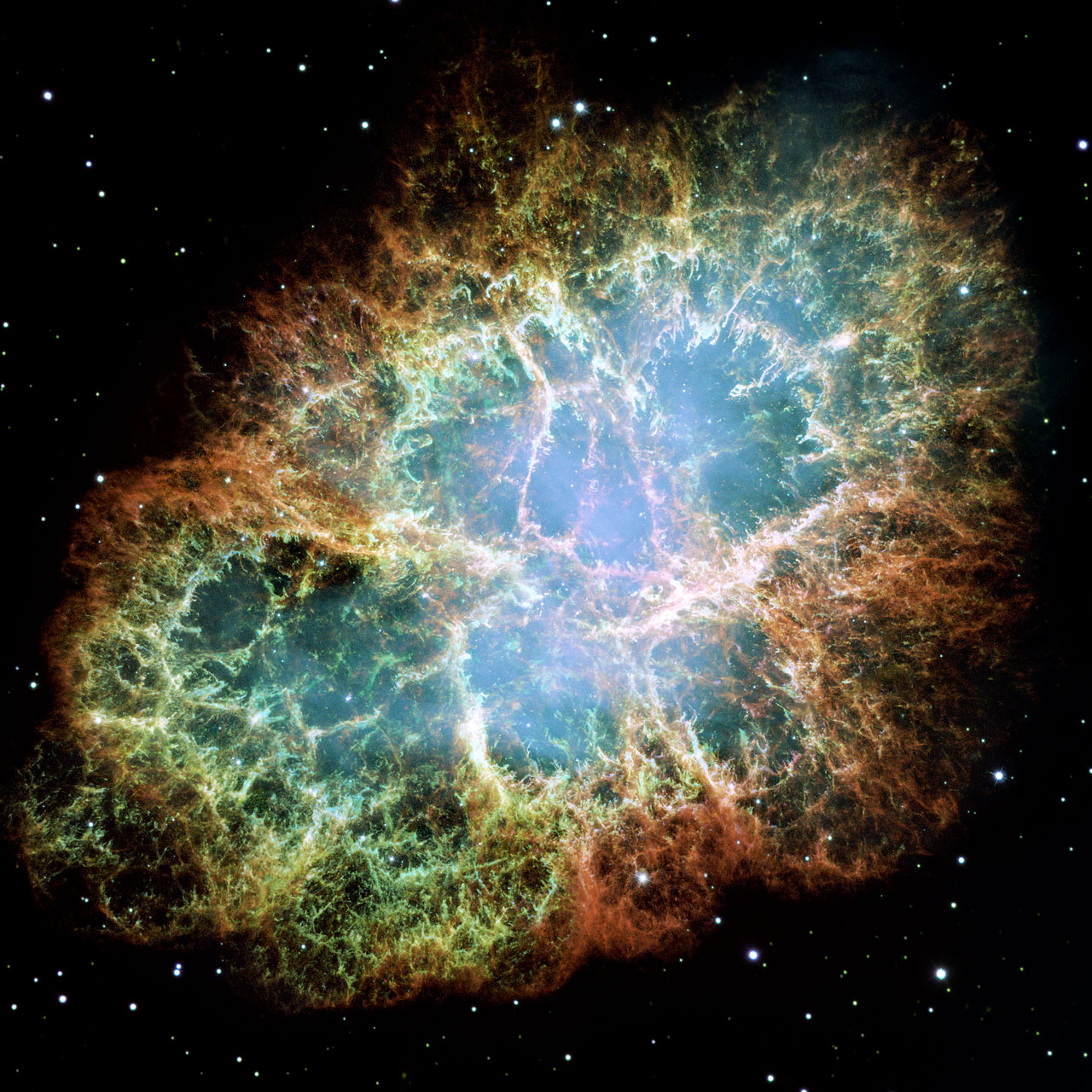
Supernova remnants often have complex filamentary structures. They can emit light across the electromagnetic spectrum, including visible light, X-rays, and radio waves.
These remnants are not only visually dramatic—they are scientifically crucial. Supernovae create many of the universe’s heavier elements, such as iron, gold, and uranium. These elements are then scattered into space, becoming part of future stars and planets.
The atoms in your blood, your bones, and your brain contain elements forged in supernova explosions. That is not metaphor. That is astrophysics.
Supernova remnants are the universe’s way of recycling death into creation. They are proof that destruction is not the end, but a transformation.
Giant Molecular Clouds: The True Star Factories
The largest nebulae in galaxies are giant molecular clouds. These are enormous regions of cold gas and dust, primarily molecular hydrogen, where stars form in large numbers.
Molecular hydrogen is difficult to detect directly, but astronomers can trace these clouds through other molecules like carbon monoxide.
Giant molecular clouds can contain hundreds of thousands or even millions of times the mass of the Sun. They are often the birthplaces of star clusters and massive star-forming regions.
Within these clouds, gravity pulls matter into denser clumps. As the clumps collapse, they form protostars—young stars still gathering mass. Over time, protostars heat up, and nuclear fusion begins.
The star’s radiation and winds then blow away surrounding gas, shaping the nebula and sometimes halting further star formation in that region.
Star formation is not a peaceful process. It is a battle between gravity pulling matter inward and radiation pushing matter outward.
Giant molecular clouds are the arenas where this battle plays out on enormous scales.
How Nebulae Form: The Universe’s Recycling System
Nebulae form through different processes, but most are tied to the life cycle of stars.
The interstellar medium is the thin mixture of gas and dust spread throughout galaxies. Over time, this material gathers into clouds under gravity. These clouds may become giant molecular clouds.
Stars form inside these clouds, and as they evolve, they shape the surrounding gas through radiation and stellar winds. When stars die, they return material to space, either through gentle mass loss or violent supernova explosions.
This returned material mixes with existing interstellar gas, enriching it with heavier elements. New nebulae form from this enriched material, and new stars are born.
This is cosmic recycling.
In the early universe, there was mostly hydrogen and helium. Heavier elements did not exist in significant amounts. They were created inside stars through nuclear fusion and distributed through stellar death.
Nebulae are the reservoirs of this recycled material. They are the cosmic compost piles that feed future generations of stars and planets.
Without nebulae, the universe would remain chemically simple. There would be no rocky planets, no water, no carbon-based life.
Nebulae are the reason the universe can evolve into complexity.
Nebulae and Star Birth: How Stars Are Born Inside Clouds
The birth of a star begins with cold darkness.
Inside a dense region of a molecular cloud, gravity starts pulling gas and dust inward. The cloud fragment collapses, becoming denser and hotter. As it shrinks, it forms a rotating core.
This rotating core becomes a protostar.
The protostar continues gathering mass from the surrounding cloud through an accretion disk, a swirling disk of material. This disk is also where planets may eventually form.
As the protostar grows, pressure and temperature in its core rise. Eventually, the core becomes hot enough for hydrogen fusion to begin. When hydrogen nuclei start fusing into helium, enormous energy is released.
At that moment, a star is born.
The new star’s radiation begins to push away surrounding gas and dust. Stellar winds carve out cavities. The nebula becomes sculpted into pillars, ridges, and bubbles.
If the star is massive, its ultraviolet radiation can ionize nearby hydrogen, creating a bright emission nebula.
Star formation often happens in clusters. Many stars can form in the same region, influencing each other through gravity and radiation.
Some stars are born alone, like quiet candles in the dark. Others are born in crowded nurseries, surrounded by siblings and glowing gas.
Nebulae are the birthplaces of stars, but they are also shaped by them. They are both the womb and the artwork carved by the newborn.
Nebulae and Planet Formation: The Dust That Becomes Worlds
Nebulae are not just star factories. They are planet factories too.
The dust grains in nebulae may be tiny, but they are the seeds of planets. In the accretion disks around young stars, dust particles collide and stick together. Over time, they form larger clumps, then pebbles, then rocks, then planetesimals—objects large enough for gravity to shape them.
Eventually, planetesimals collide and merge, forming planets.
Rocky planets like Earth form closer to the star, where temperatures are high enough that only metals and silicates can survive. Gas giants form farther out, where ice and gas can accumulate.
The materials for oceans, atmospheres, and continents all begin as dust and gas inside a nebula.
This means nebulae are not just distant clouds. They are the origin of worlds.
Every planet is a nebula’s child.
Nebulae and the Death of Stars: How the Universe Returns Matter to Space
The universe is not a one-way road. Stars do not just form and shine forever. They age, change, and die, and their deaths contribute to nebula formation.
Low-mass stars, like the Sun, eventually shed their outer layers, creating planetary nebulae. Their cores remain as white dwarfs.
High-mass stars end their lives more dramatically. They explode as supernovae, leaving behind neutron stars or black holes and creating expanding nebula remnants.
Even during their lifetimes, stars lose material through stellar winds. Massive stars can blow off huge amounts of gas, shaping surrounding nebulae and enriching space with heavier elements.
The death of stars is not an ending. It is a return.
Nebulae are the universe’s memory of stars that once existed. They are the footprints left behind, glowing in the dark.
Where Are Nebulae Found?
Nebulae are found throughout galaxies. Most are located in the spiral arms of galaxies like the Milky Way, where gas and dust are more concentrated.
Spiral arms are not solid structures but density waves—regions where gas gets compressed, triggering star formation. That is why many bright nebulae appear along spiral arms.
Nebulae are also found in irregular galaxies and starburst galaxies, where star formation is intense.
In the Milky Way, many nebulae are visible in the band of the galaxy across the night sky. Dark nebulae appear as black patches blocking starlight, while emission nebulae appear as glowing regions.
However, many nebulae are invisible to the naked eye. Some emit mainly infrared light, visible only to specialized telescopes.
The universe is filled with nebulae. We simply do not always see them.
Famous Nebulae and Why They Captivate Humanity
Certain nebulae have become iconic because of their stunning appearance and scientific importance.
The Orion Nebula is one of the closest major star-forming regions to Earth and can be seen with the naked eye as a fuzzy patch in the constellation Orion. It is a stellar nursery where young stars are forming in a glowing cloud.
The Eagle Nebula contains the famous “Pillars of Creation,” towering columns of gas and dust sculpted by radiation from young stars. These pillars show star formation in action.
The Crab Nebula is a supernova remnant, the leftover debris from a stellar explosion observed in Earth’s sky nearly a thousand years ago. It is a reminder that cosmic events can unfold within human history.
The Ring Nebula and the Helix Nebula are classic examples of planetary nebulae, showing the glowing shells of gas expelled by dying stars.
The Horsehead Nebula is a dark nebula shaped like a horse’s head, silhouetted against a glowing background. It is a perfect example of how dust can block light and create dramatic cosmic shapes.
These nebulae are not just famous because they look beautiful. They are famous because they reveal the processes that build and destroy stars and reshape galaxies.
They are cosmic storytelling in visible form.
Are Nebulae Visible to the Naked Eye?
Some nebulae are visible without a telescope, but most are not.
The Orion Nebula is one of the best examples of a nebula visible to the naked eye under dark skies. It appears as a faint smudge in Orion’s sword.
Other nebulae, like the Lagoon Nebula and the Carina Nebula, can be seen in certain parts of the world under good conditions.
However, many nebulae require binoculars or telescopes. Even then, the vivid colors seen in photographs are usually not visible to the human eye through a telescope. This is because our eyes are not very sensitive to color in low light. Nebulae often appear as grayish clouds visually.
Long-exposure photography captures more light than human eyes can collect, revealing the colors and fine structures.
So when you see a brilliant nebula photo, you are seeing a real object—but you are seeing it through the extended vision of technology.
In a way, telescopes and cameras are extensions of human senses, allowing us to witness cosmic beauty beyond our biological limits.
How Scientists Study Nebulae
Nebulae are studied using telescopes that observe different wavelengths of light.
Visible light shows glowing gas and dust structures, but it is only part of the story. Infrared light can penetrate dust, revealing stars forming inside dark clouds. Radio telescopes can detect cold molecular gas. X-ray telescopes can observe extremely hot gas in supernova remnants. Ultraviolet observations reveal high-energy processes around hot young stars.
By combining data across the electromagnetic spectrum, scientists can build a more complete picture of a nebula’s composition, temperature, density, motion, and chemical makeup.
Spectroscopy is one of the most powerful tools for studying nebulae. By splitting light into its component wavelengths, scientists can identify which elements are present. Each element has a unique spectral signature.
Spectroscopy also reveals motion through the Doppler effect. If a nebula’s gas is moving toward us, its light shifts slightly toward blue wavelengths. If it’s moving away, it shifts toward red.
This allows astronomers to map how nebulae expand, collapse, or swirl.
Nebulae are not static. They are dynamic, changing objects, and modern astronomy can measure their movement across space.
In many ways, studying nebulae is like studying weather in space—except the storms last for millions of years.
Are Nebulae Dangerous?
Nebulae are dangerous in certain ways, but mostly only if you are close enough to be inside them—which is unlikely for any human.
Nebulae can contain radiation from hot stars, shockwaves from supernovae, and high-energy particles. Supernova remnants can be extremely energetic environments.
However, nebulae are also extremely diffuse. Even if a solar system were inside a nebula, it would not be like flying through a thick cloud. Spacecraft would not crash into dense gas. The density is far too low.
The real danger is not collision but radiation and energetic processes.
If Earth were too close to a supernova remnant, the radiation could be harmful. But such events are rare and would require a relatively nearby explosion.
Nebulae are more dangerous to fragile biological life than to physical objects. Radiation can damage DNA and atmospheres. But on the scale of the galaxy, most nebulae are far from us.
For the most part, nebulae are not threats. They are distant monuments to the universe’s creative power.
Do Nebulae Last Forever?
No nebula lasts forever. Nebulae are temporary structures in the cosmic timeline.
Planetary nebulae fade relatively quickly, often within tens of thousands of years, as their gas disperses into space.
Supernova remnants can last longer, tens of thousands to hundreds of thousands of years, depending on the environment.
Star-forming nebulae and molecular clouds can persist for millions of years, but eventually, radiation and winds from newborn stars blow away the gas, ending star formation in that region.
Over time, nebula material becomes part of the general interstellar medium again, mixing into the galaxy and potentially forming new clouds later.
Nebulae are part of a cycle. They form, evolve, disperse, and reform.
The universe is not static. Even the most beautiful nebula is a temporary phase in the endless motion of matter.
Nebulae and the Origins of Life
When people look at nebulae, they often feel something deeper than scientific curiosity. They feel a sense of connection. And that feeling has a real foundation.
Nebulae contain the ingredients for life.
Hydrogen and oxygen can form water. Carbon can form complex organic molecules. Nitrogen is essential for proteins and DNA. Phosphorus is essential for energy storage in cells. Many of these elements are distributed through nebulae after being forged in stars.
In dense molecular clouds, scientists have detected complex organic molecules. Some of these molecules resemble building blocks of amino acids.
This does not mean life exists in nebulae, but it suggests that the chemistry needed for life is not rare. The universe naturally produces complexity.
The early solar system formed from a nebula-like cloud of gas and dust. The Sun formed at the center, and the planets formed in a surrounding disk. The materials that became Earth were once drifting particles in a cloud.
Every atom in your body was once part of a nebula at some stage.
That means when you look at a nebula, you are not just looking at something far away. You are looking at a place that resembles your own origin.
Nebulae are the cosmic ancestors of planets and people.
Why Nebulae Look Like Art: The Physics of Shape and Structure
Nebulae often look like living creatures or surreal landscapes. Some resemble skulls. Some look like wings. Some look like flowers blooming in space.
This is not because the universe is trying to make art, but because physics naturally creates patterns.
Nebula shapes are influenced by gravity, radiation pressure, magnetic fields, turbulence, shockwaves, and the movement of gas.
Radiation from stars can erode dense regions, leaving behind pillars and ridges. Stellar winds can carve bubbles. Supernova shockwaves can compress gas into filaments. Magnetic fields can guide the flow of charged particles, shaping the nebula’s structure.
Turbulence plays a major role. Gas in nebulae moves in chaotic, swirling currents. This turbulence creates complex patterns that can resemble smoke, waves, or storm clouds.
The result is a cosmic sculpting process. Nebulae are shaped by invisible forces, creating structures that appear intentional, even though they arise from natural laws.
In that sense, nebulae are not just objects. They are visible evidence of physics at work.
They are the universe drawing with gravity and light.
Nebulae Beyond the Milky Way
Nebulae exist not only in our galaxy but in others as well.
In distant galaxies, star-forming regions can be so large and bright that they appear as glowing patches in telescopic images. These regions contain massive nebulae where thousands of stars are being born.
Some galaxies are experiencing intense bursts of star formation, known as starburst galaxies. In these galaxies, nebulae can be extremely active and widespread.
Even in galaxies far away, the physics of nebulae remains the same. Hydrogen gas collapses, stars ignite, radiation lights up clouds, and supernovae spread heavy elements.
Nebulae are universal. They are part of the basic machinery of galaxies.
Wherever there are stars, there are nebulae.
The Role of Nebulae in the Evolution of Galaxies
Galaxies are not just collections of stars. They are ecosystems.
Nebulae are the reservoirs of gas that determine whether a galaxy can continue forming new stars. If a galaxy runs out of gas, star formation slows and the galaxy becomes older and redder over time.
Star formation consumes gas, but stars also return gas through winds and supernova explosions. This creates a cycle that can sustain star formation for billions of years.
However, galaxies can lose gas through interactions, collisions, and energetic events such as active galactic nuclei. When gas is removed or heated, nebulae cannot form easily, and star formation declines.
In this way, nebulae are central to the life of a galaxy. They determine whether the galaxy remains active and blue with young stars or becomes quiet and dominated by old stars.
Nebulae are the fuel supply of galactic evolution.
Nebulae and the Future of Astronomy
Nebulae will remain one of the most important targets in astronomy because they answer some of the biggest questions we have.
How do stars form? How do planetary systems emerge? How do galaxies evolve? How do heavy elements spread through space? How common are the chemical ingredients for life?
Modern telescopes are allowing scientists to study nebulae in extraordinary detail. Infrared telescopes can peer into star-forming clouds. Radio telescopes can map cold molecular gas. High-energy telescopes can study supernova remnants.
As technology improves, we will be able to watch star formation more clearly, measure chemical processes more precisely, and understand how the earliest nebulae formed in the young universe.
Nebulae may also hold clues to the origins of complex organic chemistry, offering hints about how life might arise elsewhere.
In the future, nebulae may not just be admired. They may be understood as the starting point of biological possibility.
The Emotional Meaning of Nebulae: Why Humans Are Drawn to Them
There is something deeply human about looking at a nebula.
Maybe it is because they look like clouds, and clouds are familiar. They connect the cosmic to the earthly.
Maybe it is because they glow like fire, and fire is ancient in our history. The first humans gathered around flames and looked into darkness beyond the circle of light. Nebulae feel like that same scene, but stretched across space.
Or maybe it is because nebulae remind us of beginnings and endings. They are birthplaces and graveyards. They show us that the universe is not static. It changes, evolves, and transforms.
When we look at a nebula, we see time made visible. We see matter becoming something else. We see the future being built out of the past.
Nebulae make the universe feel alive.
They also make us feel small—but not insignificant. Because nebulae are not separate from us. We are made of the same recycled elements. We are the universe’s way of looking back at itself.
A nebula is a cloud in space, yes. But it is also a reminder that creation is ongoing, that beauty is written into physical law, and that the cosmos is not empty.
It is filled with glowing places where stars are being born, where old suns are fading, and where the building blocks of worlds drift through the darkness.
Conclusion: Nebulae Are the Universe’s Brightest Clouds—and Its Deepest Storytellers
A nebula is a vast interstellar cloud of gas and dust, shaped by gravity, energized by radiation, and sculpted by the life and death of stars. Some nebulae are luminous nurseries where stars ignite. Some are silent dark clouds hiding future suns. Some are the glowing shells of dying stars. Some are expanding shockwaves from supernova explosions.
Nebulae are not just objects in space. They are chapters in the universe’s biography.
They tell us how stars are born, how elements are created, how galaxies evolve, and how matter is recycled into new generations of worlds.
They also tell us something about ourselves. Because everything we are—our bones, our blood, our breath—comes from the same cosmic material drifting through these clouds.
Nebulae are the universe’s brightest clouds, but they are also its memory, its imagination, and its promise.
When you look at a nebula, you are not just looking at a distant cloud.
You are looking at the raw material of the future.