For years, doctors and researchers have known that excess abdominal fat carries risks, and that losing muscle with age can quietly erode strength and independence. But a new long-term study suggests that when these two changes happen together, they do not merely add danger. They multiply it.
Researchers from the Federal University of São Carlos in Brazil, working with University College London in the United Kingdom, followed thousands of older adults over more than a decade. What they uncovered was stark and unsettling. People who had both abdominal obesity and low muscle mass faced an 83% higher risk of death compared to those without either condition.
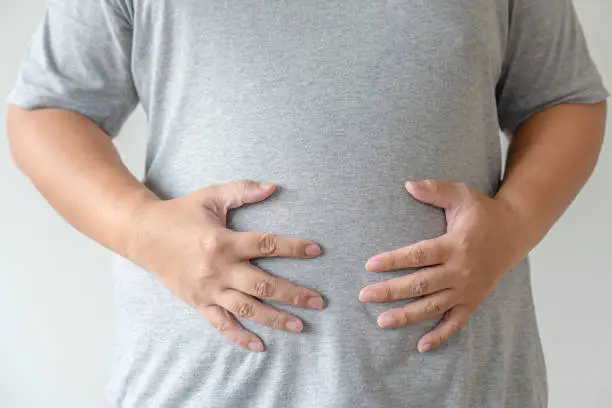
This was not simply about weight or appearance. It was about a hidden condition that blends two opposite physical changes into one dangerous state, a condition known as sarcopenic obesity.
A Condition That Hides in Plain Sight
Sarcopenic obesity sounds contradictory at first. How can someone lose muscle while gaining fat. Yet this is exactly what happens as many people age. Muscle slowly fades, strength weakens, and at the same time fat accumulates, particularly around the abdomen.
This combination points to a deeper problem. Sarcopenic obesity is closely tied to frailty syndrome, a state associated with loss of autonomy, declining quality of life, and a growing vulnerability to falls and other health complications. It is difficult to diagnose and often goes unnoticed until its effects become impossible to ignore.
The study highlights just how serious this condition can be. The coexistence of abdominal fat and muscle loss does far more harm than either condition alone. The body’s balance is disrupted in a way that accelerates physical decline.
Twelve Years Written Into Data
The findings come from a rich source of real lives followed over time. The researchers analyzed data from 5,440 participants aged 50 or older who took part in the English Longitudinal Study of Ageing. Over a 12-year follow-up period, patterns emerged that told a clear story.
Those who had both low muscle mass and abdominal obesity faced the highest risk. Those with only one of the two conditions told a very different story.
The data showed that people with low muscle mass but without abdominal obesity actually had a 40% lower risk of death. And those who carried abdominal fat but maintained adequate muscle mass were not associated with an increased risk of death at all.
This contrast revealed something crucial. Muscle mass appears to play a protective role, even in the presence of excess fat. But when muscle loss and abdominal obesity coexist, the body enters a far more dangerous state.
Making the Invisible Visible
One of the most important aspects of this research lies not only in what it discovered, but in how it made those discoveries accessible.
Traditionally, diagnosing sarcopenic obesity requires advanced and costly tests such as magnetic resonance imaging, computed tomography, electrical bioimpedance, or densitometry. These tools are accurate, but they are expensive and available only in limited healthcare settings. For many older adults, especially in under-resourced systems, this makes early diagnosis nearly impossible.
The researchers wanted to change that.
“In addition to assessing the risk of death associated with abdominal obesity and low muscle mass, we were able to prove that simple methods can be used to detect sarcopenic obesity. This is important because the lack of consensus on diagnostic criteria for this disease makes it difficult to detect and treat,” says Tiago da Silva Alexandre, a professor in the Department of Gerontology at UFSCar and one of the authors of the study.
Instead of relying on complex imaging, the team tested whether simpler measurements could reveal the same risks. They found that measuring abdominal circumference and estimating lean mass through an established equation using age, sex, weight, race, and height could successfully identify individuals at risk.
“By correlating data from ELSA study participants, we found that simple measures, such as measuring abdominal circumference and estimating lean mass [using a consolidated equation that considers clinical variables such as age, sex, weight, race, and height], showed for the first time that it’s possible to screen these individuals early,” Alexandre celebrates.
What Happens Inside the Body
The danger of sarcopenic obesity lies in the way fat and muscle interact inside the body. According to the researchers, the relationship between abdominal obesity and muscle loss creates an amplified metabolic effect.
Valdete Regina Guandalini, a professor at the Federal University of Espírito Santo and a researcher in the Department of Gerontology at UFSCar, explains that fat does more than simply add weight.
“Interestingly, individuals with abdominal obesity but adequate muscle mass weren’t associated with an increased risk of death,” she explains.
The real harm begins when muscle mass declines. Excess fat intensifies inflammatory processes in the body, triggering metabolic and catabolic changes that further worsen muscle loss. Fat does not stay neatly stored away. It infiltrates muscle tissue, taking up space that muscle once occupied.
“In addition to one condition interfering with the other, fat infiltrates the muscle and takes up its space. This systemic and progressive inflammation directly affects muscle tissue, compromising its metabolic, endocrine, immunological, and functional capabilities,” she says.
As inflammation spreads and muscle function deteriorates, the body loses resilience. Balance weakens. Strength fades. Recovery from illness or injury becomes harder. The risk of serious outcomes rises.
Defining Risk Without Consensus
One of the challenges facing researchers worldwide is the lack of a single agreed-upon definition of sarcopenic obesity. Without consensus, comparing studies and establishing guidelines becomes difficult.
To move forward, the team adopted clear and practical criteria. Abdominal obesity was defined using waist circumference, with thresholds set at more than 102 centimeters for men and 88 centimeters for women. Low muscle mass was defined using a skeletal muscle mass index below 9.36 kg/m² for men and below 6.73 kg/m² for women.
These definitions allowed the researchers to identify risk using tools that could be applied in everyday clinical settings. The goal was not perfection, but practicality. Early detection matters more than waiting for ideal conditions that may never arrive.
Why This Research Matters
The significance of this study reaches far beyond statistics. It offers a way to recognize a dangerous condition before it quietly reshapes lives.
By showing that simple, low-cost measurements can identify sarcopenic obesity, the research opens the door to earlier intervention. This means older adults could gain access to nutritional monitoring and physical exercise programs before muscle loss and abdominal fat work together to accelerate decline.
“Thus, our findings allow older adults to have greater access to early interventions, such as nutritional monitoring and physical exercise, ensuring an improvement in quality of life,” Alexandre says.
At its core, this research reframes how we think about aging bodies. It shows that strength matters, not just weight. It shows that muscle can protect even when fat is present. And it shows that hidden combinations of changes can be far more dangerous than they appear.
Most importantly, it offers hope that with awareness, early screening, and timely care, many people can avoid the silent slide into frailty and reclaim years of strength, autonomy, and life.
More information: Valdete Regina Guandalini et al, Can simple measures from clinical practice serve as a proxy for sarcopenic obesity and identify mortality risk?, Aging Clinical and Experimental Research (2024). DOI: 10.1007/s40520-024-02866-9