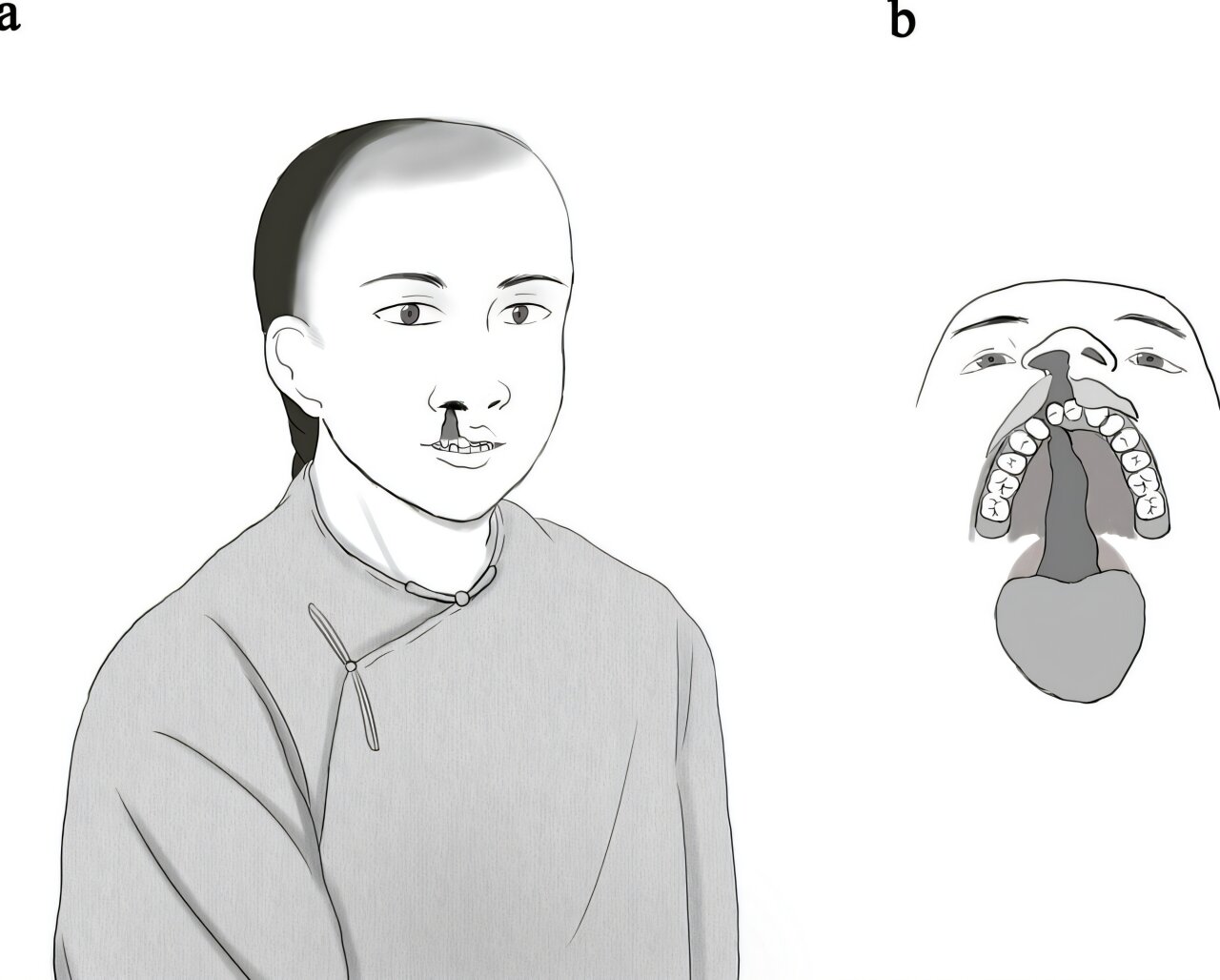
In the late imperial era of northern China, a young man was laid to rest in a brick chamber tomb alongside a woman believed to be his wife. While his death at the age of 16 to 18 was tragically premature, the story etched into his skeletal remains tells a surprising tale of resilience and radical inclusion. Born with a severe facial deformity that today would require a battery of modern surgeries, this individual did not merely survive the precarious months of infancy in a pre-industrial society; he flourished as a full member of his community. New bioarchaeological research has identified this as the first archaeological case of an orofacial cleft in China, offering a rare window into how historical societies navigated the complexities of visible birth defects and the intensive caregiving required to overcome them.
Discovering the First Archaeological Case of Orofacial Clefts in China
The discovery took place at the Wenchi cemetery in Shanxi Province, a site that researchers believe represents a stable, middle-socioeconomic stratum of society. Led by Dr. Xiaofan Sun, a team of scientists uncovered the remains of an individual designated as M234-2 within a well-constructed brick tomb. Through a combination of macroscopic observation and CT analysis, the researchers identified a suite of developmental defects that pointed toward a significant medical condition. The young man possessed a deformed palate, a missing upper incisor, and a severe deviation of the nasal septum.
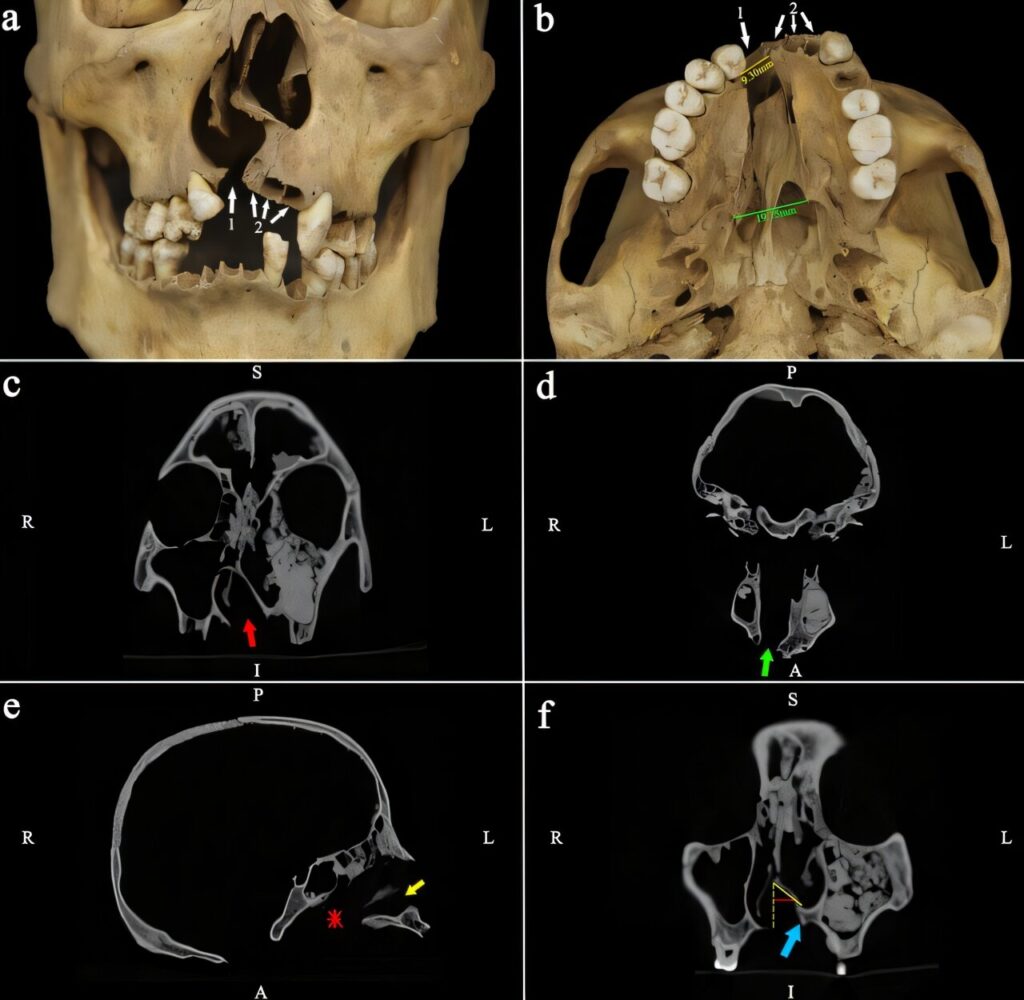
After a rigorous process of elimination—comparing the skull to others in the same cemetery and ruling out potential causes such as physical trauma or chronic infection—the team concluded that the individual had been born with an orofacial cleft. This condition, often referred to as a cleft lip or palate, occurs during fetal development when the tissues of the lip or mouth fail to fuse correctly. In the context of the Jiaqing era of the Qing dynasty, which spanned from 1796 to 1820, such a diagnosis would have presented immediate and daunting challenges for both the child and his caregivers.
Overcoming the Challenges of Infancy through Intensive Household Care
The survival of an infant with a severe orofacial cleft into late adolescence is a testament to the dedication of his family. These defects often result in profound difficulties with eating and speaking, which in many ancient contexts led to high mortality rates due to malnutrition or neglect. However, the analysis of M234-2 provided no evidence of the skeletal markers typically associated with nutritional deficiencies or chronic systemic stress. This suggests that from the moment of his birth, the young man received sustained, high-quality care that allowed him to maintain a healthy physical state despite his mechanical difficulties with feeding.
While some ancient cultures viewed such birth defects through a lens of morality or divine punishment, historical Chinese documents offer a different perspective. These records often associated orofacial clefts with animals, specifically rabbits. Traditional beliefs suggested that the defect might occur if a pregnant woman consumed rabbit meat during her pregnancy. This folkloric explanation, while medically inaccurate, may have provided a framework for understanding the condition that focused on external influences rather than a sense of inherent evil or shame. At Wenchi, the evidence suggests that this young man was viewed not as an outcast, but as a son who required—and received—the necessary support to reach adulthood.
Marriage and Social Integration in the Qing Dynasty
Perhaps the most striking evidence of the young man’s social standing is found in the way he was buried. In many historical societies, individuals with visible deformities were buried in marginal areas or without the standard funerary rites afforded to the rest of the community. M234-2 was instead interred with full honors. His tomb contained a wooden coffin and an array of typical grave goods, including ceramics, metal objects, and coins. This standard of burial suggests that his family possessed enough resources to honor him according to the norms of their social class, which sat comfortably between the elite and the impoverished.
Furthermore, the presence of an adult female in the same burial chamber suggests a high level of social integration. In the context of late imperial northern China, paired burials in a single chamber were often a reflection of the Confucian ideal of family continuity. Researchers hypothesize that the woman was his wife, indicating that his physical appearance did not prevent him from achieving the major social milestones of adulthood, such as marriage and the establishment of a household. By being buried in a family cemetery in a manner consistent with his peers, the young man was affirmed as a normative member of his society, free from the stigmatization or exclusion that often haunts those with visible differences.
The Limits of Ancient Resilience and the Reality of Frailty
Despite the clear evidence of a supportive environment, the young man’s life was cut short in his late teens. While the researchers could not identify a specific cause of death on the bones, they note that children born with significant birth defects often possess an innate frailty or vulnerability that can predispose them to early mortality. Even with excellent household care, the physiological stresses associated with his condition may have made him more susceptible to illness or other complications that a healthier peer might have survived.
This case serves as a poignant reminder that while social inclusion can provide a high quality of life, it cannot always overcome the biological realities of the era. The researchers emphasize that the Wenchi cemetery represents a specific community at a specific time, and while it proves that meaningful caregiving and inclusion were possible in late imperial China, these attitudes may not have been universal across all regions or social groups. Nonetheless, the story of M234-2 challenges the often-dark narrative of how historical societies treated those who were different.
Why This Matters
This research provides the first tangible archaeological evidence of how orofacial clefts were managed in historical China, moving the conversation beyond ancient texts and into the lived reality of the past. It demonstrates that “ordinary” communities—those without the vast wealth of the elite—were capable of providing the intensive, long-term care necessary to support a child with a complex birth defect. By showing that this young man was married and buried with dignity, the study reveals a historical capacity for empathy and social integration that mirrors the goals of modern inclusive societies. Understanding these ancient patterns of caregiving helps scholars reconstruct a more nuanced history of human compassion and the ways in which families have always worked to protect their most vulnerable members.
Study Details
Sun et al, An Archaeological Case of Cleft Lip and Palate in Late Imperial China (1796–1820 ce) and Its Social Implications, International Journal of Osteoarchaeology (2026). DOI: 10.1002/oa.70095