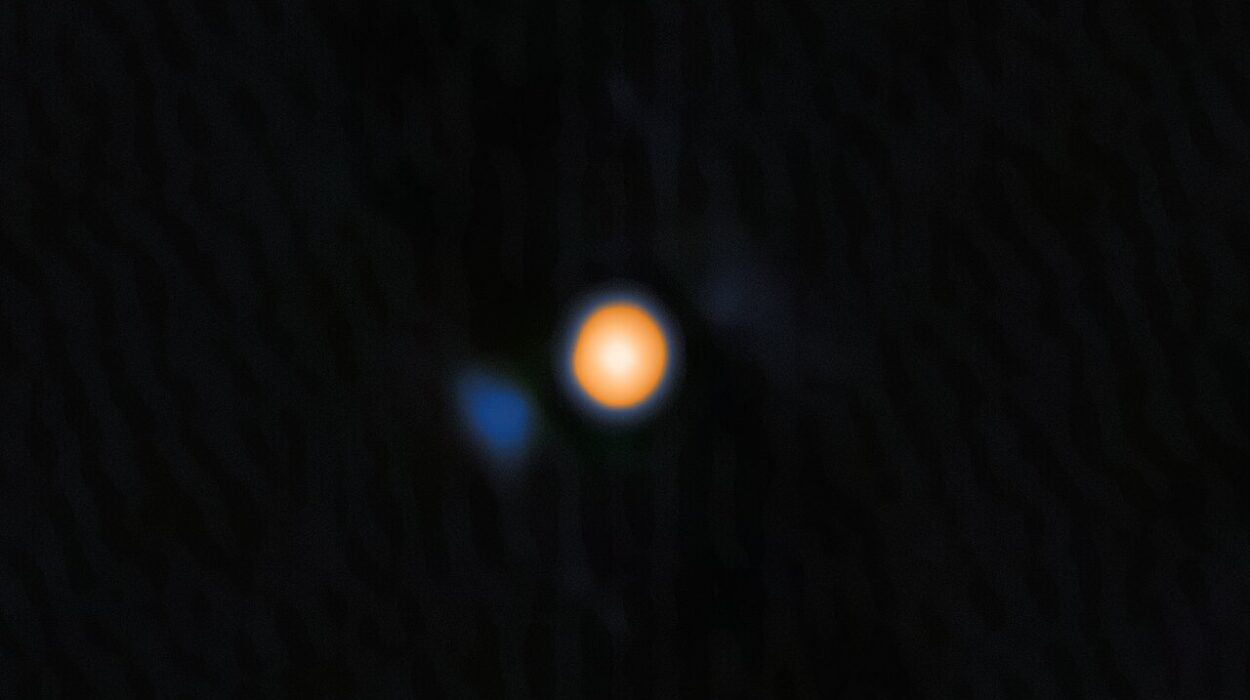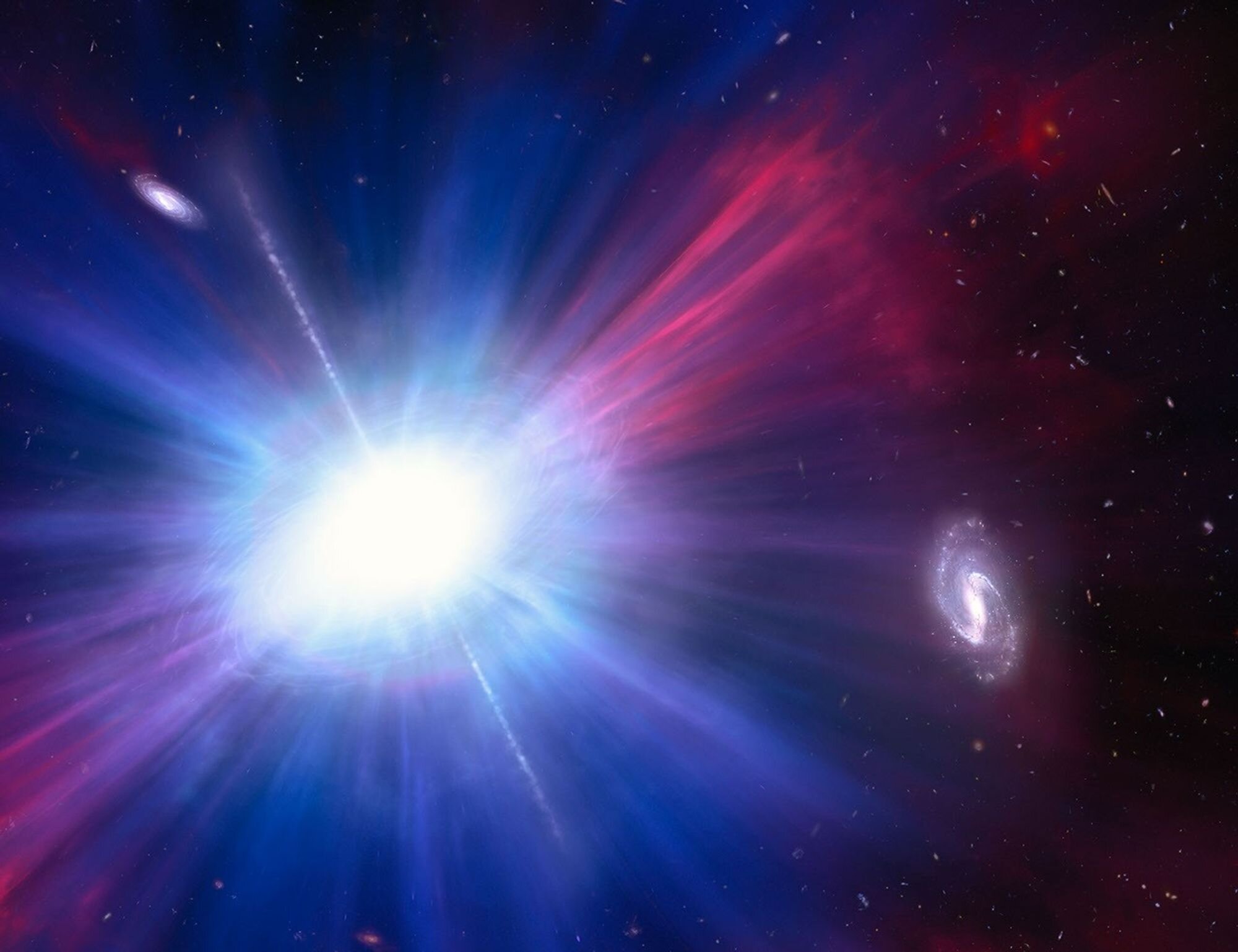
High above the silent churn of distant star systems, some of the universe’s most extreme explosions are popping off in places they seemingly don’t belong. Astronomers have long been baffled by Luminous Fast Blue Optical Transients, or LFBOTs—flashes of light so bright and so brief they defy the standard rules of stellar death. While most massive stars die in well-documented, weeks-long spectacles, these “cow-like” events peak and vanish in a fraction of that time, often appearing in the lonely, dim outskirts of galaxies where the fuel for such violence is supposedly scarce.
Named after the first of their kind discovered in 2018, AT2018cow, these transients represent a class of cosmic phenomena that are as powerful as they are enigmatic. They radiate energy at rates exceeding 10^43 erg per second, a level of luminosity comparable to superluminous supernovae. However, while a typical superluminous supernova might take months to reach its peak and fade, an LFBOT reaches its maximum brilliance within a single week and loses half that brightness only seven days later. This rapid-fire behavior suggests a physical mechanism far more concentrated and volatile than the slow decay of radioactive elements like nickel-56 that powers more common stellar explosions.
Mapping the Galactic Neighborhoods of Cosmic Giants
To solve the riddle of their origin, a research team led by Anya Nugent at the Harvard and Smithsonian Center for Astrophysics decided to stop looking just at the flashes and start looking at their homes. The study, recently detailed in a paper uploaded to the arXiv preprint server, focused on the environmental DNA of 11 specific LFBOT events. By analyzing the light coming from the host galaxies, the researchers were able to model critical physical properties, including total stellar mass, the star formation rate, and the specific chemical composition of the regions surrounding these explosions.
The findings revealed that LFBOTs generally reside in galaxies that are actively producing new stars, yet these environments are distinct from those of other cosmic events. They are less extreme than the galaxies that host superluminous supernovae but show more recent activity than the average galaxy hosting a standard supernova. From a chemical standpoint, these host environments are less enriched with heavy elements than typical supernova sites but possess more metals than the galaxies where long gamma-ray bursts occur. This “middle ground” signature suggests that LFBOTs require very specific, yet not entirely rare, galactic conditions to ignite.
The Mystery of the Missing Star Nurseries
Perhaps the most startling discovery in the study is the physical location of these explosions within their host galaxies. In many cases, stellar explosions are found clustered deep within bright, dense regions where stars are born in rapid succession. However, a significant portion of the LFBOT sample was found drifting far from these nurseries. Some were located in the faint, sparsely populated outskirts of their galaxies, miles away—in cosmic terms—from the action.
This geographical displacement allowed the team to begin a process of elimination for existing theories. Because many of these events occur so far from galactic hearts, the researchers were able to largely rule out tidal disruption events, which happen when a star is shredded by a supermassive black hole at a galaxy’s center. The data also provided less support for models involving magnetar-powered engines or “failed” supernovae, which usually stay closer to their points of origin. The distance from star-forming regions suggests that whatever causes an LFBOT must be capable of traveling a long way from its birthplace before finally detonating.
A Violent Merger Born of a Natal Kick
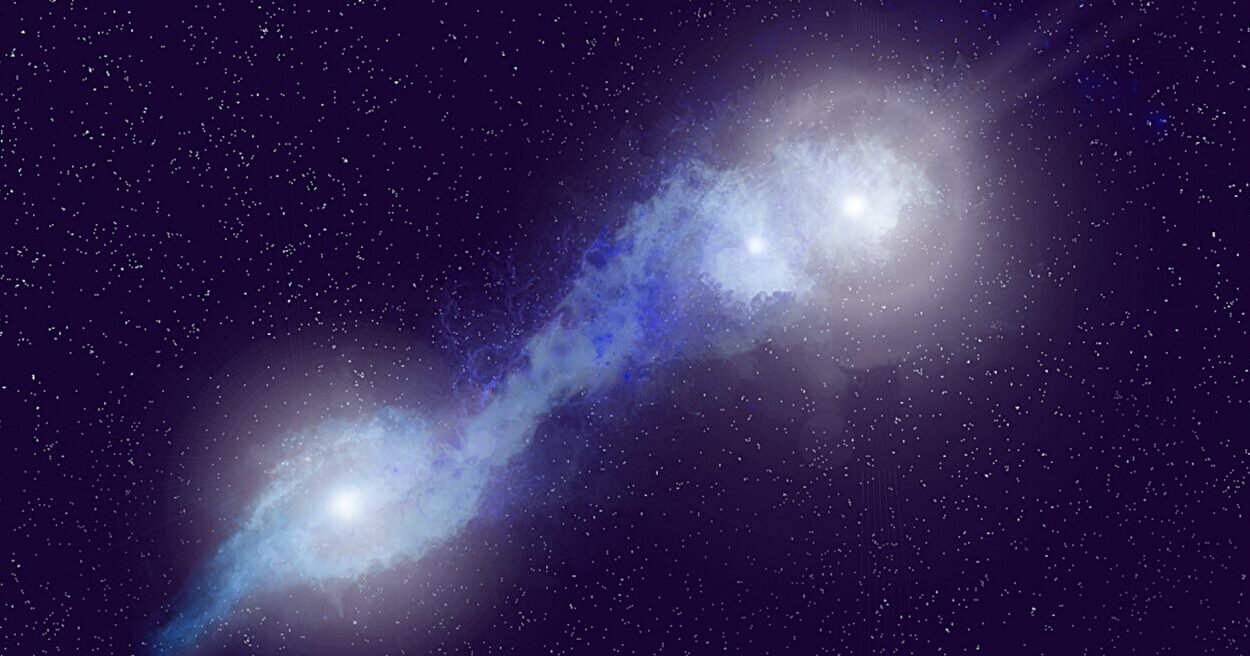
With many traditional theories falling short, the researchers proposed a specific, high-stakes scenario that accounts for both the speed of the explosion and its strange location. The model involves a binary system consisting of a massive Wolf-Rayet star and a compact object, such as a neutron star or a black hole. This pair likely began its life in a crowded star-forming region, but the system’s history took a dramatic turn when the compact object was first created during its own supernova.
When a star collapses into a neutron star or black hole, the explosion is often asymmetrical, providing a “natal kick” that sends the newly formed object—and its binary companion—screaming across space at immense speeds. Over time, this kick carries the pair far into the galactic outskirts. Eventually, the two objects merge in a cataclysmic collision. This merger provides the intense, rapid energy injection required to produce the signature blue flash of an LFBOT, explaining why these events are so bright yet fade so quickly.
Why This Matters
Understanding LFBOTs is about more than just identifying a new type of flash in the night sky; it is about uncovering the “hidden” life cycles of the universe’s most massive stars. By proving that these explosions occur far from their birth sites, this research highlights the dynamic nature of binary systems and the power of galactic “kicks” to redistribute matter across the cosmos. It suggests that the most violent events in the universe aren’t always found where the most stars are, but rather where the most extreme objects eventually collide.
While the current sample of 11 events provides a preliminary foundation, the near future holds the promise of a data revolution. The Vera C. Rubin Observatory is expected to begin a survey that could detect hundreds of these “cow-like” events every single year. Moving from a handful of examples to a population of hundreds will allow astronomers to move beyond theories and finally confirm the exact mechanics of these mysterious cosmic transients.
Study Details
Anya E. Nugent et al, The Environments of Luminous Fast Blue Optical Transients: Evidence for a Compact Object and Wolf-Rayet Star Merger Origin, arXiv (2026). DOI: 10.48550/arxiv.2603.23597