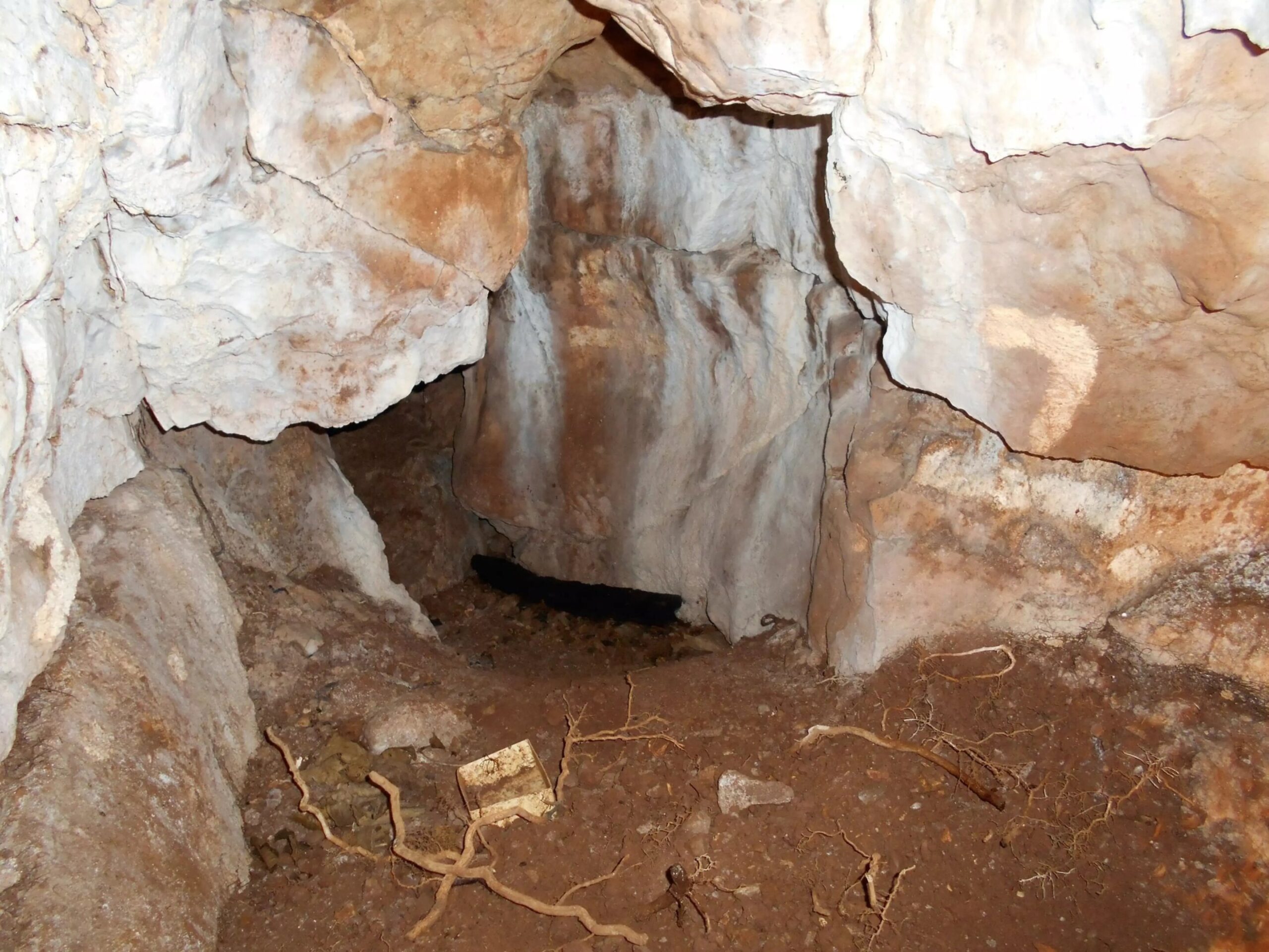
Deep in the quiet of Heaning Wood Bone Cave in Cumbria’s Great Urswick, something extraordinary waited in the dark. For thousands of years, long after ice retreated and forests rose again, long before villages and roads traced the landscape, a child lay undisturbed. Her bones, fragile and patient, carried a story from 11,000 years ago—a story that has now stepped into the light.
Three years after their discovery, those ancient remains have been identified as the oldest human remains ever found in Northern Britain. And at the heart of this revelation is not just science, but something deeply human: the careful burial of a very young girl.
The Moment the Past Spoke in DNA
When local archaeologist Martin Stables first excavated the cave, he could not have known how far the journey would go. The bones were clearly ancient, but their full story remained hidden. It took an international team led by archaeologists at the University of Lancashire to unlock the next chapter.
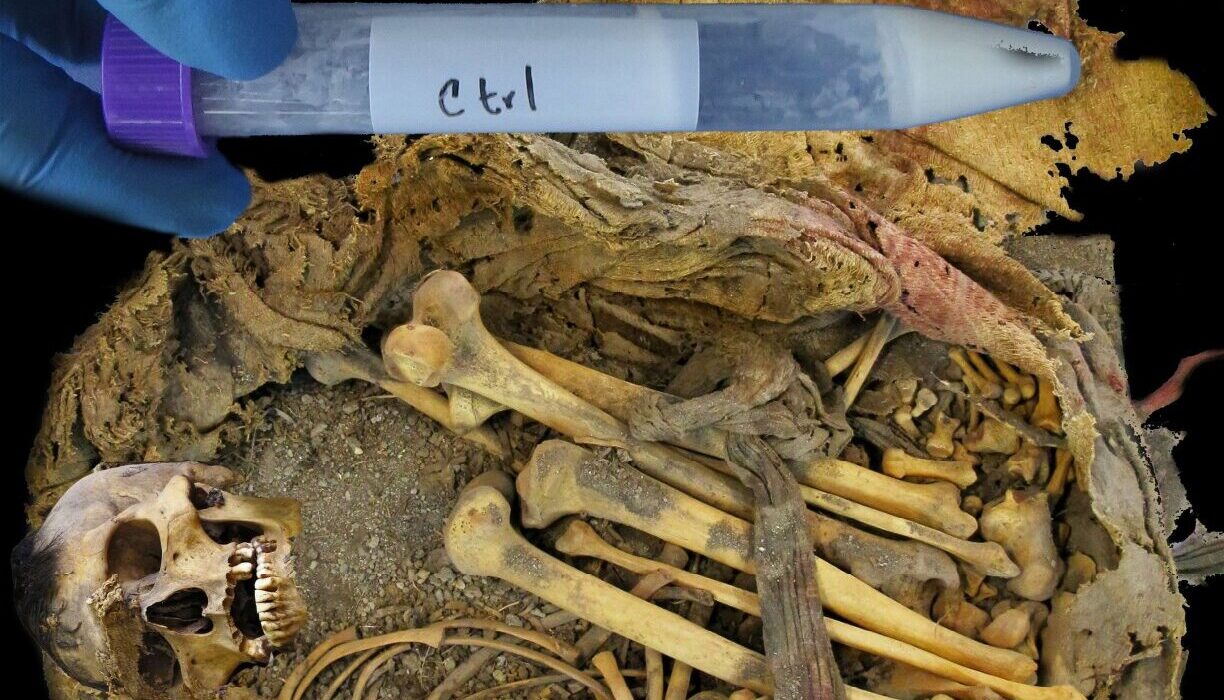
Through painstaking DNA analysis, researchers extracted enough genetic material to determine something remarkable. The remains belonged to a female child, aged between 2.5 and 3.5 years old. According to lead researcher Dr. Rick Peterson, this marks the first time scientists have been able to pinpoint the age so precisely for such ancient remains and confirm the child’s sex with certainty.
This was no anonymous fragment of prehistory. This was a toddler. A daughter. A life paused before it had truly begun.
The research, now published in the Proceedings of the Prehistoric Society, places her among the third oldest Mesolithic burial in North West Europe. Even more striking, her presence represents some of the earliest dates for human activity in Britain after the end of the last ice age.
In a land still reshaping itself after glaciation, people were already here. And they were grieving.
Jewelry in the Darkness
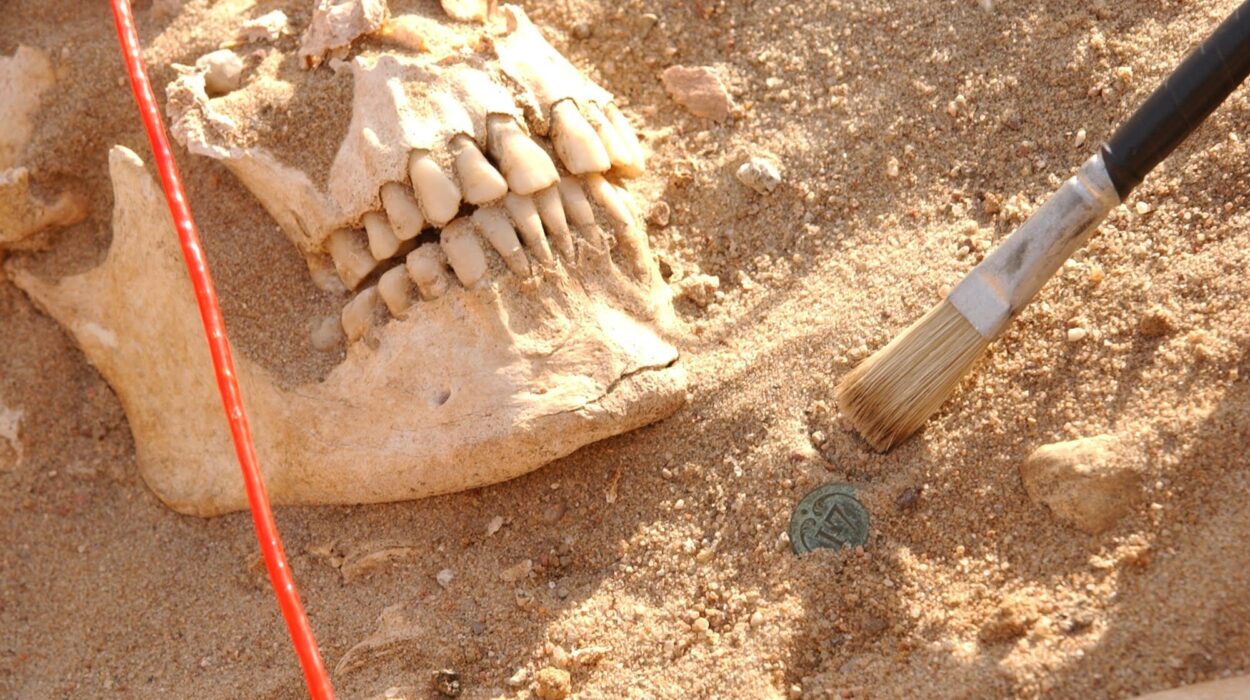
The cave did not hold bones alone. Nearby, archaeologists uncovered jewelry: a perforated deer tooth and beads, each carefully shaped and worn. When carbon dated, these artifacts revealed the same astonishing age—11,000 years old.
The alignment in dates tells a powerful story. As Dr. Peterson explained, dating the jewelry to the same time frame as the remains strengthens the idea that this was a deliberate burial. The child was not lost accidentally in a cave. She was placed there.
The beads and tooth suggest intention. Care. Perhaps ritual. The objects hint that this small life was honored in death.
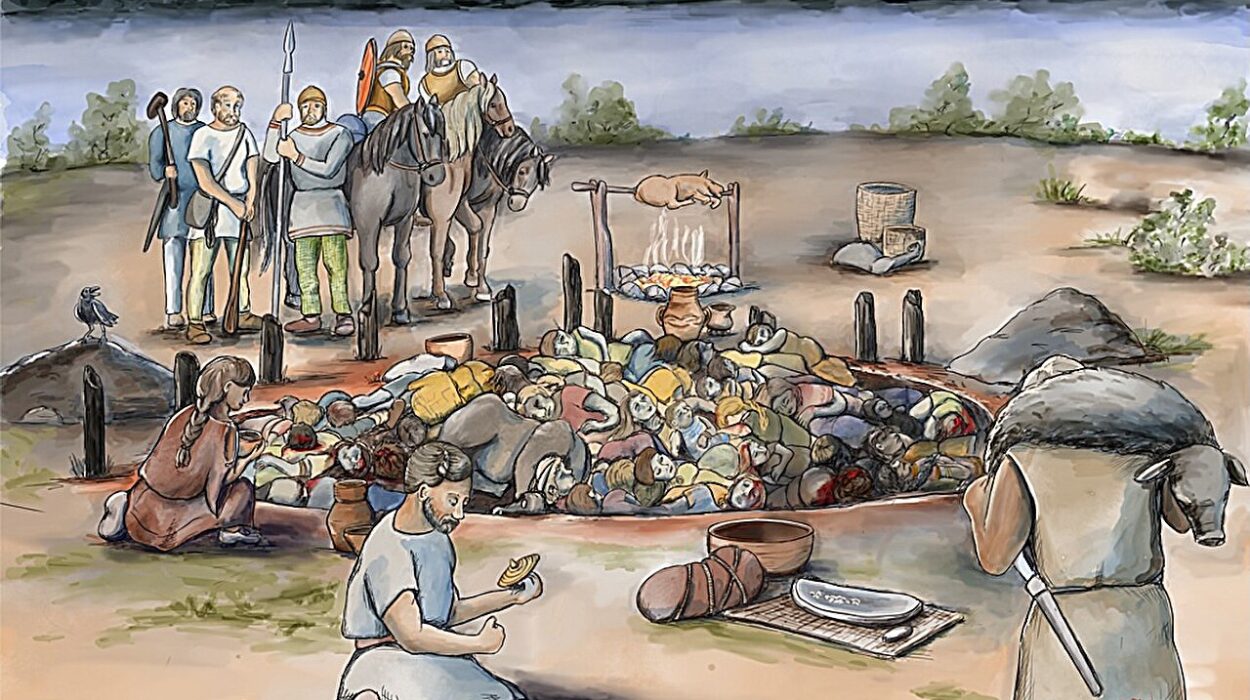
Researchers are now exploring what cave burials meant during the Early Mesolithic period. Modern hunter-gatherer groups often view caves as gateways into the spirit world. While we cannot know exactly what these early people believed, the repeated use of caves for burial across northern Europe during this time suggests something meaningful. These spaces were not random hiding places. They may have been sacred thresholds between worlds.
In that dim cave, surrounded by stone and silence, someone laid a child to rest with adornments that carried significance.
The Ossick Lass
For Martin Stables, this discovery was never just scientific. He is self-taught, driven by a deep desire to understand the prehistoric roots of his own village. When he began excavations in July 2016, he could not have imagined that nearly a decade later he would be face-to-face with a Mesolithic child.
He named her the “Ossick Lass,” using local vernacular that simply means “Urswick girl.” The name binds her to the land where she was found. It anchors her in place and memory.
Stables described his journey as if traveling back to 9,000 BC, moving layer by layer through the Bronze Age, the Neolithic, and finally reaching the Mesolithic Period. Of all the discoveries, this one became the most poignant.
He was, in his words, the first to bear witness to the “obviously caring burial” of someone’s child that occurred over 11,000 years ago.
That sentence carries weight. Because it reframes the discovery. It is not just about age or chronology. It is about care.
Across millennia, grief looks the same.
A Landscape Marked by Ice and Memory
Finding remains this old in northern Britain is rare. Earlier human remains are known from southern England and Wales, but past glaciations in the north were destructive. Ice reshaped the land and erased much of the evidence of early human presence.
Before this discovery, the so-called “earliest northerner” was a 10,000-year-old burial found at Kent’s Bank Cavern in 2013. The Ossick Lass pushes that timeline back another thousand years.
Her existence shows that people had returned to, or were already inhabiting, this northern landscape soon after the ice age ended. They were not merely surviving. They were forming communities. They were burying their dead with intention.
And she was not alone.
A Cave of Many Generations
The research team confirmed that at least eight different individuals were buried in Heaning Wood Bone Cave. Evidence shows that all were deliberate burials, spanning three distinct periods of prehistoric time.
Around 11,000 years ago, during the very early Mesolithic period, the Ossick Lass and others were laid to rest.
Thousands of years later, approximately 5,500 years ago, during the Early Neolithic, the cave was used again.
Then again around 4,000 years ago, in the Early Bronze Age.
Over thousands of years, different communities returned to this same space. The cave became a thread connecting generations who may never have known one another, yet chose the same place to say goodbye.
This continuity hints at memory embedded in landscape. The cave endured. So did its meaning.
Science Meets Humanity
There is a quiet power in combining modern genetic science with ancient human remains. The DNA analysis gave the Ossick Lass back something profoundly personal: her identity as a young girl.
For years, the bones lay silent. Now, they speak in measurable terms—age range, biological sex, chronological placement. Yet the numbers alone do not capture the full story.
The real impact lies in what those numbers imply. A community existed here 11,000 years ago. They cared for their children. They honored their dead. They selected a cave, perhaps seen as a sacred threshold, and placed jewelry beside a small body.
Science does not diminish the emotion of the story. It sharpens it.
Why This Discovery Matters
The identification of the Ossick Lass as the oldest human remains in Northern Britain reshapes our understanding of early post–ice age life in this region. It confirms that humans were present in the north earlier than previously documented and that they practiced intentional burial rituals during the Early Mesolithic.
The discovery also fills a geographical gap. Because glaciation destroyed much of the evidence in northern Britain, finds like this are exceptionally rare. Each one becomes a crucial piece in reconstructing the timeline of human return and settlement after the last ice age.
Beyond the scientific milestones, this research matters because it restores individuality to deep time. The Ossick Lass is not an abstract data point. She was a child between 2.5 and 3.5 years old, buried with care, in a cave that would serve generations.
Her story bridges 11,000 years of silence. It reminds us that even in the earliest chapters of Britain’s human history, people grieved, remembered, and marked their losses in meaningful ways.
In a small Cumbrian cave, the past has offered something fragile and powerful: proof that love and ritual reach further back than we often imagine.
Study Details
Keziah Warburton et al, Farthest North: Human Remains from Heaning Wood Bone Cave, Cumbria, UK and their European context, Proceedings of the Prehistoric Society (2026). DOI: 10.1017/ppr.2025.10077