New research reveals that the massive extinction of “megafauna” tens of thousands of years ago fundamentally destabilized ecological networks, particularly in the Americas. By analyzing over 440 mammal species across three continents, scientists discovered that the loss of prehistoric giants permanently narrowed the variety of prey available to modern predators.
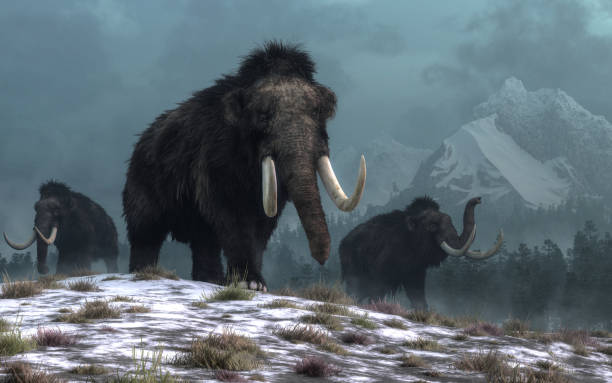
The Earth was once a realm of titans. Imagine a world where saber-toothed cats brandishing 7-inch fangs stalked through the brush, and sloths the size of modern elephants moved slowly through the trees. In this prehistoric landscape, woolly mammoths carried curved tusks exceeding 12 feet in length, while three-ton wombats—creatures as large as a family car—roamed the plains. These massive animals, known as megafauna, were the architects of their environments for millions of years. However, between 50,000 and 10,000 years ago, the majority of these large-bodied mammals vanished from the face of the Earth. While their physical presence is long gone, a new study suggests that the “ghosts” of these giants still dictate the survival strategies of the animals living today.
The Ripple Effect of Ancient Losses
When a species disappears, the impact is rarely contained to that single animal. Instead, extinctions trigger a series of cascading effects throughout the ecosystem. According to a study published in the Proceedings of the National Academy of Sciences, the disappearance of the world’s largest mammals fundamentally reshaped the “food webs”—the intricate networks of who eats whom—for the species that survived.
Senior author Lydia Beaudrot, an assistant professor of integrative biology at Michigan State University, noted that the removal of top-tier predators or primary prey causes the remaining relationships to shift in complex, often unpredictable ways. When a major predator vanishes, its former prey may multiply without restraint, which in turn stresses the vegetation and other animals within that habitat. Beaudrot and her team hypothesized that the massive extinctions of the late Pleistocene had left a permanent mark on these biological connections, but proving this required a massive synthesis of data across vast geographical scales.
Mapping the Global Trophic Shift
To understand how these ancient losses influence modern wildlife, the research team, led by Beaudrot and first author Chia Hsieh, analyzed predator-prey relationships at 389 sites across the tropical and subtropical regions of the Americas, Africa, and Asia. The scope of the study was immense, covering more than 440 species of mammals, ranging from modern giants like lions and elephants to smaller carnivores such as wolves and bears.
The researchers focused on comparing how “trophic levels”—the functional positions animals occupy in a food chain—differed between continents. While every food web shares a basic structure of eaters and the eaten, the study found that the specific “flavor” of these webs varies significantly by region. Specifically, the data revealed that modern food webs in the Americas look very different from those in Africa and Asia.
In the Americas, predators today rely on a much narrower range of prey. These prey animals are generally smaller and possess less diverse physical traits and activity patterns than their counterparts on other continents. Furthermore, there is significantly less overlap in the types of prey targeted by different American predators. This suggests a “thinner” ecological network where the options for survival are more restricted.
Why the Americas Were Hit Hardest
The disparity between regions cannot be explained by modern environmental factors alone. While weather patterns and seasonal changes influence animal behavior, the researchers found that the severity of prehistoric extinctions was the primary driver of these modern differences.
Each corner of the globe suffered during the extinction wave that occurred 50,000 years ago, but the Americas experienced a particularly devastating blow. The study indicates that the Americas lost more than 75% of all mammals weighing over 100 pounds. For instance, South America was once the home of several species of giant deer. When these animals went extinct, they left a massive void in the diet of predators like the dire wolf and the saber-toothed cat.
Because so much of the “lower part” of the food web was lost in the Americas, the remaining ecosystem became flattened. With the largest prey species gone, the entire structure of the food web thinned out, leaving modern predators with a reduced menu of smaller, less diverse options. This historical “flattening” explains why the ecological relationships in North and South America appear more fragile or restricted compared to the more robust webs found in Africa, where a higher percentage of megafauna survived into the modern era.
The Unsolved Mystery of the Megafauna
While the consequences of these extinctions are becoming clearer, the cause remains a point of intense scientific debate. Some researchers point toward environmental pressures, suggesting that rapid changes in climate pushed mammoths and other giants to the brink. Others argue that the human story is inseparable from the extinction event, suggesting that as humans migrated out of Africa and across the globe, their hunting practices and presence led to the demise of the world’s largest creatures.
Regardless of whether it was climate, human activity, or a combination of both, the result was a permanent alteration of the Earth’s biological landscape. The study confirms that even 10,000 years after the last mammoth fell, the echoes of that loss are still measurable in the behavior and biology of modern mammals.
Why This Matters
This research provides more than just a look into the past; it serves as a warning for the future. Today, the world is facing a new wave of potential extinctions. According to the International Union for the Conservation of Nature (IUCN), nearly half of all mammals weighing more than 20 pounds are currently classified as vulnerable, endangered, or critically endangered.
By identifying how past extinctions “thinned” the food web and made ecosystems more rigid, scientists can better predict the long-term consequences of losing modern giants like lions or elephants. If these species vanish, the ripple effects could last for tens of thousands of years, further weakening the ecological networks that support life on Earth. The team now plans to investigate whether these historical losses make certain modern communities more vulnerable to future environmental shifts, using the lessons of the Pleistocene to safeguard the biodiversity of tomorrow.
Study Details
Chia Hsieh, et al. Historical legacies shape continental variation in contemporary mammal food webs, Proceedings of the National Academy of Sciences (2026). DOI: 10.1073/pnas.2519938123